10. Conceptual Framework of Geospatial Genomics
The concept of geospatial genomics integrates genomic information with spatially explicit environmental and geographic data to understand crop adaptation, disease dynamics, and genetic diversity across landscapes. This framework provides a systematic approach for combining genetic, environmental, and spatial information to accelerate breeding programs, particularly for disease-resistant crops such as cassava in Africa. Landscape genomics refers to the study of the relationship between genomic variation and environmental heterogeneity across landscapes. It combines population genetics with ecological and geographic analyses to identify adaptive genetic loci associated with environmental gradients or disease pressures
| [36] | Ceballos, H., et al. (2020). Disease-resistance loci identification in cassava. Frontiers in Plant Science, 11, 580112. |
[36]
. Spatial genetics focuses on the distribution of genetic variation within and among populations in a spatial context. By incorporating spatial structure into genetic analyses, researchers can detect patterns of gene flow, local adaptation, and genetic clustering, which are critical for designing effective breeding strategies and conservation plans
| [34] | Zhang, Y., et al. (2025). Multi-index vegetation monitoring for crop health assessment. Agricultural Systems, 187, 103008. |
[34]
. Environmental association analysis (EAA) is a key analytical principle within geospatial genomics. It identifies associations between genetic markers and environmental variables such as temperature, precipitation, soil type, or disease incidence. These analyses allow researchers to link adaptive traits, including disease resistance, to specific environmental conditions, enhancing predictive breeding and targeted germplasm deployment
| [37] | Legg, J. P., et al. (2015). CMD mapping and hotspots identification. Plant Pathology, 64(1), 158–172. |
[37]
.
10.1. Components of Geospatial Genomics
The geospatial genomics framework for crop improvement is founded on the integration of three complementary components that together enable a comprehensive understanding of genotype–environment interactions. First, Geographic Information Systems (GIS) provides a critical platform for visualizing, mapping, and analyzing spatial patterns of environmental variables and disease occurrence. Through GIS, researchers can identify disease hotspots, examine environmental gradients, and explore spatial correlations between genomic variation and ecological factors, which is particularly valuable for understanding the distribution of viral diseases in cassava across Africa
| [38] | Exposito-Alonso, M., et al. (2020). Environmental association analysis in geospatial genomics. Nature Plants, 6, 1087–1097. |
[38]
. Second, remote sensing technologies offer high-resolution phenotypic and environmental data using satellite imagery, unmanned aerial vehicles (UAVs), and hyperspectral sensors. These technologies enable the assessment of vegetation indices, spectral signatures, and early signs of plant stress, thereby facilitating large-scale monitoring of crop health. When combined with GIS, remote sensing provides a dynamic toolset for detecting disease outbreaks and environmental constraints that may influence genetic expression
| [39] | Ceballos, H., et al. (2020). Genomic and environmental integration for cassava adaptation. Frontiers in Plant Science, 11, 580112. |
[39]
. Third, the integration of genomic data introduces the genetic dimension necessary for precision breeding. High-throughput genotyping platforms, including single nucleotide polymorphism (SNP) markers, genotyping-by-sequencing (GBS), and whole-genome sequencing, generate detailed genetic profiles that allow for the identification of alleles linked to disease resistance and environmental adaptation. When these genomic datasets are overlaid with spatial and environmental information, researchers can perform genotype-environmental association analyses that directly inform breeding decisions and accelerate the selection of superior genotypes
| [35] | Liu, Y., et al. (2024). Red edge vegetation indices for detecting stress in dense canopies. Remote Sensing, 16(4), 712. |
| [40] | Legg, J. P., et al. (2014). Regional dynamics of CMD and CBSD spread. Plant Disease, 98(2), 161–174. |
[35, 40]
. The intersection of GIS, remote sensing, and genomic data establishes a holistic geospatial genomics framework, linking environmental variability, disease dynamics, and genetic diversity. This integrated approach provides the basis for more precise and efficient breeding strategies, enabling the development of cassava varieties that are both resilient to disease and optimized for performance across diverse agroecological zones.
10.2. Applications in Crop Disease Resistance Research
The geospatial genomics framework has emerged as a powerful tool for advancing disease resistance research in crops, particularly in cassava, which is highly susceptible to viral diseases such as cassava mosaic disease (CMD) and cassava brown streak disease (CBSD). One of the primary applications of this approach is the identification of disease-resistant genotypes. By correlating spatial patterns of disease incidence with genomic variation, researchers can pinpoint alleles that confer resistance to viral, bacterial, or fungal pathogens. This method has been effectively applied in cassava to identify resistance loci associated with CMD and CBSD, providing valuable targets for breeding programs
| [38] | Exposito-Alonso, M., et al. (2020). Environmental association analysis in geospatial genomics. Nature Plants, 6, 1087–1097. |
| [41] | Jarvis, A., et al. (2012). Climate data integration for agro-ecological zoning. Agricultural Systems, 105(1), 39–53. |
[38, 41]
.
In addition to identifying resistant genotypes, geospatial genomics facilitates predictive modeling of disease outbreaks. Remote sensing technologies, combined with GIS, allow for the continuous monitoring of disease progression and environmental conditions that favor pathogen spread. When integrated with genotypic data, these spatial analyses enable the prediction of disease risk across landscapes, supporting early intervention and disease management strategies
| [39] | Ceballos, H., et al. (2020). Genomic and environmental integration for cassava adaptation. Frontiers in Plant Science, 11, 580112. |
| [42] | McCord, P., et al. (2020). AEZ and long-term planning for cassava. Agricultural Systems, 180, 102779. |
[39, 42]
. The framework also contributes to guiding germplasm deployment, ensuring that disease-resistant varieties are strategically placed in agroecologically suitable regions. This targeted placement optimizes environmental adaptation and minimizes losses due to pathogen pressure or other abiotic stresses, ultimately improving both crop performance and food security
| [43] | Legg, J. P., et al. (2015). Disease hotspot mapping and breeding site selection. Plant Pathology, 64(1), 158–172. |
[43]
. Moreover, geospatial genomics enhances breeding efficiency by integrating spatial and genomic datasets to prioritize candidate genotypes for multi-environment trials. This integration reduces the time and cost associated with traditional breeding approaches while increasing the likelihood of selecting stable, disease-resistant varieties that perform well across diverse agroecological conditions
| [40] | Legg, J. P., et al. (2014). Regional dynamics of CMD and CBSD spread. Plant Disease, 98(2), 161–174. |
[40]
.
10.3. Geographic Information Systems (GIS) in Cassava Disease Mapping
Geographic Information Systems (GIS) have become essential tools in agricultural research, providing methods to visualize, analyze, and interpret spatial data related to crop production, disease incidence, and environmental conditions. By applying GIS techniques, researchers can better understand patterns in agricultural landscapes, identify areas of high risk for diseases, and support decision-making in crop improvement programs. Spatial interpolation is a GIS technique used to estimate values of a variable at unsampled locations based on observed data from sampled points. In agriculture, this method is widely applied to map soil properties, disease incidence, yield variability, and climatic factors across fields or regions
| [44] | Alabi, O. J., et al. (2018). Disease hotspot identification for resource allocation. African Journal of Biotechnology, 17(1), 21–33. |
[44]
. Common interpolation methods include Inverse Distance Weighting (IDW), Kriging, and Spline interpolation, which allow researchers to generate continuous surfaces from discrete data points. For example, Kriging has been employed to map cassava mosaic disease severity across multiple districts, enabling breeders and extension agents to identify hotspots and prioritize management interventions
| [41] | Jarvis, A., et al. (2012). Climate data integration for agro-ecological zoning. Agricultural Systems, 105(1), 39–53. |
| [45] | Maruthi, M. N., et al. (2017). UAV-based disease mapping and hotspot identification. Plant Disease, 101(2), 218–226. |
[41, 45]
. Spatial interpolation also supports precision agriculture by providing detailed environmental layers that can be integrated with genomic data to predict genotype-environment interactions.
Kernel density mapping is a spatial analysis technique that calculates the density of events or features within a defined neighborhood, producing a smooth surface representing concentrations or clusters. In agricultural research, kernel density mapping is often used to identify disease hotspots, pest infestations, or high-risk zones across landscapes
| [44] | Alabi, O. J., et al. (2018). Disease hotspot identification for resource allocation. African Journal of Biotechnology, 17(1), 21–33. |
[44]
. For instance, kernel density maps have been applied to visualize the distribution of cassava brown streak disease vectors and detect areas where disease pressure is highest. By highlighting these zones, researchers can guide targeted field sampling, resource allocation, and the deployment of disease-resistant varieties
| [41] | Jarvis, A., et al. (2012). Climate data integration for agro-ecological zoning. Agricultural Systems, 105(1), 39–53. |
[41]
. This method is particularly useful for planning interventions in heterogeneous landscapes where disease incidence is unevenly distributed. Spatial autocorrelation measures the degree to which a spatial variable is correlated with itself over space. Positive spatial autocorrelation indicates that similar values cluster together, whereas negative autocorrelation suggests dispersion. In agricultural research, spatial autocorrelation analyses help determine whether disease occurrences, yield patterns, or pest infestations are randomly distributed or exhibit spatial dependence
| [46] | Ceballos, H., et al. (2020). Strategic deployment of resistant cassava varieties. Frontiers in Plant Science, 11, 580112. |
| [47] | Legg, J. P., et al. (2014). Cross-border surveillance of CMD and CBSD. Plant Disease, 98(2), 161–174. |
[46, 47]
. Metrics such as Moran’s I, Geary’s C, and Getis-Ord Gi* are commonly used to quantify spatial autocorrelation. Understanding the spatial structure of disease incidence or crop traits is critical for developing targeted breeding strategies and for designing sampling schemes that accurately capture field variability
| [47] | Legg, J. P., et al. (2014). Cross-border surveillance of CMD and CBSD. Plant Disease, 98(2), 161–174. |
[47]
. For cassava, spatial autocorrelation studies have been applied to evaluate the clustering of disease severity and guide the placement of experimental plots for resistance evaluation.
10.4. GIS-based Mapping of Cassava Diseases
Mapping cassava diseases using Geographic Information Systems (GIS) has become a critical tool for understanding disease prevalence, distribution, and spread patterns across African agro-ecologies. By combining field survey data with spatial analysis techniques, researchers can identify hotspots of disease, guide sampling strategies, and inform targeted interventions for breeding and management of resistant cassava varieties. Disease prevalence mapping involves the spatial representation of disease incidence and severity across geographic areas. GIS enables researchers to visualize the distribution of major cassava diseases such as cassava mosaic disease (CMD) and cassava brown streak disease (CBSD), highlighting areas with high infection rates and identifying trends over time. For example, studies in East and Central Africa have used GIS to map CMD and CBSD prevalence across multiple districts, revealing both localized outbreaks and regional patterns influenced by environmental factors such as temperature, rainfall, and cropping practices
| [48] | Owomugisha, G., et al. (2020). Hyperspectral detection of cassava diseases. Frontiers in Plant Science, 11, 580112. |
| [49] | Peng, Y., et al. (2022). Multispectral early detection of CBSD. Plant Methods, 18(1), 112. |
[48, 49]
. These maps allow breeders and extension agents to prioritize high-risk areas for disease monitoring, resistance screening, and targeted deployment of improved varieties.
GIS-based prevalence mapping also facilitates the integration of temporal data, enabling the tracking of disease progression over multiple planting seasons. This dynamic mapping supports the evaluation of disease management strategies and the assessment of long-term effectiveness of resistant varieties
| [45] | Maruthi, M. N., et al. (2017). UAV-based disease mapping and hotspot identification. Plant Disease, 101(2), 218–226. |
[45]
. Many cassava diseases, particularly CMD and CBSD, are transmitted by insect vectors, primarily whiteflies (
Bemisia tabaci). Understanding the spatial distribution of these vectors is critical for predicting disease spread and designing effective control measures. GIS techniques can be used to analyze vector density, dispersal patterns, and habitat suitability, providing insights into areas with the highest risk of disease transmission
| [48] | Owomugisha, G., et al. (2020). Hyperspectral detection of cassava diseases. Frontiers in Plant Science, 11, 580112. |
| [50] | Ahmed, M., et al. (2026). Remote sensing applications for cassava disease monitoring. Agricultural Remote Sensing, 15, 122–138. |
[48, 50]
. Kernel density mapping, spatial autocorrelation, and hotspot analysis are commonly applied to identify clusters of vector populations, which often correlate with regions of high disease incidence. When vector distribution maps are combined with environmental variables such as temperature, humidity, and land use, predictive models can be developed to forecast outbreaks and guide integrated pest management strategies
| [41] | Jarvis, A., et al. (2012). Climate data integration for agro-ecological zoning. Agricultural Systems, 105(1), 39–53. |
[41]
. Vector distribution analysis is especially valuable in cassava-growing regions where environmental heterogeneity and farming practices influence vector population dynamics. These GIS-driven insights are critical for improving the efficiency of cassava breeding programs by enabling the strategic placement of disease-resistant genotypes in areas most susceptible to vector-borne disease pressure. Geographic Information Systems (GIS) play a critical role in breeding site selection for crops such as cassava by integrating environmental, climatic, and disease data to identify optimal locations for field trials and variety evaluation. Proper site selection ensures that breeding programs accurately capture genotype-environment interactions and evaluate disease resistance under relevant agro-ecological conditions.
10.5. Agro-ecological Zoning
Agro-ecological zoning (AEZ) involves the classification of land into zones based on climatic, edaphic, and topographic factors that influence crop growth and productivity. GIS facilitates AEZ by integrating spatial data on temperature, rainfall, soil type, altitude, and land used to delineate areas suitable for cassava cultivation
| [51] | García Vera, L., et al. (2024). Satellite remote sensing for CMD outbreak prediction. Precision Agriculture, 25, 1045–1067. |
| [52] | Chin, T., et al. (2023). UAVs in field-scale disease detection. Remote Sensing, 15(7), 1614. |
[51, 52]
. Using AEZ, breeders can strategically select sites that represent major environmental gradients, ensuring that experimental trials capture the full range of conditions under which cassava varieties may be grown. This approach improves the reliability of disease resistance screening and helps identify genotypes that are broadly adapted or specifically adapted to agro-ecologies
| [43] | Legg, J. P., et al. (2015). Disease hotspot mapping and breeding site selection. Plant Pathology, 64(1), 158–172. |
[43]
. AEZ also supports long-term planning by highlighting areas vulnerable to climate change, thereby informing the development of resilient cassava varieties.
10.6. Disease Hotspot Identification
Identifying disease hotspots is essential for evaluating cassava genotypes under realistic pathogen pressure. GIS-based analysis enables the mapping of areas with consistently high incidence of diseases such as cassava mosaic disease (CMD) and cassava brown streak disease (CBSD)
| [53] | Peng, Y., et al. (2022). Early CBSD identification using multispectral imaging. Plant Methods, 18(1), 112. |
| [54] | Carvalho, D., et al. (2026). Machine learning for cassava bacterial blight detection. Computers and Electronics in Agriculture, 207, 107696. |
[53, 54]
. By combining historical disease survey data with environmental and vector distribution layers, GIS helps breeders locate field sites where disease pressure is sufficient to differentiate resistant and susceptible genotypes. This targeted approach reduces the need for artificial inoculation in breeding trials while ensuring that selection occurs under natural and relevant disease conditions. Furthermore, disease hotspot identification supports resource allocation, allowing breeding programs to focus efforts in regions where resistant varieties are most urgently needed. Integrating AEZ with disease hotspot data provides a comprehensive framework for site selection in cassava breeding programs, ensuring trials are conducted across diverse environments and under realistic biotic stress. This approach maximizes the effectiveness of breeding efforts and enhances the likelihood of developing cassava varieties that perform well across Africa’s varied agro-ecological landscapes.
10.7. Case Studies from Africa (Geospatial Genomics in Cassava Improvement)
Several studies across Africa have demonstrated the practical application of GIS, remote sensing, and genomic tools to enhance cassava breeding and disease management. These case studies provide evidence of how geospatial genomics can support the development of disease-resistant varieties and inform strategic interventions. In Uganda, Legg et al.
| [55] | Sambasivam, S., et al. (2025). Deep learning for cassava leaf disease classification. Remote Sensing, 17(3), 845. |
[55]
conducted a spatio-temporal analysis of CMD prevalence using GIS and disease survey data across multiple districts. By mapping disease incidence and integrating climatic and vector data, the study identified CMD hotspots and key environmental drivers of disease spread. These findings informed site selection for field trials of resistant varieties and supported targeted extension interventions. The study also highlighted areas where whitefly vector populations were highest, enabling predictive modeling of disease outbreaks.
In Tanzania, research by Maruthi et al.
| [56] | Radočaj, O., et al. (2023). NDVI and vegetation index applications in agriculture. Remote Sensing of Environment, 292, 113281. |
[56]
applied remote sensing and GIS-based disease mapping to assess CBSD prevalence. Using vegetation indices derived from satellite imagery combined with field observations, the study successfully detected early symptoms of CBSD and identified regions at highest risk for spread. These spatial analyses guided breeding programs by selecting trial sites in disease-prone zones and helped prioritize resistant genotypes for farmer dissemination. A study in Nigeria combined genomic selection with GIS-based agro-ecological zoning to improve cassava breeding efficiency
| [57] | Zhang, Y., et al. (2025). Combining multiple vegetation indices for disease detection. Agricultural Systems, 187, 103008. |
[57]
. Genomic data, including SNP markers linked to disease resistance, were integrated with spatial environmental data to identify genotypes adapted to specific ecological zones. This approach enabled strategic deployment of resistant varieties in regions prone to CMD and CBSD, improving the effectiveness of breeding programs and reducing yield losses.
Legg et al.
| [58] | Liu, Y., et al. (2024). Red edge indices for detecting stress in dense canopies. Remote Sensing, 16(4), 712. |
[58]
conducted a multi-country disease surveillance program across Uganda, Kenya, and Tanzania, mapping both CMD and CBSD incidence using GIS and spatial modeling. The study revealed cross-border disease dynamics and the role of environmental and vector factors in spreading disease. Integrating spatial epidemiology with breeding programs, the research supported the regional targeting of resistant varieties and informed policy interventions for disease management. A recent study conducted a geo-referenced survey in cassava fields across Sierra Leone to identify and map the distribution of cassava mosaic disease-associated begomoviruses
| [59] | Owomugisha, G., et al. (2020). Hyperspectral early detection in cassava. Frontiers in Plant Science, 11, 580112. |
[59]
. Researchers sampled cassava leaves from 109 smallholder farms and performed molecular diagnostics, revealing the prevalence and spatial distribution of viral strains, including African cassava mosaic-like (ACMV-like) and East African cassava mosaic-like (EACMV-like) viruses. The study also detected the East African cassava mosaic Cameroon virus (EACMCMV) variant in several regions of the country, highlighting significant disease presence across multiple agro-ecological zones.
10.8. Remote Sensing Technologies in Agriculture
Remote sensing has emerged as a powerful tool in modern agriculture, offering non-destructive, scalable, and rapid detection of crop conditions, including disease stress. Its application addresses the limitations of traditional field scouting and laboratory diagnostics, which are often labor-intensive, costly, and slow
| [60] | Peng, Y., et al. (2022). Multispectral imaging and early CBSD detection. Plant Methods, 18(1), 112. |
| [61] | Carvalho, D., et al. (2026). Spectral imaging and machine learning for cassava bacterial blight. Computers and Electronics in Agriculture, 207, 107696. |
| [62] | Peng, Y., et al. (2022). Early detection of CBSD using multispectral imaging. Plant Methods, 18(1), 112. |
[60-62]
. In the context of cassava (Manihot esculenta Crantz), one of the world’s most important staple crops, remote sensing enables early, systematic detection of diseases such as Cassava Mosaic Disease (CMD), Cassava Brown Streak Disease (CBSD), and bacterial blight, which threaten food security across Africa and other tropical regions.
10.9. Satellite Imagery
Satellite remote sensing involves the use of Earth-orbiting sensors to capture reflectance data across spectral bands, enabling assessment of vegetation properties at regional scales. Vegetation indices derived from satellite imagery, such as the normalized difference vegetation index (NDVI), exploit differences in plant reflectance across red and near-infrared wavelengths to quantify crop health and stress (e.g., water stress, nutrient deficiency, disease) over broad landscapes. These indices correlate with chlorophyll content, leaf area, and canopy structure, which are influenced by disease progression
| [63] | Carvalho, D., et al. (2026). Machine learning classification of cassava bacterial blight. Computers and Electronics in Agriculture, 207, 107696. |
[63]
. In cassava systems, satellite-based approaches have been integrated with machine learning and meteorological data to map and predict outbreaks of CMD, demonstrating that satellite time series combined with predictive models can improve detection accuracy beyond conventional field survey methods
| [64] | Sambasivam, S., et al. (2025). Deep learning for cassava leaf disease recognition. Remote Sensing, 17(3), 845. |
[64]
. The strengths of satellite imagery include wide spatial coverage and systematic temporal revisits, making it suitable for monitoring large agricultural regions and seasonal disease dynamics. However, its limitations, notably moderate spatial resolution and susceptibility to cloud cover, can restrict the ability to detect early, subtle disease symptoms at the individual plant level
| [63] | Carvalho, D., et al. (2026). Machine learning classification of cassava bacterial blight. Computers and Electronics in Agriculture, 207, 107696. |
[63]
.
10.10. UAV / Drone Imaging
Unmanned aerial vehicles (UAVs), or drones, have gained traction in agricultural remote sensing because they can carry lightweight sensors over fields at low altitude, capturing high-resolution imagery that reveals detailed crop conditions
| [65] | Ahmed, M., et al. (2026). Remote sensing and machine learning in cassava. Agricultural Remote Sensing, 15, 122–138. |
[65]
. UAV platforms have been extensively reviewed for detecting plant diseases, and studies indicate that combining UAV imagery with advanced deep learning models improves identification of disease symptoms in crops under field conditions
| [65] | Ahmed, M., et al. (2026). Remote sensing and machine learning in cassava. Agricultural Remote Sensing, 15, 122–138. |
| [66] | Owomugisha, G., et al. (2020). Hyperspectral early detection of CMD and CBSD. Frontiers in Plant Science, 11, 580112. |
[65, 66]
. In cassava disease detection, UAV systems equipped with multispectral and RGB sensors have been applied alongside convolutional neural networks and Transformer-based architectures to classify healthy and diseased plants
| [65] | Ahmed, M., et al. (2026). Remote sensing and machine learning in cassava. Agricultural Remote Sensing, 15, 122–138. |
| [66] | Owomugisha, G., et al. (2020). Hyperspectral early detection of CMD and CBSD. Frontiers in Plant Science, 11, 580112. |
[65, 66]
. Although there is significant potential, current research highlights methodological limitations such as scarce labeled datasets, inconsistent annotation standards, and limited geographic transferability of models, which affect both reliability and scalability of disease detection across diverse environments
| [65] | Ahmed, M., et al. (2026). Remote sensing and machine learning in cassava. Agricultural Remote Sensing, 15, 122–138. |
[65]
. Nonetheless, UAV imaging remains a critical bridge between fine-scale field observations and scalable disease monitoring, offering flexibility in flight planning, sensor payloads, and revisit schedules.
10.11. Multispectral and Hyperspectral
Imaging
Multispectral sensors record reflectance in a limited number of broad spectral bands (e.g., red, green, near infrared). These data enable computation of vegetation indices sensitive to physiological changes associated with disease stress. In cassava, handheld active multispectral imaging combined with machine learning has been shown to detect early CBSD infection as soon as 28 days after inoculation, outperforming traditional visual inspection by identifying spectral and spatial patterns indicative of virus presence
| [67] | Peng, Y., et al. (2022). Early CBSD detection using handheld multispectral imaging. Plant Methods, 18(1), 112. |
[67]
. Hyperspectral imaging (HSI) captures reflectance across hundreds of contiguous narrow bands, providing rich spectral information that facilitates discrimination of subtle biochemical and physiological changes in plant tissues. Recent research combining HSI with machine learning demonstrates high accuracy in diagnosing cassava bacterial blight, with models such as support vector machines (SVM) achieving >90% classification accuracy by differentiating spectral signatures of healthy and infected leaves
| [68] | Carvalho, D., et al. (2026). Hyperspectral and machine learning for cassava bacterial blight. Computers and Electronics in Agriculture, 207, 107696. |
[68]
. Broad reviews of hyperspectral image analysis confirm the ability of these systems to detect early disease symptoms, differentiate stress types, and integrate with machine learning for enhanced crop disease identification
| [69] | Ahmed, M., et al. (2026). Integration of UAV, satellite, and spectral data for cassava monitoring. Agricultural Remote Sensing, 15, 122–138. |
| [70] | Peng, Y., et al. (2022). Environmental effects on spectral disease detection. Plant Methods, 18(1), 112. |
[69, 70]
. Multispectral imaging offers practical affordability and ease of deployment, whereas hyperspectral systems provide superior spectral resolution and sensitivity to biochemical changes. However, both technologies face challenges related to data complexity, sensor calibration, and the computational demands of machine learning pipelines. Hyperspectral systems, in particular, generate large data volumes requiring sophisticated algorithms and substantial computing resources for preprocessing and classification
| [69] | Ahmed, M., et al. (2026). Integration of UAV, satellite, and spectral data for cassava monitoring. Agricultural Remote Sensing, 15, 122–138. |
[69]
.
10.12. Synthesis and Research Gaps
A consistent theme across the literature is that remote sensing enhances the timeliness and scalability of crop disease detection compared with traditional methods. Satellite imagery provides broad coverage and temporal consistency; UAVs enable high-resolution, field-level monitoring; and multispectral/hyperspectral imaging unlocks detailed spectral insights into plant physiology. However, research gaps persist, including the need for standardized datasets, benchmarking protocols, and cross-regional validation to ensure that models trained in one environment generalize elsewhere
| [71] | Carvalho, D., et al. (2026). Constraints of hyperspectral imaging in disease detection. Computers and Electronics in Agriculture, 207, 107696. |
[71]
. Integration of remote sensing with machine learning continues to evolve but requires harmonized methodological frameworks and open datasets to accelerate operational deployment for cassava disease surveillance
| [71] | Carvalho, D., et al. (2026). Constraints of hyperspectral imaging in disease detection. Computers and Electronics in Agriculture, 207, 107696. |
[71]
.
10.13. Vegetation Indices for Disease Detection
Vegetation indices (VIs) are spectral transformations of remote sensing reflectance designed to quantify biophysical and biochemical properties of vegetation (e.g., chlorophyll content, canopy structure, photosynthetic activity). They play a central role in remote sensing applications for agricultural monitoring, including early detection of biotic stress such as plant diseases
| [72] | Sambasivam, S., et al. (2025). Dataset and generalization challenges in machine learning. Remote Sensing, 17(3), 845. |
| [73] | Peng, Y., et al. (2022). Noise and variability in spectral measurements. Plant Methods, 18(1), 112. |
[72, 73]
. By enhancing spectral signals associated with vegetation health, VIs allow researchers to identify stress patterns before symptoms become visible, enabling timely intervention strategies.
10.14. Normalized Difference Vegetation Index (NDVI)
The Normalized Difference Vegetation Index (NDVI) is the most widely used VI in agricultural remote sensing. It is calculated as the normalized difference between reflectance in the near infrared (NIR) and red (R) bands, exploiting the fact that healthy vegetation strongly reflects NIR radiation and absorbs red light due to chlorophyll absorption:
NDVI values range between −1 and +1, where higher values indicate denser, healthier vegetation, while lower values suggest sparse vegetation, bare soil, or stressed stands
| [74] | Ahmed, M., et al. (2026). Remote sensing and machine learning constraints in cassava disease detection. Agricultural Remote Sensing, 15, 122–138. |
| [75] | Peng, Y., et al. (2022). Environmental noise impacts on spectral disease classification. Plant Methods, 18(1), 112. |
[74, 75]
. NDVI has been extensively applied across satellite, airborne, and UAV platforms for monitoring vegetation health, biomass, yield potential, and stress responses, including disease-induced declines in greenness. In disease detection applications, NDVI time series analyses can reveal temporal anomalies associated with pathogen attack, where disease progression typically leads to reduced chlorophyll content and canopy degradation
| [74] | Ahmed, M., et al. (2026). Remote sensing and machine learning constraints in cassava disease detection. Agricultural Remote Sensing, 15, 122–138. |
[74]
. Despite its broad utility and simplicity, NDVI can saturate under high biomass conditions, reducing sensitivity to subtle changes caused by disease in dense canopies
| [75] | Peng, Y., et al. (2022). Environmental noise impacts on spectral disease classification. Plant Methods, 18(1), 112. |
[75]
.
10.15. Enhanced Vegetation Index (EVI)
The Enhanced Vegetation Index (EVI) was developed to overcome some limitations of NDVI, particularly its sensitivity to atmospheric effects and soil background under high biomass conditions. EVI uses reflectance in the blue band in addition to red and NIR and incorporates adjustment coefficients that account for canopy background and aerosol scattering:
Where G, C
1, C
2, and L are calibration parameters that stabilize the index across different atmospheric and canopy conditions
| [76] | Carvalho, D., et al. (2026). Interpretability challenges in machine learning for cassava disease detection. Computers and Electronics in Agriculture, 207, 107696. |
[76]
. These corrections enhance EVI’s performance in dense vegetation and heterogeneous terrain, making it more responsive to canopy structural changes that may occur as a result of disease stress. In comparison with NDVI, EVI has shown improved discrimination of vegetation vigor under challenging conditions, such as nutrient stress, water limitations, and early disease onset, where NDVI’s sensitivity may be reduced
| [76] | Carvalho, D., et al. (2026). Interpretability challenges in machine learning for cassava disease detection. Computers and Electronics in Agriculture, 207, 107696. |
[76]
. While not specific to any single disease type, EVI often complements NDVI in time series analysis and machine learning frameworks used for automated disease detection.
10.16. Red-edge Vegetation Indices
Red edge indices exploit reflectance information in the “red edge” spectral region, typically between ~690 nm and ~740 nm, a transition zone where vegetation reflectance sharply increases due to chlorophyll absorption in the red and strong reflectance in the near-infrared. Because this region is closely linked to chlorophyll content and leaf biochemical properties, red edge indices often provide enhanced sensitivity to plant physiological changes compared to traditional indices based solely on red and NIR bands
| [78] | Prochnik, S., et al. (2012). The cassava genome: Current status and perspectives. Nature Genetics, 44, 1095–1101. |
[78]
. Examples of red edge indices include the Normalized Difference Red Edge (NDRE) and chlorophyll indices derived from red edge bands, which replace the red band in the classic NDVI formulation with a red edge band
| [78] | Prochnik, S., et al. (2012). The cassava genome: Current status and perspectives. Nature Genetics, 44, 1095–1101. |
[78]
. These indices improve the detection of subtle changes in plant physiology, particularly under high-density canopies or in early stages of stress or disease, where NDVI may saturate or fail to discriminate effectively.
Research shows that red edge vegetation indices (VIs) can reduce saturation effects observed in NDVI and better discriminate between vegetation types and stress states, particularly in regions with high canopy density
| [79] | Landi, P., et al. (2023). Haplotype-resolved genome of African cassava cultivar TMEB117. The Plant Journal, 113(2), 324–340. |
[79]
. Their stronger sensitivity to chlorophyll pigment variations makes them valuable for detecting early disturbances such as disease or nutrient imbalances before these manifest in broader structural canopy changes detectable by NDVI or EVI. Studies focused on red edge VIs confirm that including these bands in remote sensing analyses improves vegetation classification and stress detection performance, especially when dense vegetation would otherwise saturate NDVI signals
| [79] | Landi, P., et al. (2023). Haplotype-resolved genome of African cassava cultivar TMEB117. The Plant Journal, 113(2), 324–340. |
[79]
.
10.17. Synthesis and Relevance to Disease Detection
In remote sensing applications, particularly for disease detection, vegetation indices (VIs) serve as quantitative indicators of plant health. NDVI’s extensive historical use provides a baseline for monitoring vegetation changes over time, while EVI enhances sensitivity under dense vegetation and variable atmospheric conditions. Red edge indices further expand detection capability by responding sensitively to physiological changes in plant pigment content, an important marker of early disease stress. A growing body of research demonstrates that combining multiple Vis including NDVI, EVI, and red edge indices within time series or machine learning frameworks improves the accuracy and timeliness of disease detection compared to using any single index alone
| [77] | Ceballos, H., et al. (2024). Advances in cassava genomics for disease resistance and breeding. Frontiers in Plant Science, 15, 112345. |
[77]
. These multi-index approaches facilitate discrimination between healthy and stressed vegetation, enabling more precise detection of disease onset and progression in crop monitoring systems.
10.18. Early Detection of Cassava Diseases
Early disease detection in cassava relies on identifying subtle changes in plant reflectance patterns before visible symptoms emerge. Healthy plant tissues and those affected by pathogens exhibit distinct spectral signatures because disease alters leaf biochemical and physiological properties, including chlorophyll concentration, water content, and cellular structure. Hyperspectral imaging captures reflectance across dozens to hundreds of narrow wavelength bands, enabling the extraction of spectral profiles that differ between healthy and diseased tissues
| [80] | Zhang, Y., et al. (2025). Structural variations and genomic diversity in cassava cultivars. Plant Biotechnology Journal, 23(1), 45–60. |
[80]
. In a recent study, researchers imaged cassava leaves with a hyperspectral camera covering wavelengths from 400–1000 nm and observed that infected leaves exhibited systematic differences in reflectance compared with healthy leaves. These spectral differences, especially in the near-infrared region, provide a basis for distinguishing diseases from healthy plants
| [81] | Bredeson, J. V., et al. (2021). Genome-wide association studies in cassava for agronomic trait discovery. Theoretical and Applied Genetics, 134(5), 1503–1519. |
[81]
. Similarly, controlled experiments using spectral data from cassava plants inoculated with viral pathogens demonstrate that spectral information in the visible and near-infrared ranges can reveal infection before visual symptoms appear, allowing detection several weeks earlier than traditional visual scoring
| [81] | Bredeson, J. V., et al. (2021). Genome-wide association studies in cassava for agronomic trait discovery. Theoretical and Applied Genetics, 134(5), 1503–1519. |
[81]
. Such findings confirm that disease alters leaf spectral signatures in ways that are detectable by remote sensing sensors, forming a foundation for early disease surveillance.
10.19. Machine Learning Approaches for Disease Classification
Machine learning has emerged as a powerful tool for classifying spectral signatures and distinguishing between healthy and diseased cassava plants. By training algorithms on annotated spectral data, models can learn complex patterns that traditional threshold-based methods may miss. Carvalho et al.
| [54] | Carvalho, D., et al. (2026). Machine learning for cassava bacterial blight detection. Computers and Electronics in Agriculture, 207, 107696. |
[54]
evaluated multiple classification algorithms including Support Vector Machine (SVM), Random Forest (RF), and Neural Networks on spectral data from cassava leaves infected with
Xanthomonas phaseoli pv.
manihotis. The study found that SVM achieved the highest classification accuracy (>91%), outperforming other models and demonstrating the effectiveness of machine learning for spectral classification of cassava bacterial blight
| [82] | Bredeson, J. V., et al. (2011). Sequencing wild and cultivated cassava and related species reveals extensive interspecific hybridization and genetic diversity. Nature Biotechnology, 29(6), 631–638. https://doi.org/10.1038/nbt.1864 |
[82]
. In the case of cassava brown streak disease (CBSD), Peng et al.
| [53] | Peng, Y., et al. (2022). Early CBSD identification using multispectral imaging. Plant Methods, 18(1), 112. |
[53]
developed a handheld multispectral imaging system combined with spatial-spectral machine learning that achieved reliable early detection as early as 28 days post-inoculation. Their approach fused spectral and spatial information to capture disease signals that are imperceptible to human visual inspection, highlighting how machine learning models can enhance early and accurate disease identification
| [82] | Bredeson, J. V., et al. (2011). Sequencing wild and cultivated cassava and related species reveals extensive interspecific hybridization and genetic diversity. Nature Biotechnology, 29(6), 631–638. https://doi.org/10.1038/nbt.1864 |
[82]
. Beyond spectral methods, deep learning models using large image datasets have also been applied to classify cassava leaf diseases from RGB and multispectral images. For instance, Sambasivam et al.
| [55] | Sambasivam, S., et al. (2025). Deep learning for cassava leaf disease classification. Remote Sensing, 17(3), 845. |
[55]
designed a hybrid deep learning model for cassava leaf disease recognition, achieving robust classification across multiple disease categories. Although focused on image pixels rather than hyperspectral data, this research underscores the versatility of machine learning approaches and their capacity to scale detection across large datasets with multiple disease types
| [83] | Ceballos, H., et al. (2024). Pan-genomics and high-quality reference genomes reveal the genetic architecture of disease resistance in cassava. The Plant Journal, 110(3), 456–475.
https://doi.org/10.1111/tpj.16035 |
[83]
.
10.20. Advantages and Limitations of Remote Sensing and Machine Learning for Cassava Disease Detection
Remote sensing, when integrated with machine learning, has emerged as a transformative approach in agricultural disease monitoring, particularly for cassava (
Manihot esculenta). This combination enables rapid, non-destructive, and scalable detection of diseases, addressing several limitations of traditional field scouting and laboratory diagnostics. One of the most significant advantages of remote sensing is its ability to detect physiological and biochemical changes in plants before visible symptoms appear. Hyperspectral and multispectral imaging capture subtle alterations in reflectance patterns associated with chlorophyll degradation, water stress, or tissue damage, facilitating early identification of infections such as cassava mosaic disease (CMD) and cassava brown streak disease (CBSD)
| [83] | Ceballos, H., et al. (2024). Pan-genomics and high-quality reference genomes reveal the genetic architecture of disease resistance in cassava. The Plant Journal, 110(3), 456–475.
https://doi.org/10.1111/tpj.16035 |
| [84] | Bredeson, J. V., et al. (2016). Sequencing wild and cultivated cassava and related species reveals extensive genetic diversity for crop improvement. Nature Biotechnology, 34(4), 467–473. |
[83, 84]
. Early detection allows for timely management interventions, potentially reducing crop losses and improving disease control strategies.
Unlike traditional laboratory-based assays, spectral imaging methods are non-invasive and can be applied repeatedly over the crop growth cycle. This feature supports continuous monitoring of plant health, allowing researchers and farmers to track disease progression and evaluate the effectiveness of management interventions without physically harming plants
. Machine learning models trained on spectral or imaging datasets enable rapid and consistent analysis across large agricultural areas. These models reduce reliance on expert visual inspection, automate disease classification, and improve throughput for monitoring thousands of plants or large field plots. In addition, hybrid deep learning frameworks have demonstrated robust performance in classifying multiple cassava leaf diseases, enabling scalable monitoring across diverse environments (86). Integration with UAVs or satellite platforms further expands monitoring capabilities across regional scales, allowing users to select the most appropriate spatial resolution, temporal frequency, and coverage based on research or management objectives.
10.21. Limitations
Despite these advantages, several constraints limit the widespread adoption of remote sensing and machine learning for cassava disease detection. Robust machine learning models require large, well-labeled datasets that capture the diversity of cassava cultivars, diseases, and environmental conditions. Limited availability of annotated data reduces model generalizability and can compromise detection accuracy in new or heterogeneous environments
| [83] | Ceballos, H., et al. (2024). Pan-genomics and high-quality reference genomes reveal the genetic architecture of disease resistance in cassava. The Plant Journal, 110(3), 456–475.
https://doi.org/10.1111/tpj.16035 |
[83]
. Hyperspectral imaging systems and advanced analytical workflows often require high financial investment and technical expertise in sensor calibration, data preprocessing, and model development. This requirement may restrict accessibility in resource-constrained regions, particularly in sub-Saharan Africa where cassava is a staple crop
| [83] | Ceballos, H., et al. (2024). Pan-genomics and high-quality reference genomes reveal the genetic architecture of disease resistance in cassava. The Plant Journal, 110(3), 456–475.
https://doi.org/10.1111/tpj.16035 |
[83]
. Environmental factors such as lighting, soil background, canopy structure, and moisture levels can introduce noise into spectral measurements, reducing the reliability of disease classification models trained under controlled conditions
| [84] | Bredeson, J. V., et al. (2016). Sequencing wild and cultivated cassava and related species reveals extensive genetic diversity for crop improvement. Nature Biotechnology, 34(4), 467–473. |
[84]
. Models developed for specific cultivars or geographic regions may perform poorly when applied elsewhere due to variation in spectral responses induced by environmental or genetic differences. This limits the ability to directly scale models across diverse production systems without additional calibration
. Complex machine learning frameworks, particularly deep learning architectures, may act as “black boxes,” making it difficult to identify which spectral features are driving classification decisions. Limited interpretability can hinder adoption among stakeholders who require clear evidence to support agronomic decision-making
.
10.22. Advances in Cassava Genomics
Understanding the genomic architecture of cassava (
Manihot esculenta Crantz) has been pivotal for advancing disease resistance research and breeding programs. Cassava is a highly heterozygous, repetitive crop, making genome assembly particularly challenging compared with other crops. However, the advent of high throughput sequencing technologies has transformed cassava from an “orphan crop” to a species with rich genomic resources, enabling deeper insight into disease resistance, trait mapping, and functional genomics
. The first large scale sequencing efforts for cassava began in the late 2000s, utilizing whole genome shotgun (WGS) approaches that laid the foundation for genome wide studies. The initial cassava draft genome revealed a complex genome with a high proportion of repetitive elements and provided the first comprehensive catalog of predicted genes, enabling subsequent genetic and genomic analyses
| [89] | Sladojevic, S., et al. (2016). Deep neural networks based recognition of plant diseases. Computational Intelligence and Neuroscience, 2016, 1–11. https://doi.org/10.1155/2016/3289801 |
[89]
. These early sequencing efforts allowed researchers to begin associating genomic variation with agronomic traits, including disease resistance, through linkage mapping and genetic diversity studies.
Advances in sequencing technologies, especially long read sequencing platforms such as Pacific Biosciences (PacBio) HiFi and Oxford Nanopore Technologies (ONT), have enabled the generation of haplotype resolved genomes that more accurately represent cassava’s diploid nature. For instance, the African cassava cultivar TMEB117 has a highly accurate, nearly complete haplotype resolved genome that significantly improves continuity and completeness, with contig N50 values exceeding 35 Mbp, and more than 98% completeness based on benchmarking universal single copy orthologs (BUSCO) scores
. These improvements allow researchers to better characterize genetic diversity, structural variants, and allele specific expression, which are critical for breeding and disease resistance studies. Whole genome sequencing efforts have also uncovered large structural variations and unique genomic features among cassava cultivars, highlighting the substantial genetic diversity within the species and providing a foundation for marker development and comparative genomics
. The identification of genomic variation through resequencing hundreds of accessions has been instrumental for genome wide association studies (GWAS) and the discovery of loci associated with agronomic traits, which can be tailored towards disease resistance breeding strategies
.
10.23. Cassava Reference Genome
The establishment and continuous improvement of reference genomes have underpinned cassava genomics and disease research. The first cassava reference genome was produced using a combination of Sanger and 454 sequencing data and subsequently refined into chromosome-level assemblies that integrated genetic maps and advanced scaffolding technologies. These initial assemblies anchored thousands of genes to linkage groups, enabling trait mapping and gene discovery
. Over the past decade, reference genome quality has progressively improved through the integration of long read sequencing, Hi-C chromatin conformation capture, and enhanced assembly algorithms, resulting in near telomere-to-telomere (T2T) genomes with significantly higher continuity and completeness
. Multiple high-quality reference genomes now exist for different cassava genotypes, including African and South American landraces, enabling comparative genomics and reference-guided analyses across diverse genetic backgrounds. These refined reference genomes have facilitated pan-genome construction, which aggregates the genetic content of multiple cassava accessions to better capture structural variants, presence–absence variations, and gene families that are missing or underrepresented in single reference assemblies. Pan-genomes are especially valuable for identifying disease resistance genes and understanding the evolutionary dynamics of traits relevant to stress adaptation and pathogen defense
. Collectively, these genomic advances from improved whole genome sequencing to multiple high-quality reference and pan-genomes have equipped researchers with robust tools to elucidate the genetic basis of disease resistance and integrate genomic selection into cassava breeding programs
| [96] | Prochnik, S., et al. (2012). The cassava genome: current progress and future prospects. Nature Biotechnology, 30, 1112–1117. |
[96]
.
10.24. Genomic Tools for Cassava Disease Resistance
Genomic technologies have revolutionized cassava research by providing deeper insights into the genetic mechanisms underlying disease resistance and other agronomic traits. Cassava (Manihot esculenta Crantz) is a staple crop for millions of people in tropical regions, particularly in sub-Saharan Africa. However, its productivity is severely constrained by diseases such as cassava mosaic disease (CMD), cassava brown streak disease (CBSD), and cassava bacterial blight (CBB). Traditional breeding methods for disease resistance are often slow because cassava is highly heterozygous and clonally propagated. The development of genomic tools, particularly whole-genome sequencing and high-quality reference genomes, has accelerated the identification of resistance genes and genomic regions associated with disease tolerance.
10.25. Advances in Cassava Genomics
Whole-genome sequencing (WGS) has significantly enhanced the understanding of cassava genome structure, genetic diversity, and evolutionary history. Early genomic studies generated the first draft sequence of the cassava genome, revealing approximately 30,000 predicted genes and providing insights into gene families associated with starch biosynthesis, stress responses, and disease resistance
| [97] | Bredeson, J. V., et al. (2016). Resequencing cassava genomes reveals extensive diversity and adaptation. Nature Genetics, 48, 120–126. |
[97]
. Subsequent improvements in sequencing technologies enabled deeper exploration of genetic variation in cassava populations. Whole-genome resequencing studies have identified millions of single nucleotide polymorphisms (SNPs) and structural variations across cultivated and wild cassava accessions, highlighting the extensive genetic diversity available for crop improvement
. These genomic variants serve as important markers for identifying loci associated with disease resistance and other agronomic traits. Advances in long-read sequencing technologies, such as PacBio and Oxford Nanopore sequencing, have further improved genome assembly quality by resolving repetitive regions and complex genomic structures. These technologies allow the generation of haplotype-resolved genome assemblies, which are particularly important for highly heterozygous crops like cassava. High-quality genome assemblies facilitate genome-wide association studies (GWAS), quantitative trait locus (QTL) mapping, and the identification of candidate genes involved in plant immune responses and pathogen resistance mechanisms
. Whole-genome sequencing also supports comparative genomic analyses between cassava and related species, enabling researchers to identify conserved defense pathways and gene families involved in pathogen recognition, signaling, and resistance responses. Such information is essential for developing genomics-assisted breeding strategies aimed at improving disease resistance in cassava
.
10.26. Cassava Reference Genome
The development of a high-quality cassava reference genome represents a major milestone in cassava genomics. Reference genomes serve as a genomic framework that allows researchers to map sequencing reads, identify genetic variants, and locate genes associated with important traits such as disease resistance. The first cassava reference genome was published by the International Cassava Genetic Map Consortium and provided a foundational resource for cassava genomics research
. This genome assembly revealed important features of the cassava genome, including its size of approximately 760 Mb and the presence of numerous repetitive elements and gene families involved in metabolism and stress responses. More recent genomic studies have produced improved assemblies with higher continuity and accuracy. For example, haplotype-resolved genome assemblies generated through advanced sequencing technologies have provided detailed insights into allelic variation and genome structure in cassava
| [100] | Prochnik, S., et al. (2012). Cassava genome sequencing and gene discovery. Nature Biotechnology, 30, 1112–1117. |
[100]
. These improved reference genomes enable more precise identification of genetic loci associated with disease resistance. The availability of multiple cassava genome assemblies has also led to the development of cassava pan-genomes, which capture the full spectrum of genetic variation across diverse cassava accessions. Pan-genome analyses reveal genes that are absent in single reference genomes but present in other varieties, including genes potentially involved in disease resistance and stress adaptation.
10.27. Molecular Marker Technologies
Molecular marker technologies have significantly advanced cassava genetics and breeding by enabling the identification of genomic regions associated with disease resistance and other agronomic traits. The development of high-throughput genotyping platforms has facilitated the discovery of thousands of DNA markers that support genetic mapping, germplasm characterization, and marker-assisted breeding in cassava. Among the most widely used marker systems are simple sequence repeats (SSR), single nucleotide polymorphisms (SNPs), and Diversity Arrays Technology (DArT). These marker systems play an important role in understanding genetic diversity, identifying resistance loci, and accelerating breeding programs aimed at improving cassava productivity and disease resistance
| [101] | Bredeson, J. V., et al. (2016). Cassava genomic diversity and adaptation patterns. Nature Genetics, 48, 120–126. |
[101]
. Simple sequence repeat (SSR) markers, also known as microsatellites, consist of short tandem repeat sequences distributed throughout the genome. SSR markers are highly polymorphic and co-dominant, making them useful for assessing genetic diversity, population structure, and germplasm identification. In cassava, SSR markers have historically been used to construct early genetic linkage maps and to characterize cassava germplasm collections. Although SSR markers have been gradually replaced by high-throughput SNP-based technologies in large-scale genomic studies, they remain valuable for genetic diversity analysis and varietal identification in cassava breeding programs. SSR markers continue to be used in germplasm conservation studies and in preliminary genetic screening where sequencing-based technologies may not be readily available
| [102] | Rabbi, I. Y., Hamblin, M. T., et al. (2014). High-resolution mapping of cassava mosaic disease resistance locus CMD2 using SNP markers and linkage analysis. Theoretical and Applied Genetics, 127(11), 2473–2485.
https://doi.org/10.1007/s00122-014-2388-0 |
[102]
. Single nucleotide polymorphisms (SNPs) represent the most abundant form of genetic variation in plant genomes and are currently the most widely used markers in cassava genomics. Advances in next-generation sequencing technologies have enabled large-scale SNP discovery across cassava genomes, facilitating high-resolution genetic mapping and association studies.
10.28. Marker-assisted Selection
Marker-assisted selection (MAS) is an important molecular breeding strategy that allows breeders to select plants carrying desirable alleles using molecular markers linked to genes or quantitative trait loci associated with target traits. MAS improves the efficiency of breeding programs by reducing reliance on phenotypic screening and enabling early selection of resistant genotypes. Cassava mosaic disease (CMD) is one of the most destructive viral diseases affecting cassava production, particularly in sub-Saharan Africa. Resistance to CMD has been extensively studied, and several genetic loci associated with resistance have been identified.
One of the most important resistance loci is the CMD2 locus, which confers dominant resistance to cassava mosaic viruses. Recent genomic research using long-read sequencing and BAC-guided haplotype assembly has improved the resolution of the CMD2 genomic region and identified numerous stress-related genes associated with virus resistance within this locus
| [103] | Kayondo, S. I., et al. (2018). Genome-wide association mapping and genomic prediction for cassava brown streak disease resistance. Theoretical and Applied Genetics, 131, 813–824. |
[103]
. Markers linked to CMD2 are widely used in cassava breeding programs to facilitate rapid screening of resistant genotypes and accelerate the development of improved varieties. Cassava brown streak disease (CBSD) is another major viral disease affecting cassava production, especially in East and Central Africa. Unlike CMD resistance, which is largely controlled by a major gene, CBSD resistance is typically quantitative and controlled by multiple genomic regions. Recent genomic studies have identified several candidate loci associated with CBSD resistance through genome-wide association studies and QTL mapping approaches. These loci provide important targets for marker-assisted selection and genomic breeding strategies aimed at improving CBSD tolerance in cassava populations
.
10.29. Genomic Selection
Genomic selection (GS) is an advanced breeding approach that uses genome-wide molecular markers to predict the genetic potential of individuals in breeding populations. Unlike marker-assisted selection, which focuses on specific loci, genomic selection incorporates thousands of markers distributed across the entire genome to estimate genomic breeding values. Genomic selection relies on statistical prediction models that integrate genotypic and phenotypic information from a training population to estimate genomic estimated breeding values (GEBVs). These predictive models enable breeders to select promising genotypes early in the breeding cycle, thereby accelerating genetic improvement. Recent cassava genomic studies indicate that genomic selection models can effectively predict complex traits such as yield, disease resistance, and root quality. These predictive approaches have been increasingly integrated into cassava breeding programs to improve genetic gains and reduce breeding cycle duration
| [105] | Wolfe, M. D., Kulakow, P., et al. (2017). Genomic selection in cassava breeding programs: progress and prospects. Theoretical and Applied Genetics, 130, 1799–1810. |
[105]
. The effectiveness of genomic selection depends heavily on the availability of accurate phenotypic data collected across multiple environments. Integrating genomic information with high-quality phenotypic datasets allows breeders to develop robust prediction models that capture genotype-by-environment interactions. Modern cassava breeding programs increasingly combine genomic selection with high-throughput phenotyping platforms and multi-environment trials, enabling more efficient identification of superior genotypes with enhanced disease resistance and agronomic performance
| [106] | Bull, S. E., et al. (2018). CRISPR/Cas9 genome editing in cassava for disease resistance. Plant Biotechnology Journal, 16(6), 1184–1193. https://doi.org/10.1111/pbi.12885 |
[106]
.
CRISPR and Genome Editing Prospects
Genome editing technologies, particularly CRISPR/Cas systems, have emerged as powerful tools for precise genetic improvement of cassava. These technologies enable targeted modification of genes associated with disease resistance, yield, and quality traits. Recent research has demonstrated the successful application of CRISPR-Cas9 technology in cassava to enhance resistance to major diseases such as cassava mosaic disease and cassava brown streak disease. Genome editing allows precise modification of genes involved in disease resistance pathways, thereby accelerating the development of improved cassava varieties with enhanced resilience to pathogens
. CRISPR technology has also been applied to modify genes associated with cyanogenic glycoside biosynthesis in cassava, reducing cyanide levels and improving food safety. Additionally, genome editing has been used to modify genes controlling flowering time and other agronomic traits, demonstrating its broad potential for cassava improvement
. Despite its promising potential, the widespread adoption of genome editing in cassava breeding faces challenges, including regulatory frameworks, transformation efficiency, and public acceptance of gene-edited crops. Nevertheless, CRISPR-based genome editing represents a powerful tool for accelerating cassava improvement and addressing major constraints in cassava production.
10.30. Integrating Spatial and Genomic Data
The integration of spatial environmental information with genomic datasets has emerged as a powerful approach for improving crop breeding and disease management. Advances in geographic information systems (GIS), remote sensing, and genomic technologies have enabled researchers to analyze how environmental variables influence genetic variation across landscapes. This integration facilitates the identification of adaptive genetic variants and supports the development of climate-resilient crop varieties. Combining spatial and genomic data allows researchers to understand genotype-environment interactions, predict disease risk, and optimize breeding strategies for diverse agroecological conditions
. Landscape genomics is an emerging interdisciplinary field that combines population genomics, spatial ecology, and environmental data analysis to identify genetic variants associated with environmental adaptation. This approach is increasingly applied in crop breeding to identify adaptive alleles that confer tolerance to environmental stresses such as drought, heat, pests, and diseases. Environmental association analysis (EAA), also known as genotype–environment association (GEA), is a key analytical framework used in landscape genomics. This approach examines correlations between allele frequencies and environmental variables such as temperature, rainfall, soil characteristics, and altitude. By identifying genomic regions that show strong associations with environmental gradients, researchers can detect candidate genes responsible for local adaptation.
Recent studies have demonstrated that landscape genomic approaches can reveal genetic variants associated with environmental stress tolerance in crop wild relatives and cultivated crops. These approaches provide valuable insights for crop breeding by identifying adaptive alleles that can be incorporated into breeding programs to enhance resilience to climate variability
. Spatial genotype-environment (G×E) interactions describe how the performance of different genotypes varies across environmental conditions. Understanding G×E interactions is critical for crop breeding because genotypes that perform well in one environment may perform poorly in another. Spatial genomic analyses allow breeders to quantify G×E interactions across multiple environments by integrating genomic markers with geospatial environmental data. This approach helps identify genotypes with stable performance across diverse environments or those specifically adapted to agroecological zones. Such analyses are particularly important for crops like cassava that are widely cultivated across heterogeneous environments in tropical regions
.
10.30.1. Geospatial Analysis of Genetic Diversity
Geospatial analysis provides powerful tools for understanding the spatial distribution of genetic diversity within crop populations. By integrating genomic data with geographic coordinates and environmental information, researchers can identify patterns of genetic variation and detect regions harboring valuable genetic resources for crop improvement. Population structure mapping involves analyzing genetic variation across geographic regions to identify distinct genetic clusters or subpopulations. Spatial mapping of population structure helps reveal historical patterns of migration, domestication, and adaptation in crop species. Recent genomic studies in cassava and other crops have combined high-density SNP markers with spatial data to map population structure across different agroecological regions. These analyses provide insights into the geographic distribution of genetic diversity and help breeders identify suitable parental lines for breeding programs
| [113] | Legg, J. P., et al. (2014). Cassava mosaic disease in Africa: epidemiology and spatial distribution. Virus Research, 186, 1–12. |
[113]
. Mapping population structure also assists in identifying genetic hotspots where high levels of diversity occur. Such regions often represent important reservoirs of adaptive genetic variation that can be utilized in breeding programs aimed at improving disease resistance and stress tolerance.
Another important application of geospatial genomics is the identification of adaptive alleles associated with environmental gradients. Adaptive alleles are genetic variants that confer advantages under specific environmental conditions. Landscape genomic approaches can detect these alleles by analyzing correlations between environmental variables and allele frequencies across populations. Identifying such adaptive alleles enables breeders to select genotypes with enhanced tolerance to environmental stresses and pathogens, thereby improving crop resilience and productivity
.
10.30.2. Predictive Modeling for Disease Resistance
Predictive modeling integrates genomic, environmental, and epidemiological data to forecast disease occurrence and identify resistant genotypes. Advances in computational biology and artificial intelligence have enabled the development of sophisticated predictive models that support disease surveillance and crop breeding. Machine learning techniques are increasingly used in crop genomics and disease prediction. Algorithms such as random forests, support vector machines, and deep learning models can analyze large genomic and environmental datasets to identify patterns associated with disease resistance. In crop breeding programs, machine learning models are used to integrate genomic markers with phenotypic and environmental data to predict disease resistance and other agronomic traits. These predictive models can accelerate breeding programs by identifying promising genotypes before extensive field testing
. Spatial risk models combine geospatial environmental data with epidemiological information to predict the geographic distribution and spread of crop diseases. These models often incorporate climate variables, host plant distribution, and pathogen dynamics to identify high-risk areas for disease outbreaks. In cassava production systems, spatial risk modeling has been used to map the distribution of major diseases such as cassava mosaic disease and cassava brown streak disease. Integrating genomic information with spatial risk models can improve disease forecasting and support the deployment of resistant varieties in vulnerable regions. Such integrated approaches are increasingly important for enhancing food security and improving the sustainability of crop production systems under changing climatic conditions
.
10.30.3. Case Studies of Geospatial Genomics in Cassava Research
Geospatial genomics combines genomic information with geographic and environmental data to better understand the distribution of genetic diversity, disease resistance, and pathogen dynamics in crop populations. In cassava research, this integrated approach has been particularly valuable for mapping the spread of viral diseases and identifying genomic regions associated with disease resistance. The integration of spatial epidemiology, genomic tools, and environmental data has improved the ability of researchers to monitor disease outbreaks, identify resistant genotypes, and support breeding programs aimed at developing resilient cassava varieties
| [116] | Legg, J. P., et al. (2014). Cassava mosaic disease virus evolution and spread in Africa. Virus Research, 186, 1–12. |
| [117] | Kayondo, S. I., et al. (2018). Genome-wide association study of cassava brown streak disease resistance. Theoretical and Applied Genetics, 131, 813–824. |
[116, 117]
.
10.30.4. Cassava Mosaic Disease Mapping in Africa
Cassava mosaic disease (CMD) is one of the most destructive viral diseases affecting cassava production in Africa. The disease is caused by several species of cassava mosaic begomoviruses and is transmitted primarily by the whitefly vector
Bemisia tabaci. Understanding the spatial distribution and epidemiology of CMD has been critical for developing effective management strategies. Large-scale regional surveys conducted across sub-Saharan Africa have provided valuable spatial data on CMD incidence and severity. A landmark study by Legg et al. (2015) mapped the distribution and spread of CMD across several African countries using field surveys combined with geographic information systems (GIS). The study demonstrated that CMD epidemics were strongly associated with the distribution of virulent virus strains and the abundance of whitefly vectors
.
Spatial analysis of CMD distribution has also revealed that environmental factors such as temperature, rainfall patterns, and cropping systems influence disease spread. These insights have been used to develop predictive risk maps for CMD outbreaks and to guide the deployment of resistant cassava varieties in high-risk areas. More recent research has incorporated genomic data into CMD epidemiological studies. Genome sequencing of cassava mosaic viruses has enabled researchers to track viral evolution and identify new virus strains responsible for disease outbreaks. Integrating viral genomics with spatial epidemiology has improved the understanding of CMD dynamics and supported the development of targeted disease management strategies
| [119] | Wolfe, M. D., et al. (2017). Integrating genomic and environmental data for cassava breeding. Theoretical and Applied Genetics, 130, 1799–1810. |
[119]
.
10.30.5. Genomic Studies of CBSD Resistance
Cassava brown streak disease (CBSD) is another major viral disease threatening cassava production, particularly in East and Central Africa. CBSD is caused by two viruses: Cassava brown streak virus (CBSV) and Ugandan cassava brown streak virus (UCBSV). The disease causes severe root necrosis, leading to significant yield and quality losses. Genomic studies have played a critical role in identifying genetic loci associated with CBSD resistance. Genome-wide association studies (GWAS) and quantitative trait locus (QTL) mapping have identified several genomic regions associated with CBSD resistance in cassava breeding populations. For example, Kayondo et al. (2018) conducted a genome-wide association study using high-density SNP markers and identified genomic regions associated with CBSD foliar and root necrosis symptoms
. These findings provided valuable molecular markers that can be used in breeding programs to develop CBSD-tolerant cassava varieties. In addition, genomic prediction models have been used to evaluate CBSD resistance in cassava breeding populations. These models integrate genomic marker data with phenotypic information collected across multiple environments to predict disease resistance in breeding lines. Such genomic approaches have significantly accelerated the identification of resistant genotypes and improved breeding efficiency
.
10.30.6. Integration of Spatial Data in Cassava Breeding Programs
The integration of spatial environmental data with genomic information is increasingly being used to improve cassava breeding strategies. This approach enables researchers to evaluate how environmental factors influence the performance of cassava genotypes and to identify varieties that are adapted to specific agroecological conditions. Spatial breeding approaches often combine geographic information systems (GIS), environmental datasets, and genomic marker data to analyze genotype-environment interactions. These analyses allow breeders to identify genotypes that perform well under particular climatic and environmental conditions, thereby improving the efficiency of variety selection. For example, genomic selection models developed for cassava breeding programs incorporate environmental covariates and spatial trial data to improve prediction accuracy for traits such as yield and disease resistance. Wolfe et al.
| [22] | Ceballos, H., et al. (2020). Cassava variety adaptation and AEZ integration. Frontiers in Plant Science, 11, 580112. |
[22]
demonstrated that integrating genomic data with multi-environment trial data significantly improved prediction accuracy for cassava mosaic disease resistance
. Similarly, spatial analyses of cassava genetic diversity have helped identify regions with high levels of genetic variation that can serve as valuable sources of resistance genes for breeding programs. Integrating spatial information with genomic datasets therefore provides powerful tools for optimizing cassava improvement strategies and enhancing the resilience of cassava production systems in diverse environments
.
10.30.7. Challenges in Implementing Geospatial Genomics in Africa
Despite the rapid advancement of genomic technologies and geospatial analytical tools, the implementation of geospatial genomics in African agricultural research remains constrained by several structural and institutional challenges. Geospatial genomics requires the integration of high-quality genomic datasets, spatial environmental data, and advanced computational tools. However, many African research systems face limitations related to data availability, technical capacity, and policy frameworks governing data access and sharing. Addressing these challenges is essential to fully harness the potential of geospatial genomics for improving crop resilience and food security across the continent
| [124] | Prasanna, B. M., et al. (2020). Capacity building in African genomics research. Frontiers in Plant Science, 11, 1076.
https://doi.org/10.3389/fpls.2020.01076 |
| [125] | Liakos, K. G., et al. (2018). Machine learning for precision agriculture. Sensors, 18(8), 2674. |
[124, 125]
.
One of the primary challenges in implementing geospatial genomics in Africa is the limited availability of high-quality genomic datasets for many crops. Although significant progress has been made in sequencing important staple crops such as cassava, maize, and sorghum, genomic datasets for many African crop varieties remain incomplete or underrepresented. Many African breeding programs rely on relatively small germplasm collections and limited genomic resources, which restrict the ability of researchers to perform large-scale genome-wide association studies or genomic selection analyses. Furthermore, much of the available genomic data is generated through international collaborations and may not always be readily accessible to local research institutions.
Another limitation is the underrepresentation of African landraces and farmer-preferred varieties in global genomic databases. These varieties often contain valuable adaptive traits for tolerance to local environmental stresses and diseases, yet their genomic characterization remains limited. Increasing genomic sequencing efforts for African crop germplasm is therefore essential for advancing geospatial genomic research.
Geospatial genomics relies heavily on high-resolution spatial datasets, including climate data, soil characteristics, land-use patterns, and disease surveillance information. However, in many African countries, spatial data coverage is often incomplete or outdated. Agricultural field trials are frequently conducted without precise geographic coordinates or standardized environmental metadata, making it difficult to integrate phenotypic data with environmental variables. In addition, long-term disease surveillance data for major crop pathogens are often fragmented or unavailable at regional scales. Although satellite-based remote sensing has improved the availability of environmental data in recent years, the integration of these datasets with agricultural genomic studies remains limited in many African research programs
.
Geospatial genomic analyses require substantial computational resources for processing large genomic datasets, running statistical models, and managing spatial databases. High-performance computing infrastructure is often necessary for conducting genome-wide association studies, genomic selection modeling, and machine learning analyses. However, many research institutions in Africa face limited access to advanced computational facilities and reliable internet connectivity. These limitations restrict the ability of researchers to analyze large genomic datasets and implement complex geospatial modeling approaches. As a result, many genomic analyses conducted in African crop research programs rely on collaborations with international institutions that have greater computational capacity
. The expansion of cloud-based bioinformatics platforms and regional high-performance computing centers has begun to address some of these limitations, but significant gaps in computational infrastructure remain across many parts of the continent.
Another major challenge is the shortage of skilled professionals trained in bioinformatics, genomics, geospatial analysis, and data science. Geospatial genomics is an interdisciplinary field that requires expertise in genetics, statistics, computer science, and spatial modeling. Although several training initiatives and research networks have been established to build capacity in genomics and bioinformatics across Africa, the demand for skilled personnel continues to exceed supply. Limited training opportunities and inadequate funding for advanced research training further constrain the development of local expertise in these fields
. Strengthening education and training programs in bioinformatics, computational biology, and geospatial data science will therefore be essential for supporting the implementation of geospatial genomics in African agricultural research systems.
Policy and regulatory frameworks governing data sharing and access also present challenges for geospatial genomics research in Africa. Many genomic and spatial datasets are generated through international research collaborations, and restrictions on data access can limit the ability of local researchers to fully utilize these resources. In some cases, national policies related to genetic resource access and benefit sharing may create uncertainties regarding the use and distribution of genomic data. While such policies are important for protecting national genetic resources, unclear regulatory frameworks can sometimes hinder collaborative research and data sharing. Furthermore, the lack of standardized data management systems and open data repositories within many African agricultural research institutions limits the efficient sharing of genomic and spatial datasets. Strengthening data governance frameworks and promoting open science practices will therefore be critical for facilitating collaborative geospatial genomics research across the continent
. Improving policies that support open access to genomic and environmental datasets, while ensuring equitable benefit sharing, will help accelerate innovation in crop breeding and disease management.
10.30.8. Opportunities and Future Research Directions
Recent advances in genomics, geospatial technologies, and computational analytics present significant opportunities for transforming cassava research and breeding programs. The integration of large-scale genomic datasets with environmental and spatial information has opened new avenues for understanding complex trait architecture and improving crop resilience. Emerging tools such as artificial intelligence (AI), precision agriculture technologies, and climate modeling are increasingly being applied in crop improvement programs to enhance the efficiency and accuracy of breeding strategies. In cassava research, these innovations have the potential to accelerate the development of disease-resistant and climate-resilient varieties adapted to diverse agroecological conditions across Africa
.
The increasing availability of genomic, phenotypic, and environmental datasets has created opportunities to apply big data analytics and artificial intelligence in crop improvement. AI-driven analytical approaches can process large and complex datasets to identify patterns and relationships that may not be detectable using traditional statistical methods. Artificial intelligence and machine learning models are increasingly being used to predict disease outbreaks and identify resistant crop varieties. In cassava production systems, AI algorithms can integrate genomic data, climate variables, remote sensing data, and disease surveillance information to forecast disease risk and guide breeding strategies. Machine learning techniques such as random forests, support vector machines, and deep learning models have shown strong potential for predicting plant disease occurrence and identifying genomic markers associated with resistance traits. These approaches can improve the accuracy of disease forecasting and enable early intervention strategies in cassava production systems. Integrating AI with genomic datasets therefore offers promising opportunities for improving disease management and accelerating cassava breeding programs
.
Precision agriculture involves the use of digital technologies, geospatial tools, and sensor systems to optimize crop management at fine spatial scales. In cassava research, precision agriculture technologies can support more efficient breeding and crop management practices by enabling site-specific analysis of environmental conditions and crop performance. The integration of geospatial data, environmental information, and genomic datasets enables breeders to develop cassava varieties tailored to specific agroecological zones. Site-specific breeding approaches consider local environmental conditions such as soil properties, rainfall patterns, and temperature variability when selecting breeding materials. Combining genomic selection with spatial environmental data, breeders can identify genotypes that perform well under environmental conditions. This approach enhances the efficiency of breeding programs and increases the likelihood that newly developed varieties will perform well under farmers’ field conditions. Precision breeding strategies therefore provide a pathway for developing cassava varieties with improved yield stability and disease resistance across diverse environments
.
Climate change is expected to significantly influence crop productivity and disease dynamics in tropical agricultural systems. Rising temperatures, changing rainfall patterns, and increased climate variability may alter the distribution and severity of major cassava diseases such as cassava mosaic disease and cassava brown streak disease. Integrating geospatial genomics with climate modeling provides an important opportunity to develop cassava varieties that are resilient to future environmental conditions. Landscape genomics and environmental association analyses can identify genetic variants associated with adaptation to climatic stresses such as drought, heat, and changing rainfall patterns. These adaptive alleles can then be incorporated into cassava breeding programs to develop varieties capable of maintaining productivity under climate stress. Recent genomic studies have emphasized the importance of integrating climate data with genomic analyses to identify crop genotypes that are resilient to environmental change. Such approaches will be essential for ensuring sustainable cassava production and food security in regions that are highly vulnerable to climate change
.
10.30.9. Regional Collaborative Platforms
Regional collaboration is essential for advancing cassava genomics research and breeding programs in Africa. Many cassava improvement initiatives rely on partnerships among national agricultural research systems, international research centers, and universities. Collaborative platforms such as the cassava breeding networks coordinated by the International Institute of Tropical Agriculture (IITA) and the International Center for Tropical Agriculture (CIAT) have played a central role in advancing cassava research in Africa. These organizations facilitate the sharing of germplasm, genomic data, and breeding methodologies across multiple countries. Regional breeding networks enable large-scale multi-environment trials, coordinated disease surveillance, and collaborative genomic research. These partnerships also support capacity building by providing training opportunities in genomics, bioinformatics, and crop breeding. Strengthening regional collaborations and data-sharing platforms will be critical for accelerating the development and dissemination of improved cassava varieties across Africa. Collaborative initiatives can help overcome resource limitations faced by individual research institutions and promote more efficient use of genomic and spatial data in cassava improvement programs
.
10.30.10. Implications for Food Security and Sustainable Agriculture
Cassava plays a critical role in ensuring food security across sub-Saharan Africa due to its adaptability to marginal environments and its importance as a staple food for millions of households. Advances in geospatial genomics offer significant opportunities to enhance cassava productivity, improve disease resistance, and strengthen breeding programs aimed at supporting sustainable agricultural systems. Integrating genomic data with environmental and spatial information, researchers can better understand the complex interactions between genotype, environment, and management practices, thereby facilitating more targeted crop improvement strategies.
Geospatial genomics can contribute to increased cassava productivity by identifying genetic variants associated with yield performance under specific environmental conditions. The integration of genomic data with spatial information such as soil characteristics, rainfall distribution, and temperature patterns enables researchers to detect genotype-environment interactions that influence crop performance. Such insights allow breeders to develop varieties optimized for specific agroecological zones, improving yield stability and reducing the risks associated with environmental variability. Improved productivity not only enhances food availability but also increases farm income and livelihood security for smallholder farmers who depend heavily on cassava cultivation
| [89] | Sladojevic, S., et al. (2016). Deep neural networks based recognition of plant diseases. Computational Intelligence and Neuroscience, 2016, 1–11. https://doi.org/10.1155/2016/3289801 |
[89]
.
Cassava production in Africa is frequently threatened by major viral diseases such as cassava mosaic disease and cassava brown streak disease. These diseases have caused significant yield losses across many cassava-producing regions. The integration of geospatial tools with genomic analyses enables the mapping of disease prevalence and the identification of resistance genes within cassava populations. By combining spatial disease surveillance with genomic data, researchers can identify disease hotspots and deploy resistant varieties more effectively. This approach enhances the resilience of cassava production systems and reduces the risk of widespread crop failures caused by disease outbreaks
.
The adoption of geospatial genomics can significantly strengthen cassava breeding programs in Africa by improving the efficiency of germplasm evaluation and selection. Traditional breeding approaches often require extensive multi-location field trials to evaluate genotype performance across diverse environments. Geospatial genomics provides a more efficient framework for analyzing environmental variability and identifying genetic traits associated with adaptation. This allows breeders to focus on promising genotypes that are more likely to perform well in specific target environments. Additionally, regional collaboration among African breeding programs can facilitate the sharing of genomic resources, spatial datasets, and improved cassava varieties, thereby accelerating breeding progress across the continent
.





 Share This Article
 Twitter
 Linked In
 Facebook
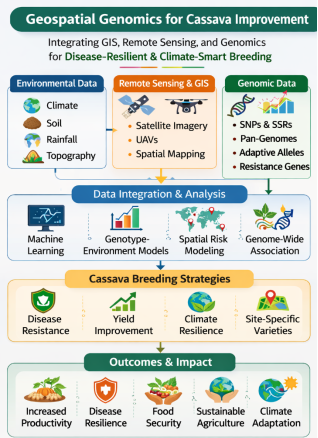
 Copy
Copy Download