Research Article | | Peer-Reviewed

Development of Super-Fast Decision Support System for Optimum Packaging Material Selection

Received: 30 April 2026     Accepted: 13 May 2026     Published: 28 July 2026
Views:       Downloads:
Abstract

This study developed a rapid Decision Support System (DSS) to improve the efficiency, reliability, accuracy, and consistency of packaging material selection through the automation of the Analytic Hierarchy Process (AHP). Traditional AHP-based selection methods are often time-consuming and computationally demanding, particularly when several criteria and alternatives must be evaluated. To address this limitation, this study adopted a systematic methodology in which the AHP technique was integrated into a Python-based application with a graphical user interface (GUI). Expert judgments were collected through pairwise comparisons and processed within the system to generate automated weight calculations, consistency evaluations, global rankings of alternatives, and sensitivity analysis. The results showed that plastic had the highest global priority score of 0.4202, making it the most preferred packaging material in the decision framework. This was followed by paperboard (0.2315), glass (0.2003), and metal (0.1481). The sensitivity analysis further showed that the ranking remained stable under small changes of 0 to 20% in expert judgments, indicating that the outcomes were reliable and robust. The developed DSS reduced decision-making time by an average of 21.29% compared with a conventional AHP tool. In addition, the system provides automated computations, downloadable graphical outputs, and real-time sensitivity analysis, making it a practical, efficient, and user-friendly tool for selecting packaging materials.

Published in International Journal of Engineering Management (Volume 10, Issue 1)
DOI 10.11648/j.ijem.20261001.12
Page(s) 14-26
Creative Commons

This is an Open Access article, distributed under the terms of the Creative Commons Attribution 4.0 International License (http://creativecommons.org/licenses/by/4.0/), which permits unrestricted use, distribution and reproduction in any medium or format, provided the original work is properly cited.

Copyright

Copyright © The Author(s), 2026. Published by Science Publishing Group

Keywords

Multi Criteria, Analytical Hierarchy Process, Decision Support System, Software, Visualization, Decision Making

1. Introduction
Packaging has emerged as one of the most significant essentials of contemporary industrial systems, as a medium of protection and a strategic component that links production processes to consumer markets . Packaging addresses the issues of design, assessment, and choice of materials to ensure that products do not lose their quality, safety, and popularity during their lifecycle . However, it has transformed its conventional perception as a mere ship, and has turned into a multidisciplinary domain incorporating some elements of material science, supply chain logistics, marketing, sustainability, and consumer behavior .
Traditionally, the selection of packaging materials in the manufacturing industry has been characterized by a narrow focus on cost and performance . In the past, the functional requirements, including strength, durability, and cost efficiency, have been ranked by the engineers, and they chose materials, such as plastic, glass, metal, and paper, with regard to their mechanical characteristics and ease of handling . The current movement towards sustainable manufacturing worldwide has introduced new complications in the process of choosing effective packaging materials . The rapid progress of biodegradable and bio-based materials has hindered mass production, supply chains, and the ability to create products and demonstrate their performance .
Thus, industries should consider the systems engineering approach using technological innovation, economic analysis, and eco-friendliness measurements to achieve functional and environmental purposes in modern packaging processes . Modern research has indicated the combination of various multi-criteria decision-making (MCDM) methods, one of which is the Analytic Hierarchy Process (AHP), which increases the capacity of a system to accept both qualitative and quantitative judgments . The availability of web-based and real-time decision support systems has enhanced accessibility, collaboration, and scalability in the decision-making process in organizations . This has gone beyond the conventional role of being a computational instrument to form support for strategic management and industrial systems engineering .
One of the most commonly used Multi-Criteria Decision-Making (MCDM) approaches to analyzing complex decisions is the Analytical Hierarchy Process (AHP) that was developed by Thomas L. Saaty in the 1980s . The AHP has been applied because of its simplicity, flexibility, and well-grounded theories . It offers a structured methodology for categorizing problems into various tiers of hierarchy, namely goals, criteria, and alternatives. It follows the pairwise comparison approach, that is, decision-makers consider the qualitative value of each criterion and then convert it into quantitative values . Such a structured procedure not only makes difficult decisions easier to analyze but also makes it possible to measure the consistency of judgements, which will increase the credibility of the findings .
It is also especially applicable to real-life engineering, management, and policy analysis because of its capability to address both objective and human-intuitive data . Moreover, its consistency checks, sensitivity analyses, and scenario evaluations, which are features that strengthen the reliability of the decisions, make it one of the strongest, most flexible, and user-friendly MCDM methods for making systematic and rational decisions. Other approaches, such as TOPSIS, ELECTRE, or PROMETHEE, may demand large amounts of quantitative data or complicated calculations, but AHP does not demand these conditions and allows the consideration of tangible and intangible factors so that decision-makers can effectively use expert opinion and subjective preferences .
Although many industries still rely on this informal or fragmented process, which completely ignores lifecycle impact in the decision process, The AHP based decision support system is widely recognized and is being used for different studies, including packaging equipment selection , independent criteria accounting , automatic and semi-automatic criteria selection system , disaster management , project selection, supply chain, strategic planning, environmental sustainability, and health care , hydrogen energy and energy equipment selection , leadership strategies optimization , occupational health and safety , sustainable supplier selection ; flood susceptibili0ty and hazard assessment , waste management , highway transportation asset, pavement selection and condition assessment , and technology reliability and efficiency . In all the stated studies, AHP as a means to support decision-makers to make a good decision regarding packaging material selection has been overlooked. This gap is addressed by developing a high-performance AHP-based Super-Fast Decision Support System (SFDSS) software for optimum package material selection.
2. Methodology
The steps used for the system development are as follows
2.1. Identification of Selection Criteria
The criteria for implementation were identified as product protection, production cost, environmental factors, and recyclability. This was done by conducting a questionnaire to assess expert input.
2.2. AHP Model Formulation
The formulation process followed these steps:
2.2.1. Hierarchical Structure
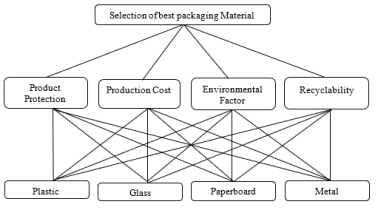
A three-level hierarchy, as shown in Figure 1, was established as follows:
Level 1: Goal (Selection of the most suitable material).
Level 2: Selection Criteria (product protection, production cost, environmental factor and recyclability).
Level 3: Alternatives (Plastic, Glass, Metal (can), and paperboard).
Figure 1. Main AHP Framework of this Study.
2.2.2. Pairwise Comparison Process
Pairwise comparisons were conducted between elements within the same hierarchy level. Each pair was evaluated with respect to the elements at a higher level. The resulting pairwise comparison matrices were populated based on expert inputs, as represented in Equations (1) and (2).
A= [aij](1)
where a represents the relative importance of criterion i over criterion j.
The reciprocal property is shown as follows:
aji= 1aij, and aii=1(2)
where: aij represents the element in the (i)-th row and (j)-th column of a matrix.
aii represents the diagonal element of the matrix in the (i)-th row and (i)-th column
2.2.3. Measuring Scale
Table 1. shows the Saaty scale that was used to quantify the level of importance of one element over the other. This was made dimensionless by integrating the ratio analysis.
Table caption.

Intensity

Definition

Description

1

Equal importance

Two elements contribute equally

3

Moderate importance

Slight dominance of one over the other

5

Strong importance

One element is strongly favoured

7

Very strong importance

Demonstrated dominance in importance

9

Extreme importance

Absolute preference

2, 4, 6, 8

Intermediate values

Compromise between judgments

2.2.4. Mathematical Procedure
Schemes for the Computation of Priority Weights.
The priority weight (or eigenvector approximation) for each criterion was calculated as the average of each row of the normalized matrix:
wi= j=1nnijn(3)
where: wi is the priority weight (or eigenvector approximation) of the (i)-th criterion
nij is the normalized element in the (i)-th row and (j)-th column of the matrix
n is the total number of criteria (or the size of the matrix)
The weight vector is then expressed as shown in equation (3), where the weight sum must be equal to 1 as represented in equation (4) and (5),
W=w1w2w3...wn(4)
i=1nwi=1(5)
These weights represent the relative importance of each criterion and the preference intensity of the alternatives.
Consistency Evaluation.
Furthermore, to determine the consistency of the pairwise comparison matrix, the eigenvalue (λmax) was first obtained using Equations (6), (7), and (8), respectively .
AW= λmaxW(6)
where, A is the pairwise comparison matrix
A= 1a12a13a211a23a31a321 an(7)
where, A is the reciprocal matrix used
an is the total number of criteria (or the size of the matrix)
a12, a13,  a23 are the pairwise comparison values
AW= a11w1+ a12w2++ a1nwna21w1+ a22w2++ a2nwn...an1w1+ an2w2++ annwn(8)
A consistency ratio (CR) ≤ 0.10 indicates acceptable consistency; otherwise, the judgments are re-examined for their logical accuracy. In this study, the CR was gotten to be less than less than 0.1 which implies the pairwise
2.3. Flow Chart/Algorithm Development
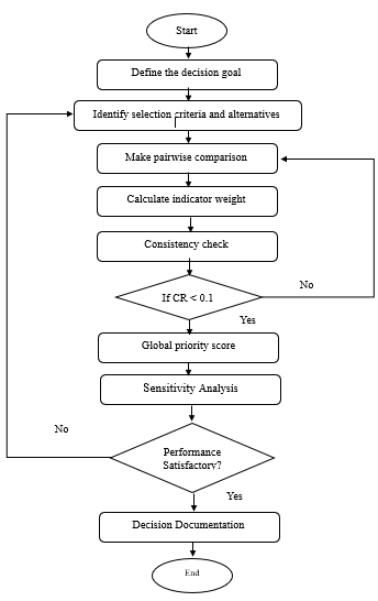
Figure 2 illustrates the flowchart of the algorithm implemented in the software solution developed to innovate the adopted AHP process. The algorithm followed a structured sequence of steps to ensure that the decisions made were reliable. The process started with defining the goal, followed by identification of the selection criteria and alternatives.
Following the identification stage, pairwise comparisons were performed, in which the criteria and alternatives were compared with one another. This helped to capture the relative importance of each criterion and alternative to the decision goal. The weights from the comparison matrices were calculated, which ensured the reliability of the judgments provided during the pairwise. The CR was calculated to determine whether the comparison was logically consistent. Consistency confirmation was followed by computation to obtain the ranking of alternatives. Finally, a sensitivity analysis was performed to evaluate the robustness of the results by observing the changes in the criteria weights. The stepwise procedure is illustrated in Figure 2.
Figure 2. Algotithm Flow chart for the AHP Process.
2.4. Development Tool
The program was written in PythonTM, which is powerful for numerical computations, algorithm implementation, and interface development. Python was chosen because it is flexible, easy to integrate, and supports scientific computing, making it suitable for another application (the AHP model).
3. Results
The results obtained from the proposed system are presented in this section.
3.1. Summary of Expert Judgement
To verify the developed system, a questionnaire survey was conducted to obtain the weights of the criteria and alternatives. The questionnaire was distributed to 10 experts; five from academia and five from industry, to aggregate their judgements. The aggregation took place using physical and digital distributions, such as WhatsApp and Telegram platforms. The profiles of the individual experts were anonymous based on confidentiality requests. The statistics for all participants are presented in Table 2. Expert judgments were gathered until the inconsistency rate of the AHP matrices became acceptable (less than 0.1) .
Table 2. Statistics of the Expert Profile.

Expert

Age

Category

Field of Expertise

Years of Experience

1

45

Industry

Manufacturing

15

2

46

Industry

Sustainability

10

3

38

Academic

Sustainability

5

4

57

Industry

Sustainability

17

5

35

Academic

Manufacturing

5

6

39

Academic

Material Science

12

7

38

Academic

Packaging Technology

8

8

42

Industry

Packaging Technology

8

9

47

Industry

Material Science

12

10

40

Academic

Waste Management

13

3.2. System Design and Development
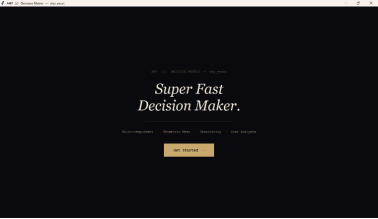
The developed Super-Fast Decision Support System (SFDSS) was designed to provide a fast, reliable, and smooth user-friendly platform for packaging material selection using the Analytic Hierarchy Process (AHP). The system transforms the traditional AHP procedure into an automated software solution capable of performing real-time computations and delivering structured decision outputs. The developed system was divided into two main components: system architecture and development tools. The homepage of the AHP-Based Super-Fast Decision Maker (SFDM) is presented in Figure 3.
Figure 3. Home Page of the Software.
3.2.1. System Architecture
The system architecture was designed using a modular three-layer structure consisting of an input, processing, and output layer to ensure efficient data flow and rapid computation.
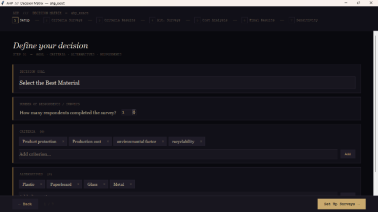
1) Input layer: This layer is responsible for capturing the user input data required for the decision-making process. This included the selection of criteria, alternatives, and pairwise comparison values based on Saaty’s 1–9 scale. A graphical user interface (GUI) was implemented to allow users to input their judgments in a structured and intuitive format. The Input Section Interface is shown in Figure 4.
Figure 4. Input Interface.
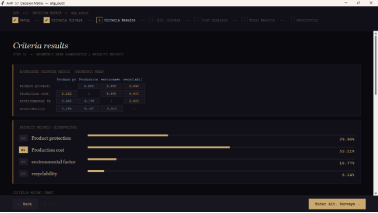
2) Processing layer: This layer serves as the core computational engine of the system. The AHP algorithm was implemented by constructing pairwise comparison matrices, normalizing the matrices, prioritizing weights, and evaluating the Consistency Ratio (CR). The system also performs global priority synthesis to determine the overall ranking of alternatives. The processed results page is shown in Figure 5.
Figure 5. Result Display Page.
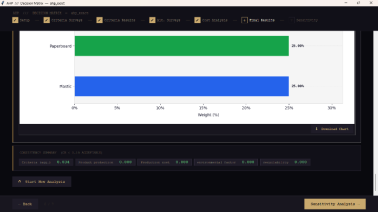
3) Output layer: This layer is responsible for presenting the computed results. The system generates priority weights, ranked alternatives, consistency evaluation results, and graphical visualizations. These outputs were displayed through the GUI and could be downloaded for reporting and documentation. The output Result Page of the SFDM AHP Software is shown in Figure 6.
Figure 6. Output Result/Visual Display Page.
3.2.2. System Development Tool Outcome
The system was installed as a desktop application based on the Windows operating system, which is expected to work effectively on most computing systems with a minimum memory of 4 GB RAM. The system has various functional parts, and a modular programming approach was adopted to divide the system into input processing, computational processing, consistency evaluation, and result visualization. The graphical user interface (GUI) allows users to input values and display the results of the calculations. The entire AHP computation process, which consists of matrix normalization, eigenvector approximation, consistency checking, and global priority calculation, was performed using the logic in the backend. Other features, such as the creation of graphical output, downloadable results visualization, and sensitivity analysis tools, were added to make it easier to use and more functional.
3.3. Result on Case Study
3.3.1. Pairwise Comparison Matrices (SFDM Input)
In this section, as the inputs of the AHP, the preferences of each of the four perspectives of the DSS and strategies of each perspective were determined by the questionnaire survey; here, the average of the scores was rounded to the nearest integer (Tables 3-7). In these pairwise comparison matrices, the inconsistency of each is less than 0.1; therefore, these matrices can be used as inputs for calculating the weights of the measures. Tables 3-7 show the weights of each strategy.
Table 3. Pairwise Comparison of Selection Criteria.

Product Protection

Production Cost

Environmental Factor

Recyclability

Weights

Ranking

Product Protection

1

1.90

2.200

2.440

0.4055

1st

Production Cost

0.526

1

1.560

2.200

0.2612

2nd

Environmental Factor

0.455

0.641

1

2.420

0.2110

3rd

Recyclability

0.410

0.455

0.413

1

0.1223

4th

Inconsistency

0.0270

Table 4. Pairwise Comparison of Alternatives Under Product Protection.

Product Protection

Production Cost

Environmental Factor

Recyclability

Weights

Ranking

Plastic

1

3.64

1.80

1.52

0.4124

1st

Glass

0.275

1

1.240

1.730

0.2084

3rd

Paperboard

0.556

0.806

1

1.750

0.2164

2nd

Metal

0.658

0.578

0.571

1

0.1627

4th

Plastic

0.0737

Table 5. Pairwise Comparison of Alternatives Under Production Costs.

Product Protection

Production Cost

Environmental Factor

Recyclability

Weights

Ranking

Plastic

1

4.55

1,17

3.06

0.4241

1st

Glass

0.22

1

0.940

2.960

0.1958

3rd

Paperboard

0.855

1.064

1

4.030

0.2929

2nd

Metal

0.327

0.338

0.248

1

0.0870

4th

Inconsistency

0.0890

Table 6. Pairwise Comparison of Alternatives Under Environmental Factor.

Product Protection

Production Cost

Environmental Factor

Recyclability

Weights

Ranking

Plastic

1

2.52

2.53

2.510

0.4466

1st

Glass

0.397

1

0.920

1.310

0.1834

3rd

Paperboard

0.395

1.087

1

2.630

0.2357

2nd

Metal

0.397

0.763

0.380

1

0.1343

4th

Inconsistency

0.0301

Table 7. Pairwise Comparison of Alternatives Under Recyclability.

Product Protection

Production Cost

Environmental Factor

Recyclability

Weights

Ranking

Plastic

1

2.570

2.540

2.620

0.4557

1st

Glass

0.387

1

0.970

0.710

0.1636

4th

Paperboard

0.394

1.031

1

1.690

0.2075

2nd

Metal

0.382

1.408

0.592

1

0.1732

3rd

Inconsistency

0.0227

3.3.2. Global Ranking
Table 8 shows that plastic was the most preferred packaging material in the global synthesis, with a priority weight of 0.4202 in the first position. The paperboard with a weight of 0.2315 was placed at the second position, and the glass at position three with a weight of 0.2003. The least preferred alternative with a weight of 0.1481 was metal, which was the fourth most preferable choice. Table 3 shows that product protection was the most influential factor, contributing 40.55 percent of the decision weight. This highlights the paramount importance of ensuring product integrity and value to human lives.
Plastic received the greatest priority weight (0.4124), followed by paperboard (0.2164), glass (0.2084), and metal (0.1627) under the product protection criterion, as indicated in Table 4. This shows that plastic has better protective performance than its competitors. The value of the associated inconsistency (0.0737) did not exceed reasonable boundaries, which validated the strength of the comparison. Similarly, plastic won the production cost criterion in Table 5 with a weight of 0.4241, surpassing paperboard (0.2929), glass (0.1958), and metal (0.0870). This brings out the cost savings of plastic in operations that are price-sensitive. The consistency value (0.0890) also confirms the credibility of these findings.
Plastic was the highest in the environmental factor criterion, as shown in Table 6 (0.4466), followed by paperboard (0.2357), glass (0.1834), and metal (0.1343). This might seem to contradict traditional expectations, but the result is a multi-criteria evaluation framework that involves a wider lifecycle perspective. The inconsistency value was low (0.0301), confirming the validity of this finding. Lastly, in the category of recyclability, as shown in Table 7, plastic still occupied the top spot with a weighted value of 0.4557, and paperboard (0.2075) and metal (0.1732) were placed in the second and third positions, respectively, and glass (0.1636). Such a high-quality standard in all aspects highlights the strength of plastic as a packaging option in the identified decision-making model.
Table 8. Global Ranking Priority Weights.

Plastic

Glass

Paperboard

Metal

Weight

0.4202

0.2003

0.2315

0.1481

Ranking

1st

3rd

2nd

4th

4. Discussion
This section has two subsections. First, a sensitivity analysis involving different scenarios was conducted to check the strength of the AHP method. We present the managerial implications based on the results obtained after the sensitivity analysis.
4.1. Sensitivity Analysis
The outcome of the sensitivity analysis (Tables 9-12: Scenarios 1-4) revealed that the sequence of the alternatives did not vary in all the variations considered (5%-20% changes in criteria weights). In all scenarios, plastic remained in the first position, paperboard second, glass third, and metal fourth. This consistency proved the stability and reliability of the model, which meant that the outcomes of the decision were not vulnerable to moderate changes in the decision priorities. Tables 9-12 show the sensitivity analysis of the scenarios.
Table 9. Product Protection Sensitivity Analysis.

At 5% (0.4555)

At 10% (0.5055)

At 15% (0.5555)

At 20% (0.6055)

Weight (%)

Rank

Weight (%)

Rank

Weight (%)

Rank

Weight (%)

Rank

Plastic

42.67

1st

42.54

1st

42.41

1st

42.28

1st

Glass

19.55

3rd

16.67

3rd

19.79

3rd

19.91

3rd

Paperboard

23.74

2nd

23.55

2nd

23.36

2nd

23.17

2nd

Metal

14.03

4th

14.24

4th

14.45

4th

14.65

4th

Table 10. Production Cost Sensitivity Analysis.

At 5% (0.2610)

At 10% (0.3110)

At 15% (0.3610)

At 20% (0.4110)

Weight (%)

Rank

Weight (%)

Rank

Weight (%)

Rank

Weight (%)

Rank

Plastic

42.77

1st

42.75

1st

42.72

1st

42.69

1st

Glass

19.45

3rd

19.45

3rd

19.46

3rd

19.47

3rd

Paperboard

24.30

2nd

24.66

2nd

25.02

2nd

25.39

2nd

Metal

13.48

4th

13.14

4th

12.79

4th

12.45

4th

Table 11. Environmental Factor Sensitivity Analysis.

At 5% (0.2110)

At 10% (0.2610)

At 15% (0.3110)

At 20% (0.3610)

Weight (%)

Rank

Weight (%)

Rank

Weight (%)

Rank

Weight (%)

Rank

Plastic

42.92

1st

43.03

1st

43.15

1st

43.27

1st

Glass

19.37

3rd

19.30

3rd

19.23

3rd

19.16

3rd

Paperboard

23.91

2nd

23.89

2nd

23.87

2nd

23.85

2nd

Metal

13.80

4th

13.78

4th

13.75

4th

13.73

4th

Table 12. Recyclability Sensitivity Analysis.

At 5% (0.1120)

At 10% (0.1720)

At 15% (0.2220)

At 20% (0.2720)

Weight (%)

Rank

Weight (%)

Rank

Weight (%)

Rank

Weight (%)

Rank

Plastic

42.96

1st

43.11

1st

43.27

1st

43.43

1st

Glass

19.26

3rd

19.08

3rd

18.91

3rd

18.73

3rd

Paperboard

23.76

2nd

23.57

2nd

23.39

2nd

23.21

2nd

Metal

14.03

4th

14.23

4th

14.43

4th

14.62

4th

4.2. SFDM – AHP Software Efficiency
The results presented in Table 13 highlight a comparison between the SuperDecison (SD) software and Super-Fast Decision Maker. The results from both software were similar, but in terms of the time spent to conduct the analysis from start to finish. The overall average time saving across all trials is 1.52 min, which means that SFDM, on average, saved time by 21.29% compared to the conventional Super Decision software.
Table caption.

No of Trials

SuperDecison

Super-Fast Decision Maker

Time Savings

Trial 1

7

5.6

1.4

Trial 2

6.7

5.5

1.2

Trial 3

7

6

1

Trial 4

8

6

2

Trial 5

7

5

2

Total

35.7

28.10

7.6

Average

7.14

5.62

1.52

% Time Saved

1.52 / 7.14 = 21.29%

4.3. Managerial Insights and Implications
1) Plastic should be prioritized in packaging decisions where product protection is critical, as evidenced by its highest weight under this criterion, as shown in Table 4.
2) The strong performance of plastic under production cost (Table 5) supports its adoption for cost-sensitive operations.
3) Decision-makers can achieve an optimal cost–performance balance by selecting plastic, given its dominance in both protection and cost criteria (Tables 4 and 5).
4) Paperboard should be considered a strategic alternative where environmental concerns are emphasized, given its relatively strong performance (Table 6), and its recyclability.
5) The global ranking (Table 8) confirms paperboard as a viable second option in multicriteria decision-making environments.
6) Glass may be adopted for premium packaging applications, despite its lower ranking (Table 8), where aesthetic and rigidity factors are prioritized.
7) Metal should be limited to specialized applications because of its consistently low weights across all criteria (Tables 4-7).
8) The dominance of product protection (Table 3: Selection criteria weights) indicates that minimizing product damage to meet customer satisfaction should remain the primary operational objective.
9) Managers should align packaging choices with product fragility and distribution conditions, as reflected in the weighting structure (Table 3).
10) Organizations can integrate DSS into procurement systems to standardize decision-making processes.
11) Companies seeking sustainability can also include the additional use of paperboard selectively with the help of its positioning based on environmental and recyclability scales (Tables 6 and 7).
12) High adaptability to various operational conditions is evidenced by the steady high positioning of plastic in all criteria (Tables 4-7).
13) Even in the case of stable results, managers must periodically re-evaluate criteria weights every now and then, considering the changing regulatory and market environments (Tables 9-12).
4.4. Software – Oriented Insights
1) The created SFDM - AHP is to be adopted in the form of a Python-based decision-making tool, which would allow the AHP calculations to be computed swiftly and scaled, as it can be seen in the fact that the results of the process were consistent across Tables 4-7 and Tables 9-12.
2) The SFDM – AHP needs to be incorporated into a graphical user interface (GUI), which would enable non-technical managers to enter the criteria weights and receive real-time rankings.
3) The system may be implemented as a web-based application to facilitate distributed decision-making among all supply chain members, and in this way, the model will be applied consistently.
4) To ensure that the optimized process is aligned, the SFDM - AHP can be linked to enterprise resource planning (ERP) systems to automate the selection of packaging material, depending on the operational data input.
5. Conclusions
This study developed an AHP-based Decision Support System that can simplify the process of selecting packaging materials. The evolution of SFDMS not only facilitates the selection process but also enhances the accuracy and consistency of decisions. The following conclusions can be drawn from the outcomes of this study:
1) The study developed an AHP-based Superfast Decision Support System (SFDSS) that resulted in a tremendous improvement in the efficiency of the decision-making process, with an average time saved of 21.29% compared to a conventional AHP instrument. This validates that the system serves the purpose of increasing the computational speed without affecting the accuracy of the analytics.
2) The findings revealed that product protection was the most important criterion, with the highest decision weight of 40.55%, indicating that product safety and integrity were the major factors to consider when selecting a packaging material.
3) Plastic emerged as the most appropriate packaging material after the assessment of alternatives; it ranked first in all aspects and received the best weight of global priority (0.4202). This was evidenced by the good balance between protection, cost efficiency, environmental considerations, and recyclability factors considered in the decision model.
4) The stability of the decision model was verified by sensitivity analysis, in which there was no shift in ranking in all tested cases (5% -20% change in criteria weights). This means that the model is strong and can be used in practice because the results are not dependent on moderate alterations in decision priorities.
The following recommendations are made to address the limitations of this study.
1) Organizations should adopt the developed SFDM–AHP system in their packaging decision processes to reduce decision time, eliminate manual computation errors, and standardize multi-criteria evaluations, especially in industries where rapid and accurate decisions are critical.
2) Although plastic ranked highest in this study, decision-makers should periodically reassess criteria weights, particularly environmental and regulatory factors, to ensure that packaging decisions remain aligned with evolving sustainability policies and market expectations.
3) Future work should extend the system to a web-based or ERP-integrated platform, enabling real-time collaborative decision-making across supply chain stakeholders and improving scalability and practical industrial adoption.
Abbreviations

DSS

Decision Support System

AHP

Analytical Hierarchy Process

SFDM

Super-Fast Decision Maker

SFDSS

Super-Fast Decision Support System

MCDM

Multi Criteria Decision Making

Acknowledgments
First and foremost, glory be to God for granting us the ability to complete this study. We are also grateful to the experts who responded, even though they asked to remain anonymous due to confidentiality.
Author Contributions
Abdullah Abdulkareem: Conceptualization, Data curation, Formal Analysis, Methodology, Software, Validation, Visualization
Basil Olufemi Akinnuli: Investigation, Methodology, Supervision, Writing – review & editing
Emmanuel Olatunji Olutomilola: Formal Analysis, Supervision, Visualization, Writing – review & editing
Data Availability Statement
The Response of experts is strictly confidential, but the geometric mean of the samples is presented as the result of this study.
Conflict of Interest
The authors declare no conflict of interest.
References
[1] Amankwah-Nkyi, K., Hernandez, S., & Mitra, S. K. (2025). Highway-Transportation-Asset Criticality Estimation Leveraging Stakeholder Input Through an Analytical Hierarchy Process (AHP). Sustainability, 17(11), 5212.
[2] Ara, M. A., Tamanna, M. S., Ali, M., Amin, A., & Shabur, M. A. (2025). A hybrid AHP and statistical validation approach for sustainable supplier selection in apparel industry. Discover Sustainability, 6(1), 538.
[3] Ayuketah, Y., Edimu, M., & Mwikirize, C. (2025). Optimal site selection for utility-scale solar PV projects using a RETscreen-AHP-TOPSIS framework: application to the southern Cameroon. Sustainable Energy Research, 12(1), 22.
[4] Bhabani, B., & Mahapatro, J. (2023). Performance Evaluation of Priority-based Scheduling in Hybrid VANETs for Different Criteria Weights Using AHP-AHP and AHP-TOPSIS. IETE Journal of Research, 70(6), 5759–5770.
[5] Bugingo, E., & Ndimubenshi, E. L. (2025). Application of AHP in decision-making: Case studies and Practical Implementation. The Art of Decision Making-Applying AHP in Practice: Applying AHP in Practice, 121(1), 1-10.
[6] Chen, R. (2024). Sustainable Supply Chain Management as a Strategic Enterprise Innovation. Advances in Economics, Management and Political Sciences, 85(1), 24–29.
[7] Cordeiro, A., Hussain, M., Ramachandran, T. et al. Advancements in Packaging Materials: Trends, Sustainability, and Future Prospects. Circ. Econ. Sust. 5, 2959–2990 (2025).
[8] Cristea, C., & Cristea, M. (2017). A multi-criteria decision making approach for the selection of a flexible packaging equipment. MATEC Web of Conferences, 94, 06003.
[9] Esen, H. (2023). Analytical hierarchy process problem solution. In Analytic Hierarchy Process-Models, Methods, Concepts and Applications. IntechOpen.
[10] Ghorbani, H., Chalabyan, A., Minasyan, A., Ghorbani, P., Wood, D. A., Ghorbani, S., & Zehra, F. (2025). Application of analytical hierarchy process to the selection suitability of biological drug forms for psoriasis treatment. Journal of Pharmaceutical Innovation, 20(3), 94.
[11] Huang, J.-J., & Chen, C.-Y. (2023). Using Markov Random Field and Analytic Hierarchy Process to Account for Interdependent Criteria. Algorithms, 17(1),
[12] Korucuk, S., & Karamaşa, Ç. (2025). Determining the importance level of sustainable innovation applications via hesitant AHP: An application on food firms. Management analytics and social insights, 2(3), 182-193.
[13] Kumar, R., & Sharma, A. (2024). Review of Pet Food Packaging in the US Market: Future Direction Towards Innovation and Sustainability. Annual Research & Review in Biology, 39(6), 16–30.
[14] Kumari, S., Debbarma, R., Nasrin, N., Khan, T., Taj, S., & Bhuyan, T. (2024). Recent advances in packaging materials for food products. Food Bioengineering, 3(2), 236–249.
[15] Kumar, M., Vipin, & Agarwal, A. (2025). Evaluation of indian railway’s supply chain parameters for improved sustainability under industry 4.0 transformation: an application of AHP and TOPSIS. Engineering Management Journal, 37(4), 452-464.
[16] Kumar, R., & Pamucar, D. (2025). A Comprehensive and Systematic Review of Multi-Criteria Decision-Making (MCDM) Methods to Solve Decision-Making Problems: Two Decades from 2004 to 2024. Spectrum of Decision Making and Applications, 2(1), 178–197.
[17] Mousavi, S. M., & Naeini, M. J. (2025). Application of the Analytical Hierarchy Process (AHP) in Occupational Health and Safety. The Art of Decision Making-Applying AHP in Practice: Applying AHP in Practice, 147.
[18] Malmir, A. (2026). Ranking of factors affecting transformational leadership in organizations: Application of AHP method in optimizing leadership strategies. Spectrum of Decision Making and Applications, 3(1), 62-69.
[19] Musiime, R., Ferriz-Papi, J., & Marshall-Ponting, A. (2025). Developing a pavement condition assessment method for unpaved roads using the analytic hierarchy process (AHP). International Journal of Pavement Research and Technology, 1-16.
[20] Nowfal, S. H., G, R., Sengab, S., K, S., Sadu, V. B., & R, A. N. (2024). Genetic Algorithms for Optimized Selection of Biodegradable Polymers in Sustainable Manufacturing Processes. Journal of Machine and Computing, 563–574.
[21] Panek, A., Jacyna, M., Jachimowski, R., & Szczepański, E. (2025). Reliability and efficiency in technology selection in logistics facilities–multi-criteria decision support using the AHP method. Eksploatacja i Niezawodność, 27(2).
[22] Pinto, M. C., Gaeta, M., Arco, E., Boccardo, P., & Corgnati, S. P. (2025). Mapping the suitability of North Africa for green hydrogen production: an application of a multi-criteria spatial decision support system combining GIS and AHP for Tunisia. Energy, Sustainability and Society, 15(1), 20.
[23] Pinheiro, B. C., & de Mello Sant́Ana, P. H. (2025). AHP-based decision making to selecting energy-efficient air conditioning equipaments and commercial building. Energy and Buildings, 329, 115281.
[24] Pulikkalparambil, H., Varghese, S. A., Chonhenchob, V., Nampitch, T., Jarupan, L., & Harnkarnsujarit, N. (2023). Recent Advances in Natural Fibre-Based Materials for Food Packaging Applications. Polymers, 15(6), 1393.
[25] Rezaei, J., Azouji, R., Azouji, M., & Ghorbani, H. (2025). Application of the Analytical Hierarchy Process in the management of private ambulance care systems in three selected European countries: a strategic decision-making framework. Frontiers in Public Health, 13, 1526586.
[26] Rodrigues De Oliveira, B., & Duarte, M. A. Q. (2024). Automatic and Semi-automatic Analytic Hierarchy Process (AHP). Trends in Agricultural and Environmental Sciences, e240009.
[27] Sahin, O., & Aksoy, B. (2025). A Combined AHP–TOPSIS-Based Decision Support System for Highway Pavement Type Selection. Sustainability, 17(21), 9396.
[28] Saaty T. L. (2008). Decision making with the analytic hierarchy process. International Journal Services Sciences, 1(1), 83-98.
[29] Sar, N., Ryngnga, P. K., & De, D. K. (2025). Application of the analytical hierarchy process (AHP) for flood susceptibility mapping using GIS techniques in lower reach of Keleghai River Basin, West Bengal, India. Geohazard Mechanics, 3(2), 123-135.
[30] Srdjevic, Z., Srdjevic, B., Zdero, S., & Ilic, M. (2022). How MCDM method and the number of comparisons influence the priority vector. Computer Science and Information Systems, 19(1), 251–275.
[31] Taoukidou, N., Karpouzos, D., & Georgiou, P. (2025). Flood Hazard Assessment Through AHP, Fuzzy AHP, and Frequency Ratio Methods: A Comparative Analysis. Water, 17(14), 2155.
[32] Thammaboribal, P., Triapthti, N. K., & Lipiloet, S. (2025). Using of analytical hierarchy process (AHP) in disaster management: a review of flooding and landslide susceptibility mapping. International Journal of Geoinformatics, 21(4), 177-196.
[33] Tramarico, C., Petrillo, A., Andrade, H., & Salomon, V. (2025). Advancing Circular Supplier Selection: Multi-Criteria Perspectives on Risk and Sustainability. Sustainability, 17(15), 6814.
[34] Waterman, N. (2024). The Materials Selector, Second Edition. Routledge.
[35] Zhang, J., & Goyal, S. B. (2024). AI-Driven Decision Support System Innovations to Empower Higher Education Administration. Journal of Computers, Mechanical Management, 3(2), 35–41.
Cite This Article
  • APA Style

    Abdulkareem, A., Akinnuli, B. O., Olutomilola, E. O. (2026). Development of Super-Fast Decision Support System for Optimum Packaging Material Selection. International Journal of Engineering Management, 10(1), 14-26. https://doi.org/10.11648/j.ijem.20261001.12

    Copy | Download

    ACS Style

    Abdulkareem, A.; Akinnuli, B. O.; Olutomilola, E. O. Development of Super-Fast Decision Support System for Optimum Packaging Material Selection. Int. J. Eng. Manag. 2026, 10(1), 14-26. doi: 10.11648/j.ijem.20261001.12

    Copy | Download

    AMA Style

    Abdulkareem A, Akinnuli BO, Olutomilola EO. Development of Super-Fast Decision Support System for Optimum Packaging Material Selection. Int J Eng Manag. 2026;10(1):14-26. doi: 10.11648/j.ijem.20261001.12

    Copy | Download

  • @article{10.11648/j.ijem.20261001.12,
      author = {Abdullah Abdulkareem and Basil Olufemi Akinnuli and Emmanuel Olatunji Olutomilola},
      title = {Development of Super-Fast Decision Support System for Optimum Packaging Material Selection},
      journal = {International Journal of Engineering Management},
      volume = {10},
      number = {1},
      pages = {14-26},
      doi = {10.11648/j.ijem.20261001.12},
      url = {https://doi.org/10.11648/j.ijem.20261001.12},
      eprint = {https://article.sciencepublishinggroup.com/pdf/10.11648.j.ijem.20261001.12},
      abstract = {This study developed a rapid Decision Support System (DSS) to improve the efficiency, reliability, accuracy, and consistency of packaging material selection through the automation of the Analytic Hierarchy Process (AHP). Traditional AHP-based selection methods are often time-consuming and computationally demanding, particularly when several criteria and alternatives must be evaluated. To address this limitation, this study adopted a systematic methodology in which the AHP technique was integrated into a Python-based application with a graphical user interface (GUI). Expert judgments were collected through pairwise comparisons and processed within the system to generate automated weight calculations, consistency evaluations, global rankings of alternatives, and sensitivity analysis. The results showed that plastic had the highest global priority score of 0.4202, making it the most preferred packaging material in the decision framework. This was followed by paperboard (0.2315), glass (0.2003), and metal (0.1481). The sensitivity analysis further showed that the ranking remained stable under small changes of 0 to 20% in expert judgments, indicating that the outcomes were reliable and robust. The developed DSS reduced decision-making time by an average of 21.29% compared with a conventional AHP tool. In addition, the system provides automated computations, downloadable graphical outputs, and real-time sensitivity analysis, making it a practical, efficient, and user-friendly tool for selecting packaging materials.},
     year = {2026}
    }
    

    Copy | Download

  • TY  - JOUR
    T1  - Development of Super-Fast Decision Support System for Optimum Packaging Material Selection
    AU  - Abdullah Abdulkareem
    AU  - Basil Olufemi Akinnuli
    AU  - Emmanuel Olatunji Olutomilola
    Y1  - 2026/07/28
    PY  - 2026
    N1  - https://doi.org/10.11648/j.ijem.20261001.12
    DO  - 10.11648/j.ijem.20261001.12
    T2  - International Journal of Engineering Management
    JF  - International Journal of Engineering Management
    JO  - International Journal of Engineering Management
    SP  - 14
    EP  - 26
    PB  - Science Publishing Group
    SN  - 2640-1568
    UR  - https://doi.org/10.11648/j.ijem.20261001.12
    AB  - This study developed a rapid Decision Support System (DSS) to improve the efficiency, reliability, accuracy, and consistency of packaging material selection through the automation of the Analytic Hierarchy Process (AHP). Traditional AHP-based selection methods are often time-consuming and computationally demanding, particularly when several criteria and alternatives must be evaluated. To address this limitation, this study adopted a systematic methodology in which the AHP technique was integrated into a Python-based application with a graphical user interface (GUI). Expert judgments were collected through pairwise comparisons and processed within the system to generate automated weight calculations, consistency evaluations, global rankings of alternatives, and sensitivity analysis. The results showed that plastic had the highest global priority score of 0.4202, making it the most preferred packaging material in the decision framework. This was followed by paperboard (0.2315), glass (0.2003), and metal (0.1481). The sensitivity analysis further showed that the ranking remained stable under small changes of 0 to 20% in expert judgments, indicating that the outcomes were reliable and robust. The developed DSS reduced decision-making time by an average of 21.29% compared with a conventional AHP tool. In addition, the system provides automated computations, downloadable graphical outputs, and real-time sensitivity analysis, making it a practical, efficient, and user-friendly tool for selecting packaging materials.
    VL  - 10
    IS  - 1
    ER  - 

    Copy | Download

Author Information
  • Department of Industrial and Production Engineering, Federal University of Technology, Akure, Nigeria

    Biography: Abdullah Abdulkareemn is a young researcher in industrial and production engineering. He holds a Bachelor’s degree in Mechanical Engineering with a minor in Industrial Engineering in 2023, and a Master’s degree in Industrial and Production Engineering (Industrial and Systems Engineering option) in 2026. His research interests span operations research, systems design, and engineering optimization, with growing applications in artificial intelligence and machine learning. His work focuses on developing data-driven and optimization-based solutions to improve decision-making, efficiency, and performance in complex engineering and industrial systems.

  • Department of Industrial and Production Engineering, Federal University of Technology, Akure, Nigeria

    Biography: Basil Olufemi Akinnuli is a Professor of Industrial and Production Engineering at the Federal University of Technology, Akure (FUTA). He holds a B. Engr. in Agricultural Engineering, an M. eng in Mechanical Engineering, and a Ph.D. in Industrial Engineering. His research focuses on manufacturing systems, engineering management, and industrial optimization, with notable contributions in plant asset management, failure analysis, and computer-aided manufacturing. He has developed simulation tools for asset depreciation and production systems, and conducted studies on waste-to-energy applications, including palm kernel shell fuel. His work also spans industrial machine performance assessment and procurement optimization, contributing to improved efficiency and decision-making in engineering systems.

  • Department of Industrial and Production Engineering, Federal University of Technology, Akure, Nigeria

    Biography: Emmanuel Olatunji Olutomilola is an Associate Professor of Industrial and Production Engineering and a joint winner of the 2022 Nigeria Prize for Science on Sustainable Food Security for his co-invention of a plantain flour processing plant. He obtained a B. Eng. in Mechanical Engineering from Ekiti State University in 2007, and later earned his M. Eng. (2012) and Ph.D. (2019) from the Federal University of Technology, Akure (FUTA). He is a registered member of the Nigerian Society of Engineers and a COREN-certified engineer. His research interests include machine design, applied manufacturing, automation and control systems, and food processing, with emphasis on sustainable and efficient production systems.


  • Abstract
  • Keywords
  • Document Sections

    1. 1. Introduction
    2. 2. Methodology
    3. 3. Results
    4. 4. Discussion
    5. 5. Conclusions
    Show Full Outline
  • Abbreviations
  • Acknowledgments
  • Author Contributions
  • Data Availability Statement
  • Conflict of Interest
  • References
  • Cite This Article
  • Author Information