Bone grafting before dental implants are placed is one of the most common procedures nowadays in dentistry. The reality is that CBCT and also CAD-CAM technology have changed all what has to be related to it. Customized titanium meshes (CTMs) have become a reliable option for guided bone regeneration (GBR), allowing precise anatomical reconstruction of alveolar defects through CAD/CAM technology. Their rigidity, biocompatibility, and design flexibility provide superior mechanical stability and soft-tissue management compared with conventional collagen membranes or PTR membranes. This review analyzes the biological, technical, and clinical advantages of CTMs, summarizing current evidence on their predictability, technical considerations, and limitations. Additionally, it explores the role of digital planning and 3D printing in optimizing surgical outcomes, minimizing intraoperative adjustments, and improving patient-specific adaptation. CTMs have demonstrated high success rates in maintaining space for bone regeneration, reducing complications such as mesh exposure, and achieving satisfactory aesthetic and functional results. The review also discusses potential complications, handling protocols, and long-term clinical follow-up. Furthermore, it presents two cases in which Element® Customized Ti-Meshes were used, showing excellent integration and bone volume stability. After successful osteointegration of the bone graft, dental implants were placed, achieving predictable and stable restorative outcomes.
This is an Open Access article, distributed under the terms of the Creative Commons Attribution 4.0 International License (http://creativecommons.org/licenses/by/4.0/), which permits unrestricted use, distribution and reproduction in any medium or format, provided the original work is properly cited.
Customized Titanium Mesh, Bone Regeneration, CAD/CAM, Implant Dentistry, Biomaterials
1. Introduction
Alveolar ridge atrophy is a common clinical challenge that compromises implant placement and long-term stability. The loss of bone volume following tooth extraction, trauma, or infection can lead to significant horizontal and vertical deficiencies, necessitating regenerative interventions prior to implant installation
[1]
Aghaloo TL, Moy PK. (2007). Which hard tissue augmentation techniques are the most successful in furnishing bony support for implant placement? IntJOralMaxillofacImplants, 22(Suppl), 49-70.
[2]
Chiapasco M, Zaniboni M, Boisco M. (2006). Augmentation procedures for the rehabilitation of deficient edentulous ridges with oral implants. ClinOralImplantsRes, 17(Suppl 2), 136-159.
[1, 2]
.
Guided bone regeneration (GBR) has been established as a predictable technique to reconstruct such defects, using barrier membranes to exclude soft-tissue invasion and maintain a protected space for osteogenesis
[3]
Rakhmatia YD, Ayukawa Y, Furuhashi A, Koyano K. (2013). Current barrier membranes: Titanium mesh and other membranes for GBR. JProsthodontRes, 57(1), 3-14.
[3]
. Among the available barrier materials, titanium meshes have demonstrated superior mechanical properties, biocompatibility, and dimensional stability
[4]
Buser D, Martin W, Belser UC. (2004). Optimizing esthetics for implant restorations in the anterior maxilla: Anatomic and surgical considerations. IntJOralMaxillofacImplants, 19(Suppl), 43-61.
[5]
Rocchietta I, Fontana F, Simion M. (2008). Clinical outcomes of vertical bone augmentation using titanium-reinforced e-PTFE membranes. ClinOralImplantsRes, 19(4), 380-386.
[4, 5]
.
However, traditional meshes require manual adaptation during surgery, a process that can be time-consuming and prone to inaccuracies. Improper fit may create dead space or soft-tissue tension, increasing the risk of dehiscence or early exposure
[6]
De Stavola L, Tunkel J. (2013). A new approach for GBR in vertical defects using titanium-reinforced d-PTFE membranes. IntJPeriodonticsRestorativeDent, 33(3), 355-361.
[6]
. The introduction of customized titanium meshes (CTMs) digitally designed and fabricated via CAD/CAM technology—has addressed these limitations. Using cone-beam computed tomography (CBCT) data and virtual planning, CTMs are designed to precisely match the patient’s defect morphology, resulting in an individualized, pre-shaped scaffold ready for intraoperative placement. Customized titanium meshes (CTMs) have now become a reliable option for GBR, allowing for precise anatomical reconstruction of alveolar defects. Their inherent rigidity, excellent biocompatibility, and design flexibility provide superior mechanical stability and soft-tissue management compared with conventional collagen membranes or pre-formed titanium-reinforced (PTR) membranes. This review analyzes the biological, technical, and clinical advantages of CTMs, summarizing current evidence on their predictability, technical considerations, and limitations. Additionally, it explores the central role of digital planning and 3D printing in optimizing surgical outcomes, minimizing intraoperative adjustments, and improving patient-specific adaptation.
[7]
Cerea M, Dolcini G. (2018). Custom-made titanium mesh for alveolar bone reconstruction. IntJPeriodonticsRestorativeDent, 38(2), 231-239.
[8]
Gherlone EF, Capparè P, Vinci R, Ferrini F, Gastaldi G. (2021). Evaluation of customized CAD/CAM titanium meshes for alveolar ridge augmentation: A multicenter prospective study. Materials, 14(5), 1208.
[7, 8]
.
This innovation enables clinicians to achieve greater precision in graft volume control, reduce surgical time, and improve soft-tissue adaptation
[9]
González-García R, Monje A, Moreno C. (2021). Digital workflow for customized titanium mesh in complex alveolar defects. ClinOralImplantsRes, 32(3), 325-334.
[9]
. Furthermore, the combination of CTMs with particulate xenografts or autogenous bone facilitates predictable regeneration of both horizontal and vertical defects, with reduced morbidity compared to block grafts
[10]
Urban IA, Lozada JL, Jovanovic SA, Nagursky H, Nagy K. (2011). Vertical ridge augmentation with titanium-reinforced d-PTFE membranes and a combination of particulate autogenous bone and anorganic bovine bone mineral. ClinOralImplantsRes, 22(2), 210-217.
[11]
Chiapasco M, Casentini P, Zaniboni M. (2009). Bone augmentation procedures in implant dentistry. IntJOralMaxillofacImplants, 24(Suppl), 237-259.
[10, 11]
.
The following review summarizes the biological and mechanical advantages of CTMs, discusses their clinical outcomes, and outlines their potential limitations, based on current scientific literature. And presents a couple of cases, in which ELEMENT® (C/Riera Montealegre 50, Badalona, Barcelona Spain) customized Ti-meshes were used in two different situations.
2. Materials and Methods
A comprehensive search was conducted in PubMed, Scopus, and Web of Science databases for studies published between 2010 and 2023. Search terms included “customized titanium mesh,” “guided bone regeneration,” “CAD/CAM titanium,” “ridge augmentation,” “Bone grafting” and “implant reconstruction.” Both clinical and preclinical studies describing the design, application, and outcomes of CTMs were included. Systematic reviews, randomized clinical trials, and prospective case series were prioritized. We excluded all the papers which spoke about Ti-meshes which were not customized. We also present two cases in which Element® Customized Ti-Meshes were used, showing excellent integration and bone volume stability. After successful osteointegration of the bone graft, dental implants were placed, achieving predictable and stable restorative treatments.
Clinical Cases:
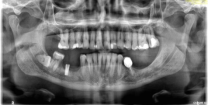
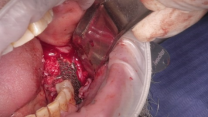
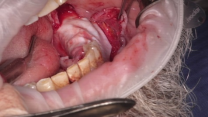
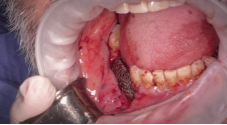
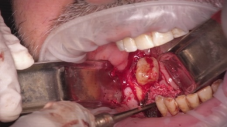
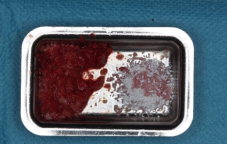
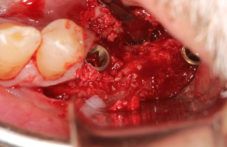
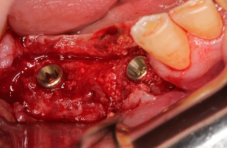
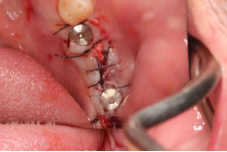
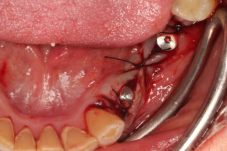
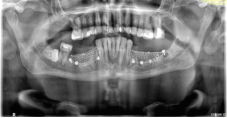
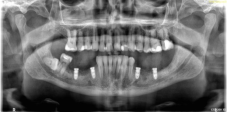
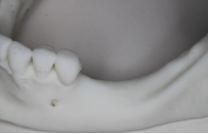
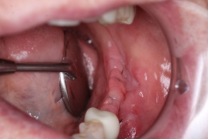
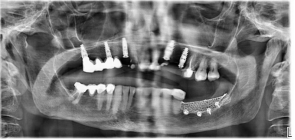
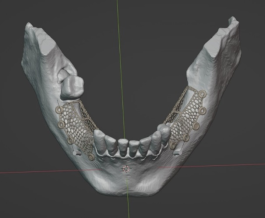
a) The first case we present; is a male of 57 years with no pathologies associated, which had a severe bilateral atrophy of the posterior mandibula. In which finally Dr. Mayo placed two implants on both sides after removing both Ti-meshes after 5 months. It must be considered that he removed both ELEMENT® Customized Titanium Meshes and waited two months more to place the implants in the regenerated areas. The bone graft was composed of 70% autogenous and 30% xenograft. And both meshes were covered by a collagen membrane.
Figure 14. Final Xray with the 4 Implants Placed. Case A.
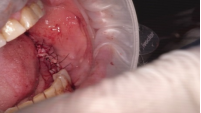
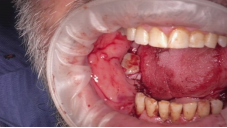
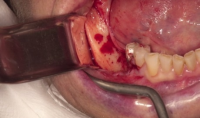
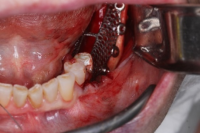
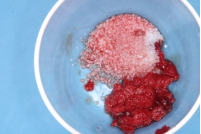
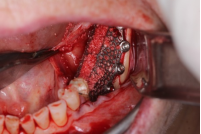
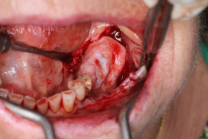
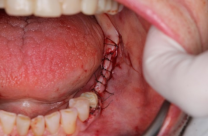
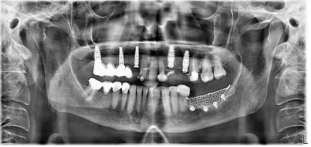
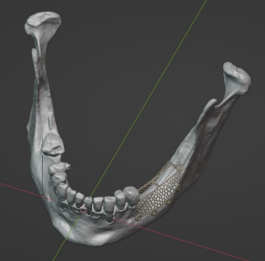
b) The second case; is a female of 62 years old. With no systemic pathologies. She presented an important posterior mandibular bone resorption on her left side. Where Dr. Mayo placed an ELEMENT® Customized Titanium Mesh for bone grafting the area, in order to place dental implants around 6 months after the surgery. The bone graft in this case was composed of 50% autogenous and 50% xenograft. And also, again the mesh was covered by a collagen membrane to avoid soft tissue infiltration.
Digitally fabricated CTMs demonstrate an exact adaptation to the underlying bone, minimizing intraoperative modifications. This accuracy ensures a uniform graft thickness, avoids compression of the soft tissue, and reduces exposure rates
[7]
Cerea M, Dolcini G. (2018). Custom-made titanium mesh for alveolar bone reconstruction. IntJPeriodonticsRestorativeDent, 38(2), 231-239.
[12]
Watzinger F, et al. (2020). Three-dimensional printing of patient-specific meshes for bone regeneration. JCraniomaxillofacSurg, 48(9), 844-851.
[7, 12]
. The intimate contact between mesh and host bone enhances the stability of the grafting material and facilitates neovascularization.
3.2. Mechanical Stability and Space Maintenance
Titanium’s stiffness allows maintenance of the regenerative space under soft-tissue pressure, which is crucial for bone regeneration. CTMs distribute mechanical loads evenly and prevent collapse of the graft, ensuring long-term dimensional stability
[4]
Buser D, Martin W, Belser UC. (2004). Optimizing esthetics for implant restorations in the anterior maxilla: Anatomic and surgical considerations. IntJOralMaxillofacImplants, 19(Suppl), 43-61.
[13]
Rasia-dal Polo M, Poli PP, Rancitelli D, Beretta M, Maiorana C. (2017). Alveolar ridge reconstruction with titanium mesh. ClinImplantDentRelatRes, 19(2), 195-203.
[4, 13]
. Unlike resorbable membranes, CTMs maintain volume even in vertical augmentations exceeding 5 mm
[9]
González-García R, Monje A, Moreno C. (2021). Digital workflow for customized titanium mesh in complex alveolar defects. ClinOralImplantsRes, 32(3), 325-334.
[9]
.
3.3. Soft-Tissue Behavior and Healing
The smooth, contoured surface of customized meshes contributes to better soft-tissue adaptation and tension-free closure. Several authors report significantly reduced exposure rates compared with manually bent meshes—between 10% and 15% versus 25%-40% in traditional designs
[8]
Gherlone EF, Capparè P, Vinci R, Ferrini F, Gastaldi G. (2021). Evaluation of customized CAD/CAM titanium meshes for alveolar ridge augmentation: A multicenter prospective study. Materials, 14(5), 1208.
[14]
Her S, Kang T, Fien MJ. (2012). Titanium mesh as an alternative for GBR procedures: A retrospective study. ClinImplantDentRelatRes, 14(3), 464-471.
[19]
Bianchi, A. E., Dolcini, G. A., & Colombo, M. (2023). Design and clinical application of a novel CAD/CAM titanium mesh with geometric retention for bone regeneration: A technical note. TheInternationalJournalofPeriodontics&RestorativeDentistry, 43(1), 33-40.
[8, 14, 19]
. This improvement is attributed to the pre-surgical design of convex surfaces that respect the natural mucosal profile.
3.4. Clinical Efficiency and Reduced Morbidity
The pre-manufactured design minimizes chair-time and intraoperative manipulation, reducing contamination risks and surgical stress. Digital planning also facilitates virtual simulation of implant positioning, improving prosthetic alignment and reducing the need for secondary corrections
[10]
Urban IA, Lozada JL, Jovanovic SA, Nagursky H, Nagy K. (2011). Vertical ridge augmentation with titanium-reinforced d-PTFE membranes and a combination of particulate autogenous bone and anorganic bovine bone mineral. ClinOralImplantsRes, 22(2), 210-217.
[15]
Stimmelmayr M, Güth JF, Erdelt K, Edelhoff D, Beuer F. (2020). CAD/CAM-fabricated titanium meshes for alveolar ridge augmentation. IntJComputDent, 23(1), 27-40.
[10, 15]
.
3.5. Biological Performance and Bone Gain
CTMs provide an optimal environment for osteoconduction by combining mechanical rigidity with permeability for vascular ingrowth. Reported bone gains range from 4-8 mm horizontally and 3-6 mm vertically, with histologic evidence of mature, vital bone formation suitable for implant placement
[9]
González-García R, Monje A, Moreno C. (2021). Digital workflow for customized titanium mesh in complex alveolar defects. ClinOralImplantsRes, 32(3), 325-334.
[16]
Xing Z, Chen L, Chen X, Xu H. (2019). Efficacy of customized titanium meshes for alveolar bone augmentation: A systematic review. JOralRehabil, 46(9), 777-787.
[17]
Cucchi, A., Vignudelli, E., Napolitano, A., Franco, S., Corinaldesi, G., & Marchetti, C. (2021). Vertical and horizontal ridge augmentation using customized CAD/CAM titanium mesh with versus without resorbable membranes: A randomized clinical trial. ClinicalOralImplantsResearch, 32(11), 1251-1264.
[19]
Bianchi, A. E., Dolcini, G. A., & Colombo, M. (2023). Design and clinical application of a novel CAD/CAM titanium mesh with geometric retention for bone regeneration: A technical note. TheInternationalJournalofPeriodontics&RestorativeDentistry, 43(1), 33-40.
[9, 16, 17, 19]
. These outcomes are comparable or superior to those achieved with block grafts or resorbable membranes.
3.6. Limitations and Future Perspectives
Despite their benefits, CTMs still require a second surgery for removal, and exposure—though less frequent—remains the most common complication
[5]
Rocchietta I, Fontana F, Simion M. (2008). Clinical outcomes of vertical bone augmentation using titanium-reinforced e-PTFE membranes. ClinOralImplantsRes, 19(4), 380-386.
[14]
Her S, Kang T, Fien MJ. (2012). Titanium mesh as an alternative for GBR procedures: A retrospective study. ClinImplantDentRelatRes, 14(3), 464-471.
[5, 14]
. Advances in ultra-thin titanium, laser-microtextured surfaces, and hybrid titanium-resorbable composites may reduce these drawbacks. Future research should focus on surface modifications that enhance soft-tissue integration and possibly enable partial resorption.
3.7. Digital Workflow Integration
The integration of digital technologies such as CBCT imaging, intraoral scanning, and CAD/CAM design allows clinicians to achieve unprecedented precision in preoperative planning. Through virtual surgical simulations, the clinician can visualize bone defects, predict graft volume, and customize the mesh morphology according to the patient’s specific anatomy. This workflow not only increases surgical predictability but also enhances interdisciplinary communication between surgeons, prosthodontists, and dental technicians. Additionally, the ability to virtually align implant positions prior to mesh fabrication ensures prosthetically driven outcomes and minimizes postoperative adjustments.
[8]
Gherlone EF, Capparè P, Vinci R, Ferrini F, Gastaldi G. (2021). Evaluation of customized CAD/CAM titanium meshes for alveolar ridge augmentation: A multicenter prospective study. Materials, 14(5), 1208.
[8].
3.8. Material Innovation and Surface Optimization
Recent advancements in material science have led to significant improvements in the properties of titanium meshes. Modifications such as laser microperforations, anodized coatings, and nano-textured surfaces have been shown to promote better tissue adhesion and facilitate early vascularization. These innovations reduce bacterial colonization and may decrease the risk of soft-tissue dehiscence. Research is ongoing into combining titanium with bioactive materials, such as hydroxyapatite or collagen, to create hybrid meshes that maintain mechanical strength while encouraging faster and more predictable bone regeneration.
3.9. Clinical Outcomes and Long-Term Stability
Clinical studies consistently demonstrate that CTMs provide predictable and stable results, with survival and success rates of dental implants placed in regenerated sites comparable to those in native bone. Long-term follow-ups indicate minimal resorption of regenerated bone, maintaining both vertical and horizontal dimensions over several years. Patient satisfaction is also high, due to reduced surgical discomfort and improved esthetic outcomes. Moreover, CTMs facilitate precise prosthetic rehabilitation, ensuring optimal occlusal function and soft-tissue harmony in the final restoration.
[14]
Her S, Kang T, Fien MJ. (2012). Titanium mesh as an alternative for GBR procedures: A retrospective study. ClinImplantDentRelatRes, 14(3), 464-471.
[15]
Stimmelmayr M, Güth JF, Erdelt K, Edelhoff D, Beuer F. (2020). CAD/CAM-fabricated titanium meshes for alveolar ridge augmentation. IntJComputDent, 23(1), 27-40.
[14, 15].
3.10. Cost-Effectiveness and Practical Considerations
Although customized titanium meshes may involve higher initial costs due to digital design and manufacturing, the overall treatment efficiency offsets these expenses by reducing surgical time, minimizing complications, and improving predictability. The reduction in postoperative interventions and the increased success rate of implant placement contribute to a favorable cost-benefit ratio. In clinical practice, CTMs streamline workflow and enhance patient confidence through minimally invasive, digitally guided procedures. As production technologies become more accessible and standardized, the cost gap between customized and conventional solutions is expected to narrow, making CTMs a practical and economically viable option for guided bone regeneration.
[16]
Xing Z, Chen L, Chen X, Xu H. (2019). Efficacy of customized titanium meshes for alveolar bone augmentation: A systematic review. JOralRehabil, 46(9), 777-787.
[17]
Cucchi, A., Vignudelli, E., Napolitano, A., Franco, S., Corinaldesi, G., & Marchetti, C. (2021). Vertical and horizontal ridge augmentation using customized CAD/CAM titanium mesh with versus without resorbable membranes: A randomized clinical trial. ClinicalOralImplantsResearch, 32(11), 1251-1264.
[18]
Molina, A., Sanz-Sánchez, I., & Sanz-Martín, I. (2022). Efficacy and predictability of CAD/CAM titanium meshes for bone regeneration: A systematic review. InternationalJournalofOralandMaxillofacialSurgery, 51(11), 1407-1418.
[16-18].
4. Conclusions
Customized titanium meshes (CTMs) represent one of the most significant advancements in the field of computer-assisted bone regeneration. In particular in one of the cases we present (B), we gain more the 5mm length and 4mm wight in the zone it was grafted using Customized Element® (Riera Montealegre 50, Badalona. Barcelona, Spain) Ti-meshes. Their introduction has reshaped the approach to alveolar ridge augmentation, providing clinicians with the ability to virtually plan, design, and execute reconstructions that are anatomically precise, mechanically stable, and biologically sound.
In our experience the advantages of CTMs extend beyond mechanical performance. Their patient-specific design ensures intimate adaptation to the underlying bone, thereby reducing dead space, surgical time, and intraoperative manipulation. The biocompatibility of titanium, combined with its stiffness and corrosion resistance, provides an ideal environment for predictable osteogenesis. Furthermore, improved soft-tissue integration contributes to lower exposure rates and enhanced wound healing, making CTMs particularly suitable for challenging vertical and combined defects,
[17]
Cucchi, A., Vignudelli, E., Napolitano, A., Franco, S., Corinaldesi, G., & Marchetti, C. (2021). Vertical and horizontal ridge augmentation using customized CAD/CAM titanium mesh with versus without resorbable membranes: A randomized clinical trial. ClinicalOralImplantsResearch, 32(11), 1251-1264.
[18]
Molina, A., Sanz-Sánchez, I., & Sanz-Martín, I. (2022). Efficacy and predictability of CAD/CAM titanium meshes for bone regeneration: A systematic review. InternationalJournalofOralandMaxillofacialSurgery, 51(11), 1407-1418.
[17, 18].
From a clinical perspective, CTMs yield reproducible results, with reported implant survival rates above 95% and consistent bone volume stability at 1-5 years post-surgery
[8]
Gherlone EF, Capparè P, Vinci R, Ferrini F, Gastaldi G. (2021). Evaluation of customized CAD/CAM titanium meshes for alveolar ridge augmentation: A multicenter prospective study. Materials, 14(5), 1208.
[9]
González-García R, Monje A, Moreno C. (2021). Digital workflow for customized titanium mesh in complex alveolar defects. ClinOralImplantsRes, 32(3), 325-334.
[16]
Xing Z, Chen L, Chen X, Xu H. (2019). Efficacy of customized titanium meshes for alveolar bone augmentation: A systematic review. JOralRehabil, 46(9), 777-787.
[8, 9, 16]
. The digital workflow promotes interdisciplinary collaboration and reduces procedural variability, aligning with the principles of minimally invasive and prosthetically driven implantology.
However, continued research is essential to refine design parameters, surface properties, and biomaterial combinations. Future developments such as biofunctional surface coatings, porous titanium structures fabricated via selective laser melting (SLM), and partially resorbable metal-polymer hybrids could further enhance the regenerative potential and eliminate the need for mesh removal
[15]
Stimmelmayr M, Güth JF, Erdelt K, Edelhoff D, Beuer F. (2020). CAD/CAM-fabricated titanium meshes for alveolar ridge augmentation. IntJComputDent, 23(1), 27-40.
[16]
Xing Z, Chen L, Chen X, Xu H. (2019). Efficacy of customized titanium meshes for alveolar bone augmentation: A systematic review. JOralRehabil, 46(9), 777-787.
[15, 16]
.
In conclusion, customized titanium meshes have established themselves as a cornerstone of modern GBR, providing a scientifically validated, digitally integrated, and biologically favorable solution for alveolar ridge reconstruction. As technology evolves, CTMs are poised to become not only a regenerative scaffold but a fully customized, biologically interactive device supporting long-term functional and esthetic success in implant dentistry.
[19]
Bianchi, A. E., Dolcini, G. A., & Colombo, M. (2023). Design and clinical application of a novel CAD/CAM titanium mesh with geometric retention for bone regeneration: A technical note. TheInternationalJournalofPeriodontics&RestorativeDentistry, 43(1), 33-40.
[19].
Future developments are expected to focus on enhancing surface treatments to promote faster osteogenesis, integrating bioactive coatings to improve soft-tissue compatibility, and refining digital workflows for greater precision and efficiency. The incorporation of artificial intelligence in treatment planning and automated mesh design may further streamline clinical procedures, reduce human error, and individualize regenerative strategies based on patient-specific bone morphology and healing potential. Moreover, ongoing research into hybrid materials combining titanium with resorbable polymers or biomimetic layers could yield next generation meshes offering the mechanical advantages of titanium with improved biological performance. These advances will likely redefine the standards of guided bone regeneration, ensuring more predictable outcomes and setting the stage for a new era of digitally driven, biologically inspired bone grafting and implant dentistry therapy.
Abbreviations
GBR
Guided Bone Regeneration
CBCT
Cone-beam Computed Tomography
CTMs
Customized Titanium Meshes)
Data Availability Statement
The authors declare that no patient data appears in this article. Right to privacy and informed consent.
Conflicts of Interest
The authors declare no conflicts of interest.
References
[1]
Aghaloo TL, Moy PK. (2007). Which hard tissue augmentation techniques are the most successful in furnishing bony support for implant placement? IntJOralMaxillofacImplants, 22(Suppl), 49-70.
[2]
Chiapasco M, Zaniboni M, Boisco M. (2006). Augmentation procedures for the rehabilitation of deficient edentulous ridges with oral implants. ClinOralImplantsRes, 17(Suppl 2), 136-159.
[3]
Rakhmatia YD, Ayukawa Y, Furuhashi A, Koyano K. (2013). Current barrier membranes: Titanium mesh and other membranes for GBR. JProsthodontRes, 57(1), 3-14.
[4]
Buser D, Martin W, Belser UC. (2004). Optimizing esthetics for implant restorations in the anterior maxilla: Anatomic and surgical considerations. IntJOralMaxillofacImplants, 19(Suppl), 43-61.
[5]
Rocchietta I, Fontana F, Simion M. (2008). Clinical outcomes of vertical bone augmentation using titanium-reinforced e-PTFE membranes. ClinOralImplantsRes, 19(4), 380-386.
[6]
De Stavola L, Tunkel J. (2013). A new approach for GBR in vertical defects using titanium-reinforced d-PTFE membranes. IntJPeriodonticsRestorativeDent, 33(3), 355-361.
[7]
Cerea M, Dolcini G. (2018). Custom-made titanium mesh for alveolar bone reconstruction. IntJPeriodonticsRestorativeDent, 38(2), 231-239.
[8]
Gherlone EF, Capparè P, Vinci R, Ferrini F, Gastaldi G. (2021). Evaluation of customized CAD/CAM titanium meshes for alveolar ridge augmentation: A multicenter prospective study. Materials, 14(5), 1208.
[9]
González-García R, Monje A, Moreno C. (2021). Digital workflow for customized titanium mesh in complex alveolar defects. ClinOralImplantsRes, 32(3), 325-334.
[10]
Urban IA, Lozada JL, Jovanovic SA, Nagursky H, Nagy K. (2011). Vertical ridge augmentation with titanium-reinforced d-PTFE membranes and a combination of particulate autogenous bone and anorganic bovine bone mineral. ClinOralImplantsRes, 22(2), 210-217.
[11]
Chiapasco M, Casentini P, Zaniboni M. (2009). Bone augmentation procedures in implant dentistry. IntJOralMaxillofacImplants, 24(Suppl), 237-259.
[12]
Watzinger F, et al. (2020). Three-dimensional printing of patient-specific meshes for bone regeneration. JCraniomaxillofacSurg, 48(9), 844-851.
[13]
Rasia-dal Polo M, Poli PP, Rancitelli D, Beretta M, Maiorana C. (2017). Alveolar ridge reconstruction with titanium mesh. ClinImplantDentRelatRes, 19(2), 195-203.
[14]
Her S, Kang T, Fien MJ. (2012). Titanium mesh as an alternative for GBR procedures: A retrospective study. ClinImplantDentRelatRes, 14(3), 464-471.
[15]
Stimmelmayr M, Güth JF, Erdelt K, Edelhoff D, Beuer F. (2020). CAD/CAM-fabricated titanium meshes for alveolar ridge augmentation. IntJComputDent, 23(1), 27-40.
[16]
Xing Z, Chen L, Chen X, Xu H. (2019). Efficacy of customized titanium meshes for alveolar bone augmentation: A systematic review. JOralRehabil, 46(9), 777-787.
[17]
Cucchi, A., Vignudelli, E., Napolitano, A., Franco, S., Corinaldesi, G., & Marchetti, C. (2021). Vertical and horizontal ridge augmentation using customized CAD/CAM titanium mesh with versus without resorbable membranes: A randomized clinical trial. ClinicalOralImplantsResearch, 32(11), 1251-1264.
[18]
Molina, A., Sanz-Sánchez, I., & Sanz-Martín, I. (2022). Efficacy and predictability of CAD/CAM titanium meshes for bone regeneration: A systematic review. InternationalJournalofOralandMaxillofacialSurgery, 51(11), 1407-1418.
[19]
Bianchi, A. E., Dolcini, G. A., & Colombo, M. (2023). Design and clinical application of a novel CAD/CAM titanium mesh with geometric retention for bone regeneration: A technical note. TheInternationalJournalofPeriodontics&RestorativeDentistry, 43(1), 33-40.
Fajo, I. M., Lloret, A. M. (2025). Advantages of Customized Titanium Meshes in Oral Bone Regeneration: A Literature Review and Two Cases Presentation Using Customized Meshes. International Journal of Clinical Oral and Maxillofacial Surgery, 11(2), 82-88. https://doi.org/10.11648/j.ijcoms.20251102.14
Fajo, I. M.; Lloret, A. M. Advantages of Customized Titanium Meshes in Oral Bone Regeneration: A Literature Review and Two Cases Presentation Using Customized Meshes. Int. J. Clin. Oral Maxillofac. Surg.2025, 11(2), 82-88. doi: 10.11648/j.ijcoms.20251102.14
Fajo IM, Lloret AM. Advantages of Customized Titanium Meshes in Oral Bone Regeneration: A Literature Review and Two Cases Presentation Using Customized Meshes. Int J Clin Oral Maxillofac Surg. 2025;11(2):82-88. doi: 10.11648/j.ijcoms.20251102.14
@article{10.11648/j.ijcoms.20251102.14,
  author = {Iñaki Mayo Fajo and Antonio Macías Lloret},
  title = {Advantages of Customized Titanium Meshes in Oral Bone Regeneration: A Literature Review and Two Cases Presentation Using Customized Meshes},
  journal = {International Journal of Clinical Oral and Maxillofacial Surgery},
  volume = {11},
  number = {2},
  pages = {82-88},
  doi = {10.11648/j.ijcoms.20251102.14},
  url = {https://doi.org/10.11648/j.ijcoms.20251102.14},
  eprint = {https://article.sciencepublishinggroup.com/pdf/10.11648.j.ijcoms.20251102.14},
  abstract = {Bone grafting before dental implants are placed is one of the most common procedures nowadays in dentistry. The reality is that CBCT and also CAD-CAM technology have changed all what has to be related to it. Customized titanium meshes (CTMs) have become a reliable option for guided bone regeneration (GBR), allowing precise anatomical reconstruction of alveolar defects through CAD/CAM technology. Their rigidity, biocompatibility, and design flexibility provide superior mechanical stability and soft-tissue management compared with conventional collagen membranes or PTR membranes. This review analyzes the biological, technical, and clinical advantages of CTMs, summarizing current evidence on their predictability, technical considerations, and limitations. Additionally, it explores the role of digital planning and 3D printing in optimizing surgical outcomes, minimizing intraoperative adjustments, and improving patient-specific adaptation. CTMs have demonstrated high success rates in maintaining space for bone regeneration, reducing complications such as mesh exposure, and achieving satisfactory aesthetic and functional results. The review also discusses potential complications, handling protocols, and long-term clinical follow-up. Furthermore, it presents two cases in which Element® Customized Ti-Meshes were used, showing excellent integration and bone volume stability. After successful osteointegration of the bone graft, dental implants were placed, achieving predictable and stable restorative outcomes.},
 year = {2025}
}
TY  - JOUR
T1  - Advantages of Customized Titanium Meshes in Oral Bone Regeneration: A Literature Review and Two Cases Presentation Using Customized Meshes
AU  - Iñaki Mayo Fajo
AU  - Antonio Macías Lloret
Y1  - 2025/12/17
PY  - 2025
N1  - https://doi.org/10.11648/j.ijcoms.20251102.14
DO  - 10.11648/j.ijcoms.20251102.14
T2  - International Journal of Clinical Oral and Maxillofacial Surgery
JF  - International Journal of Clinical Oral and Maxillofacial Surgery
JO  - International Journal of Clinical Oral and Maxillofacial Surgery
SP  - 82
EP  - 88
PB  - Science Publishing Group
SN  - 2472-1344
UR  - https://doi.org/10.11648/j.ijcoms.20251102.14
AB  - Bone grafting before dental implants are placed is one of the most common procedures nowadays in dentistry. The reality is that CBCT and also CAD-CAM technology have changed all what has to be related to it. Customized titanium meshes (CTMs) have become a reliable option for guided bone regeneration (GBR), allowing precise anatomical reconstruction of alveolar defects through CAD/CAM technology. Their rigidity, biocompatibility, and design flexibility provide superior mechanical stability and soft-tissue management compared with conventional collagen membranes or PTR membranes. This review analyzes the biological, technical, and clinical advantages of CTMs, summarizing current evidence on their predictability, technical considerations, and limitations. Additionally, it explores the role of digital planning and 3D printing in optimizing surgical outcomes, minimizing intraoperative adjustments, and improving patient-specific adaptation. CTMs have demonstrated high success rates in maintaining space for bone regeneration, reducing complications such as mesh exposure, and achieving satisfactory aesthetic and functional results. The review also discusses potential complications, handling protocols, and long-term clinical follow-up. Furthermore, it presents two cases in which Element® Customized Ti-Meshes were used, showing excellent integration and bone volume stability. After successful osteointegration of the bone graft, dental implants were placed, achieving predictable and stable restorative outcomes.
VL  - 11
IS  - 2
ER  -
Oral Surgery and Implants Department, Dentistry School, University of Seville, Seville, Spain;Oral Prosthetics and TMJ Department, Dentistry School, UIC Barcelona, Barcelona, Spain
Fajo, I. M., Lloret, A. M. (2025). Advantages of Customized Titanium Meshes in Oral Bone Regeneration: A Literature Review and Two Cases Presentation Using Customized Meshes. International Journal of Clinical Oral and Maxillofacial Surgery, 11(2), 82-88. https://doi.org/10.11648/j.ijcoms.20251102.14
Fajo, I. M.; Lloret, A. M. Advantages of Customized Titanium Meshes in Oral Bone Regeneration: A Literature Review and Two Cases Presentation Using Customized Meshes. Int. J. Clin. Oral Maxillofac. Surg.2025, 11(2), 82-88. doi: 10.11648/j.ijcoms.20251102.14
Fajo IM, Lloret AM. Advantages of Customized Titanium Meshes in Oral Bone Regeneration: A Literature Review and Two Cases Presentation Using Customized Meshes. Int J Clin Oral Maxillofac Surg. 2025;11(2):82-88. doi: 10.11648/j.ijcoms.20251102.14
@article{10.11648/j.ijcoms.20251102.14,
  author = {Iñaki Mayo Fajo and Antonio Macías Lloret},
  title = {Advantages of Customized Titanium Meshes in Oral Bone Regeneration: A Literature Review and Two Cases Presentation Using Customized Meshes},
  journal = {International Journal of Clinical Oral and Maxillofacial Surgery},
  volume = {11},
  number = {2},
  pages = {82-88},
  doi = {10.11648/j.ijcoms.20251102.14},
  url = {https://doi.org/10.11648/j.ijcoms.20251102.14},
  eprint = {https://article.sciencepublishinggroup.com/pdf/10.11648.j.ijcoms.20251102.14},
  abstract = {Bone grafting before dental implants are placed is one of the most common procedures nowadays in dentistry. The reality is that CBCT and also CAD-CAM technology have changed all what has to be related to it. Customized titanium meshes (CTMs) have become a reliable option for guided bone regeneration (GBR), allowing precise anatomical reconstruction of alveolar defects through CAD/CAM technology. Their rigidity, biocompatibility, and design flexibility provide superior mechanical stability and soft-tissue management compared with conventional collagen membranes or PTR membranes. This review analyzes the biological, technical, and clinical advantages of CTMs, summarizing current evidence on their predictability, technical considerations, and limitations. Additionally, it explores the role of digital planning and 3D printing in optimizing surgical outcomes, minimizing intraoperative adjustments, and improving patient-specific adaptation. CTMs have demonstrated high success rates in maintaining space for bone regeneration, reducing complications such as mesh exposure, and achieving satisfactory aesthetic and functional results. The review also discusses potential complications, handling protocols, and long-term clinical follow-up. Furthermore, it presents two cases in which Element® Customized Ti-Meshes were used, showing excellent integration and bone volume stability. After successful osteointegration of the bone graft, dental implants were placed, achieving predictable and stable restorative outcomes.},
 year = {2025}
}
TY  - JOUR
T1  - Advantages of Customized Titanium Meshes in Oral Bone Regeneration: A Literature Review and Two Cases Presentation Using Customized Meshes
AU  - Iñaki Mayo Fajo
AU  - Antonio Macías Lloret
Y1  - 2025/12/17
PY  - 2025
N1  - https://doi.org/10.11648/j.ijcoms.20251102.14
DO  - 10.11648/j.ijcoms.20251102.14
T2  - International Journal of Clinical Oral and Maxillofacial Surgery
JF  - International Journal of Clinical Oral and Maxillofacial Surgery
JO  - International Journal of Clinical Oral and Maxillofacial Surgery
SP  - 82
EP  - 88
PB  - Science Publishing Group
SN  - 2472-1344
UR  - https://doi.org/10.11648/j.ijcoms.20251102.14
AB  - Bone grafting before dental implants are placed is one of the most common procedures nowadays in dentistry. The reality is that CBCT and also CAD-CAM technology have changed all what has to be related to it. Customized titanium meshes (CTMs) have become a reliable option for guided bone regeneration (GBR), allowing precise anatomical reconstruction of alveolar defects through CAD/CAM technology. Their rigidity, biocompatibility, and design flexibility provide superior mechanical stability and soft-tissue management compared with conventional collagen membranes or PTR membranes. This review analyzes the biological, technical, and clinical advantages of CTMs, summarizing current evidence on their predictability, technical considerations, and limitations. Additionally, it explores the role of digital planning and 3D printing in optimizing surgical outcomes, minimizing intraoperative adjustments, and improving patient-specific adaptation. CTMs have demonstrated high success rates in maintaining space for bone regeneration, reducing complications such as mesh exposure, and achieving satisfactory aesthetic and functional results. The review also discusses potential complications, handling protocols, and long-term clinical follow-up. Furthermore, it presents two cases in which Element® Customized Ti-Meshes were used, showing excellent integration and bone volume stability. After successful osteointegration of the bone graft, dental implants were placed, achieving predictable and stable restorative outcomes.
VL  - 11
IS  - 2
ER  -





 Share This Article
 Twitter
 Linked In
 Facebook
 Copy
Copy Download