Research Article | | Peer-Reviewed

Expert Perspectives on Acne, Melasma, Polymorphic Light Eruption, and Role of Sunscreens: A Nationwide Survey

Received: 23 July 2026     Accepted: 7 August 2026     Published: 24 August 2026
Views:       Downloads:
Abstract

Objective: To assess clinical practice patterns, treatment preferences, safety monitoring practices, and clinicians' perceptions of a botanical extract-based sunscreen formulation containing multiple plant-derived extracts, octinoxate, and titanium dioxide in the management of acne, melasma, and polymorphic light eruption (PLE) among dermatologists in India. Methods: A cross-sectional, nationwide, questionnaire-based survey was conducted among practicing dermatologists across India using a structured 22-item questionnaire. The survey evaluated clinical practice patterns in the management of acne, melasma, and PLE, including treatment preferences, photoprotection strategies, safety monitoring practices, and clinicians' perceptions of the extract-based sunscreen formulation containing multiple plant-derived extracts, octinoxate, and titanium dioxide. Data were analyzed using descriptive statistics. Results: A total of 623 dermatologists participated in the survey. Oily skin was reported by 46% of respondents as the most common presenting complaint among patients with acne, while 50% indicated that acne was more frequently encountered in female patients. Clindamycin (45.75%) and benzoyl peroxide (44.30%) were the most commonly preferred first-line treatments for teenage acne. The majority (70.95%) reported occasionally encountering topical antibiotic resistance in acne vulgaris during routine practice. Malar melasma (48.64%) was identified as the most frequently encountered clinical subtype, and melasma was considered the most common cause of facial pigmentation by 67% of respondents. Approximately 64% of dermatologists reported regularly monitoring patients for treatment-related adverse effects and medication-associated complications. Based on the 5-point Global Improvement Scale, around 46% of respondents observed marked improvement in sun-induced hyperpigmentation, ultraviolet protection, PLE, and solar urticaria with the extract-based sunscreen formulation. Conclusion: This nationwide survey highlights clinical practice patterns in the management of acne, melasma, and PLE among Indian dermatologists. The extract-based sunscreen formulation is perceived to provide clinical benefits in photoprotection and the management of sun-induced dermatoses, supporting its use as an adjunctive sunscreen in routine dermatological practice.

Published in International Journal of Clinical Dermatology (Volume 9, Issue 2)
DOI 10.11648/j.ijcd.20260902.11
Page(s) 102-110
Creative Commons

This is an Open Access article, distributed under the terms of the Creative Commons Attribution 4.0 International License (http://creativecommons.org/licenses/by/4.0/), which permits unrestricted use, distribution and reproduction in any medium or format, provided the original work is properly cited.

Copyright

Copyright © The Author(s), 2026. Published by Science Publishing Group

Keywords

Acne Vulgaris, Melasma, PLE, Photoprotection, Sunscreen, Dermatologists

1. Introduction
Acne vulgaris, melasma, and photodermatoses are among the most frequently encountered dermatological disorders in routine clinical practice and are associated with considerable cosmetic concerns, psychosocial burden, and impaired quality of life . Acne vulgaris affects approximately 85% of individuals aged 12-25 years worldwide, while in India, it affects an estimated 50-80% of adolescents and young adults, with an increasing prevalence among adult women . Melasma is a common acquired hyperpigmentary disorder characterized by symmetrical brown-to-gray macules and patches on sun-exposed areas, particularly the face. It affects approximately 11% of the global population, with nearly 68% of cases occurring in women. Beyond its cosmetic manifestations, melasma is associated with significant psychosocial distress, adversely affecting self-esteem, emotional well-being, and quality of life . Polymorphic light eruption (PLE), the most common idiopathic photodermatosis, is also frequently encountered in regions with high solar radiation, including India . Given the central role of UV radiation in the pathogenesis and exacerbation of these conditions, effective photoprotection remains a cornerstone of their management.
Botanical sunscreen formulations incorporating multiple plant-derived extracts with established UV filters have emerged as promising adjuncts in the management of inflammatory and photo-induced skin disorders. The formulation evaluated in the present survey contains Phellodendron amurense bark extract, Salix alba (white willow) bark extract, Rehmannia chinensis root extract, Azadirachta indica (neem) leaf extract, Scutellaria baicalensis root extract, Houttuynia cordata extract, soybean (Glycine soja) protein extract, Lactobacillus/pear juice ferment filtrate, octinoxate, and titanium dioxide. The synergistic actions of these ingredients provide complementary anti-inflammatory, antioxidant, antimicrobial, keratolytic, barrier-protective, depigmenting, and photoprotective effects. Botanical extracts such as Phellodendron amurense, Scutellaria baicalensis, Azadirachta indica, Salix alba, and Houttuynia cordata modulate inflammatory signaling, reduce oxidative stress, and improve epidermal barrier function, whereas Rehmannia chinensis, soybean protein extract, and Lactobacillus/pear juice ferment filtrate support skin homeostasis, barrier repair, and hydration .
The formulation also incorporates two well-established ultraviolet filters. Octinoxate primarily absorbs UVB radiation (280-320 nm), thereby preventing UV-induced erythema, oxidative stress, and DNA damage . Titanium dioxide functions as a broad-spectrum inorganic sunscreen that reflects, scatters, and partially absorbs both UVA and UVB radiation, providing additional photoprotection and reducing ultraviolet-induced pigmentation and photodamage .
Despite the availability of numerous topical therapeutic options, evidence regarding dermatologists' treatment practices, safety monitoring, and perceptions of the effectiveness of multi-target topical formulations in routine clinical practice remains limited in India. Therefore, the present survey was undertaken to evaluate current clinical practice patterns, treatment preferences, safety monitoring practices, and dermatologists' perceptions of the effectiveness of the aforementioned botanical extract-based formulation in the management of acne, melasma, and photodermatoses in India.
2. Materials and Methods
2.1. Study Settings
Between June and December 2025, a cross-sectional, questionnaire-based survey was conducted among practicing dermatologists involved in the management of patients with acne, melasma, and photolichenoid eruption (PLE) across major cities in different regions of India. The study was designed to assess current clinical practice patterns, treatment approaches, photoprotection practices, safety monitoring, and clinicians’ perceptions regarding the effectiveness and safety of a botanical extract-based formulation used in dermatological practice. Ethical approval was obtained from the Bangalore Ethics Independent Ethics Committee (ECR/355/Indt/KA/2022), recognized by the Drug Controller General of India. The survey was conducted in accordance with the approved ethical standards.
2.2. Study Participants
Practicing dermatologists involved in the management of patients with acne, melasma, and/or PLE were invited to participate in the survey. A total of 623 dermatologists from major cities across different Indian states participated in the study, thereby providing broad geographical representation of clinical practice across India. All participants provided the information requested in the questionnaire.
2.3. Study Procedure
Dermatologists who consented to participate were provided with a structured 23-item, multiple-choice questionnaire entitled PHOTO-CARE (Photoprotection and Cutaneous outcomes: Expert Perspectives study). The questionnaire assessed routine clinical practice patterns related to acne, melasma, and PLE, including disease burden, patient demographics, clinical presentations, treatment preferences, and challenges encountered in routine practice. It also evaluated photoprotection strategies, sunscreen-prescribing practices, indications for use of the botanical extract-based formulation containing Phellodendron amurense bark extract, Salix alba (white willow) bark extract, Rehmannia chinensis root extract, Azadirachta indica leaf extract, Scutellaria baicalensis root extract, Houttuynia cordata extract, soybean (Glycine soja) protein extract, Lactobacillus/pear juice ferment filtrate, octinoxate, and titanium dioxide. Additional information was collected regarding treatment duration, safety monitoring practices, occurrence of treatment-related adverse events, and clinicians’ perceptions of treatment outcomes using a 5-point Global Improvement Scale.
Participants were requested to complete the questionnaire independently and were permitted to omit any question they did not wish to answer. Written informed consent was obtained from all participants before participation in the survey.
2.4. Statistical Analysis
Survey responses were analyzed using descriptive statistical methods. Categorical variables were summarized as frequencies and percentages. The findings were presented in tables and figures generated using Microsoft Excel.
3. Results
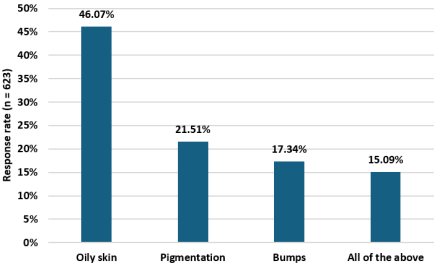
A total of 623 dermatologists participated in the survey. Approximately half (50.08%) of the respondents reported encountering 10-20 cases of PLE per week in their routine clinical practice. Nearly half (48.15%) of the respondents indicated that 15-20 years was the age group most commonly affected by acne. About 46% identified oily skin as the most common presenting complaint among patients with acne (Figure 1).
Figure 1. Distribution of responses on the most common presenting complaint among patients with acne in clinical practice.
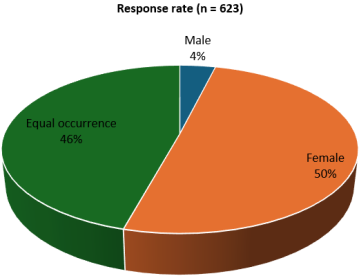
More than half of the respondents (56.82%) considered acne scars to be the most challenging complication of acne to treat. Approximately 63% of clinicians reported that 11-25% of female patients with acne presented with associated hormonal variations. Around 50% of respondents reported observing a higher frequency of acne presentations among female patients (Figure 2).
Nearly 51% of participants identified comedonal acne as the most common clinical presentation. Approximately 46% of clinicians preferred clindamycin as a first-line therapy for teenage patients with acne, while 44% preferred benzoyl peroxide (Table 1). The majority (70.95%) reported that they occasionally encountered topical antibiotic resistance in patients with acne vulgaris during routine clinical practice (Figure 3).
Table 1. Distribution of responses on the first-line treatment prescribed in teenage patients with acne.

First-line treatment

Response rate (n = 623)

Benzyl peroxide

44.3%

Clindamycin

45.75%

Salicylic acid

4.17%

All of the above

5.78%

Figure 2. Distribution of responses on gender reporting more commonly with acne in clinical practice.
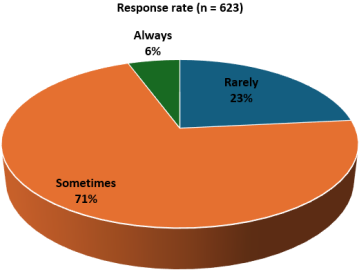
Figure 3. Distribution of responses on the frequency of topical antibiotic resistance in acne vulgaris in clinical practice.
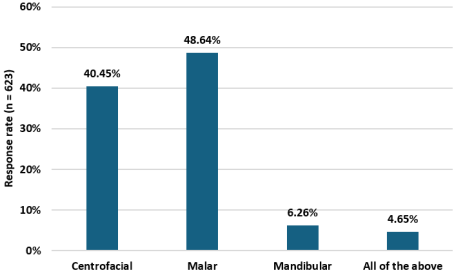
About 37% of clinicians prescribed the aforementioned extract-based formulation as an adjunct to acne treatment in 11-25% of patients. About 49% of the participants reported malar melasma as the most common clinical subtype encountered in practice (Figure 4). More than half of the respondents (52.65%) advised sunscreen along with skin-lightening agents in 51-75% of patients with melasma. About 67% of respondents identified melasma as the most common cause of facial pigmentation (Table 2).
Table 2. Distribution of responses on the common cause of facial pigmentation seen in patients in clinical practice.

Cause

Response rate (n = 623)

Melasma

67.26%

Acne induced pigmentation

22.15%

Reihls melanosis

1.12%

All of the above

9.47%

Figure 4. Distribution of responses on the common type of melasma seen in clinical practice.

Approximately 30% of dermatologists prescribed the extract-based sunscreen formulation as an adjuvant therapy in 21-30% of patients with melasma. Nearly 42% of clinicians rated the use of the extract-based sunscreen formulation in PLE as very good in clinical practice. One-third (33.55%) of the participants prescribed topical steroids for 2 weeks in patients with PLE. About 36% of clinicians selected lightweight, non-greasy, and no white cast as the most preferred features of the extract-based sunscreen formulation. About 39% of clinicians reported that acne was the most common indication for prescribing the extract-based sunscreen formulation in clinical practice. About 47% of the participants prescribed physical sunscreen for teenagers with acne in clinical practice.
Approximately 64% of dermatologists reported regularly monitoring patients for potential treatment-related adverse effects and medication-associated complications (Table 3). The majority (91.81%) had not observed any adverse drug reactions associated with the extract-based sunscreen formulation in their clinical practice. Based on the 5-point Global Improvement Scale, 45% of experts reported marked improvement in sun-induced hyperpigmentation, protection against ultraviolet radiation, PLE, and solar urticaria following treatment with the extract-based sunscreen formulation (Table 4).
Table 3. Distribution of responses on frequency of monitoring patients with potential side effects or complications of medications.

Frequency

Response rate (n = 623)

Regularly

64.04%

Occasionally

27.61%

Rarely

8.35%

Table 4. Distribution of responses according to the Global Improvement Scale rating for sun-induced hyperpigmentation, protection against UV radiation, PLE, and solar urticaria following treatment with the extract-based sunscreen formulation.

Rate

Response rate (n = 623)

No change

5.46%

Slight improvement

9.63%

Moderate improvement

39.33%

Marked improvement

45.59%

4. Discussion
Acne continues to represent a substantial clinical burden among adolescents and young adults. The predominance of patients aged 15-20 years and the high frequency of oily skin and comedonal acne observed in the present survey indicate that early recognition and timely initiation of evidence-based treatment remain essential to prevent disease progression and long-term sequelae. This observation is consistent with the established pathophysiology of acne vulgaris, in which excessive sebum production plays a pivotal role in follicular hyperkeratinization, proliferation of Cutibacterium acnes, and the subsequent inflammatory cascade. Vasam et al. similarly reported that increased sebaceous gland activity is one of the earliest and most prominent clinical features observed in patients with acne vulgaris . Likewise, Dhoot et al. found that excessive facial oiliness is among the most frequent concerns leading adolescents and young adults to seek dermatological care for acne . Furthermore, the updated American Academy of Dermatology (AAD) guidelines identify increased sebum production as one of the four major pathogenic factors in acne and recommend treatment strategies that simultaneously target multiple pathogenic mechanisms to achieve optimal clinical outcomes .
In the present survey, nearly half of the respondents reported that acne was encountered more frequently in female patients than in male patients. Similarly, Gugulus et al. demonstrated the increasing prevalence of acne among adult women, highlighting its growing clinical importance. Hormonal fluctuations associated with menstruation, polyendocrine metabolic ovary syndrome, pregnancy, and menopause, along with cosmetic use and psychosocial factors, are considered important contributors to the higher burden of acne in females seeking dermatological care. Women are also more likely to present with persistent, recurrent, or late-onset acne, which often requires prolonged management. Although acne commonly affects both sexes during adolescence, its persistence into adulthood is substantially more frequent in women . Furthermore, recent clinical guidelines recognize adult female acne as a distinct clinical entity and recommend individualized treatment strategies, including the use of hormonal therapies in appropriately selected patients .
Another important finding of the present survey was the preference for clindamycin as the first-line treatment for teenage patients with acne. Topical clindamycin is a well-established antibiotic for the management of inflammatory acne vulgaris. Armillei et al. reported that clindamycin remains an effective component of acne therapy, particularly when used as part of combination regimens . Similarly, the National Institute for Health and Care Excellence (NICE) guidelines recommend topical clindamycin in combination with benzoyl peroxide or a topical retinoid as a first-line treatment option for adolescents with mild-to-moderate inflammatory acne. Combination therapy is preferred over topical antibiotic monotherapy because it enhances clinical efficacy while reducing the risk of antimicrobial resistance . The frequent preference for clindamycin observed in the present survey suggests that treatment practices among Indian dermatologists are broadly aligned with contemporary evidence-based recommendations, which emphasize the use of combination therapy to optimize treatment outcomes and minimize the emergence of antibiotic resistance.
A substantial proportion of dermatologists in the present survey reported occasionally encountering topical antibiotic resistance in patients with acne vulgaris. This finding underscores the ongoing challenge of antimicrobial resistance in routine dermatological practice. A recent systematic review and meta-analysis by Zhu et al. reported considerable geographic variation in clindamycin resistance, highlighting the importance of antimicrobial stewardship in acne management . Furthermore, Karadag et al. emphasized that antibiotic resistance remains a significant concern in acne therapy and may contribute to reduced treatment efficacy and alterations in the skin microbiome . Current AAD guidelines recommend avoiding topical antibiotic monotherapy and advocate combining topical antibiotics with benzoyl peroxide to minimize the development of antibiotic resistance while improving clinical outcomes .
In the present survey, malar melasma was identified as the most frequently encountered clinical subtype, and melasma was considered the most common cause of facial pigmentation. This finding is consistent with several epidemiological studies reporting the malar pattern as one of the predominant clinical presentations of melasma, particularly among individuals with darker skin phototypes. Gokhale et al. observed that the malar type was highly prevalent in Indian patients with melasma, reflecting the influence of chronic sun exposure and genetic predisposition . Similarly, Ortonne et al. reported that the malar distribution is a common clinical pattern worldwide, although its prevalence varies across different populations and ethnic groups .
Melasma is widely recognized as one of the most common acquired pigmentary disorders affecting the face and has a considerable impact on patients' quality of life. Handel et al. described melasma as one of the most prevalent facial pigmentary disorders worldwide, with a substantial impact on patients' quality of life . Similarly, Gokhale et al. reported that melasma is among the most common pigmentary conditions encountered in dermatological practice in India, largely attributed to chronic ultraviolet exposure, genetic predisposition, and hormonal influences . Furthermore, a comprehensive review by Ogbechie-Godec and Elbuluk highlighted melasma as the leading cause of acquired facial hyperpigmentation and emphasized its chronic, relapsing nature and multifactorial pathogenesis .
Most dermatologists reported regularly monitoring patients for treatment-related adverse effects and medication-associated complications. This practice is consistent with current evidence and clinical guidelines, which emphasize the importance of routine follow-up to assess treatment efficacy, medication tolerability, patient adherence, and the early detection of adverse events. Navarrete-Dechent et al. demonstrated that regular follow-up visits were significantly associated with better treatment adherence and improved clinical outcomes in patients with acne vulgaris . Similarly, the NICE and the European S3 guidelines advocate scheduled clinical reviews to evaluate treatment response, monitor safety, and modify therapy when necessary .
Based on the 5-point Global Improvement Scale, many clinicians observed marked improvement in sun-induced hyperpigmentation, protection against ultraviolet radiation, polymorphic light eruption, and solar urticaria with the extract-based sunscreen formulation. The botanical ingredients incorporated in the formulation have individually demonstrated beneficial dermatological properties in experimental and clinical studies. Phellodendron amurense and Scutellaria baicalensis extracts exhibit potent anti-inflammatory activity in experimental models of cutaneous inflammation and have traditionally been used in the management of inflammatory skin disorders . Azadirachta indica, Houttuynia cordata, and Salix alba extracts possess antimicrobial, antioxidant, and anti-inflammatory properties that may help reduce skin inflammation and support barrier function . In addition, octinoxate and titanium dioxide provide established protection against ultraviolet radiation, thereby reducing UV-induced skin damage and pigmentary changes .
In the present survey, approximately one-third of the respondents identified lightweight texture, a non-greasy feel, and the absence of a white cast as the most desirable attributes of the formulation. These cosmetic characteristics are recognized as important determinants of patient adherence, particularly among individuals with acne-prone or oily skin and are emphasized in current photoprotection guidelines to encourage consistent and long-term sunscreen use. Furthermore, the favorable tolerability observed in routine clinical practice, with more than 90% of dermatologists reporting no treatment-related adverse drug reactions, suggests that the formulation is well suited for long-term adjunctive use in the management of pigmentary disorders and photodermatoses. Although these findings are encouraging, prospective randomized controlled studies are warranted to validate the clinical efficacy and long-term safety of the formulation .
This study provides valuable insights into the current clinical practices of dermatologists across India regarding the management of acne, melasma, PLE, and the use of extract-based sunscreen formulation in routine practice. The large sample size (n = 623) enhances the reliability of the findings and reflects contemporary prescribing trends, safety monitoring, and clinicians' perceptions of treatment effectiveness. However, this study has certain limitations. As a questionnaire-based survey, the findings are based on clinicians' self-reported opinions and experiences, which may be subject to recall and response bias. Furthermore, the descriptive cross-sectional design precludes assessment of long-term clinical outcomes or causal relationships.
Future Research Directions: While the findings of the present study provide important insights into the topic, further research is warranted to strengthen the evidence base. Future studies should focus on larger, multicenter cohorts with longer follow-up periods to enhance the generalizability of the findings. Additionally, investigations involving diverse patient populations, real-world clinical settings, and comparative effectiveness analyses would help validate these results and better define their applicability in routine clinical practice.
5. Conclusions
The findings indicate widespread adoption of evidence-based therapeutic approaches, routine use of photoprotection, and regular monitoring for treatment-related adverse effects. The extract-based sunscreen formulation is perceived by clinicians as a safe and effective adjunctive sunscreen for the management of pigmentary disorders and photodermatoses, with most respondents reporting favorable clinical outcomes and minimal adverse reactions. These findings support the integration of the extract-based sunscreen formulation into routine dermatological practice while emphasizing the importance of individualized treatment strategies and comprehensive photoprotection.
Abbreviations

AAD

American Academy of Dermatology

ADRs

Adverse Drug Reactions

PLE

Polymorphic Light Eruption

UV

Ultraviolet

UVA

Ultraviolet A

UVB

Ultraviolet B

WHO

World Health Organization

Author Contributions
Manjula Suresh: Conceptualization, Methodology, Project administration, Resources, Supervision, Validation, Writing – review & editing
Krishna Kumar Manjunath: Data curation, Formal Analysis, Investigation, Visualization, Writing – original draft, Writing – review & editing
Conflicts of Interest
The authors declare no conflicts of interest.
References
[1] Guguluș, D. L., Vâță, D., Popescu, I. A., Pătrașcu, A. I., Halip, I. A., Mocanu, M., et al. The epidemiology of acne in the current era: trends and clinical implications. Cosmetics. 2025, 12(3), 106.
[2] Naldi, L., Cazzaniga, S., Flohr, C., Lee, M. M., Fuller, C., Hay, R., et al. The worldwide burden of skin diseases: Lessons from the Global Burden of Disease data. Journal of the European Academy of Dermatology and Venereology. 2026, June 22.
[3] Budamakuntla, L., Parasramani, S., Dhoot, D., Deshmukh, G., Barkate, H. Acne in Indian population: An epidemiological study evaluating multiple factors. IP Indian Journal of Clinical and Experimental Dermatology [Internet]. 2020, 6(3), 237-242. Available from:
[4] KrupaShankar, D. S., Somani, V. K., Kohli, M., Sharad, J., Ganjoo, A., Kandhari, S., et al. A cross-sectional, multicentric clinico-epidemiological study of melasma in India. Dermatology and Therapy. 2014, 4(1), 71-81.
[5] Kerob, D., Passeron, T., Alexis, A., Dreno, B., Wei, L., Morita, A., et al. 54671 Prevalence of melasma, impact on quality of life and social stigmatization: results of the first large international survey. Journal of the American Academy of Dermatology. 2024, 91(3 Suppl), AB285.
[6] Srinivas, C. R., Sekar, C. S., Jayashree, R. Photodermatoses in India. Indian Journal of Dermatology, Venereology and Leprology. 2012, 78(1), 1-8.
[7] Erhan, S. E., Pârvu, A. E., Ciorîță, A., Putri, A. A., Villagrana Molina, A. J., Pârvu, M., et al. Chemical composition and anti-inflammatory effect of Phellodendron amurense Rupr. stem bark extract. Notulae Botanicae Horti Agrobotanici Cluj-Napoca. 2023, 51(3), 13306.
[8] Huang, R., Zhang, W., Hu, Y., Xu, J., Dong, Z., Liu, J., et al. Houttuynia cordata polysaccharides ameliorate atopic dermatitis in mice through modulation of skin immune barrier and lipid metabolism. International Journal of Biological Macromolecules. 2025, 314, 144264.
[9] Knackstedt R, Knackstedt T, Gatherwright J. The role of topical probiotics in skin conditions: A systematic review of animal and human studies and implications for future therapies. Experimental Dermatology. 2020; 29(1): 15–21.
[10] Tan, S. T., Tan, S. S., Tan, C. X. Soy protein, bioactive peptides, and isoflavones: a review of their safety and health benefits. PharmaNutrition. 2023, 25, 100352.
[11] Jia, J., Chen, J., Wang, G., Li, M., Zheng, Q., Li, D. Progress of research into the pharmacological effect and clinical application of the traditional Chinese medicine Rehmanniae Radix. Biomedicine & Pharmacotherapy. 2023, 168, 115809.
[12] Mittal, R., Mittal, A., Saini, P., Mehta, P., Kushwah, A. S. Scutellaria baicalensis Georgi: a review on botany, phytoconstituents, and pharmacological activities. Letters in Drug Design & Discovery. 2025, 22(10), 100168.
[13] Wylie, M. R., Merrell, D. S. The antimicrobial potential of the neem tree Azadirachta indica. Frontiers in Pharmacology. 2022, 13, 891535.
[14] Shara M, Stohs SJ. Efficacy and safety of white willow bark (Salix alba) extracts. Phytotherapy Research. 2015; 29(8): 1112–1116.
[15] Lorigo, M., Quintaneiro, C., Breitenfeld, L., Cairrao, E. Exposure to UV-B filter octylmethoxycinnamate and human health effects: focus on endocrine disruptor actions. Chemosphere. 2024, 358, 142218.
[16] Araki, S. M., Baby, A. R. New perspectives on titanium dioxide and zinc oxide as inorganic UV filters: advances, safety, challenges, and environmental considerations. Cosmetics. 2025, 12(2), 77.
[17] Vasam, M., Korutla, S., Bohara, R. A. Acne vulgaris: a review of the pathophysiology, treatment, and recent nanotechnology-based advances. Biochemistry and Biophysics Reports. 2023, 36, 101578.
[18] American Academy of Dermatology. American Academy of Dermatology issues updated guidelines for the management of acne [Internet]. Rosemont (IL): American Academy of Dermatology; 2024 Jan 31 [cited 2026 Jul 13]. Available from:
[19] Armillei, M. K., Lomakin, I. B., Del Rosso, J. Q., Grada, A., Bunick, C. G. Scientific rationale and clinical basis for clindamycin use in the treatment of dermatologic disease. Antibiotics. 2024, 13(3), 270.
[20] National Institute for Health and Care Excellence (NICE). Acne vulgaris: management—Recommendations [Internet]. London: NICE; 2021 [updated 2023; cited 2026 Jul 13]. Available from:
[21] Zhu, C., Wei, B., Li, Y., Wang, C. Antibiotic resistance rates in Cutibacterium acnes isolated from patients with acne vulgaris: a systematic review and meta-analysis. Frontiers in Microbiology. 2025, 16, 1565111.
[22] Karadag, A. S., Aslan Kayıran, M., Wu, C. Y., Chen, W., Parish, L. C. Antibiotic resistance in acne: changes, consequences and concerns. Journal of the European Academy of Dermatology and Venereology. 2021, 35(1), 73-78.
[23] Sarkar, R., Arora, P., Garg, V. K., Sonthalia, S., Gokhale, N. Melasma update. Indian Dermatology Online Journal. 2014, 5(4), 426-435.
[24] Ortonne, J. P., Arellano, I., Berneburg, M., Cestari, T., Chan, H., Grimes, P., et al. A global survey of the role of ultraviolet radiation and hormonal influences in the development of melasma. Journal of the European Academy of Dermatology and Venereology. 2009, 23(11), 1254-1262.
[25] Handel, A. C., Miot, L. D., Miot, H. A. Melasma: a clinical and epidemiological review. Anais Brasileiros de Dermatologia. 2014, 89(5), 771-782.
[26] Ogbechie-Godec, O. A., Elbuluk, N. Melasma: an up-to-date comprehensive review. Dermatology and Therapy. 2017, 7(3), 305-318.
[27] Navarrete-Dechent, C., Curi-Tuma, M., Nicklas, C., Cárdenas, C., Pérez-Cotapos, M. L., Salomone, C. Oral and written counseling is a useful instrument to improve short-term adherence to treatment in acne patients: a randomized controlled trial. Dermatology Practical & Conceptual. 2015, 5(4), 13-16.
[28] Salehi B, Sharifi-Rad J, Abu-Darwish MS, et al. Antiinflammatory and wound healing activities of medicinal plants used in traditional medicine. Journal of Ethnopharmacology. 2019; 240: 111582.
[29] Tufail, T., Bader Ul Ain, H., Ijaz, A., Nasir, M. A., Ikram, A., Noreen, S., et al. Neem (Azadirachta indica): a miracle herb; panacea for all ailments. Food Science & Nutrition. 2025, 13(9), e70820.
[30] Nash JF. Human safety and environmental aspects of major UV filters. Photochemical & Photobiological Sciences. 2006; 5: 170–179.
[31] Vaudagna, M. V., Aiassa, V., Marcotti, A., Pince Beti, M. F., Constantín, M. F., Pérez, M. F., et al. Titanium dioxide nanoparticles in sunscreens and skin photo-damage: development, synthesis and characterization of a novel biocompatible alternative based on their in vitro and in vivo study. Journal of Photochemistry and Photobiology. 2023, 15, 100173.
[32] Araki SM, Baby AR New perspectives on titanium dioxide and zinc oxide as inorganic UV filters: advances, safety, challenges, and environmental considerations. Cosmetics. 2025; 12: 77.
[33] Passeron T, Lim HW, Goh CL, et al. Photoprotection according to skin phototype and dermatoses: Practical recommendations from an international expert panel. Journal of the European Academy of Dermatology and Venereology. 2021.
Cite This Article
  • APA Style

    Suresh, M., Manjunath, K. K. (2026). Expert Perspectives on Acne, Melasma, Polymorphic Light Eruption, and Role of Sunscreens: A Nationwide Survey. International Journal of Clinical Dermatology, 9(2), 102-110. https://doi.org/10.11648/j.ijcd.20260902.11

    Copy | Download

    ACS Style

    Suresh, M.; Manjunath, K. K. Expert Perspectives on Acne, Melasma, Polymorphic Light Eruption, and Role of Sunscreens: A Nationwide Survey. Int. J. Clin. Dermatol. 2026, 9(2), 102-110. doi: 10.11648/j.ijcd.20260902.11

    Copy | Download

    AMA Style

    Suresh M, Manjunath KK. Expert Perspectives on Acne, Melasma, Polymorphic Light Eruption, and Role of Sunscreens: A Nationwide Survey. Int J Clin Dermatol. 2026;9(2):102-110. doi: 10.11648/j.ijcd.20260902.11

    Copy | Download

  • @article{10.11648/j.ijcd.20260902.11,
      author = {Manjula Suresh and Krishna Kumar Manjunath},
      title = {Expert Perspectives on Acne, Melasma, Polymorphic Light Eruption, and Role of Sunscreens: A Nationwide Survey},
      journal = {International Journal of Clinical Dermatology},
      volume = {9},
      number = {2},
      pages = {102-110},
      doi = {10.11648/j.ijcd.20260902.11},
      url = {https://doi.org/10.11648/j.ijcd.20260902.11},
      eprint = {https://article.sciencepublishinggroup.com/pdf/10.11648.j.ijcd.20260902.11},
      abstract = {Objective: To assess clinical practice patterns, treatment preferences, safety monitoring practices, and clinicians' perceptions of a botanical extract-based sunscreen formulation containing multiple plant-derived extracts, octinoxate, and titanium dioxide in the management of acne, melasma, and polymorphic light eruption (PLE) among dermatologists in India. Methods: A cross-sectional, nationwide, questionnaire-based survey was conducted among practicing dermatologists across India using a structured 22-item questionnaire. The survey evaluated clinical practice patterns in the management of acne, melasma, and PLE, including treatment preferences, photoprotection strategies, safety monitoring practices, and clinicians' perceptions of the extract-based sunscreen formulation containing multiple plant-derived extracts, octinoxate, and titanium dioxide. Data were analyzed using descriptive statistics. Results: A total of 623 dermatologists participated in the survey. Oily skin was reported by 46% of respondents as the most common presenting complaint among patients with acne, while 50% indicated that acne was more frequently encountered in female patients. Clindamycin (45.75%) and benzoyl peroxide (44.30%) were the most commonly preferred first-line treatments for teenage acne. The majority (70.95%) reported occasionally encountering topical antibiotic resistance in acne vulgaris during routine practice. Malar melasma (48.64%) was identified as the most frequently encountered clinical subtype, and melasma was considered the most common cause of facial pigmentation by 67% of respondents. Approximately 64% of dermatologists reported regularly monitoring patients for treatment-related adverse effects and medication-associated complications. Based on the 5-point Global Improvement Scale, around 46% of respondents observed marked improvement in sun-induced hyperpigmentation, ultraviolet protection, PLE, and solar urticaria with the extract-based sunscreen formulation. Conclusion: This nationwide survey highlights clinical practice patterns in the management of acne, melasma, and PLE among Indian dermatologists. The extract-based sunscreen formulation is perceived to provide clinical benefits in photoprotection and the management of sun-induced dermatoses, supporting its use as an adjunctive sunscreen in routine dermatological practice.},
     year = {2026}
    }
    

    Copy | Download

  • TY  - JOUR
    T1  - Expert Perspectives on Acne, Melasma, Polymorphic Light Eruption, and Role of Sunscreens: A Nationwide Survey
    AU  - Manjula Suresh
    AU  - Krishna Kumar Manjunath
    Y1  - 2026/08/24
    PY  - 2026
    N1  - https://doi.org/10.11648/j.ijcd.20260902.11
    DO  - 10.11648/j.ijcd.20260902.11
    T2  - International Journal of Clinical Dermatology
    JF  - International Journal of Clinical Dermatology
    JO  - International Journal of Clinical Dermatology
    SP  - 102
    EP  - 110
    PB  - Science Publishing Group
    SN  - 2995-1305
    UR  - https://doi.org/10.11648/j.ijcd.20260902.11
    AB  - Objective: To assess clinical practice patterns, treatment preferences, safety monitoring practices, and clinicians' perceptions of a botanical extract-based sunscreen formulation containing multiple plant-derived extracts, octinoxate, and titanium dioxide in the management of acne, melasma, and polymorphic light eruption (PLE) among dermatologists in India. Methods: A cross-sectional, nationwide, questionnaire-based survey was conducted among practicing dermatologists across India using a structured 22-item questionnaire. The survey evaluated clinical practice patterns in the management of acne, melasma, and PLE, including treatment preferences, photoprotection strategies, safety monitoring practices, and clinicians' perceptions of the extract-based sunscreen formulation containing multiple plant-derived extracts, octinoxate, and titanium dioxide. Data were analyzed using descriptive statistics. Results: A total of 623 dermatologists participated in the survey. Oily skin was reported by 46% of respondents as the most common presenting complaint among patients with acne, while 50% indicated that acne was more frequently encountered in female patients. Clindamycin (45.75%) and benzoyl peroxide (44.30%) were the most commonly preferred first-line treatments for teenage acne. The majority (70.95%) reported occasionally encountering topical antibiotic resistance in acne vulgaris during routine practice. Malar melasma (48.64%) was identified as the most frequently encountered clinical subtype, and melasma was considered the most common cause of facial pigmentation by 67% of respondents. Approximately 64% of dermatologists reported regularly monitoring patients for treatment-related adverse effects and medication-associated complications. Based on the 5-point Global Improvement Scale, around 46% of respondents observed marked improvement in sun-induced hyperpigmentation, ultraviolet protection, PLE, and solar urticaria with the extract-based sunscreen formulation. Conclusion: This nationwide survey highlights clinical practice patterns in the management of acne, melasma, and PLE among Indian dermatologists. The extract-based sunscreen formulation is perceived to provide clinical benefits in photoprotection and the management of sun-induced dermatoses, supporting its use as an adjunctive sunscreen in routine dermatological practice.
    VL  - 9
    IS  - 2
    ER  - 

    Copy | Download

Author Information