
Rice blast disease, caused by Magnaporthe oryzae (M. oryzae) is one of the most devastating diseases in rice production worldwide, causing high yield losses. In Tanzania, the disease exhibits significant impacts, largely due to limited diagnostic knowledge, resistant varieties, and poor control measures. This research study carried out during 2024/2025 aim to determine the incidence and severity of the disease across five representative rice-growing regions (Morogoro, Tanga, Kilimanjaro, Mwanza, and Mbeya). Disease incidence and severity from selected hundred (100) rice rice-growing farms were studied and recorded, while the symptomatic blast leaves were collected for isolation and morphological identification of the pathogen. The results revealed that both incidence and severity across regions, villages varied significantly at P < 0.05 given that, Morogoro region showed the highest incidence (60.68% and severity (66.32%), and the lowest in Mwanza (46.52%, 51.95%). The study also detected Dakawa village has attacked more (61.29%), while Mvumi both from Morogoro was more infested (68.38%). Rice cultivars showed the significant differences in disease susceptibility levels, given that the variety TXD 306 (Saro 5) was relatively tolerant, with low incidence and severity (40.33%, 44.84%), whereas kalamata was highly susceptible (62.15% incidence and 67.71% severity). The noted significant regional difference (P<0.001) in disease pressure from the studied region could be influenced by different climatic factors, ecology, and varieties grown. Overall, this finding highlights the significant threat posed by rice blast disease in Tanzania and suggests an urgent need for modern management measures and the adoption of resistant rice varieties.
| Published in | International Journal of Applied Agricultural Sciences (Volume 12, Issue 3) |
| DOI | 10.11648/j.ijaas.20261203.12 |
| Page(s) | 84-96 |
| Creative Commons |
This is an Open Access article, distributed under the terms of the Creative Commons Attribution 4.0 International License (http://creativecommons.org/licenses/by/4.0/), which permits unrestricted use, distribution and reproduction in any medium or format, provided the original work is properly cited. |
| Copyright |
Copyright © The Author(s), 2026. Published by Science Publishing Group |
Disease Management Options, Magnaporthe oryzae, Disease Incidence Disease Severity, Rice Cultivars, Tanzania
REGION | Incidence (%) | Severity (%) | Temperature (°C) | Rainfall (mm) | R. H (%) |
|---|---|---|---|---|---|
MWANZA | 46.52a | 51.95a | 23-24 | 129.6 | 70-75 |
TANGA◦ | 51.55b | 57.21b | 22-30 | 121 | 77-81 |
KILIMANJARO | 52.51bc | 56.44b | 24-33 | 117 | 79-82.2 |
MBEYA | 55.38c | 61.62c | 16-27 | 256 | 86-90 |
MOROGORO | 60.68d | 66.32d | 21-31 | 220 | 85-89 |
Fpr. | <0.001 | <0.001 | |||
CV (%) | 17.3 | 18.2 | |||
LSD (%) | 3.3 | 3.8 | |||
Village | Ecology | Incidence (%) | Severity (%) |
|---|---|---|---|
Malya | Rainfed | 42.03 a | 48.27 ab |
Mahiga | Irrigated | 43.51 ab | 46.78 a |
Nyakasanga | Irrigated | 46.3 abc | 50.28 abc |
Jitengeni | Irrigated | 48.16 abcd | 53.55 abcd |
Chekeleni | Irrigated | 49.16 abcde | 50.92 abc |
Chekelei | Irrigated | 50.38 bcdef | 55.97 bcde |
Kahe | Irrigated | 50.43 bcdef | 52.73 abc |
Makwale | Irrigated | 51.41 cdef | 57.54 cdef |
Misozwe | Rainfed | 53.12 cdefg | 57.76 cdef |
Chimala | Irrigated | 53.43 cdefgh | 55.42 bcde |
Ndungu | Irrigated | 53.69 cdefghi | 55.73 bcde |
Nyahororo | Rainfed | 54.23 defghi | 62.47 efg |
Masimba | Rainfed | 54.54 defghi | 61.54 defg |
Hedaru | Rainfed | 56.75 efghi | 66.37 g |
Mahenge | Rainfed | 57.19 fghi | 65.43 fg |
Isitu | Rainfed | 59.5 ghi | 68.11 g |
Mkindo | Irrigated | 59.65 ghi | 65.41 fg |
Mvumi | Irrigated | 60.8 hi | 68.38 g |
Ilonga | Irrigated | 61 hi | 65.23 fg |
Dakawa | Irrigated | 61.29 i | 66.27 g |
Fpr | 0.001 | 0.001 | |
CV | 16.8 | 18.7 | |
LSD | 6.4 | 7.1 |
Agro-ecology | Incidence (%) | Severity (%) |
|---|---|---|
Rainfed | 53.9 | 61.42 |
Irrigated | 53.66 | 57.25 |
CV | 21.76 | 22.18 |
LSD | 5.68 | 6.7 |
Variety | Incidence (%) | Severity (%) |
|---|---|---|
TXD 306 | 40.33 a | 44.84 a |
WAHIWAHI | 52.43 b | 57.84 b |
MBAWAMBILI | 54.27 b | 59.29 b |
SUPA | 57.48 c | 63.87 c |
KALAMATA | 62.15 d | 67.71 d |
CV | 13.7 | 15 |
LSD | 2.6 | 3.1 |
ANOVA | Analysis of Variance |
CV | Coefficient of Variation |
DMBB | Department of Molecular Biology and Biotechnology |
Fpr | False Positive Rate |
IDM | Integrated Disease Management |
IRRI | International Rice Research Insttitute |
LSD | Least Significant Difference |
M. oryzae | Magnaporthe oryzae |
PDA | Potato Dextrose Agar |
R. H | Relative Humidity |
SSA | Sub-saharan Africa |
| [1] | Ashkani, S., Rafii, M. Y., Shabanimofrad, M., Miah, G., Sahebi, M., Azizi, P.,... & Nasehi, A. (2015). Molecular breeding strategy and challenges towards improvement of blast disease resistance in rice crop. Frontiers in plant science, 6, 886. |
| [2] | Azizi, P., Rafii, M. Y., Mahmood, M., Abdullah, S. N. A., Hanafi, M. M., Nejat, N., Latif, M. A., & Sahebi, M. (2015) Differential gene expression reflects morphological characteristics and physiological processes in rice immunity against blast pathogen Magnaporthe oryzae. PLoS ONE, 10(5), 1–18. |
| [3] | Busungu, C. (2023) Past, Present and Future Perspectives of Rice Production in Tanzania. Agricultural Sciences, 14, 987-1006. |
| [4] | Chuwa, C. J., Mabagala, R. B., & Reuben, M. S. O. W. (2015a) Assessment of Grain Yield Losses Caused by Rice Blast Disease in Major Rice Growing Areas in Tanzania. 4(10), 2211–2218. |
| [5] | Dagdas, Y. F.; Yoshino, K.; Dagdas, G.; Ryder, L. S.; Bielska, E.; Steinberg, G.; Talbot, N. J. (2012). Septin-mediated plant cell invasion by the rice blast fungus (Magnaporthe oryzae). Science, 336, 1590–1595. |
| [6] | Dean, R. A., Talbot, N. J., Ebbole, D. J., Farman, M. L., Mitchell, T. K., Orbach, M. J., Thon, M., Kulkarni, R., Xu, J. R., Pan, H., Read, N. D., Lee, Y. I., Carbone, I., Brown, D., Yeon, Y. O., Donofrio, N., Jun, S. J., Soanes, D. M., Djonovic, S., … Dirren, B. W. (2005) The genome sequence of the rice blast fungus Magnaporthe grisea. Nature, 434(7036), 980–986. |
| [7] | FAO (2017) Rice market monitor. Food and Agriculture Organization of the United Nations, 39 p. |
| [8] | FAO (2017) The State of Food and Agriculture: Leveraging Food Systems for Inclusive Rural Transformation. Rome, 184 p. |
| [9] | Galhano, R., & Talbot, N. J. (2011) The biology of blast: Understanding how Magnaporthe oryzae invades rice plants. Fungal Biology Reviews, 25(1), 61–67. |
| [10] | Giraldo, M. C.; Dagdas, Y. F.; Gupta, Y. K.; Mentlak, T. A.; Yi, M.; Martinez-Rocha, A. L.; Valent, B. (2013) Two distinct secretion systems facilitate tissue invasion by the rice blast fungus (Magnaporthe oryzae). Nat. Commun. 4, 1996. |
| [11] | Jamal-u-ddin Hajano, G., Pathan, Q. A., & Mubeen, A. L. (2011). Rice blast-mycoflora, symptomatology and pathogenicity. Sindh Agric Univ Tandojam, 5(1), 53-63. |
| [12] |
International Rice Research Institute (IRRI) and CIMMYT. (2008). Fungal diseases of rice.
http://www.knowledgebank.irri.org/ckb/index.php?option=com_content&view=article&id=32&Itemid=111 site visited on 2/6/2011. |
| [13] | International Rice Research Institute (IRRI). (2013). Standard evaluation system for rice (5th ed.). IRRI, Los Baños, Philippines. |
| [14] | IRRI. (2014) Rice Blast Disease: Identification and Management Guidelines. International Rice Research Institute. |
| [15] | Kankanala, P.; Czymmek, K.; Valent, B (2007) Roles for rice membrane dynamics and plasmodesmata during biotrophic invasion by the blast fungus. Plant Cell, 19, 706–724. |
| [16] | Kadigi, I. L., Mutabazi, K. D., Philip, D., Richardson, J. W., Bizimana, J. C., Mbungu, W., Mahoo, H. F. and Sieber, S., (2020) An economic comparison between alternative rice farming systems in Tanzania using a Monte Carlo simulation approach. Sustainability, 12(16), p. 6528. |
| [17] | Kato, H. (2001) Rice blast disease. Pestic. Outlook, 12, 23–25. |
| [18] | Katsantonis, D., Kadoglidouk, K., Dramalis, C. and Puigdollers, P. (2017) Rice blast forecasting models and their practical value. A review. Phytopathologia Mediterranean 56(2): 187–216. |
| [19] | Kirtphaiboon, S., Humphries, U., Khan, A., & Yusuf, A. (2021). Model of rice blast disease under tropical climate conditions. Chaos, Solitons & Fractals, 143, 110530. |
| [20] | Kumar, J., Nelson, R. J., & Zeigler, R. S. (2020) Advances in understanding host-pathogen interactions in rice blast disease. Annual Review of Phytopathology, 58, 23–45. |
| [21] | Law, J. W. F., Ser, H. L., Khan, T. M., Chuah, L. H., Pusparajah, P., Chan, K. G. and Lee, L. H. (2017). The potential of Streptomyces as biocontrol agents against the rice blast fungus, Magnaporthe oryzae (Pyricularia oryzae). Frontiers in Microbiology 8: 3–24. |
| [22] | Levy, M., Correa-Victoria, F. J., Zeigler, R. S., Xu, S. and Hamer, J. E. (1993) Genetic diversity of the rice blast fungus in a disease nursery in Colombia. Phytopathology 83: 1427-1433. |
| [23] | Lwezaura, D. (2011). Government funding for agricultural R&D: a case study on the Tanzanian Division of Research and Development. |
| [24] | Luzi-Kihupi, A., Zakayo, J. A., Tusekelege, H., Mkuya, M., Kibanda, N. J. M., Khatib, K. J. and Maerere, A. (2009). Mutation breeding for rice improvement in Tanzania, In Induced Plant Mutations in the Genomics Era. (Edited by Shu, Q. Y.). Food and Agriculture Organization of the United Nations, Rome. pp. 385, 387. |
| [25] | Marcel, S., Paszkowski, U., Sawers, R., Oakeley, E., & Angliker, H. (2010) Tissue-adapted invasion strategies of the rice blast fungus Magnaporthe oryzae. Plant Cell, 22(9), 3177–3187. |
| [26] | Miah, M. A. T., Singh, N. I., & Bonman, J. M. (2013). Effect of nitrogen fertilization on rice blast disease. International Journal of Agricultural Science and Research, 3(2), 45–53. |
| [27] | Monsur, M. A., Islam, M. T., Meah, M. B., & Latif, M. A. (2016). Survival and transmission of Magnaporthe oryzae through rice seeds and plant residues. Bangladesh Journal of Agricultural Research, 41(1), 121–129. |
| [28] | Nutsugah, S. K., Dogbe, W. Twumasi, J. K. Dartey, K. Chipili, J. Sreenivasaprasad, S. and Sere, Y. (2005) Prevalence of rice blast and varietal screening in Ghana. Journal of Science Technology 25: 18-34. |
| [29] | Obilo, O. P., et al. (2012) "Control of rice blast (Magnaporthe grisea) disease using various organic manures." Journal of Agricultural Extension and Rural Development 15: 1198-1205. |
| [30] | Ou, S. H. (1985) Rice diseases (2nd ed.). Commonwealth Mycological Institute, Kew, UK. |
| [31] | Pooja, K., & Katoch, A. (2014). Past, present and future of rice blast management. Plant Science Today, 1(3), 165–173. |
| [32] | Puri, Satish Chandra, et al. (2006) "The endophytic fungus Trametes hirsuta as a novel alternative source of podophyllotoxin and related aryl tetralin lignans." Journal of Biotechnology 122.4: 494-510. |
| [33] | Rajput, L. S., Sharma, T., Madhusudhan, P., & Sinha, P. (2017). Effect of temperature on growth and sporulation of rice leaf blast pathogen Magnaporthe oryzae. Int. J. Curr. Microbiol. Appl. Sci, 6(3), 394-401. |
| [34] | Saito, K., Senthilkumar, K., Dossou-Yovo, E. R., Ali, I., Johnson, J-M., Mujawamariya, G., & Rodenburg, J. (2023) Status quo and challenges of rice production in sub-Saharan Africa. Plant Production Science 26(3), 320-333. |
| [35] | Séré, Y., Fargette, D., Abo, M. E., Wydra, K., Bimerew, M., Onasanya, A. and Akator, S. K., (2013) Managing the Major Diseases of Rice in Africa. Realizing Africa’s rice promise, p. 213. |
| [36] | Sharma, R. C., Singh, A. K., & Meena, R. P. (2021). Epidemiology and management of rice blast disease: A review. Journal of Applied and Natural Science, 13(3), 1142–1151. |
| [37] | Singh, R. P., et al. (2015). Influence of environmental factors on the development of crop diseases. Plant Pathology Journal, 31(4), 341–356. |
| [38] | Skamnioti, P., &Gurr, S. J. (2009) Against the grain: Safeguarding rice from rice blast disease. Trends Biotechnol., 27(3), 141-50. |
| [39] | Taguchi, Y., Elsharkawy, M. M. and Hyakumachi, M. (2015). Effect of artificially generated wind on removing guttation and dew droplets from rice leaf surface for controlling rice blast disease. African Journal of Biotechnology 14(12): 1039–1047. |
| [40] | Talukder, M. R., Rahman, M. A., & Islam, M. T. (2022). Occurrence and management of rice blast disease in major rice-growing areas of Bangladesh. Agronomy, 12(6), 1354. |
| [41] | Bock, C. H., El Jarroudi, M., Kouadio, L. A., Mackels, C., Chiang, K. S., & Delfosse, P. (2015). Disease severity estimates—Effects of rater accuracy and assessment methods for comparing treatments. Plant Disease, 99(8), 1104-1112. |
APA Style
Mkamilo, H., Busungu, C., Juma, I. (2026). Examination of Rice Blast Incidence and Severity Caused by Magnaporthe oryzae (M. oryzae) in Tanzania Selected Rice Growing Regions. International Journal of Applied Agricultural Sciences, 12(3), 84-96. https://doi.org/10.11648/j.ijaas.20261203.12
ACS Style
Mkamilo, H.; Busungu, C.; Juma, I. Examination of Rice Blast Incidence and Severity Caused by Magnaporthe oryzae (M. oryzae) in Tanzania Selected Rice Growing Regions. Int. J. Appl. Agric. Sci. 2026, 12(3), 84-96. doi: 10.11648/j.ijaas.20261203.12
@article{10.11648/j.ijaas.20261203.12,
  author = {Herman Mkamilo and Constantine Busungu and Ibrahim Juma},
  title = {Examination of Rice Blast Incidence and Severity Caused by Magnaporthe oryzae (M. oryzae) in Tanzania Selected Rice Growing Regions},
  journal = {International Journal of Applied Agricultural Sciences},
  volume = {12},
  number = {3},
  pages = {84-96},
  doi = {10.11648/j.ijaas.20261203.12},
  url = {https://doi.org/10.11648/j.ijaas.20261203.12},
  eprint = {https://article.sciencepublishinggroup.com/pdf/10.11648.j.ijaas.20261203.12},
  abstract = {Rice blast disease, caused by Magnaporthe oryzae (M. oryzae) is one of the most devastating diseases in rice production worldwide, causing high yield losses. In Tanzania, the disease exhibits significant impacts, largely due to limited diagnostic knowledge, resistant varieties, and poor control measures. This research study carried out during 2024/2025 aim to determine the incidence and severity of the disease across five representative rice-growing regions (Morogoro, Tanga, Kilimanjaro, Mwanza, and Mbeya). Disease incidence and severity from selected hundred (100) rice rice-growing farms were studied and recorded, while the symptomatic blast leaves were collected for isolation and morphological identification of the pathogen. The results revealed that both incidence and severity across regions, villages varied significantly at P < 0.05 given that, Morogoro region showed the highest incidence (60.68% and severity (66.32%), and the lowest in Mwanza (46.52%, 51.95%). The study also detected Dakawa village has attacked more (61.29%), while Mvumi both from Morogoro was more infested (68.38%). Rice cultivars showed the significant differences in disease susceptibility levels, given that the variety TXD 306 (Saro 5) was relatively tolerant, with low incidence and severity (40.33%, 44.84%), whereas kalamata was highly susceptible (62.15% incidence and 67.71% severity). The noted significant regional difference (P<0.001) in disease pressure from the studied region could be influenced by different climatic factors, ecology, and varieties grown. Overall, this finding highlights the significant threat posed by rice blast disease in Tanzania and suggests an urgent need for modern management measures and the adoption of resistant rice varieties.},
 year = {2026}
}
TY  - JOUR
T1  - Examination of Rice Blast Incidence and Severity Caused by Magnaporthe oryzae (M. oryzae) in Tanzania Selected Rice Growing Regions
AU  - Herman Mkamilo
AU  - Constantine Busungu
AU  - Ibrahim Juma
Y1  - 2026/05/21
PY  - 2026
N1  - https://doi.org/10.11648/j.ijaas.20261203.12
DO  - 10.11648/j.ijaas.20261203.12
T2  - International Journal of Applied Agricultural Sciences
JF  - International Journal of Applied Agricultural Sciences
JO  - International Journal of Applied Agricultural Sciences
SP  - 84
EP  - 96
PB  - Science Publishing Group
SN  - 2469-7885
UR  - https://doi.org/10.11648/j.ijaas.20261203.12
AB  - Rice blast disease, caused by Magnaporthe oryzae (M. oryzae) is one of the most devastating diseases in rice production worldwide, causing high yield losses. In Tanzania, the disease exhibits significant impacts, largely due to limited diagnostic knowledge, resistant varieties, and poor control measures. This research study carried out during 2024/2025 aim to determine the incidence and severity of the disease across five representative rice-growing regions (Morogoro, Tanga, Kilimanjaro, Mwanza, and Mbeya). Disease incidence and severity from selected hundred (100) rice rice-growing farms were studied and recorded, while the symptomatic blast leaves were collected for isolation and morphological identification of the pathogen. The results revealed that both incidence and severity across regions, villages varied significantly at P < 0.05 given that, Morogoro region showed the highest incidence (60.68% and severity (66.32%), and the lowest in Mwanza (46.52%, 51.95%). The study also detected Dakawa village has attacked more (61.29%), while Mvumi both from Morogoro was more infested (68.38%). Rice cultivars showed the significant differences in disease susceptibility levels, given that the variety TXD 306 (Saro 5) was relatively tolerant, with low incidence and severity (40.33%, 44.84%), whereas kalamata was highly susceptible (62.15% incidence and 67.71% severity). The noted significant regional difference (P<0.001) in disease pressure from the studied region could be influenced by different climatic factors, ecology, and varieties grown. Overall, this finding highlights the significant threat posed by rice blast disease in Tanzania and suggests an urgent need for modern management measures and the adoption of resistant rice varieties.
VL  - 12
IS  - 3
ER  -
Tanzania Agricultural Research Institute (TARI), Dodoma, Tanzania;Research and Innovation, Morogoro, Tanzania;Department of Crop Science and Beekeeping Technology, University of Dar es Salaam, Dar es Salaam, Tanzania
Biography: Herman Mkamilo is a Research Officer at the Tanzania Agricultural Research Institute (TARI) with over ten years of professional experience in agricultural research, crop improvement, and seed systems development. His work is strongly oriented toward strengthening food security through applied research, innovation, and farmer-centered solutions. He holds a Bachelor’s degree in General Agriculture from Sokoine University of Agriculture (SUA), where he developed a strong background in agronomy, crop science, and plant breeding. At TARItari, Herman has been actively involved in crop breeding and varietal development, contributing to the development of improved, resilient, and high-yielding crop varieties adapted to diverse agro-ecological zones in Tanzania. Throughout his career, Herman has collaborated with a wide range of national and international development partners, including USAI D, FAOao, World Vision, and VSO. In 2014, he played a significant role in organizing and registering farmer groups under FAO-supported programs, enhancing farmers’ access to agricultural technologies and institutional support. In 2015, he contributed to the development of constitutional frameworks and by-laws for VSO-supported farmer organizations, promoting good governance, accountability, and long-term sustainability. Herman has extensive technical experience in the establishment, management, monitoring, and evaluation of field, screenhouse, and laboratory-based research experiments. He has worked closely with the Agricultural Seed Agency (ASA) and private seed companies such as Syngenta and Tanseed Ltd, gaining valuable expertise in seed production, quality assurance, and public–private partnerships. Notably, he served as Section Leader for the maize seed program, where he successfully supervised all operational activities, coordinated research and production processes, and provided technical leadership to multidisciplinary teams. Between 2023 and 2025, Herman conducted a large-scale field survey across seven regions of Tanzania—Morogoro, Tanga, Kilimanjaro, Mwanza, Mbeya, Kagera, and Rukwa—focusing on major rice diseases, particularly rice blast disease and rice brown spot disease. His research aimed to assess the relative destructiveness and emerging trends of these diseases under farmers’ field conditions. The findings revealed rice brown spot as an emerging and increasingly widespread disease, while rice blast remained the most destructive threat to rice production. Based on these results, Herman emphasized the need for immediate and targeted disease management interventions to protect rice yields and safeguard national food security.

Department of Crop Science and Beekeeping Technology, University of Dar es Salaam, Dar es Salaam, Tanzania
Biography: Constantine Busungu is a senior Lecturer and researcher at the Department of crop Science and Beekeeping Technology at the University of Dar es Salaam (UDSM), Tanzania. He holds a BSc in Agriculture General (SUA), MSc Crop Science/Biotechnolog (SUA), Tanzania, and PhD of Bioresource Production at the Kagoshima University in Japan. His research Interest based on mutation breeding, seed systems, crop wild relatives, plant genetic resources management, climate change adaptation, and the development of resilient, high-yielding crop varieties to support sustainable agriculture and food security.

Department of Food Science and Technology, University of Dar es Salaam, Dar es Salaam, Tanzania
Biography: Ibrahim Juma is a lecturer at the University of Dar es Salaam, Tanzania with a PhD in Plant Breeding, MSc and bachelor’s degrees in Molecular Biology and Biotechnology. His research focuses on plant genetics, molecular biology, crop improvement, and sustainable Agriculture. His work includes studies on avocado genetic diversity and sustainability prediction for cultivation in Tanzania, as well as research on indigenous edible mushrooms and plant-associated microorganism aimed at improving agricultural productivity and food security.

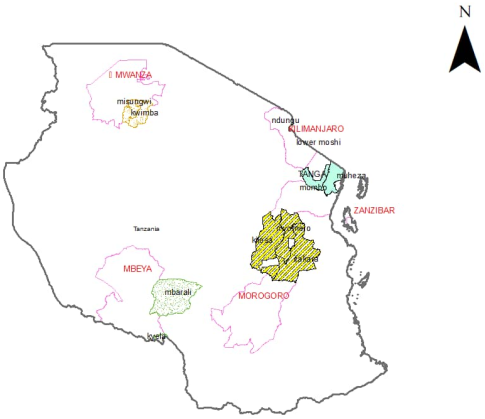
Figure 1. A Tanzania map showing the studied sites.
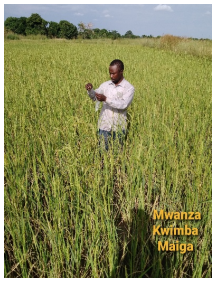
Figure 2. Rice blast disease observation and sample collection.
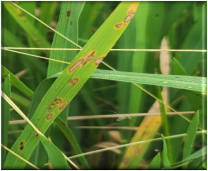
Figure 3. Rice blast disease symptomatic leaves.
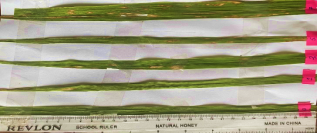
Figure 4. Estimation of rice blast disease severity.
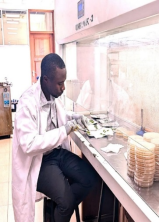
Figure 5. Isolation process of fungal isolates.
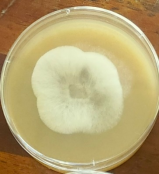
Figure 6. Sub-culturing of fungal isolates.
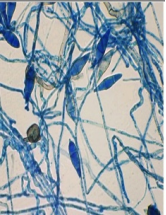
Figure 7. Microscopic feature of M. oryzae.
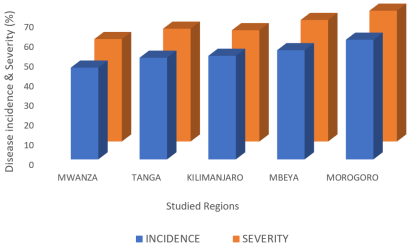
Figure 8. Histogram showing variation of disease pressure across the studied regions.
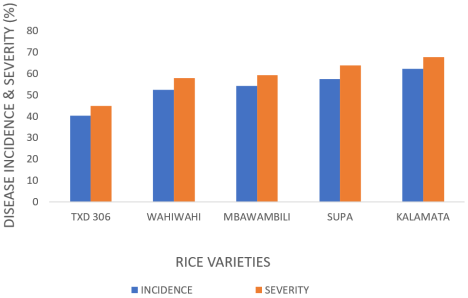
Figure 9. A bar chart showing responses of 5-rice cultivars against rice blast disease.

Information



 Share This Article
 Twitter
 Linked In
 Facebook
 Copy
Copy Download