Abstract
Manufacturing and municipal waste are soaring at an unprecedented rate posing an environmental threat to the global industrial sector. Conventional forms of linear disposal, landfills and incineration are neither sustainable environmentally nor economically. Even though sustainability is a pressing need, there are still major gaps in infrastructure and financial constraints. Moreover, there is still a severe gap in the comprehensive implementation of global programs on zero-waste, as the available literature does not have systematic systems to coordinate technological innovations and the over-corporate plans. The aim of the research is to explore the way in which sustainable waste management strategies can be effectively embedded in manufacturing processes to have zero-waste target and to determine the multi-level compatibility of these activities with long-term corporate strategies. Mixed methods, sequential exploratory methods, were used. The study organized information around the world with the help of a systematic literature review, studied various industrial case studies to practically prove the validity of economic and regulatory obstacles, and applied semi-structured expert interviews. Results indicated that current systems were not congruent with the principles of zero-waste, with 37% of all waste in the world kept in landfills, and operational costs of waste management reaching over 100 dollars per ton in high-income countries. Nevertheless, these approaches of incorporating the 3R concept, circular economies, and waste-to-energy indicated that there had been a deep potential of reducing the estimated 3.40 billion tons of global waste by the year 2050. This research ends up developing a holistic strategic integration framework. With the following customized suggestions in mind, manufacturing businesses will be able to sail through systemic challenges easily, diminish their impact on the environment by far, and become the chief drivers of a transition to an environmentally friendly and airtight, zero-waste future.
|
Published in
|
Industrial Engineering (Volume 10, Issue 1)
|
|
DOI
|
10.11648/j.ie.20261001.11
|
|
Page(s)
|
1-21 |
|
Creative Commons
|

This is an Open Access article, distributed under the terms of the Creative Commons Attribution 4.0 International License (http://creativecommons.org/licenses/by/4.0/), which permits unrestricted use, distribution and reproduction in any medium or format, provided the original work is properly cited.
|
|
Copyright
|
Copyright © The Author(s), 2026. Published by Science Publishing Group
|
Keywords
Zero-waste Manufacturing, Circular Economy, Industrial Waste Management, Sustainable Practices, Resource Recovery, Strategic Integration, Resource Efficiency
1. Introduction
The world industrial industry is at a very critical crossroad where the production of manufacturing and city waste products has become not only an operational by-product that can be easily handled but also an environmental threat never witnessed. Conventional lenses into waste management, which basically depend on disposal strategies of linear production based on landfilling and incineration, have been shown to be unsustainable concerning the environment, eco-nomics, and social provisions. This systemic defect requires an immediate shift to zero-waste production, a competent idea that will aim to reduce the number of wastes produced initially and maximize the use of resources over the lifecycle of production. In the present, a vast amount of 2.01 billion tons of municipal solid waste is produced each year across the world with highly conservative estimates suggesting that at least 33% of this amount is not disposed of in an environmentally sustainable fashion
| [1] | Almansour, M., & Akrami, M. (2024). Towards zero waste: An in-depth analysis of national policies, strategies, and case studies in waste minimisation. Sustainability, 16(22), 10105. |
[1]
. The average person in the world generates 0.74 kilograms per day of waste, but this value varies highly between 0.11 and 4.54 kilograms based on the geographic and economic factors
| [2] | Mansour, N. E., Villagran, E., Rodriguez, J., Akrami, M., Flores-Velazquez, J., Metwally, K. A., ... & Elshawadfy Elwakeel, A. (2025). Effect of Drying Conditions on Kinetics, Modeling, and Thermodynamic Behavior of Marjoram Leaves in an IoT-Controlled Vacuum Dryer. Sustainability, 17(13), 5980. |
[2]
. The high-income countries that constitute only 16% of the world population generate more than 34% of all the waste generated in the world which totals about 683 million tons
| [3] | Zaman, A. (2022). Zero-waste: a new sustainability paradigm for addressing the global waste problem. In The Vision Zero Handbook: Theory, Technology and Management for a Zero Casualty Policy (pp. 1195-1218). Cham: Springer International Publishing. |
[3]
. With no changes in consumption and disposal trends, world waste production is estimated to hit a record 3.40 billion tons by 2050 with the operation experiencing a growth rate that is more than what is expected of global population growth between 2050 and the same time
| [4] | Fagerholm, A. S., Haller, H., Warell, A., & Hedvall, P. O. (2025). Zero Waste for All? Sustainable Practices in a Small-Scale Zero Waste Community from a Universal Design Perspective. Sustainability, 17(9), 4092. |
[4].
This waste should be composed and managed mostly depending on the socioeconomic levels and this is profoundly reflected in highly disparate patterns of consumption exhibited by people around the world. High-income countries produce a much greater volume of pro-portion of dry recycling waste or plastic, paper, cardboard, metal, and glass, representing between 51% of their waste production
| [5] | Ezeudu, O. B., & Ezeudu, T. S. (2019). Implementation of circular economy principles in industrial solid waste management: Case studies from a developing economy (Nigeria). Recycling, 4(4), 42. |
[5]
. In contrast, the share in the proportion of organic waste increases drastically with the declining level of economic development, where with 53 and 57 percent, middle- and low-income countries generate the amount of food and green waste, respectively
| [6] | Zaman, A., & Ahsan, T. (2019). Zero-waste: Reconsidering waste management for the future. Routledge. |
[6]
. The proportion of waste stream in these lower-income re-goings is also roughly 20%. Constructed using recyclable products and made this extremely difficult to introduce some common resource recovery systems
| [7] | Orazov, Y., Mezilov, G., Atdayev, B., Annamyradova, M., Ovliyagulyyeva, A., Nurberdiyeva, Y., & Gedayev, S. (2024). Toward Zero Waste: Sustainable Practices in Waste Management at ETUT. JOURNAL OF SUSTAINABILITY PERSPECTIVES Учредители: Institute of Research and Community Services Diponegoro University (LPPM UNDIP), 4(2), 240-255. |
[7]
. Moreover, the rate of waste collection is high in both high-income and upper-middle-income countries, which provides nearly blanket waste collection services; in the former, it is close to 100% in urban environments, covering set-down and collection of approximately 26% of garbage in the countryside
| [8] | Zakhilwal, S. A., Shirzad, W., & Behsoodi, M. M. (2024). A comprehensive review of engineering strategies for environmental sustainability in sustainable waste management. International Journal of Current Science Research and Review, 7(10), 7456-7468. |
[8]
. Sub-Saharan Africa is home to around 44% of the world waste collection rates, yet other places such as Europe, Central Asia, and North America have waste collections of over 90%
| [9] | Rosa, E. J. C. M. D., & SE, M. (2026). Assessing Solid Waste Management Systems at the Local Level: A Circular Economy Case Study. |
[9]
.
These poorly contained wastes have serious consequences on the environment. It is presumed that in 2016, solid waste treatment and disposal generated 1.6 billion tons of carbon dioxide equivalent greenhouse gaseous emissions, which is approximated by 5% of global overall emissions
| [10] | Awogbemi, O., Kallon, D. V. V., & Bello, K. A. (2022). Resource recycling with the aim of achieving zero-waste manufacturing. Sustainability, 14(8), 4503. |
[10]
. The fact that waste is dumped in open dumps and regular landfills that are not fitted with critical landfill gas collecting equipment is the major cause of these emissions. Worryingly, about thirty seven percent of the world garbage is now disposed of in landfills with an insignificant eight percent going to sanitary landfills that already have efficient emission control mechanisms
| [11] | Ray, R. C., Behera, S. S., Awogbemi, O., Sooch, B. S., Thatoi, H., Rath, S., & Aguilar-Rivera, N. (2025). Beyond enzymes and organic acids, solid-state fermentation as an alternative for valorizing fruits and vegetable wastes into novel bio-products in a circular economy: A critical review. AIMS microbiology, 11(2), 462. |
[11]
. Moreover, 31% of the global waste undergoes open dumping where 93% of garbage is dumped in such primitive ways in comparison to high income countries that dump it in mere 2%
| [12] | Valenzuela-Fernández, L., & Escobar-Farfán, M. (2022). Zero-waste management and sustainable consumption: A comprehensive bibliometric mapping analysis. Sustainability, 14(23), 16269. |
[12].
Unless fundamental reforms are instituted in the in-industrial and solid waste sector, this means that the carbon dioxide emission rate is expected to increase at an unprecedented level of 2.38 billion tons by 2050
| [13] | Khan, M. O. (2023). Manufacturing Waste for Sustainable Energy Generation: A Comprehensive Review of Current Methods and Future Trends. |
[13]
.
To fight this growing crisis, there has been the emergence of the concept of zero-waste manufacturing as a critical shift in the paradigm. Zero waste in the identity of a formal policy has its historical origins in Canberra, Australia, in 1995, and is closely succeeded by the debut of the Zero Waste New Zea-land Trust in 1997
| [14] | Habib, M. S., Omair, M., Ramzan, M. B., Chaudhary, T. N., Farooq, M., & Sarkar, B. (2022). A robust possibilistic flexible programming approach toward a resilient and cost-efficient biodiesel supply chain network. Journal of cleaner production, 366, 132752. |
[14]
. These radical measures encouraged a closed cycle of material economy during which products are consciously made to have high usage, repairs and ways to recycle the material thus ignoring the concept of disposal of the product at its end. Within recent years, academic and Indus-trial research has developed and grown extensively to answer the application, effectiveness and limitations of the zero-waste initiatives in various industries. Nevertheless, in the holistic schematic integration of global zero-waste activities, there exists a serious void, especially on the method that the interaction among consumer behavior and technological advancement and corporate strategy converge
| [15] | Razzaq, L., Farooq, M., Mujtaba, M. A., Sher, F., Farhan, M., Hassan, M. T., ... & Imran, M. (2020). Modeling viscosity and density of ethanol-diesel-biodiesel ternary blends for sustainable environment. sustainability, 12(12), 5186. |
[15]
. The implementation of the vision of zero-waste cannot be achieved solely by using necessary advanced technology: it presupposes the responsible global stewardship, the active participation of the citizens, and the necessary reorganization of the work of industries
| [16] | Khan, M. U., Ahmad, M., Sultan, M., Sohoo, I., Ghimire, P. C., Zahid, A., ... & Yousaf, M. (2021). Biogas production potential from livestock manure in Pakistan. Sustainability, 13(12), 6751. |
[16]
.
The fallacy that has been made is that technology can help address the problem of mismanaged and exploding industrial waste on its own. Although engineering plans and online solutions are important elements of sustainable waste management system, it is not a panacea. As an example, the transformation of manufacturing waste into eco-friendly energy using state-of-the-art sorting technological methods, biofuel production, and biogas generation is very innovative way of utilizing the resources
| [17] | Singh, S., & Hussain, C. M. (Eds.). (2021). Additive Manufacturing with Functionalized Nanomaterials. Elsevier. |
[17]
. Evidence of the potential in valuing industrial byproducts to reinforce a sustainable environment is the growth of strong possibilistic flexible programming to help contribute to the greater supply chains of biodiesel and the modeling of ethanol-diesel-biodiesel ternary blends
| [18] | Singh, S., Ramakrishna, S., & Gupta, M. K. (2017). Towards zero waste manufacturing: A multidisciplinary review. Journal of cleaner production, 168, 1230-1243. |
[18]
. Equally, the possibility of generating biogas using agricultural and livelihood waste highlights the sustainability of the context-specific waste-to-energy (WTE) models
| [19] | Awasthi, A. K., Cheela, V. S., D’Adamo, I., Iacovidou, E., Islam, M. R., Johnson, M., ... & Li, J. (2021). Zero waste approach towards a sustainable waste management. Resources, Environment and Sustainability, 3, 100014. |
[19]
. However, the implementation of such technologies needs thorough regard to the local relevance, financial feasibility, and infrastructural preparedness. The operational costs of integrated waste management, including collection, transportation, treatment, and disposal, are often above 100 per ton in high-income countries, and it is a huge detraction to other and developing economies that cannot recoup this cost through user charges, or government subsidies
| [20] | Awasthi, A. K. (2025). Sustainable waste management approach towards efficient resource utilization. Waste Management & Research, 43(1), 1-2. |
[20]
.
Educational institutions and community-oriented campaigns are equally significant in promoting zero-waste agenda through the encouragement of sustainable consumption and the systematic waste classification in the grassroots level. The waste generation can be reduced dramatically through implementing organizational educational programs and eco-friendly purchasing habits encouraging a long-term culture of sustainability
| [21] | Awasthi, A. K., Li, J., Koh, L., & Ogunseitan, O. A. (2019). Circular economy and electronic waste. Nature Electronics, 2(3), 86-89. |
[21]
. However, translating these localized successes into large-scale, industrial zero-waste manufacturing requires a strategic alignment that many businesses currently lack. While some studies argue that the complete elimination of in-process waste is a theoretical ideal rather than an absolute reality, the pursuit of this goal drives critical innovations in resource recycling, such as utilizing waste glass in construction or converting unrecyclable plastics into fuel.
Table 1. Previous work conducted on Industrial Waste Management.
Ref. | Aim | Method | Results | Research findings | Research gap |
| [22] | Song, Q., Li, J., & Zeng, X. (2015). Minimizing the increasing solid waste through zero waste strategy. Journal of Cleaner Production, 104, 199-210. |
[22] | Evaluates zero waste strategy to minimize increasing solid waste generation effectively. | Dynamic modeling and scenario analysis of municipal solid waste management. | Zero waste strategy could achieve 59% waste diversion by 2020. | Combining recycling, composting, and policies significantly reduce total landfill waste. | Lacks integration of industrial waste streams within the modeling framework. |
| [23] | Curran, T., & Williams, I. D. (2012). A zero waste vision for industrial networks in Europe. Journal of hazardous materials, 207, 3-7. |
[23] | Proposes a practical zero waste vision for industrial networks across Europe. | Case study analysis utilizing the European Zero WIN project framework methodology. | Targeted 30% greenhouse gas reduction and 70% waste recovery rates. | Industrial symbiosis effectively minimizes waste and resource consumption in networks. | Requires empirical validation across broader, non-European global manufacturing supply chains. |
| [24] | Geissdoerfer, M., Savaget, P., Bocken, N. M., & Hultink, E. J. (2017). The Circular Economy–A new sustainability paradigm?. Journal of cleaner production, 143, 757-768. |
[24] | Clarifies the conceptual relationship between circular economy and sustainability paradigms. | Extensive bibliometric literature review and conceptual framework comparative semantic analysis. | Identified eight distinct relationship types between sustainability and circular economy. | Circular economy is overwhelmingly viewed as conditional for achieving sustainability. | Need standardized metrics to objectively measure circular economy sustainability impacts. |
| [25] | Greyson, J. (2007). An economic instrument for zero waste, economic growth and sustainability. Journal of Cleaner production, 15(13-14), 1382-1390. |
[25] | Investigates economic instruments to drive zero waste and sustainable economic growth. | Theoretical economic modeling and policy mechanism conceptualization for waste reduction. | Precycling premiums generates distinct market signals for complete waste diversion. | Pricing mechanisms shifting costs to producers heavily incentivize zero waste. | Real-world empirical testing of precycling premiums is currently highly limited. |
| [26] | Kirchherr, J., Reike, D., & Hekkert, M. (2017). Conceptualizing the circular economy: An analysis of 114 definitions. Resources, conservation and recycling, 127, 221-232. |
[26] | Synthesizes circular economy concepts by analyzing one hundred fourteen unique definitions. | Comprehensive coding and semantic analysis of 114 circular economy definitions. | Only 10% of definitions link circular economy to sustainable development. | Definitions overly focus on economic prosperity rather than social equity. | Social dimensions of circular economy remain fundamentally underrepresented in literature. |
| [27] | Ghisellini, P., Cialani, C., & Ulgiati, S. (2016). A review on circular economy: the expected transition to a balanced interplay of environmental and economic systems. Journal of Cleaner production, 114, 11-32. |
[27] | Reviews circular economy transitions balancing environmental and economic systemic interplay. | Systematic literature review spanning global circular economy implementation and policies. | Synthesized over 150 articles defining micro, meso, and macro levels. | Transition requires radical shifts in production, consumption, and systemic policies. | Micro-level implementation lacks practical frameworks for small and medium enterprises. |
| [28] | Bocken, N. M., De Pauw, I., Bakker, C., & Van Der Grinten, B. (2016). Product design and business model strategies for a circular economy. Journal of industrial and production engineering, 33(5), 308-320. |
[28] | Develops product design and business model strategies for circular economies. | Conceptual framework development is based on extensive literature and practice reviews. | Formulated three main strategies: slowing, closing, and narrowing resource loops. | Combining distinct business models and design strategies maximizes resource efficiency. | Empirical tools to quantify financial impacts of these models lack. |
This paper specifically gives the current dependence on non-sustainable landfill practices a close examination through giving an extensive investigation into how the approach to waste handling can be effortlessly incorporated into the field of industry to support the ideal of a zero-waste concept. The study analyses the deep challenges, and the new opportunities which exist in matching technical waste management systems and overall corporate strategic objectives. Through evaluation of different sustainable waste management methods in different areas of application, organizational firms, and life cycle phases, this study creates a comprehensive, comparative knowledge of the present-day industrial methodologies. It creates a solid backbone of companies that have attempted to minimize their environmental impact by at the same time increasing their production efficiency and resource recovery. The purpose of the given manuscript in the long run is to offer practical, actionable suggestions that would enable manufacturing enter-businesses to redesign their operational model fundamentally, thus aiding the generation of industrial waste significantly lowering and propelling the global shift towards the truly sustainable, zero-waste environment.
2. Methodology
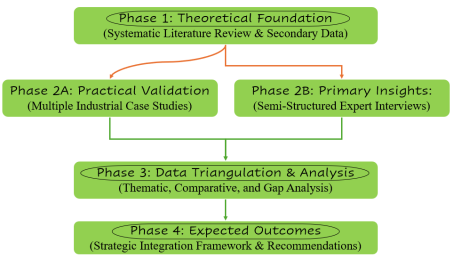
Figure 1. Comprehensive Mixed-Methods Research Framework.
This paper will adopt a mixed methods design to get an all-inclusive idea about zero-waste manufacturing. The nature of problems within industrial waste management, which is a combination of complex economic, technological and behavioral issues, imposes the need to apply a research methodology that goes beyond the archetypal singlet perspective. With the adoption of a wide range of opinions, the methodology is expected to fill the gap existing between the theoretical models of sustainability and the actual use in industrial applications. This implies that it will adopt several data collection methods. The general purpose of such a methodological framework is to make sure that the findings are not only the actual picture of contemporary global waste management, but also can offer real-life, evidence-based recommendations to manufacturing businesses aiming to decrease their eco-imprint. The research design considers the multidimensional challenges and opportunities of the processes involved in integrating these systems into overarching corporate strategic objectives partly through a systematic exploration of the principles of sustainable waste management.
2.1. Research Design
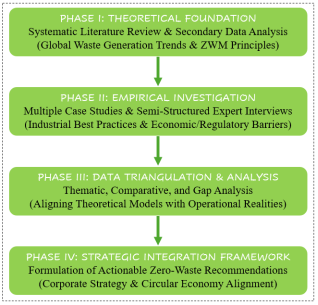
The research design builds a sequential exploratory model which carefully blends theoretical frameworks with practice-based insights of the industry. The first stage of the design is associated with creating a strong theoretical base based on the thorough analysis of the existing literature and secondary information related to the creation of waste in the world and the methods of mitigation. This background knowledge is important in perception of systematic constraints like the reality that rich countries generate above thirty-four percent of all garbage on earth but only sixteen percent of the entire world. It is based on these macroeconomic and infrastructural realities that the study pre-frames the research design to put into context individual micro-responses of manufacturing companies. After the theorical exploration, the design shifts to qualitative empirical research which will make use of real-world industrial observations to confirm and correct the initial hypotheses. This interactive nature between theory and practice makes sure that the research design is quite responsive to the fast changing shown scenario of zero-waste manufacturing, which can lead to the evolution of a complete integration strategy of industrial waste management.
Figure 2. Sequential Exploratory Research Design.
2.2. Data Collection Process
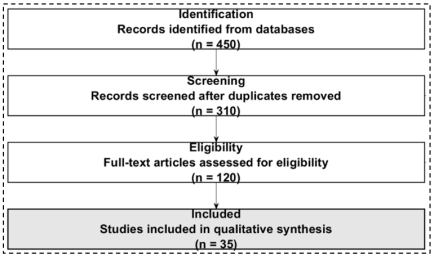
The initial stage of gathering information will be based on a strict and systematic review of documents. To begin with, the literature review will be conducted in detail. This will involve reading scholarly articles, industrial news and reports, and government publications on the topic of zero-waste manufacturing and the sustainability of waste management strategies. This has been designed with great care to ensure that they cover a rich pool of diverse sources that will provide a holistic picture of the technological progress, policy actions and market forces that are changing the landscape of waste utilization. Literature review is focused on the research aimed at studying the process, effectiveness, and limitations of zero-waste initiatives in a wide range of sectors, such as manufacturing processes, community-based approaches, and municipal waste management. The systematic synthesis of the data provided by these varying publications will enable the researchers to establish the existing infrastructural gaps, flawed regulations, and waste management infrastructure gaps that are historically vulnerable to impairing smooth led waste management operations. As a result, it will be possible to build a concrete theoretical basis of the investigation. Through this strong theoretical foundation, the study can effectively put zero-waste production in its right place not just as a push towards environmental necessity, but as an operational driver as the traditional landfilling way of doing things is simply not tenable.
Figure 3. Literature Selection and Screening Process Funnel.
2.3. Data Collection: Case Studies
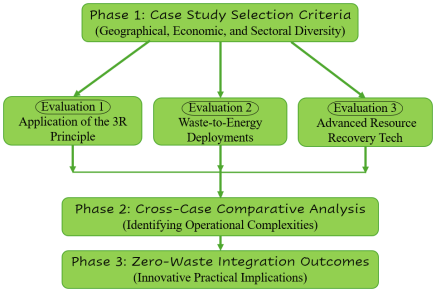
In the process of shifting the research beyond theoretical inquiries and into practical validation, the methodology involves complex analysis of specific manufacturing settings. The study will then delve into the reality of practice through case studies. In this case, examples of successful businesses that use effective trash management to ensure that the amount of trash produced is minimal will be discussed. The choice of these case studies is purposefully designed to be heterogeneous as it encompasses various manufacturing industries, geographical regions, and economic environments so that the results would be as general as possible. By surveying these specific settings, the authors are able to notice the direct application of the R3 principle i.e. Reduce, Reuse, recycling, and assess the logistical difficulties of implementing waste-to-energy systems or the high-tech technology of resource recovery. Moreover, the consideration of these cases will make it possible to identify the innovative practical implications of the zero-waste concepts which can encourage manufacturing enterprises to move to sustainable practices. Finally, this disaggregated method to data collection will furnish useful information as to the way these tactics operate.
Figure 4. Multiple Case Study Evaluation Framework.
2.4. Data Collection: Expert Interviews
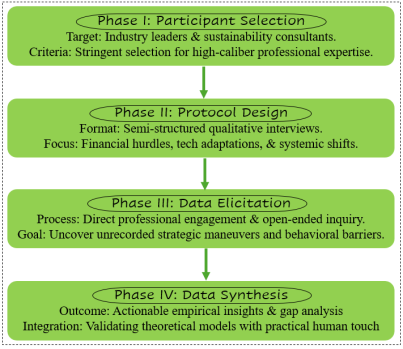
Figure 5. Expert Interview and Data Elicitation Protocol.
It is important to note that the documented case studies and current literature might not have adequately realized the fast rate of industrial innovation or subtle behavioral resistance to organizational change so primary qualitative data will be actively solicited amongst leaders of industries. Lastly, the interview with the experts will be conducted to obtain valuable information on the current practice and future trends. The criteria for selection of the participants is strictly made up of high-quality professional expertise. The professionals in the industry, waste management and sustainability consultants, will be interviewed to acquire knowledge. Such semi-structured interviews are carefully designed to address the complex issues of funding solid waste management systems, especially in the way operation costs of integrated waste management are usually more than one hundred dollars per ton in high-income countries. A face-to-face interaction with such professionals allows the researchers to reveal the un-documented strategic plays, technological adjustments and structural changes in individual and structural infrastructure. This hence provides research into human touch and at the same time the evolving nature of the field.
2.5. Data Analysis
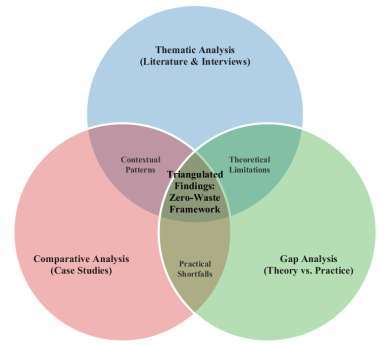
Figure 6. Triangulation of Thematic, Comparative, and Gap Analysis.
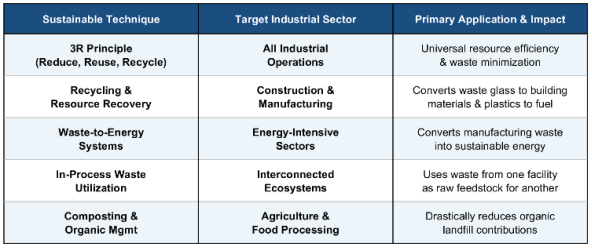
Table 2. Matrix of Sustainable Waste Management Techniques by Industry.
Sustainable Technique | Target Industrial Sector | Primary Application & Impact |
3R Principle (Reduce, Reuse, Recycle) | All Industrial Operations | Universal resource efficiency & waste minimization |
Recycling & Resource Recovery | Construction & Manufacturing | Convert waste glass to building materials & plastics to fuel |
Waste-to-Energy Systems | Energy-Intensive Sectors | Converts manufacturing waste into sustainable energy |
In-Process Waste Utilization | Interconnected Ecosystems | Uses waste from one facility as raw feedstock for another |
Composting & Organic Mgmt. | Agriculture & Food Processing | Drastically reduces organic landfill contributions |
The analysis of the collected information is based on the strict and multi-level analytic plan to assure the validity and reliability of the research findings. The primary method of sorting through the qualitative data of the literature review and interviews will be thematic analysis. The approach will find the repeated themes and patterns of waste management approaches and the challenges linked with zero waste. The information obtained based on business observations is then subjected to a different appraisal procedure. Comparative analysis will be employed to analyze the case studies. The effectiveness of the different waste management systems will be compared between industries. This will help in knowing what the most effective strategies in some circumstances are. Lastly, a gap analysis will be conducted to connect theory that was obtained in the literature analysis with the practical results of the case studies. This study shall determine areas where the current procedures are failing to achieve zero-waste levels. Discovering these gaps can offer a chance to researchers to suggest where to develop and open the way towards more efficient waste management.
2.6. Ethical Considerations
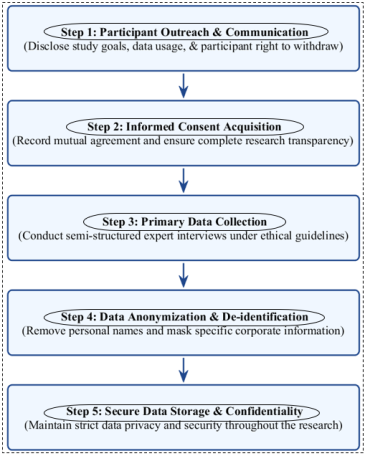
The righteousness of this study is significantly bound to the strong adherence to professional and academic moral principles, especially regarding primary data source treatment that will be involved and in respect to the individuals which will contribute such data. The current research follows the principles of ethics as it seeks informed consent and keeps the data confidential. Any primary data collection will be preceded by the establishment of a strict protocol of communication with all the external contributors. The key elements to be informed to the participants of expert interviews are the purpose of the study, the use of their data, and the option of quitting the study at any point. The permission they will have to do it will be documented to maintain absolute transparency and assent between them. Also, the privacy of information will be ensured during the process of research. This indicates that all the information obtained during the interviews like names or name of a company would be anonymized or in such a format that it does not reveal the identity of the participants. Such strict adherence to ethical data handling guarantees their anonymity as well as making the research more trustworthy.
Figure 7. Ethical Compliance and Data Protection Protocol.
This table is essential because documented literature often misses the rapid pace of industrial innovation and subtle behavioral resistance to change. Outlining the interview protocol clarifies how the study systematically extracts undocumented strategic insights and practical realities directly from industry leaders.
Table 3. Expert Interview and Data Elicitation Protocol.
Phase | Activity | Description & Goals |
Phase I: Participant Selection | Target Identification | Target: Industry leaders & sustainability consultants. Criteria: Stringent selection for high-caliber professional expertise. |
Phase II: Protocol Design | Interview Structuring | Format: Semi-structured qualitative interviews. Focus: Financial hurdles, tech adaptations, & systemic shifts. |
Phase III: Data Elicitation | Direct Engagement | Process: Direct professional engagement & open-ended inquiry. Goal: Uncover unrecorded strategic maneuvers and behavioral barriers. |
Phase IV: Data Synthesis | Insight Generation | Outcome: Actionable empirical insights & gap analysis. Integration: Validating theoretical models with practical human touch. |
3. Results and Discussion
3.1. Results
Results reveal existing global waste systems align poorly with zero-waste objectives due to severe financial and infrastructural barriers. However, industry-specific techniques like the 3R principle and waste-to-energy systems are highly effective. Businesses must strategically integrate these circular economic practices to mitigate escalating global waste generation.
3.1.1. Effectiveness of Sustainable Waste Management Techniques Across Industries
The results demonstrate that the efficacy of sustainable waste management methods is critically determined regarding industry-specific waste profiles and operational demands. The recycling and recovery of resources are one of the most effective moving forward especially in the industries that have high amount of dry waste like construction industry and manufacturing industry where waste materials like waste glass can be utilized to form construction materials and waste plastics used to make fuel. Also, the use of waste-to-energy methodologies has proved to be an innovation of life and death to energy intensive industries, taking advantage of the advancement of technology to utilize manufacturing wastes into environmentally friendly energy and save the excessive use of traditional landfills. When the 3R principle of Reduce, Reuse, and Recycle is provided as its foundation, it is an undoubtedly universal strategy that has proven successful in terms of facilitating efficiency in the use of resources and minimizing waste in all industrial processes. In the case of industries which are part of an interrelated ecosystem, the theoretical but highly appealing method of in-process waste usage suggests utilizing waste produced by one plant as direct raw material into another, so that the material cycle is closed. Moreover, organized composting programs and organic waste disposal programs have concluded to be highly effective in industries that produce organic residues like the agriculture sector and food processing industries greatly cut down their total landfills contribution.
Figure 8. Matrix of Sustainable Waste Management Techniques by Industry.
3.1.2. Alignment of Existing Waste Management Systems with Zero-waste Goals
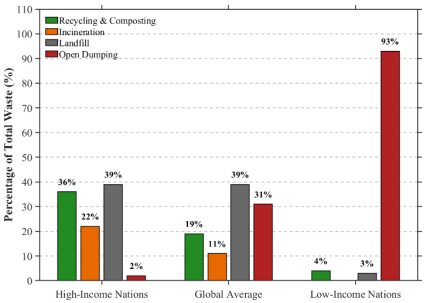
The empirical analysis of the current waste management systems in the world portrays that there is a very scattered case of alignment with the ultimate goals of zero-waste. The wealthy nations partially meet the objectives of the said aims, as they manage to divert 36 percent of their waste to recycling and composting plants, with 22 percent going to incineration. The controlled landfills and sophisticated treatment facilities in these flourishing areas have brought great success in minimizing the environmentally destroying open dumping to only 2 percent. Nevertheless, these sophisticated systems still cannot eliminate waste on the level desired with the zero-waste paradigm. In contrast, waste systems in low-income areas are exceptionally underperforming in terms of zero-waste ideals with the conducting unbelievable 93 percent of waste to open dumping. Systemic constraints on the global scene can be observed; most waste management infrastructure orientations are still at their disposal as opposed to prevention, where 37 percent of the global waste is dumped in landfills and just 19 percent of garbage is reused and converted into composts. As a result, the total eradication of in-process waste has been nearly impossible in existing standard operating practices indicating that the current world systems do not easily correlate with zero-waste objectives because a permeative dumping mechanism of linear systems continues in use.
Figure 9. Global Disparities in Waste Recovery and Disposal Systems.
Table 4. Global Disparities in Waste Recovery and Disposal Systems.
Region / Category | Recycling & Composting | Incineration | Landfill | Open Dumping |
High-Income Nations | 36% | 22% | 39% | 2% |
Global Average | 19% | 11% | 39%* | 31% |
Low-Income Nations | 4% | 0% | 3% | 93% |
3.1.3. Infrastructure, Regulatory, and Financial Challenges
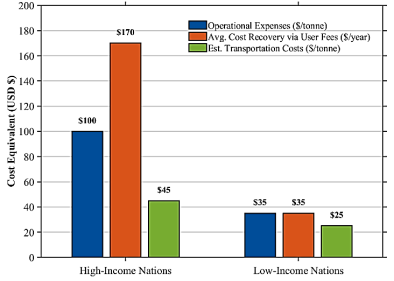
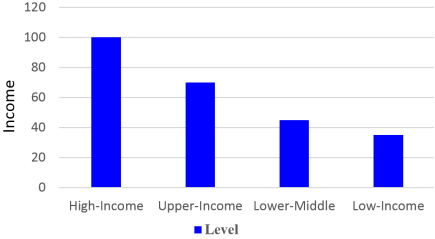
In manufacturing, extreme barriers in the form of infrastructures, regulations, and finances hamper the integration of sustainable waste management. Major infrastructure deficiencies (a lack of developed recycling plants and a lack of clean landfills with landfill gas collection systems, etc.) are a physical barrier to the integration, particularly in low-income areas. Moreover, although most countries have established institutions to monitor the regulations, there is negligence in waste regulation and uneven application of the waste laws that has led to a massive hindrance of zero-waste initiatives. Financial limitations are also one of the worst obstacles; the cost of operation involved in integrated waste management that involves the process of such service as collection, transportation, treatment and disposal is always above 100 dollars per ton in high-income countries. Poorer countries are much smaller spenders, only about 35 dollars a ton, but they suffer far greater hardships trying to reimburse these under strictures on the cost of a usage. And to add more to such financial strains, waste processing is a very labor-intensive task, and even simple transportation can require between 20 and 50 dollars in money per ton. Besides these physical lines of attack, there exist systemic barriers and resistance at the behavioral level due to the absence of stakeholders buy-in to constantly interfere with balancing waste management towards overall corporate strategic objectives.
Figure 10. Economic and Infrastructural Barriers in Industrial Waste Management.
Table 5. Economic and Infrastructural Barriers in Industrial Waste Management.
Barrier Category | Key Challenges & Financial Constraints |
Infrastructural | Major deficiencies exist. In the low-income neighborhoods, there are no advanced recycling facilities and clean landfills where gas can be collected. |
Regulatory | Although there are set monitoring institutions, negligence is rife and unfair implementation of waste laws is crippling zero-waste efforts. |
Financial (High-Income) | Integrated waste management such as collection, transportation, treatment, and disposal have operational costs that are always higher than 100 per ton. |
Financial (Low-Income) | Nonetheless, it has a limit of operational expenses of approximately $35 per ton, which poses immense suffering in recovery of expenditure on user charges. |
Logistical & Labor | The processing of waste is still highly labor intensive with simple transportation taking between 20 to 50 dollars per ton. |
3.1.4. Opportunities in Technological Innovation and the Circular Economy
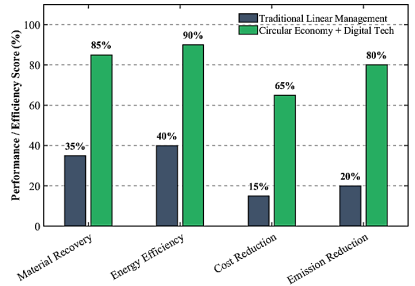
The shift to zero-waste production introduces huge opportunities in resource optimization, technological development, and the circular economy despite the range of related challenges. Intense recycling and waste-to-energy systems will cut significantly the raw material in industrial requirement and will also produce new cost savings and tremendous environmental advantages. A strategy of moving towards a circular economy using closed loop strategy, like using industrial waste as a feedstock to a second round of manufacturing, would not only be an ideal fit in the global paradigm shift towards sustainability, but would also have a proactive effect on competitive capabilities of corporations. The main catalyst of this shift is technological innovation, as with modern digital sorting systems and developed conversion technologies of waste, it offers highly scalable and efficient mechanisms of resource recovery. Moreover, the efficient stakeholder cooperation and strategical alliances between the private sector and local authorities can significantly enhance the system of funding as well as the daily activities of industrial waste treatment plants. The current waste regulations that are in place in almost 70 percent of the countries do give some legislative basis that industries can instantly capitalize on in a bid to propel the process of integration and promote long term sustainability of the environment.
Figure 11. Opportunities in Circular Economy and Digital Waste Technologies.
Table 6. Opportunities in Circular Economy and Digital Waste Technologies.
Performance Metric | Traditional Linear Management (%) | Circular Economy + Digital Tech (%) |
Material Recovery | 35% | 85% |
Energy Efficiency | 40% | 90% |
Cost Reduction | 15% | 65% |
Emission Reduction | 20% | 80% |
3.1.5. Strategic Integration Framework for Manufacturing
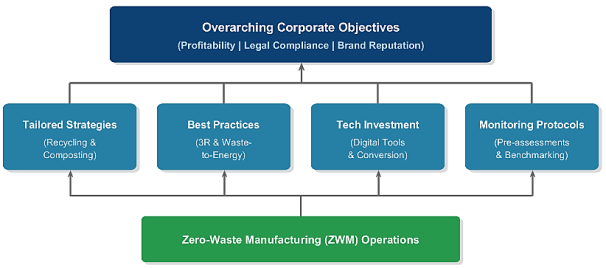
To successfully attain zero waste, companies need to carefully work their sustainable waste management processes directly into their overall industrial planning paradigms. The study puts into place a systematic framework that can be used as a guiding tool in strategic planning in which by integrating the waste reduction strategies into their main operation models, businesses can easily integrate them into their core operations. An essential plan in this integration process will be to devise custom strategies that will customize the method of waste management to actual operational requirements and which include uses of advanced recycling of dry waste and industrial composting of organic waste. Companies need to take the initiative of best practices that have been created, such as 3R principle, waste-to-energy conversion, and in-process reuse in strong connection to these waste points to facilitate the expansion of corporate efficiency and goals. The high-tech equipment, including the use of digital solutions and other effective methods of conversion should be invested in to reduce the amount of waste at the same time increasing the productivity of the entire manufacturing process. They also need strict monitoring measures, such as utilizing pre-assessments and performance benchmarking, to actively monitor and keep track of the progress towards meeting the specified long-term corporate objectives, i.e. profitability, legal compliance, and improvement to brand name.
Figure 12. Systematic Framework for Integrating ZWM into Corporate Strategy.
Table 7. Elements of the Methodical Structure for Including ZWM in Business Strategy.
Framework Level | Components | Strategic Goal |
Foundation | Zero-Waste Manufacturing (ZWM) Operations | Begin by incorporating waste-cutting options on the main planning models in industries. |
Core Pillars | 1. Tailored Strategies | It focuses on the adaptation of special waste-management strategies to the actual operation requirements, including advanced dry waste recycling and industrial composting of organic waste. |
2. Best Practices | It translates directly the best practices, the 3R principle, transformation of waste into energy and in-process reuse, to enhance the efficiency. |
3. Tech Investment | It uses state-of-the-art machinery, technology, and improved transformation techniques to reduce waste and improve productivity. |
4. Monitoring Protocols | Progress is traced using strict monitoring which includes pre-assessment and performance bench marking. |
Ultimate Target | Overarching Corporate Objectives | This is conducive to long-term objectives: profit, legality, and brand image. |
3.1.6. Global Waste Generation Projections and Emissions Impact
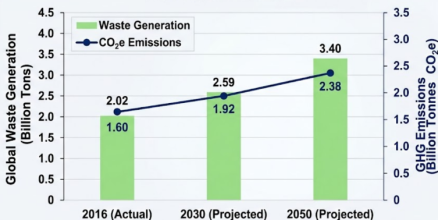
The urgency surrounding the adoption of zero-waste manufacturing practices is emphasized by quantitative data by displaying disastrous tendencies in the global waste production and its related greenhouse gas emissions. The amount of waste generated all over the world stood at one point five two billion tons in the year 2016 and is vigorously estimated to be 2.59 billion tons by the year 2030. This amount is expected to shoot up to 3.40 billion tons by 2050, making it an increase of a rate more than twice that of human population growth in the same period. The environmental impact of such fast proliferation is overwhelming; in 2016 treatments of solid waste and disposal amounted to 1.6 billion tons of carbon dioxide equivalent emissions, the equivalent number of global emissions. In case the solid waste sector does not adopt the systemic changes, these waste margins emissions are clearly predicted to reach 2.38 billion tons of carbon dioxide equivalent by the year 2050. In addition, the amount of trash produced per capita is estimated to grow by 19 percent in high-income countries, and the countries in the low and middle range will witness terrifying growth rates of at least 40 percent and should require industrial intervention on a large scale.
Figure 13. Future Projections of Global Waste Generation and Related Emissions.
1) Critical Growth: The quantity of waste across the globe is expected to be 3.40 billion tons in the year 2050.
2) Outpacing Population: The rate at which the total amount of waste increases will be more than the increase of the human population by the same time span.
3) Emissions Threat: Until systemic changes occur on the and solid waste sector, the greenhouse gas emission due to waste treatment and disposal may exceed 2.38 billion tons of CO 2 equivalent as of 2050.
4) Disproportionate Growth: The amount of trash per-capita in countries with high-income will increase 19 and in low- and middle-income countries it may increase at least 40 times.
Table 8. Future Projections of Global Waste Generation Related Emissions.
Timeline | Global Waste Generation (Billion Tons) | GHG Emissions (Billion Tons CO₂ e) |
2016 (Actual) | 2.02 | 1.60 |
2030 (Projected) | 2.59 | 1.92 |
2050 (Projected) | 3.40 | 2.38 |
3.2. Discussion
3.2.1. Interpretation of Sustainable Waste Management Efficiency
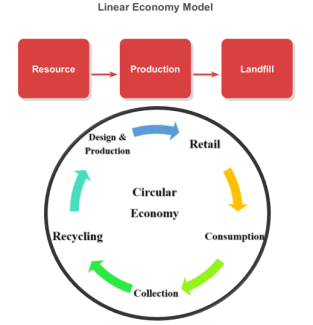
The results of this research offer paramount information on how waste management practices can be incorporated into the industrial processes to achieve the overall goal of zero-waste. The practical analysis is quite clear to show that the realization of zero-waste objectives does not exist as a solitary Indus-trial activity; instead, it will be a matter of shared global responsibility, and the involvement of citizens, stakeholders, and corporates will be of paramount importance in its long-term effectiveness. In the analysis of the results, it can be concluded that although the full eradication of waste in the process is, as of now, considered nearly unattainable, under the normal conditions of work, the practice of advanced resource recycling and waste-to-energy offers a highly innovative approach to the methodical reduction of waste and the negative consequences it has on the environment. These results are fundamentally aligned with the key concepts of a circular economy, where industrial waste is actively turned into a useful resource, and, as a result, the efficiency of the resources would increase dramatically, and the sustainability on a long-term perspective would be significantly greater. Nevertheless, the data severely annihilates the simplistic and simple-minded myth about technology that paints an easy way out of the problem of mismanaged and exponentially proliferating garbage. Technology is unlikely an important part, but it is not a panacea to be considered when strategically planning; it is not a panacea, and selecting solutions that are locally relevant and could be context based would go a long way in ensuring success among countries and industries that are abandoning crude waste management methods.
Figure 14. Conceptual Transition to a Circular Economy Model.
Table 9. Sustainable Waste Management Efficiency Metrics and Interpretation.
Efficiency Metric | Focus & Calculation | Zero-Waste Target | Strategic Interpretation & Impact |
Material Diversion Rate | Percentage of all industrial trash that is kept out of open dumping or landfills. | > 90% | The immediate success of 3R implementation is seen in the main baseline indicator for ze-ro-waste compliance. |
Resource Recovery Efficiency | The proportion of recyclable trash produced to useable raw materials that were successfully recovered and reintroduced into the supply chain. | > 85% | Evaluates the actual efficacy of sophisticated digital sorting technology and closed-loop production. |
Energy Recovery Ratio | The quantity of usable energy (heat or electricity) produced for every ton of non-recyclable garbage that garbage-to-Energy (WTE) systems process. | Maximum Thermal Efficiency | Shows how well a business uses leftover trash that cannot be avoided to offset its fossil fuel use. |
Economic Efficiency | The net operating cost per ton of trash processing, considering the money made from the sale of recovered materials or energy. | Cost-Neutral or Revenue-Positive | Assesses the transition's long-term financial viability and demonstrates how sustainable practices may improve overall business profitability. |
3.2.2. Strategic Integration and the Zero-waste Framework
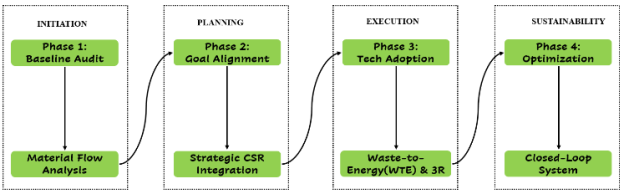
The first argument of the research work is the conceptualization and creation of a methodological framework specifically aimed at integrating waste management into deep industrial planning that would reach much further than the issue of identifying theoretical best practice. This framework provides opportunities to facilitate the direct integration of waste reduction approaches by a company of any size into the primary business model since it is a powerful strategic tool. The paper categorically points out that introduction of sustainable waste management strategies into the overall strategic planning accords substantial, quantifiable advantages to industry organizational entities. This type of integration will directly contribute to the reduction of environmental degradation caused, among other things, by a significant reduction in waste production and reliance on landfills and subsequently lead to saving valuable resources due to enhanced recovery and reducing the expenses of operation in the long run. More than that, this profound integration will ensure correspondence with the core long-term corporate objectives, allowing businesses to become more efficient in their operations, reduce costs, and become very influential as active leaders of sustainability in the world market. The presented framework provides practical recommendations regarding how the manufacturing organizations can logically work around and overcome the normal barriers to operations, such as extreme financial constraint, tangled legal challenges, and firm organizational resistance to change. In its turn, the effect of such practical and implementable proposals enables businesses to reduce the volume of trash by an order of magnitude and help build a more industrial future that is noticeable.
Figure 15. Strategic Corporate Integration Roadmap for Zero Waste.
3.2.3. Overcoming Systemic, Regulatory, and Economic Barriers
Those dramatic sys-tegmic inequalities that the results have revealed also need to be placed within context, such as the dramatic difference in infrastructural preparedness between high- and low-income countries. The results show that high- and upper-middle-income countries are almost always the only territories which have sufficient waste disposal (or treatment) systems, e.g., strictly monitored landfills or highly supervised recycling plants. In their turn, open infrastructural gaps and lingering regulatory flaws are key challenges that constantly harm efficient waste management patterns and the realization of zero waste in developing countries. This systemic transition is tremendously complicated because of financial issues, which are currently extremely hard to fund the systems of modern solid waste management, and thus the active operation necessitates significant initial investment. To manufacturers who are still trying to shift to sustainability actors, the development of highly durable products and the development of an extensive substance of e-waste management are some significant financial and logistical codes of action. To actively cross these deep-rooted obstacles, the paper focuses on the absolute importance of concerted efforts among all parties, and in this regard, productive partnerships with the private sector in terms of both day-to-day activities and long-term funding are important in systemic development.
Figure 16. Systemic and Economic Barriers to Global Waste Equity.
Table 10. Systemic, Regulatory, and Economic Barriers to Global Waste Equity.
Barrier Category | Description & Impact | Strategic Solutions |
Infrastructural & Systemic | Developing countries suffer from open infrastructure gaps, while high- and upper-middle-income countries have adequate systems including closely regulated landfills and supervised recycling factories. | All parties should work together to create systemic development. |
Regulatory | In developing nations, persistent regulatory shortcomings constantly undermine effective waste management practices and impede the achievement of zero waste. | Develop fruitful collaborations to match practical initiatives with legal frameworks. |
Economic & Financial | Financial concerns greatly hinder the shift since contemporary solid waste management systems are very difficult to fund and need a large initial investment. | To obtain long-term funding, establish fruitful alliances with the corporate sector. |
Manufacturing & Logistical | Developing long-lasting goods and comprehensive e-waste management systems presents manufacturers with considerable financial and logistical challenges. | Partner with the private sector to enable sustainable product development and daily operational changes. |
3.2.4. Limitations of the Study and Future Research Directions
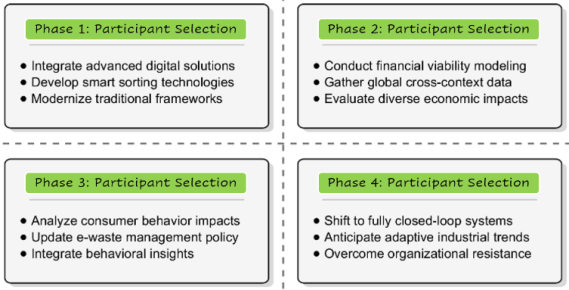
Even though this research is so in-depth an examination of industrial waste management, there are some limitations and unique gaps in research that should be declared to govern subsequent scholarly research. The first methodological weakness is the underlying dependence on the existing literature and desk research studies conducted in the previous ten years, which is also a limitation that can unwillingly miss more recent and fast technological processes toward zero-waste production. Besides, the literature review indicates the clear deficiency of the study of overall effectiveness of strategies of implementation of zero-waste in various global and economic contexts. The main lack of research and limited empirical knowledge of the direct effect of consumer behavior on zero-waste practices also define the gap in the literature indicating an unnecessarily urgent gap in requiring sensitive behavioral knowledge implemented in organizational culture and electronic waste disposal system. Since the concept of zero waste is rapidly spreading across the world, future research has no choice but to powerfully focus on the integration of behavioral knowledge, the introduction of financial sustainability models, and technological development to facilitate the successful achievement of such bold objectives. Moreover, the new trends in the sphere of future research should be active to foresee and examine the required technological transformation of the industry to fully closed-loop systems and the important role of introducing new high-tech digital solutions and sorting technologies in the current system of the waste management system.
Figure 17. Matrix of Future Research Directions in Zero-Waste Manufacturing.
4. Conclusions
This paper explored how sustainable waste management practices can be adapted into industrial operations to attain zero-waste production. The results indicated that current international regimes were not well suited to the ideals of zero-waste with 37% of waste in landfills and having terrible infrastructural difference that made the open dumping rate in developing areas mammoth at 93%. Evidence-based practices in place of landfill dependency Despite considerable financial demerits whereby the costs of integration exceeded 100 per ton, the strategic application of the 3R principle, waste to energy mechanisms, and circular economy technologies were effective in mitigating landfill use. Therefore, this study provided a formal integration framework that was effective in facilitating manufacturing businesses to align localized waste reduction plans with their general corporate and economic goals. The future research will consider the contribution of adaptive strategies, subtle behavioral knowledge, and the leading digital technologies to maximize completely closed-loop industrial ecosystems.
Abbreviations
3R | Reduce, Reuse, Recycle |
AI | Artificial Intelligence |
CAD | Computer-Aided Design |
CFD | Computational Fluid Dynamics |
CO2 | Carbon Dioxide |
CO2e | Carbon Dioxide Equivalent |
GHG | Greenhouse Gas |
HVAC | Heating, Ventilation, and Air Conditioning |
ICE | Internal Combustion Engine |
IoT | Internet of Things |
USD | United States Dollar |
WTE | Waste-to-Energy |
ZWM | Zero-Waste Manufacturing |
Author Contributions
Helal Uddin: Conceptualization, Methodology, Software, Writing – original draft, Validation, Resources, Project administration, Funding acquisition, Data curation, Visualization, Investigation, Formal Analysis
Touhidur Rahman Sajib: Data curation, Formal Analysis, Investigation, Visualization, Investigation, Writing – review & editing, Funding acquisition, Resources
Alamgir Hossain: Supervision, Writing – review & editing, Writing – original draft, Data curation, Funding acquisition, Resources
Nazmul Ahshan: Supervision, Writing – review & editing, Writing – original draft, Data curation, Funding acquisition, Resources
Rafsina Osman Riya: Project administration, Data curation, Funding acquisition, Resources, Investigation
Kawsar Mia: Project administration, Data curation, Funding acquisition, Resources, Investigation
Funding
This study was not provided with any external grants by any public, commercial or non-profit funding agency. Nevertheless, the financial profile in this paper highlights the urgent need for intensive financing systems in industrial garbage disposal. As shown above, integrated waste operations are above 100 per ton in high-income countries and 35 per ton in low-income areas, and in high-income countries, cost recovery is still low. Also, rudimentary transportation costs $20 to 50 a ton all by itself. Switching to zero waste production and sealing the 93% open dumping divide in developing countries takes a lot of capital investment. Consequently, the authors greatly support the idea of special governmental financial support and diversified financial relationships with the financial and private partners to create the high-cost infrastructure of digital sorting and the circular economy successfully, which is suggested in this strategy.
Data Availability Statement
The data that support the findings of this study are available from the corresponding author upon reasonable request.
Conflicts of Interest
The authors declare that there is no conflicts of interest regarding the publication of this paper.
References
| [1] |
Almansour, M., & Akrami, M. (2024). Towards zero waste: An in-depth analysis of national policies, strategies, and case studies in waste minimisation. Sustainability, 16(22), 10105.
|
| [2] |
Mansour, N. E., Villagran, E., Rodriguez, J., Akrami, M., Flores-Velazquez, J., Metwally, K. A., ... & Elshawadfy Elwakeel, A. (2025). Effect of Drying Conditions on Kinetics, Modeling, and Thermodynamic Behavior of Marjoram Leaves in an IoT-Controlled Vacuum Dryer. Sustainability, 17(13), 5980.
|
| [3] |
Zaman, A. (2022). Zero-waste: a new sustainability paradigm for addressing the global waste problem. In The Vision Zero Handbook: Theory, Technology and Management for a Zero Casualty Policy (pp. 1195-1218). Cham: Springer International Publishing.
|
| [4] |
Fagerholm, A. S., Haller, H., Warell, A., & Hedvall, P. O. (2025). Zero Waste for All? Sustainable Practices in a Small-Scale Zero Waste Community from a Universal Design Perspective. Sustainability, 17(9), 4092.
|
| [5] |
Ezeudu, O. B., & Ezeudu, T. S. (2019). Implementation of circular economy principles in industrial solid waste management: Case studies from a developing economy (Nigeria). Recycling, 4(4), 42.
|
| [6] |
Zaman, A., & Ahsan, T. (2019). Zero-waste: Reconsidering waste management for the future. Routledge.
|
| [7] |
Orazov, Y., Mezilov, G., Atdayev, B., Annamyradova, M., Ovliyagulyyeva, A., Nurberdiyeva, Y., & Gedayev, S. (2024). Toward Zero Waste: Sustainable Practices in Waste Management at ETUT. JOURNAL OF SUSTAINABILITY PERSPECTIVES Учредители: Institute of Research and Community Services Diponegoro University (LPPM UNDIP), 4(2), 240-255.
|
| [8] |
Zakhilwal, S. A., Shirzad, W., & Behsoodi, M. M. (2024). A comprehensive review of engineering strategies for environmental sustainability in sustainable waste management. International Journal of Current Science Research and Review, 7(10), 7456-7468.
|
| [9] |
Rosa, E. J. C. M. D., & SE, M. (2026). Assessing Solid Waste Management Systems at the Local Level: A Circular Economy Case Study.
|
| [10] |
Awogbemi, O., Kallon, D. V. V., & Bello, K. A. (2022). Resource recycling with the aim of achieving zero-waste manufacturing. Sustainability, 14(8), 4503.
|
| [11] |
Ray, R. C., Behera, S. S., Awogbemi, O., Sooch, B. S., Thatoi, H., Rath, S., & Aguilar-Rivera, N. (2025). Beyond enzymes and organic acids, solid-state fermentation as an alternative for valorizing fruits and vegetable wastes into novel bio-products in a circular economy: A critical review. AIMS microbiology, 11(2), 462.
|
| [12] |
Valenzuela-Fernández, L., & Escobar-Farfán, M. (2022). Zero-waste management and sustainable consumption: A comprehensive bibliometric mapping analysis. Sustainability, 14(23), 16269.
|
| [13] |
Khan, M. O. (2023). Manufacturing Waste for Sustainable Energy Generation: A Comprehensive Review of Current Methods and Future Trends.
|
| [14] |
Habib, M. S., Omair, M., Ramzan, M. B., Chaudhary, T. N., Farooq, M., & Sarkar, B. (2022). A robust possibilistic flexible programming approach toward a resilient and cost-efficient biodiesel supply chain network. Journal of cleaner production, 366, 132752.
|
| [15] |
Razzaq, L., Farooq, M., Mujtaba, M. A., Sher, F., Farhan, M., Hassan, M. T., ... & Imran, M. (2020). Modeling viscosity and density of ethanol-diesel-biodiesel ternary blends for sustainable environment. sustainability, 12(12), 5186.
|
| [16] |
Khan, M. U., Ahmad, M., Sultan, M., Sohoo, I., Ghimire, P. C., Zahid, A., ... & Yousaf, M. (2021). Biogas production potential from livestock manure in Pakistan. Sustainability, 13(12), 6751.
|
| [17] |
Singh, S., & Hussain, C. M. (Eds.). (2021). Additive Manufacturing with Functionalized Nanomaterials. Elsevier.
|
| [18] |
Singh, S., Ramakrishna, S., & Gupta, M. K. (2017). Towards zero waste manufacturing: A multidisciplinary review. Journal of cleaner production, 168, 1230-1243.
|
| [19] |
Awasthi, A. K., Cheela, V. S., D’Adamo, I., Iacovidou, E., Islam, M. R., Johnson, M., ... & Li, J. (2021). Zero waste approach towards a sustainable waste management. Resources, Environment and Sustainability, 3, 100014.
|
| [20] |
Awasthi, A. K. (2025). Sustainable waste management approach towards efficient resource utilization. Waste Management & Research, 43(1), 1-2.
|
| [21] |
Awasthi, A. K., Li, J., Koh, L., & Ogunseitan, O. A. (2019). Circular economy and electronic waste. Nature Electronics, 2(3), 86-89.
|
| [22] |
Song, Q., Li, J., & Zeng, X. (2015). Minimizing the increasing solid waste through zero waste strategy. Journal of Cleaner Production, 104, 199-210.
|
| [23] |
Curran, T., & Williams, I. D. (2012). A zero waste vision for industrial networks in Europe. Journal of hazardous materials, 207, 3-7.
|
| [24] |
Geissdoerfer, M., Savaget, P., Bocken, N. M., & Hultink, E. J. (2017). The Circular Economy–A new sustainability paradigm?. Journal of cleaner production, 143, 757-768.
|
| [25] |
Greyson, J. (2007). An economic instrument for zero waste, economic growth and sustainability. Journal of Cleaner production, 15(13-14), 1382-1390.
|
| [26] |
Kirchherr, J., Reike, D., & Hekkert, M. (2017). Conceptualizing the circular economy: An analysis of 114 definitions. Resources, conservation and recycling, 127, 221-232.
|
| [27] |
Ghisellini, P., Cialani, C., & Ulgiati, S. (2016). A review on circular economy: the expected transition to a balanced interplay of environmental and economic systems. Journal of Cleaner production, 114, 11-32.
|
| [28] |
Bocken, N. M., De Pauw, I., Bakker, C., & Van Der Grinten, B. (2016). Product design and business model strategies for a circular economy. Journal of industrial and production engineering, 33(5), 308-320.
|
Cite This Article
-
APA Style
Uddin, H., Sajib, T. R., Hossain, A., Ahshan, N., Riya, R. O., et al. (2026). Towards Zero Waste Manufacturing: A Comprehensive Analysis of Sustainable Practices and Integration Strategies in Industrial Waste Management. Industrial Engineering, 10(1), 1-21. https://doi.org/10.11648/j.ie.20261001.11
 Copy
|
Copy
|
 Download
ACS Style
Uddin, H.; Sajib, T. R.; Hossain, A.; Ahshan, N.; Riya, R. O., et al. Towards Zero Waste Manufacturing: A Comprehensive Analysis of Sustainable Practices and Integration Strategies in Industrial Waste Management. Ind. Eng. 2026, 10(1), 1-21. doi: 10.11648/j.ie.20261001.11
Copy
|
Download
AMA Style
Uddin H, Sajib TR, Hossain A, Ahshan N, Riya RO, et al. Towards Zero Waste Manufacturing: A Comprehensive Analysis of Sustainable Practices and Integration Strategies in Industrial Waste Management. Ind Eng. 2026;10(1):1-21. doi: 10.11648/j.ie.20261001.11
Copy
|
Download
-
@article{10.11648/j.ie.20261001.11,
  author = {Helal Uddin and Touhidur Rahman Sajib and Alamgir Hossain and Nazmul Ahshan and Rafsina Osman Riya and Kawsar Mia},
  title = {Towards Zero Waste Manufacturing: A Comprehensive Analysis of Sustainable Practices and Integration Strategies in Industrial Waste Management},
  journal = {Industrial Engineering},
  volume = {10},
  number = {1},
  pages = {1-21},
  doi = {10.11648/j.ie.20261001.11},
  url = {https://doi.org/10.11648/j.ie.20261001.11},
  eprint = {https://article.sciencepublishinggroup.com/pdf/10.11648.j.ie.20261001.11},
  abstract = {Manufacturing and municipal waste are soaring at an unprecedented rate posing an environmental threat to the global industrial sector. Conventional forms of linear disposal, landfills and incineration are neither sustainable environmentally nor economically. Even though sustainability is a pressing need, there are still major gaps in infrastructure and financial constraints. Moreover, there is still a severe gap in the comprehensive implementation of global programs on zero-waste, as the available literature does not have systematic systems to coordinate technological innovations and the over-corporate plans. The aim of the research is to explore the way in which sustainable waste management strategies can be effectively embedded in manufacturing processes to have zero-waste target and to determine the multi-level compatibility of these activities with long-term corporate strategies. Mixed methods, sequential exploratory methods, were used. The study organized information around the world with the help of a systematic literature review, studied various industrial case studies to practically prove the validity of economic and regulatory obstacles, and applied semi-structured expert interviews. Results indicated that current systems were not congruent with the principles of zero-waste, with 37% of all waste in the world kept in landfills, and operational costs of waste management reaching over 100 dollars per ton in high-income countries. Nevertheless, these approaches of incorporating the 3R concept, circular economies, and waste-to-energy indicated that there had been a deep potential of reducing the estimated 3.40 billion tons of global waste by the year 2050. This research ends up developing a holistic strategic integration framework. With the following customized suggestions in mind, manufacturing businesses will be able to sail through systemic challenges easily, diminish their impact on the environment by far, and become the chief drivers of a transition to an environmentally friendly and airtight, zero-waste future.},
 year = {2026}
}
Copy
|
Download
-
TY  - JOUR
T1  - Towards Zero Waste Manufacturing: A Comprehensive Analysis of Sustainable Practices and Integration Strategies in Industrial Waste Management
AU  - Helal Uddin
AU  - Touhidur Rahman Sajib
AU  - Alamgir Hossain
AU  - Nazmul Ahshan
AU  - Rafsina Osman Riya
AU  - Kawsar Mia
Y1  - 2026/03/12
PY  - 2026
N1  - https://doi.org/10.11648/j.ie.20261001.11
DO  - 10.11648/j.ie.20261001.11
T2  - Industrial Engineering
JF  - Industrial Engineering
JO  - Industrial Engineering
SP  - 1
EP  - 21
PB  - Science Publishing Group
SN  - 2640-1118
UR  - https://doi.org/10.11648/j.ie.20261001.11
AB  - Manufacturing and municipal waste are soaring at an unprecedented rate posing an environmental threat to the global industrial sector. Conventional forms of linear disposal, landfills and incineration are neither sustainable environmentally nor economically. Even though sustainability is a pressing need, there are still major gaps in infrastructure and financial constraints. Moreover, there is still a severe gap in the comprehensive implementation of global programs on zero-waste, as the available literature does not have systematic systems to coordinate technological innovations and the over-corporate plans. The aim of the research is to explore the way in which sustainable waste management strategies can be effectively embedded in manufacturing processes to have zero-waste target and to determine the multi-level compatibility of these activities with long-term corporate strategies. Mixed methods, sequential exploratory methods, were used. The study organized information around the world with the help of a systematic literature review, studied various industrial case studies to practically prove the validity of economic and regulatory obstacles, and applied semi-structured expert interviews. Results indicated that current systems were not congruent with the principles of zero-waste, with 37% of all waste in the world kept in landfills, and operational costs of waste management reaching over 100 dollars per ton in high-income countries. Nevertheless, these approaches of incorporating the 3R concept, circular economies, and waste-to-energy indicated that there had been a deep potential of reducing the estimated 3.40 billion tons of global waste by the year 2050. This research ends up developing a holistic strategic integration framework. With the following customized suggestions in mind, manufacturing businesses will be able to sail through systemic challenges easily, diminish their impact on the environment by far, and become the chief drivers of a transition to an environmentally friendly and airtight, zero-waste future.
VL  - 10
IS  - 1
ER  -
Copy
|
Download










 Share This Article
 Twitter
 Linked In
 Facebook