Abstract
This study aimed to analyze the characteristics of physical load and physiological responses of a female basketball player during competitive 3×3 basketball using modern monitoring technologies. The research was conducted on a 21-year-old athlete from the State University of Moldova who participated in the National University Championship. Heart rate data were continuously recorded using a Polar H10 chest strap and analyzed via the Polar Flow platform during a full competition day (2 h 10 min). The results revealed a variable load structure characterized by alternating high-intensity efforts and recovery periods. A significant proportion of time was spent in low-intensity zones (32%), reflecting recovery phases, while 34% of the total time was spent in high and maximal intensity zones, indicating substantial anaerobic contribution. Segmental analysis demonstrated consistently elevated heart rate values (181-188 bpm average; 193-197 bpm peak), confirming high cardiovascular strain across matches. Energy system analysis showed a predominance of carbohydrate metabolism (84-90%), supporting the high-intensity nature of 3×3 basketball. A temporary reduction in intensity observed in the second match, followed by an increase in the third, suggests fatigue development and subsequent mobilization of physiological reserves. Low standard deviation values indicate stable cardiovascular responses during competition. The findings highlight the effectiveness of wearable monitoring technologies in assessing real-time physiological load and support their application in optimizing training processes. The study contributes to understanding the demands of 3×3 basketball under real competitive conditions, particularly in female athletes, where empirical data remain limited.
|
Published in
|
Higher Education Research (Volume 11, Issue 3)
|
|
DOI
|
10.11648/j.her.20261103.11
|
|
Page(s)
|
43-48 |
|
Creative Commons
|

This is an Open Access article, distributed under the terms of the Creative Commons Attribution 4.0 International License (http://creativecommons.org/licenses/by/4.0/), which permits unrestricted use, distribution and reproduction in any medium or format, provided the original work is properly cited.
|
|
Copyright
|
Copyright © The Author(s), 2026. Published by Science Publishing Group
|
Keywords
3×3 Basketball, Heart Rate Monitoring, Wearable Technology, Polar H10, Physiological Response, Anaerobic Performance,
Sports Education, Performance Analysis
1. Introduction
3×3 basketball has gained widespread recognition in recent years as an independent sports discipline, as evidenced by its inclusion in the Olympic Games in 2020. This game format is characterized by a high intensity of gameplay actions, limited space, and a reduced shot-clock duration, which imposes specific demands on the physical preparation of athletes
| [11] | Snoj, L. 3×3 basketball: Everything you need to know. Meyer & Meyer Sport. 2021. |
[11]
. Analysis of motor activity shows that, under game conditions, athletes regularly perform high-intensity actions, including accelerations, changes of direction, and jumps, which alternate with short recovery phases
| [7] | Mocrousov, E., Grosul, V. Multi-ball application methodology as an efficient factor for the technical element improvement in the process of long-term development in table tennis. In: Traditions, realities and perspecives of the physical culture development: International Scientific Conference. The 1st Edition. Ch.: Ed. USEFS, 2018, p. 62. |
| [12] | Tabîrța, V. Bazele metodice ale pregătirii sportivilor. [Methodological foundations of athletes' training.] Chișinău. 2020. |
| [13] | Thomas, J. R., Nelson, J., & Silverman, S. Research methods in physical activity (7th ed.) Human Kinetics. 2015. |
| [16] | Vilcinschi, S., Ivan, S., Milos, C., & Preda, R. The use of GPS tracking in 3x3 basketball training for monitoring and improving athletes performance. Journal of Young Scientist, 7, 197-200. 2019. |
[7, 12, 13, 16]
.
In comparison with traditional 5×5 basketball, the game process in the 3×3 format is associated with a higher relative intensity of physical load. According to Vilcinschi et al.
| [16] | Vilcinschi, S., Ivan, S., Milos, C., & Preda, R. The use of GPS tracking in 3x3 basketball training for monitoring and improving athletes performance. Journal of Young Scientist, 7, 197-200. 2019. |
[16]
, despite the shorter duration of the game, the level of physiological load in 3×3 may be higher due to the continuity of gameplay episodes and the reduced number of pauses. In the study by Conte, Lukonaitiene, Matulaitis and others
| [2] | Conte, D., Lukonaitiene, I., Matulaitis, K., Snieckus, A., Kniubaite, A., Kreivyte, R., & Kamandulis, S. Recreational 3×3 basketball elicits higher heart rate, enjoyment, and physical activity intensities but lower blood lactate and perceived exertion compared to HIIT in active young adults. Biology of Sport, 40(3), 889-898. 2023.
https://doi.org/10.5114/biolsport.2023.122478 |
[2]
, it is stated that participation in 3×3 basketball is associated with higher values of relative heart rate (%HR) and physical activity levels compared to high-intensity interval training (HIIT), under comparable exercise duration.
In European countries, differences are observed in scientific and practical approaches to the study of 3×3 basketball. In Lithuania and Italy, the main focus is placed on analyzing physiological and behavioral responses of athletes in the context of increasing physical activity and engagement
| [2] | Conte, D., Lukonaitiene, I., Matulaitis, K., Snieckus, A., Kniubaite, A., Kreivyte, R., & Kamandulis, S. Recreational 3×3 basketball elicits higher heart rate, enjoyment, and physical activity intensities but lower blood lactate and perceived exertion compared to HIIT in active young adults. Biology of Sport, 40(3), 889-898. 2023.
https://doi.org/10.5114/biolsport.2023.122478 |
[2]
, whereas in Romania research is oriented toward the use of monitoring technologies, including GPS and heart rate sensors, to assess load structure and improve the efficiency of the training process
| [14] | Triboi, V. Teoria şi metodologia antrenamentului sportive (curs universitar). [Theory and methodology of sports training] (university course). Editura USEFS, Chișinău. 2020. |
| [16] | Vilcinschi, S., Ivan, S., Milos, C., & Preda, R. The use of GPS tracking in 3x3 basketball training for monitoring and improving athletes performance. Journal of Young Scientist, 7, 197-200. 2019. |
[14, 16]
. These differences reflect the need for an integrated approach combining physiological analysis and digital monitoring.
1.1. Modern Research About 3×3 Basketball
Modern research confirms that 3×3 basketball belongs to activities with a pronounced anaerobic component of energy supply. The high intensity of gameplay actions and limited recovery intervals require significant involvement of anaerobic energy systems, while aerobic processes play an important role in ensuring recovery between game episodes
| [1] | Balyi, I., Way, R., & Higgs, C. Long-term athlete development. Human Kinetics. 2013.
https://doi.org/10.5040/9781492596318 |
| [4] | Wang Z., Cao, G., Xu J., Qiu, J. and Yang, R. A comparative study of Chinese women 3 × 3 basketball players exercise load in Tokyo Olympic preparation cycle. Front. Physiol. 14: 1096423. 2023
https://www.frontiersin.org/articles/10.3389/fphys.2023.1096423/full |
| [7] | Mocrousov, E., Grosul, V. Multi-ball application methodology as an efficient factor for the technical element improvement in the process of long-term development in table tennis. In: Traditions, realities and perspecives of the physical culture development: International Scientific Conference. The 1st Edition. Ch.: Ed. USEFS, 2018, p. 62. |
| [8] | Paulauskas, R., Kamarauskas, P., Gonçalves, B., & Figueira, B. Training load and post-exercise recovery following varied game intervals in 3×3 basketball. Journal of Human Kinetics, 96. 247-261. 2025. https://doi.org/10.5114/jhk/203324 |
[1, 4, 7, 8]
.
In particular, in the study by Paulauskas
| [8] | Paulauskas, R., Kamarauskas, P., Gonçalves, B., & Figueira, B. Training load and post-exercise recovery following varied game intervals in 3×3 basketball. Journal of Human Kinetics, 96. 247-261. 2025. https://doi.org/10.5114/jhk/203324 |
[8]
, heart rate recovery indicators are observed, which are directly dependent on the duration of game intervals, and recovery efficiency increases with longer rest periods. At the same time, short recovery intervals typical of competitive activity in 3×3 impose increased demands on the functional state of the cardiovascular system
| [3] | Ferioli, D., Rampinini, E., Conte, D., Rucco, D., Romagnoli, M., & Scanlan, A. Physical demands during 3×3 international male and female basketball games are partially impacted by competition phase but not game outcome. Biology of Sport, 40(2), 377-387. 2023.
https://doi.org/10.5114/biolsport.2023.116012 |
| [5] | Golluceli, B. Comparison of physiological, physical, and psychological demands of recreational 3x3 basketball and HIIT in sedentary female adults. Master’s Thesis, Lithuanian Sports University. 2023. |
| [6] | Mcardle, W., Katch, F., & Katch, V. Exercise physiology: Nutrition, energy, and human performance (8th edition). Wolters Kluwer. 2018. |
| [15] | Turner, A. Advanced strength and conditioning. Routledge. 2019. |
[3, 5, 6, 15]
.
The development of digital technologies has significantly expanded the possibilities for analyzing training and competitive load. Wearable devices make it possible to record key physiological parameters in real time, including heart rate, heart rate variability, and energy indicators. Ripanti states that the use of such technologies contributes to improving the accuracy of physical load assessment and optimizing the training process; however, a lack of unified measurement standards is noted, which complicates the comparison of results across different studies
| [9] | Ripanti, F. Review on wearable and portable sensors for recording of cardiac signals while practicing sport. Università Politecnica delle Marche. 2022. |
[9]
.
Measurement accuracy is a key factor in the use of wearable devices. In the study by Schaffarczyk
| [10] | Schaffarczyk, M., Rogers, B., Reer, R., & Gronwald, T. Validity of the Polar H10 sensor for heart rate variability analysis during resting state and incremental exercise in recreational men and women. Sensors, 22(17), 6536. 2022.
https://doi.org/10.3390/s22176536 |
[10]
, it was established that the Polar H10 chest strap demonstrates a high degree of agreement with electrocardiographic measurements, which confirms its validity for recording heart rate indicators both at rest and during physical activity.
1.2. Analysis of the Literature and Scientific Studies About 3x3 Basketball
Despite the significant volume of accumulated scientific data, the analysis of the literature reveals certain gaps. Most studies are conducted under laboratory conditions or using simulated game protocols, which limits the possibility of obtaining results applicable to real competitive conditions. A similar trend is observed both in studies conducted in Western European countries and in research related to university sports, where experimental load models predominate
| [2] | Conte, D., Lukonaitiene, I., Matulaitis, K., Snieckus, A., Kniubaite, A., Kreivyte, R., & Kamandulis, S. Recreational 3×3 basketball elicits higher heart rate, enjoyment, and physical activity intensities but lower blood lactate and perceived exertion compared to HIIT in active young adults. Biology of Sport, 40(3), 889-898. 2023.
https://doi.org/10.5114/biolsport.2023.122478 |
[2]
.
An additional limitation is the insufficient number of studies focusing on female athletes. Existing research indicates a lack of data on physiological responses of women under game conditions, which complicates the development of scientifically grounded training programs. In particular, the study by Golluceli
| [5] | Golluceli, B. Comparison of physiological, physical, and psychological demands of recreational 3x3 basketball and HIIT in sedentary female adults. Master’s Thesis, Lithuanian Sports University. 2023. |
[5]
emphasizes the lack of empirical data on the impact of 3×3 basketball on the functional state of women.
In the educational practice of European universities, game-based forms of physical activity, including 3×3 basketball, are used as a means of increasing student engagement
| [13] | Thomas, J. R., Nelson, J., & Silverman, S. Research methods in physical activity (7th ed.) Human Kinetics. 2015. |
[13]
.
Thus, existing scientific research confirms the high intensity and specificity of physical load in 3×3 basketball, as well as the effectiveness of modern monitoring technologies. At the same time, the features of the functional response of female athletes under real competitive conditions, especially when participating in multiple matches within a single day, remain insufficiently studied. This determines the relevance of the present study.
2. Aim of the Study
The aim of the study is to analyze the characteristics of physical load and the functional state of the athlete’s body under competitive conditions in 3×3 basketball using modern monitoring technologies (Polar H10 and the Polar Flow platform) in order to improve the efficiency of control and optimize the training process.
3. To Achieve the Stated Aim, the Following Objectives Were Defined
1) To analyze contemporary approaches to the use of digital monitoring technologies in sports activity, particularly in 3×3 basketball.
2) To investigate heart rate indicators and the structure of physical load of the athlete under competitive conditions using the Polar H10 sensor and the Polar Flow platform.
3) To conduct a segmental analysis of functional indicators (heart rate, energy expenditure, temperature parameters) in individual game segments and determine the dynamics of changes during the load.
4) To evaluate the characteristics of physiological responses of the athlete’s body and identify patterns of adaptation to competitive load in 3×3 basketball.
4. Hypothesis of the Study
It is assumed that the use of modern heart rate monitoring technologies allows for an objective assessment of the variable structure of physical load in 3×3 basketball and enables the identification of patterns in changes of the functional state of the body, which contributes to more precise individualization of the training process.
5. Materials and Methods
The study involved a female athlete, a 21-year-old student of the Moldova State University, who competed as a member of the university team in the National University Championship of the Republic of Moldova in 3×3 basketball.
To assess the functional state of the body and the characteristics of physical load, the method of heart rate monitoring was applied using a Polar H10 chest strap, which provides high accuracy in recording heart rate under conditions of physical activity. The device was fixed on the athlete’s chest throughout the entire competition day.
Data collection, processing, and analysis were carried out using the Polar Flow digital platform, which allows obtaining information on heart rate dynamics, time distribution across intensity zones, and the structure of energy expenditure.
The competition was conducted within one day, which made it possible to record and analyze the cumulative load of the athlete under real competitive conditions throughout the entire championship.
The following methods were used in the study: pedagogical observation, monitoring method, digital data analysis method, comparative and segmental analysis of physiological indicators, and statistical methods.
6. Results
During the study, the physical load of the athlete participating in 3×3 basketball competition was analyzed. Throughout the entire championship, the player wore a Polar H10 chest strap. The total duration of the competition was 2 hours and 10 minutes. The Polar H10 chest strap transmitted data for 1 hour and 55 minutes. The obtained data revealed a variable structure of physical load.
Table 1. Distribution of Time Across Heart Rate Zones in 3×3 Basketball.
HR Zone | % of Time | Time | Load type |
🔴 Zone 5 | 23% | 26: 15 | Maximal (anaerobic) |
🟠 Zone 4 | 11% | 12: 28 | High |
🟡 Zone 3 | 14% | 16: 03 | Moderate |
🔵 Zone 2 | 20% | 23: 21 | Aerobic |
⚪ Zone 1 | 32% | 37: 18 | Recovery |
Based on the data presented in
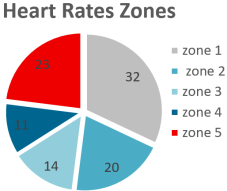
Table 1 on the distribution of time across heart rate zones, it was established that the largest percentage of time was spent in the low-intensity zone (Zone 1), accounting for 32% of the total time, which corresponds to 37: 18 minutes, reflecting recovery periods between game episodes. A significant proportion of time was also spent in the red Zone 5, corresponding to maximal intensity, which accounted for 23% of the total time, namely 26: 15 minutes, as well as in Zone 4 of high intensity, representing 11%, which corresponds to 12: 28 minutes. Altogether, this amounts to 34% of the total time, indicating a high proportion of anaerobic load. In the moderate-intensity zone (Zone 3), 14% was recorded, corresponding to 16: 03 minutes, while in the aerobic Zone 2, 20% of the time was spent, namely 23: 21 minutes, indicating the involvement of aerobic energy supply mechanisms. The data presented in
Table 1 are visually illustrated in
Figure 1, which allows a clearer observation of the structure of the athlete’s physical load during gameplay. Thus, the load distribution is characterized by an alternation of periods of high intensity and recovery, which corresponds to the intermittent nature of motor activity.
Figure 1. Distribution of Time Across Heart Rate Zones in 3×3 Basketball.
The presentation of the data in
Figure 1 makes the intermittent nature of motor activity, characteristic of 3×3 basketball, more evident and confirms the conclusions obtained from the analysis of the data presented in
Table 1.
In order to provide a more in-depth analysis of the functional state of the body under conditions of specific competitive activity in 3×3 basketball, a segmental analysis of physiological indicators was carried out within consecutive game periods of 10 minutes each. Such an approach makes it possible to identify the dynamics of changes in cardiovascular and metabolic parameters depending on the nature of the load and the degree of fatigue accumulation.
7. Discussions
During the study, average, maximum, and minimum values of heart rate were analyzed, as well as the structure of energy expenditure the proportion of carbohydrates, fats, and proteins and environmental parameters represented by temperature indicators. A comprehensive assessment of these parameters makes it possible to more accurately characterize the features of physical load inherent in 3×3 basketball.
The results of the segmental analysis are presented in
Table 2, where changes in the studied indicators over three game segments are reflected, which makes it possible to determine trends in the body’s adaptation and the characteristics of fatigue development under competitive conditions.
Table 2. Segmental Analysis of Functional Indicators in Game Segments.
Indicators | Match 1 | Match 2 | Match 3 |
HR avg bpm | 188 | 181 | 185 |
HR max bpm | 197 | 193 | 196 |
HR min bpm | 147 | 138 | 142 |
Carbohydrates% | 90 | 84 | 88 |
Fats% | 7 | 13 | 9 |
Proteins% | 3 | 3 | 3 |
Temperature | 24.5 | 24.6 | 24.4 |
Temperature max | 24.8 | 25.0 | 24.7 |
Temperature min | 24.2 | 24.3 | 24.1 |
The results presented in
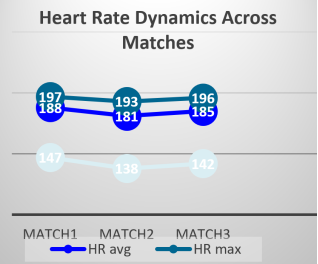
Table 2 demonstrate the characteristics of the functional response of the athlete’s body under competitive conditions in 3×3 basketball. In all analyzed game segments, a high level of intensity is maintained, as confirmed by the average heart rate values within the range of 181-188 bpm, as well as high peak values (193-197 bpm), corresponding to submaximal and maximal intensity zones.
The distribution of energy sources indicates a predominance of carbohydrate metabolism (84-90%), which is characteristic of high-intensity intermittent activity. The observed increase in fat contribution up to 13% in the second game segment may reflect partial involvement of aerobic mechanisms under conditions of fatigue development; however, this indicator does not alter the overall nature of the load.
The analysis of heart rate dynamics across segments indicates a slight decrease in intensity
during the second game period, followed by an increase in the third, which may suggest a short-term manifestation of fatigue and subsequent mobilization of the body’s functional reserves.
Temperature indicators remain practically stable across all segments, which makes it possible to exclude a significant influence of environmental conditions on the variation of physiological parameters.
Overall, the obtained data reflect the intermittent nature of the load inherent in 3×3 basketball and confirm the high demands placed on anaerobic performance and the ability for rapid recovery under conditions of dense game activity.
Figure 2. Heart Rate Dynamics Across Matches.
For the quantitative assessment of the level of physiological load and heart rate variability during competitive activity, mean values and standard deviations of heart rate indicators were calculated. The results of the calculations are presented in
Table 3.
Table 3. Mean Values and Standard Deviations of Heart Rate Parameters During 3×3 Basketball Game Activity.
Indicator | Mean Value (bpm) | Standard Deviation |
HR average | 184,7 | ± 3,5 |
HR max. | 195,3 | ± 2,1 |
HR min. | 142,3 | ± 4,5 |
The analysis of
Table 3 shows low values of standard deviation, which indicate the stability of the physiological responses of the body under competitive conditions.
7.1. Limitations of the Study and Prospects for Further Research
The present study provides insight into the physiological characteristics of load in 3×3 basketball under real competitive conditions; however, it also has a number of limitations.
1) The study was conducted with the participation of a single athlete, which limits the possibility of generalizing the obtained results. Although the study allows for a detailed analysis of individual physiological responses, further research should include a larger sample of athletes with different levels of training.
2) Data collection was carried out during a single competition day. This approach ensures high ecological validity; however, it does not allow for the assessment of the effects of accumulated fatigue over a longer competitive period. A promising direction is the implementation of longitudinal studies involving the analysis of several tournaments.
3) The study primarily employed the method of heart rate monitoring. Despite the high informativeness of this indicator, it does not fully reflect neuromuscular, biomechanical, and metabolic aspects of the load.
An additional limitation is the absence of analysis of playing positions and tactical characteristics. In 3×3 basketball, player roles are dynamic; however, taking into account game functions could increase the accuracy of interpretation of the obtained data.
It should also be considered that, despite the high validity of the Polar H10 sensor, minor measurement inaccuracies may occur under conditions of intensive physical activity. Specifically, the total time across zones (37: 18 + 23: 21 + 16: 03 + 12: 28 + 26: 15) equals 1: 55: 25, which is 15 minutes and 11 seconds less than the total recording duration of 2: 10: 36; that is, part of the time was not included in the zonal classification. In future studies, it is advisable to use combined data recording methods to improve the reliability
7.2. Future Research Directions
Future research directions are associated with expanding the sample by including athletes of different sexes and levels of training, using comprehensive methods of load assessment, as well as analyzing competitive activity over several game days. In addition, the development of standardized protocols for the application of digital monitoring technologies in 3×3 basketball remains a relevant objective.
8. Conclusions
1) Competitive activity in 3×3 basketball is characterized by significant variability of load, determined by the constant alternation of game actions and short recovery intervals.
2) The functioning of the athlete’s body under these conditions is accompanied by the predominance of high-intensity modes of activity, which indicates a substantial load on anaerobic energy systems with simultaneous support from aerobic processes.
3) Changes in indicators across individual game segments reflect adaptive responses of the body, manifested in a temporary decrease in performance followed by recovery and the involvement of additional functional reserves.
4) The obtained values of heart rate variability indicate a relatively stable nature of physiological responses under competitive conditions.
5) The use of digital monitoring tools allows for increased accuracy in load assessment and provides a basis for scientifically grounded management of the training process.
6) The use of monitoring data may contribute to more effective individualization of athlete preparation, taking into account the specific characteristics of 3×3 basketball.
Abbreviations
HR | Heart Rate |
Bpm | Beats per Minute |
HIIT | High-Intensity Interval Training |
Acknowledgments
We wish to acknowledge the Moldova State University (Institute of Physical Education and Sport) for the glad opportunity to be part of the Institution.
Author Contributions
Mocrousov Elena: Conceptualization, Formal analysis, Methodology, Project administration, Validation, Visualization, Writing – review&editing
Tugui Olga: Data curation, Investigation, Software, Writing – original draft
Funding
The authors did not receive any funding support for the research, authorship, and publication of this article.
Conflicts of interest
The authors declare no conflicts of interest.
References
| [1] |
Balyi, I., Way, R., & Higgs, C. Long-term athlete development. Human Kinetics. 2013.
https://doi.org/10.5040/9781492596318
|
| [2] |
Conte, D., Lukonaitiene, I., Matulaitis, K., Snieckus, A., Kniubaite, A., Kreivyte, R., & Kamandulis, S. Recreational 3×3 basketball elicits higher heart rate, enjoyment, and physical activity intensities but lower blood lactate and perceived exertion compared to HIIT in active young adults. Biology of Sport, 40(3), 889-898. 2023.
https://doi.org/10.5114/biolsport.2023.122478
|
| [3] |
Ferioli, D., Rampinini, E., Conte, D., Rucco, D., Romagnoli, M., & Scanlan, A. Physical demands during 3×3 international male and female basketball games are partially impacted by competition phase but not game outcome. Biology of Sport, 40(2), 377-387. 2023.
https://doi.org/10.5114/biolsport.2023.116012
|
| [4] |
Wang Z., Cao, G., Xu J., Qiu, J. and Yang, R. A comparative study of Chinese women 3 × 3 basketball players exercise load in Tokyo Olympic preparation cycle. Front. Physiol. 14: 1096423. 2023
https://www.frontiersin.org/articles/10.3389/fphys.2023.1096423/full
|
| [5] |
Golluceli, B. Comparison of physiological, physical, and psychological demands of recreational 3x3 basketball and HIIT in sedentary female adults. Master’s Thesis, Lithuanian Sports University. 2023.
|
| [6] |
Mcardle, W., Katch, F., & Katch, V. Exercise physiology: Nutrition, energy, and human performance (8th edition). Wolters Kluwer. 2018.
|
| [7] |
Mocrousov, E., Grosul, V. Multi-ball application methodology as an efficient factor for the technical element improvement in the process of long-term development in table tennis. In: Traditions, realities and perspecives of the physical culture development: International Scientific Conference. The 1st Edition. Ch.: Ed. USEFS, 2018, p. 62.
|
| [8] |
Paulauskas, R., Kamarauskas, P., Gonçalves, B., & Figueira, B. Training load and post-exercise recovery following varied game intervals in 3×3 basketball. Journal of Human Kinetics, 96. 247-261. 2025.
https://doi.org/10.5114/jhk/203324
|
| [9] |
Ripanti, F. Review on wearable and portable sensors for recording of cardiac signals while practicing sport. Università Politecnica delle Marche. 2022.
|
| [10] |
Schaffarczyk, M., Rogers, B., Reer, R., & Gronwald, T. Validity of the Polar H10 sensor for heart rate variability analysis during resting state and incremental exercise in recreational men and women. Sensors, 22(17), 6536. 2022.
https://doi.org/10.3390/s22176536
|
| [11] |
Snoj, L. 3×3 basketball: Everything you need to know. Meyer & Meyer Sport. 2021.
|
| [12] |
Tabîrța, V. Bazele metodice ale pregătirii sportivilor. [Methodological foundations of athletes' training.] Chișinău. 2020.
|
| [13] |
Thomas, J. R., Nelson, J., & Silverman, S. Research methods in physical activity (7th ed.) Human Kinetics. 2015.
|
| [14] |
Triboi, V. Teoria şi metodologia antrenamentului sportive (curs universitar). [Theory and methodology of sports training] (university course). Editura USEFS, Chișinău. 2020.
|
| [15] |
Turner, A. Advanced strength and conditioning. Routledge. 2019.
|
| [16] |
Vilcinschi, S., Ivan, S., Milos, C., & Preda, R. The use of GPS tracking in 3x3 basketball training for monitoring and improving athletes performance. Journal of Young Scientist, 7, 197-200. 2019.
|
Cite This Article
-
APA Style
Elena, M., Olga, T. (2026). Contemporary Technologies in Sports Education
– Monitoring and Enhancing Performance in 3X3 Basketball Players. Higher Education Research, 11(3), 43-48. https://doi.org/10.11648/j.her.20261103.11
 Copy
|
Copy
|
 Download
ACS Style
Elena, M.; Olga, T. Contemporary Technologies in Sports Education
– Monitoring and Enhancing Performance in 3X3 Basketball Players. High. Educ. Res. 2026, 11(3), 43-48. doi: 10.11648/j.her.20261103.11
Copy
|
Download
AMA Style
Elena M, Olga T. Contemporary Technologies in Sports Education
– Monitoring and Enhancing Performance in 3X3 Basketball Players. High Educ Res. 2026;11(3):43-48. doi: 10.11648/j.her.20261103.11
Copy
|
Download
-
@article{10.11648/j.her.20261103.11,
  author = {Mocrousov Elena and Tugui Olga},
  title = {Contemporary Technologies in Sports Education
– Monitoring and Enhancing Performance in 3X3 Basketball Players},
  journal = {Higher Education Research},
  volume = {11},
  number = {3},
  pages = {43-48},
  doi = {10.11648/j.her.20261103.11},
  url = {https://doi.org/10.11648/j.her.20261103.11},
  eprint = {https://article.sciencepublishinggroup.com/pdf/10.11648.j.her.20261103.11},
  abstract = {This study aimed to analyze the characteristics of physical load and physiological responses of a female basketball player during competitive 3×3 basketball using modern monitoring technologies. The research was conducted on a 21-year-old athlete from the State University of Moldova who participated in the National University Championship. Heart rate data were continuously recorded using a Polar H10 chest strap and analyzed via the Polar Flow platform during a full competition day (2 h 10 min). The results revealed a variable load structure characterized by alternating high-intensity efforts and recovery periods. A significant proportion of time was spent in low-intensity zones (32%), reflecting recovery phases, while 34% of the total time was spent in high and maximal intensity zones, indicating substantial anaerobic contribution. Segmental analysis demonstrated consistently elevated heart rate values (181-188 bpm average; 193-197 bpm peak), confirming high cardiovascular strain across matches. Energy system analysis showed a predominance of carbohydrate metabolism (84-90%), supporting the high-intensity nature of 3×3 basketball. A temporary reduction in intensity observed in the second match, followed by an increase in the third, suggests fatigue development and subsequent mobilization of physiological reserves. Low standard deviation values indicate stable cardiovascular responses during competition. The findings highlight the effectiveness of wearable monitoring technologies in assessing real-time physiological load and support their application in optimizing training processes. The study contributes to understanding the demands of 3×3 basketball under real competitive conditions, particularly in female athletes, where empirical data remain limited.},
 year = {2026}
}
Copy
|
Download
-
TY  - JOUR
T1  - Contemporary Technologies in Sports Education
– Monitoring and Enhancing Performance in 3X3 Basketball Players
AU  - Mocrousov Elena
AU  - Tugui Olga
Y1  - 2026/05/15
PY  - 2026
N1  - https://doi.org/10.11648/j.her.20261103.11
DO  - 10.11648/j.her.20261103.11
T2  - Higher Education Research
JF  - Higher Education Research
JO  - Higher Education Research
SP  - 43
EP  - 48
PB  - Science Publishing Group
SN  - 2578-935X
UR  - https://doi.org/10.11648/j.her.20261103.11
AB  - This study aimed to analyze the characteristics of physical load and physiological responses of a female basketball player during competitive 3×3 basketball using modern monitoring technologies. The research was conducted on a 21-year-old athlete from the State University of Moldova who participated in the National University Championship. Heart rate data were continuously recorded using a Polar H10 chest strap and analyzed via the Polar Flow platform during a full competition day (2 h 10 min). The results revealed a variable load structure characterized by alternating high-intensity efforts and recovery periods. A significant proportion of time was spent in low-intensity zones (32%), reflecting recovery phases, while 34% of the total time was spent in high and maximal intensity zones, indicating substantial anaerobic contribution. Segmental analysis demonstrated consistently elevated heart rate values (181-188 bpm average; 193-197 bpm peak), confirming high cardiovascular strain across matches. Energy system analysis showed a predominance of carbohydrate metabolism (84-90%), supporting the high-intensity nature of 3×3 basketball. A temporary reduction in intensity observed in the second match, followed by an increase in the third, suggests fatigue development and subsequent mobilization of physiological reserves. Low standard deviation values indicate stable cardiovascular responses during competition. The findings highlight the effectiveness of wearable monitoring technologies in assessing real-time physiological load and support their application in optimizing training processes. The study contributes to understanding the demands of 3×3 basketball under real competitive conditions, particularly in female athletes, where empirical data remain limited.
VL  - 11
IS  - 3
ER  -
Copy
|
Download





 Share This Article
 Twitter
 Linked In
 Facebook