Research Article | | Peer-Reviewed

Characterization and Genetic Identification of Indigenous Potential LDPE (Low-Density Polyethylene) Degrading Bacteria from Municipal Dumping Sites

Received: 26 April 2026     Accepted: 7 May 2026     Published: 6 August 2026
Views:       Downloads:
Abstract

The persistence of low density polyethylene (LDPE) in municipal dumping sites represents a major environmental concern due to its non-biodegradable nature. The present investigation aimed to isolate, characterize, and genetically identify indigenous LDPE-degrading bacteria from the municipal dumping site of Himmatnagar, District Sabarkantha, Gujarat, India. Soil samples collected from plastic-contaminated zones were subjected to enrichment techniques using LDPE as the sole carbon source. Efficient bacterial isolates were screened based on growth performance and percentage weight loss of LDPE films. Morphological, biochemical, and physiological characterization was carried out to evaluate the biodegradation potential of the isolates. Structural and chemical modifications in LDPE films following bacterial treatment were analyzed using Scanning Electron Microscopy (SEM) and Fourier Transform Infrared Spectroscopy (FTIR). SEM analysis revealed surface alterations such as cracks, pits, and erosion on LDPE films, indicating microbial action, while FTIR spectra showed significant changes in functional groups, including the appearance of carbonyl and hydroxyl peaks, confirming polymer oxidation and degradation. Molecular identification of potent isolates was performed through 16S rRNA gene sequencing and phylogenetic analysis. The study demonstrates that indigenous bacterial strains from municipal dumping sites possess substantial LDPE-degrading capability and highlights their potential application in sustainable bioremediation and plastic waste management strategies.

Published in Frontiers in Environmental Microbiology (Volume 12, Issue 2)
DOI 10.11648/j.fem.20261202.12
Page(s) 23-30
Creative Commons

This is an Open Access article, distributed under the terms of the Creative Commons Attribution 4.0 International License (http://creativecommons.org/licenses/by/4.0/), which permits unrestricted use, distribution and reproduction in any medium or format, provided the original work is properly cited.

Copyright

Copyright © The Author(s), 2026. Published by Science Publishing Group

Keywords

Low-density Polyethylene (LDPE), Indigenous Bacteria, Bioremediation, Fourier Transform Infrared Spectroscopy (FTIR), Biodegradation, 16S rRNA Sequencing

1. Introduction
Low density polyethylene (LDPE) is one of the most widely produced and consumed synthetic polymers across the globe due to its extensive use in packaging materials, carry bags, agricultural mulch films, and disposable products. Global plastic production has exceeded 390 million tones annually, with polyethylene accounting for a major share of this volume (Geyer et al., 2017). The widespread use and improper disposal of LDPE have resulted in its massive accumulation in terrestrial and aquatic environments, posing severe ecological and health risks. Low-density polyethylene (LDPE) is a widely used plastic that significantly contributes to environmental pollution, and its biodegradation remains challenging.. Thus the rapid biodegradation of plastics has been a subject of interest as the disposal strategies are critical and need attention as it makes up to 40% of total municipal waste . The major environmental concern associated with LDPE arises from its high resistance to biodegradation. LDPE consists of long-chain hydrocarbons with strong carbon–carbon bonds, making it highly stable and persistent in natural environments . Once discarded, LDPE can remain in soil and water bodies for several hundred years. In municipal dumping sites, LDPE waste alters soil structure, reduces soil fertility, and interferes with water percolation and gas exchange, thereby negatively affecting soil microbial diversity and plant growth . LDPE pollution poses a significant threat to wildlife and aquatic organisms. Large plastic debris can entangle animals, while fragmented LDPE particles form micro plastics that are easily ingested by birds, fish, and mammals. Ingestion of micro plastics can cause physical injury, intestinal blockage, reduced feeding efficiency, and mortality .
Low density polyethylene (LDPE) is highly resistant to natural degradation, and therefore several physical, chemical, and biological methods have been explored for its degradation. Physical methods include thermal degradation (pyrolysis), photo-degradation, and mechanical fragmentation; pyrolysis breaks LDPE into fuels and gases at high temperatures, while UV radiation induces photo-oxidation and chain scission, leading to surface cracking and increased brittleness . Chemical degradation involves oxidative processes using agents such as hydrogen peroxide, ozone, or Fenton’s reagent, as well as catalytic degradation with metal catalysts, which introduce functional groups like carbonyl and hydroxyl groups, enhancing polymer breakdown and susceptibility to further degradation . Among these, biological degradation is considered the most eco-friendly approach, where bacteria and fungi such as Pseudomonas, Bacillus, Rhodococcus, Aspergillus, and Penicillium colonize LDPE surfaces, formbiofilms, and secrete oxidative enzymes that cause surface erosion, weight loss, and chemical modification of the polymer, as confirmed by SEM and FTIR analyses . Recent studies suggest that integrated approaches, combining physical or chemical pre-treatment with microbial degradation, significantly enhance LDPE degradation efficiency, offering a promising and sustainable strategy for plastic waste management.
Different methods are used for the degradation of LDPE including physical, chemical and biological methods. The physical and chemical methods are expensive, producing toxic wastes which in turn pollute the environment. On the other hand, biodegradation by microorganisms have become the focus of interest for eco-friendly disposal of plastics. Biodegradation is the result of utilization of a polymer as a carbon source by the microorganisms. These microorganisms produce extracellular enzymes which lead to chain cleavage of polymer into small monomers and oligomers. These are taken up by microbial cells and are metabolized into water and carbon dioxide .
The biodegradation of low density polyethylene (LDPE) by microorganisms has gained significant attention as an eco-friendly approach to mitigate plastic pollution. Although LDPE is highly resistant to degradation due to its hydrophobic nature and stable carbon–carbon backbone, several microorganisms have been reported to possess the ability to initiate and enhance its breakdown under specific environmental conditions. These microorganisms are commonly isolated from plastic-contaminated environments such as municipal dumping sites, landfills, compost soils, and marine ecosystems, where prolonged exposure to plastic waste promotes microbial adaptation.
Among bacteria, species belonging to the genera Pseudomonas and Bacillus are the most extensively studied LDPE degraders. Pseudomonas aeruginosa and Pseudomonas putida have been shown to degrade LDPE by forming biofilms on polymer surfaces and secreting oxidative enzymes that initiate polymer chain scission . Similarly, Bacillus subtilis, Bacillus cereus, and Bacillus megaterium have demonstrated significant LDPE degradation, evidenced by weight loss, surface erosion, and formation of carbonyl groups detected through FTIR analysis .
Other bacterial genera such as Rhodococcus, Stenotrophomonas, Acinetobacter, Enterobacter, and Micrococcus have also been reported to degrade LDPE. Rhodococcus ruber is particularly notable for its strong biofilm-forming ability and extracellular enzyme production, which enhance polyethylene degradation . Stenotrophomonas maltophilia and Acinetobacter baumannii have been isolated from landfill soils and shown to cause surface cracks and pits on LDPE films, as observed through scanning electron microscopy (SEM) .
Actinomycetes, particularly species of Streptomyces and Nocardia, have also been reported to contribute to LDPE degradation. These microorganisms possess diverse metabolic pathways and produce oxidative enzymes such as laccases, peroxidases, and oxygenases, which facilitate the initial oxidation of polyethylene chains. The synergistic action of microbial consortia, involving bacteria, fungi, and actinomycetes, often results in higher degradation efficiency compared to individual strains.
2. MaterialsandMethods
2.1. Sample Collection and Processing
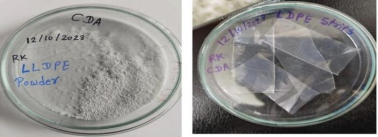
LDPE and Culture Medium LDPE (CH2CH2) served as the carbon source for microorganism cultivation, used as both powder and bag fragments. LDPE powder (samrat polymers, Dhandha, Himmatnagar) had a melting point range of104°C–138°C and a specific gravity of 0.945 g/cm3. It was sterilized by 1-h exposure to ultraviolet light (254nm) LDPE bags fragments (50 ×10 mm, 20 μm thick), obtained from a shopping center, were disinfected by 1-h immersion in a 1% bleach solution (10 mL bleach, 7 mL Tween 80, 983 mL distilled water). This was followed by rinsing with sterilized distilled water, sterilization with 70% ethanol, and 12 h of drying at 45°C .
Figure 1. 9 Low-density polyethylenes (LDPE) powder and LDPE strips (3 cm × 3 cm) were procured from Samrat Polymers, Dhandha, Himmatnagar, Gujarat, India, andusedasthesubstrate for biodegradation experiments.
Minimal salts medium (MSM) was the culture medium for microorganism isolation, containing; K2HPO4 (1 g), KH2PO4 (0.2g), NaCl (1g), CaCl2·2H2O (0.002g), H3BO3 (0.005g), (NH4)2SO4 (1g), MgSO4·7H2O(0.5g), CuSO4·5H2O(0.001g), ZnSO4·7H2O (0.001g), MnSO4·7H2O(0.001g), and FeSO4·7H2O(0.01g).
Additionally, 1 g of LDPE powder and 1 mL·L−1of Tween 80 were added as a biosurfactant to facilitate polymer particles suspension .
2.2. Soil Sample Collection, Isolation of Bacterial Strains and Screening of LDPE Degrading Bacteria
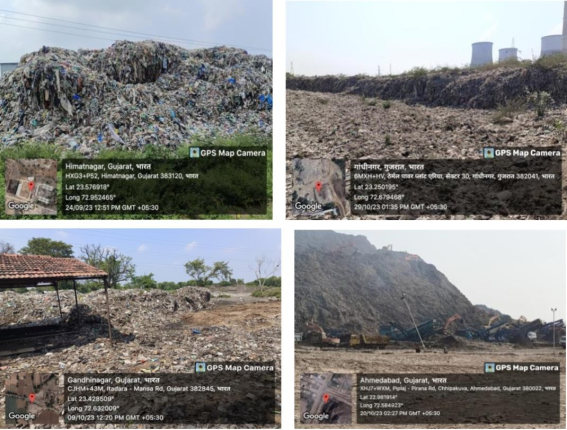
Soil samples were collected from the dump yard rich in plastic content, from Himmatnagar Municipal dumping yard, Gandhinagar Municipal dumping yard, Pirana Dumping site, Mansa dumping site collecting soil sample at a depth of about 01 feet in zipper plastic bags. The collected soil sample was diluted to 10−8 and was inoculated on a nutrient agar plate and incubated for 24 hours at 35°C . K. Rana and N. Rana, Isolation and screening. The resulting bacterial colonies were then subjected to pure culturing and screening for their LDPE degradation ability by inoculating them in modified nutrient agar plates (peptone=5g, NaCl=5g, Agar–Agar=15gand LDPE powder = 3 g) by the streak plate method and incubation at 35°C for 24 hours.
Figure 2. Geographical locations of the municipal dumping sites selected for soil sample collection, including Himmatnagar Municipal Dumping Yard, Gandhinagar Municipal Dumping Yard, Pirana Dumping Site, and Mansa Dumping Site, Gujarat, India.
2.3. Enrichment, Isolation, and Screening of LDPE Biodegrading Bacteria
Enrichment of LDPE-Degrading Bacteria
Enrichment was carried out using Minimal Salt Medium (MSM) containing (g/L): LDPE strips were added as the sole carbon source.
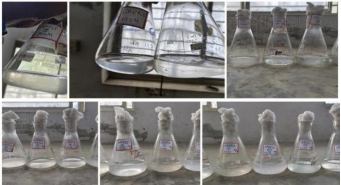
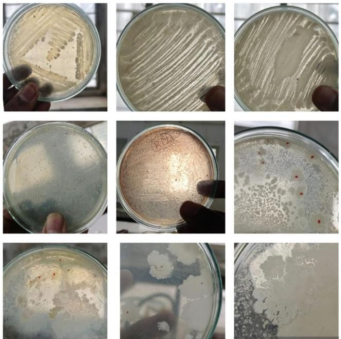
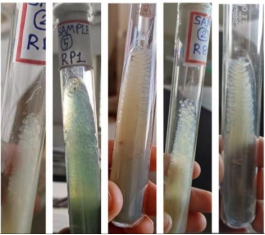
Approximately 5 g of each environmental sample was inoculated into 100 mL MSM containing LDPE strips and incubatedat30±2°C under shaking conditions (150rpm) for 30 days. Subculturing was performed every 15 days by transferring 10 mL of culture into fresh MSM containing LDPE to selectively enrich LDPE-utilizing bacteria. After enrichment, cultures were serially diluted and spread on nutrientagarplates. The plates were incubated at 30°C for 24–48h. Distinctcolonies were selected based on morphological differences and purified by repeated streaking. Pure isolates were maintained on nutrient agar slants at 4°C for further studies.
Figure 3. Enrichment of soil microbial communities in 100 mL Mineral Salt Medium (MSM) containing LDPE powder as the sole carbon source for the isolation of potential LDPE-degrading bacteria.
Figure 4. RepresentativecolonymorphologyofpotentialLDPE-degrading bacterial isolates recovered from municipal dumping site soil samples.
Figure 5. Preservation of pure bacterial isolates on nutrient agar slants at 4°C for subsequent characterization and biodegradation studies.
2.4. Pot Study for Weight Analysis
A pot experiment was conducted to evaluate the biodegradation of low-density polyethylene (LDPE) under soil conditions. Sterilized soil was filled into pots, and pretreated LDPE strips were buried at a depth of 5 cm. Selected LDPE-degrading bacterial isolates (108 CFU mL⁻1) were inoculated near the LDPE pieces, while uninoculated pots served as controls. The pots were incubated at 28–30°C for 90 days with moisture maintained at 60% water-holding capacity. After incubation, LDPE strips were recovered, cleaned, dried, andanalyzedforweightlossand surface degradation to assess biodegradation efficiency .
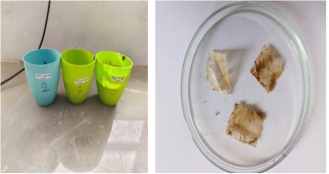
Figure 6. ExperimentalsetupofthepotstudyshowingLDPEstrips incubated with Bacillus rugosus RB3 at 28–30°C for 90 days to evaluate LDPE biodegradation efficiency.
2.5. SEM Analysis of Bacterial LDPE Degradation
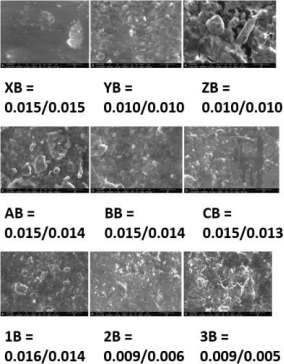
Scanning Electron Microscopy (SEM) was employed to investigate surface morphological changes in low-density polyethylene (LDPE) films after bacterial treatment. Untreated LDPE exhibited a smooth, uniform, and intact surface, indicating resistance to degradation . In contrast, bacteria-treated LDPE showed significant surface deterioration, including roughness, cracks, pits, and erosion patterns. SEM observations provide clear visual evidence of LDPE biodegradation and support the role of bacterial activity in polyethylene degradation .
2.6. Molecular Identification and Phylogeny of Indigenous LDPE-Degrading Bacteria
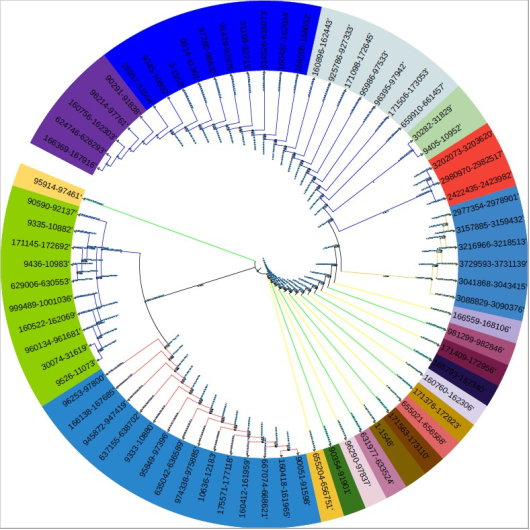
The bacterial isolate RB3 was molecularly identified as Bacillus rugosus through nucleotide sequence analysis. The query length of 1401 base pairs showed a perfect alignment with the reference sequence, yielding a maximum and total score of 2586. The query coverage was100%, with an E-value of 0, indicating a highly significant match. The percent identity was 100%, confirming that RB3 is genetically identical to Bacillus rugosus (Accession No. NR_181236.1). The accurate identification of this strain provides a foundation for understanding its role in LDPE degradation and further exploring its biodegradation potential in environmental applications .
3. Results
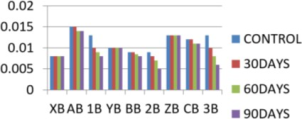
The graphical representation illustrates the variation in the measured soil parameter across different sample locations (AB, 1B, YB, BB, 2B, ZB, CB, and 3B) under control conditions and after 30, 60, and 90 days of exposure to municipal solid waste dumping activities. Under control
Conditions, all sampling sites showed comparatively higher values of the measured parameter, indicating relatively stable soil quality before prolonged exposure to dumping activities. Among the sites, 1B, ZB, and 3B exhibited the highest values, suggesting better initial soil characteristics. After 30 days, a noticeable decline in values was observed across most locations. This reduction can be attributed to the initial impact of waste decompose it ion and leachate percolation, which alters soil chemical balance. The decrease was more pronounced at sites such as YB and ZB, indicating higher sensitivity to waste-induced contamination. At 60 days, the declining trend continued, with further reduction in the measured parameter at all dump yard locations. This stage reflects the cumulative effect of prolonged exposure to municipal waste, where increased microbial activity, leachate formation, and heavy metal migration significantly influence soil properties. Sites 2B and 3B showed a sharper decline, indicating higher contamination stress. After 90 days, the lowest values were recorded for almost all sampling points. This significant reduction highlights severe degradation of soil quality due to continuous dumping and prolonged interaction between soil and waste materials. The most affected sites were ZB and3B, suggesting advanced contamination levels, while AB and BB showed comparatively lesser reduction, possibly due to differences in waste composition or soil buffering capacity. Overall, the results demonstrate progressive deterioration of soil quality with increasing exposure duration, confirming that municipal dump yards exert a substantial negative impact on surrounding soil environments. The trend Control > 30 Days > 60 Days > 90 Days clearly indicates time-dependent soil degradation. These findings are consistent with previous studies reporting that long-term waste dumping leads to altered soil physicochemical properties and increased environmental risk.
Figure 7. Weight loss analysis of RB3.
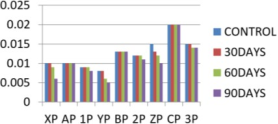
Figure 8. Weight loss analysis of RP1.
Figure 9. Comparative SEM micrographs illustrating surface morphological changes and degradation of LDPE films following treatmentwithindividualbacterialisolatesandbacterialconsortia.
Figure shows the variation in the selected soil parameter at different sampling locations under control conditions and after 30, 60, and 90 days of exposure to municipal solid waste dumping. The results indicate a clear influence of dumping duration on soil quality. Under control conditions, all soil samples recorded comparatively higher values, indicating normal soil characteristics prior to prolonged waste exposure. Locations such as CB and 3B exhibited the highest values, suggesting better baseline nutrient status or physicochemical stability. In contrast, sites like ZB and 2B showed relatively lower control values, possibly due to pre-existing anthropogenic influence. After 30days, as light reduction was observed in most samples. This decline may be attributed to the early stages of waste decomposition and leachate generation, which alters soil chemical composition. However, some locations showed minimal change, indicating short-term buffering capacity of the soil. At 60 days, a more pronounced decrease was evident across nearly all sampling points. This trend suggests cumulative effects of continuous waste deposition, enhanced microbial activity, and leachate infiltration. The reduction was particularly significant at ZB and 2B, highlighting increased susceptibility of these sites to contamination stress. After 90 days, the lowest values were recorded for most samples, indicating substantial deterioration of soil quality due to prolonged exposure to municipal waste. The consistent decline from control to 90 days demonstrates a time-dependent negative impact of dump yard activities on soil health. Sites closer to active dumping zones showed greater reductions, while locations with relatively compactor stabilized waste exhibited moderate changes. Overall, the observed trend (Control > 30 days > 60 days > 90 days) confirms that prolonged dumping significantly alters soil properties. The results align with earlier studies reporting that continuous solid waste disposal leads to degradation of soil quality through leachate migration and accumulation of contaminants.
Figure 10. Neighbor-joining phylogenetic tree based on 16SrRNA gene sequences showing the evolutionary relationship of Bacillus ragouts with closely related members of the family Bacillaceae.
Molecular identification of the potent LDPE-degrading bacterial isolate RB3 was carried out using 16S rRNA gene sequencing. The amplified nucleotide sequence of RB3 showed a query length of 1401 bp. BLAST analysis against the NCBI GenBank database revealed a maximum score of 2586 with 100% query coverage and 100% sequence identity, confirming the reliability of the obtained sequence. The isolate RB3 was identified as Bacillus rugosus, with the closest match corresponding to the accession number NR_181236.1. The E-value of zero further indicated a highly significant alignment, ruling out random similarity. Phylogenetic analysis was performed to determine the evolutionary relationship of isolate RB3 with related bacterial species. The phylogenetic tree clustered RB3 closely with reference strains of Bacillus rugosus, forming a distinct and well-supported clade. This clustering confirmed the taxonomic position of RB3 within the genus Bacillus and validated the molecular identification results. The close evolutionary relationship suggests shared genetic traits that may contribute to its LDPE-degrading capability. Overall, the molecular and phylogenetic analyses confirmed that isolate RB3 is a well-characterized indigenous strain with significant potential for LDPE biodegradation, supporting its selection for further degradation and application studies.
4. Discusion
The present study demonstrates the successful isolation, characterization, and genetic identification of indigenous bacterial strains with the potential to degrade low-density polyethylene (LDPE) from a municipal dumping site of Himatnagar, Sabarkantha. Weight loss analysis revealed a significant reduction in LDPE mass in samples treated with bacterial isolates compared to the control, indicating effective biodegradation activity. Among the isolates, strains RP1 and RB3 showed comparatively higher degradation efficiency, suggesting their strong adaptability and metabolic capability to utilize LDPE as a carbon source.
SEM analysis further supported these findings by revealing surface alterations on LDPE films, such as cracks, pits, and erosion, confirming microbial colonization and enzymatic action on the polymer surface. These structural changes are indicative of polymer chain scission and surface oxidation, which are key steps in polyethylene biodegradation. The genetic identification of the potent isolates highlights the role of indigenous microbial diversity in plastic degradation under natural environmental conditions.
5. Conclusion
In conclusion, the study emphasizes the potential application of native LDPE-degrading bacteria as eco-friendly agents for plastic waste management. The findings contribute valuable insights into microbial plastic biodegradation and suggest that further optimization and large-scale studies could enhance their applicability in sustainable environmental remediation strategies.
Abbreviations

LDPE

Low-density Polyethylene

SEM

Scanning Electron Microscopy

FTIR

Fourier Transform Infrared Spectroscopy

MBR

Microbial Biodegradation Research

Author Contributions
Rahul Ratanlal Khatik: Conceptualization, Data curation, Formal Analysis, Investigation, Methodology, Writing – original draft
Charusheela D. Afuwale: Resources, Supervision, Validation, Writing – review & editing
Conflicts of Interest
The authors declare no conflicts of interest.
References
[1] Begum A, Varalakshmi K. and Umamagheswari K,. Biodegradation of Polythene Bag using Bacteria Isolated from Soil. Int. J. Curr. Microbiol. App. Sci. 2015; 4: 674-680.
[2] Deepika, S., & Madhuri, R. J. (2015). Biodegradation of low density polyethylene by microorganisms from garbage soil. Journal of Experimental Biology and Agricultural Sciences, 3(1), 15-21.
[3] Munir, E., Sipayung, F. C., Priyani, N., & Suryanto, D. (2018, March). Potential of bacteria isolated from landfill soil in degrading low density polyethylene plastic. In IOP Conference Series: Earth and Environmental Science (Vol. 126, No. 1, p. 012144). IOP Publishing.
[4] Chae, Y. and An, Y. J. (2018) Current Research Trends on Plastic Pollution and Ecological Impacts on the Soil Ecosystem: A Review. Environmental Pollution, 240, 387-395.
[5] Andrady, A. L., 2011. Microplastics in the marine environment. Marine Pollution Bulletin 62 (8), 1596e1605.
[6] Geyer, R., Jambeck, J. R., & Law, K. L. (2017). Production, use, and fate of all plastics ever made. Science, 3(7), 1700782.
[7] Shah, A. A., Hasan, F., Hameed, A., & Ahmed, S. (2008). Biological degradation of plastics: A comprehensive review. Biotechnology Advances, 26, 246–265.
[8] Andrady, A. L. (2011). Microplastics in the marine environment. Marine Pollution Bulletin, 62, 1596–1605.
[9] Tokiwa, Y., Calabia, B. P., Ugwu, C. U., & Aiba, S. (2009). Biodegradability of plastics. International Journal of Molecular Sciences, 10, 3722–3742.
[10] Restrepo-Flórez, J. M., Bassi, A., & Thompson, M. R. (2014). Microbial degradation and deterioration of polyethylene. International Biodeterioration & Biodegradation, 88, 83–90.
[11] Sudhakar, M., et al. (2008). Marine microbe-mediated biodegradation of low- and high-density polyethylene. International Biodeterioration & Biodegradation, 61, 203–213.
[12] Yoon, M. G., Jeon, H. J., & Kim, M. N. (2012). Biodegradation of polyethylene by a soil bacterium. Biodegradation, 23, 145–151.
[13] Hadad, D., Geresh, S., & Sivan, A. (2005). Biodegradation of polyethylene by the thermophilic bacterium Brevibacillus borstelensis. Journal of Applied Microbiology, 98, 1093–1100.
[14] Albertsson, A. C., & Karlsson, S. (1990). The influence of biotic and abiotic environments on the degradation of polyethylene. Polymer Degradation and Stability, 27, 337–351.
[15] Bhardwaj, H., Gupta, R., & Tiwari, A. (2013). Microbial population associated with plastic degradation. Research Journal of Environmental Sciences, 7, 272–281.
[16] Das, M. P., & Kumar, S. (2013). Microbial degradation of plastic waste. International Journal of Pharmaceutical Sciences Review and Research, 22, 157–160.
[17] Pramila, R., & Ramesh, K. V. (2015). Potential biodegradation of low-density polyethylene by Bacillus sp. Applied Biochemistry and Biotechnology, 175, 30–45.
[18] Kumar, S., et al. (2017). Isolation of plastic-degrading bacteria from waste disposal sites. International Journal of Environmental Science, 12, 45–52.
[19] Jeyakumar, D., & Chandra, K. (2019). Microbial plastic degradation from landfill soil. Journal of Environmental Biology, 40, 123–130.
[20] Singh, B., & Sharma, N. (2008). Mechanistic implications of plastic degradation. Polymer Degradation and Stability, 93, 561–584.
[21] Raddadi, N., et al. (2015). Biodegradation of plastics in soil environments. Applied Microbiology and Biotechnology, 99, 7437–7446.
[22] Gewert, B., Plassmann, M., & MacLeod, M. (2015). Pathways for degradation of plastic polymers. Environmental Science: Processes & Impacts, 17, 1513–1521.
[23] Patel, J. D., et al. (2022). Genetic characterization of plastic-degrading bacteria. Journal of Hazardous Materials, 424, 127410.
[24] Harshvardhan, K. and Jha, B. (2013). Biodegradation of low-density polyethylene by marine bacteria from pelagic waters, Arabian Sea, India. Mar. Pollut. Bull., 77(1-2): 100-106.
[25] Sivan, A.; Szanto, M. and Pavlov, V. (2006). Biofilm development of the polyethylene-degrading bacterium Rhodococcus ruber. Appl. Microbiol. Biotechnol., 72(2): 346–352.
[26] Al-Salem, S. M.; Behbehani, M. H.; Al-Hazza’a, A.; Arnold, J. C.; Alston, S. M.; Al-Rowaih, A. A. and Karam, H. (2019). Study of the degradation profile for virgin linear low-density polyethylene (LDPE) and polyolefin (PO) plastic waste blends. J. Mater. Cycles Waste Manag., 21: 1106-1122.
[27] Dey, A.; Dhumal, C. V.; Sengupta, P.; Kumar, A.; Pramanik, N. K. and Alam, T. (2021). Challenges and possible solutions to mitigate the problems of single-use plastics used for packaging food items: A review. J. Food Sci., 58(9): 3251-3269.
[28] Han, Y. N.; Wei, M.; Han, F.; Fang, C.; Wang, D.; Zhong, Y. J. and Li, F. M. (2020). Greater biofilm formation and increased biodegradation of polyethylene film by a microbial consortium of Arthrobacter sp. and Streptomyces sp. Microorganisms, 8(12): 1979.
[29] Ibiene, A. A.; Stanley, H. O. and Immanuel, O. M. (2013). Biodegradation of polyethylene by Bacillus sp. indigenous to the Niger delta mangrove swamp. Niger. J. Biotechnol., 26: 68-78.
Cite This Article
  • APA Style

    Khatik, R. R., Afuwale, C. D. (2026). Characterization and Genetic Identification of Indigenous Potential LDPE (Low-Density Polyethylene) Degrading Bacteria from Municipal Dumping Sites. Frontiers in Environmental Microbiology, 12(2), 23-30. https://doi.org/10.11648/j.fem.20261202.12

    Copy | Download

    ACS Style

    Khatik, R. R.; Afuwale, C. D. Characterization and Genetic Identification of Indigenous Potential LDPE (Low-Density Polyethylene) Degrading Bacteria from Municipal Dumping Sites. Front. Environ. Microbiol. 2026, 12(2), 23-30. doi: 10.11648/j.fem.20261202.12

    Copy | Download

    AMA Style

    Khatik RR, Afuwale CD. Characterization and Genetic Identification of Indigenous Potential LDPE (Low-Density Polyethylene) Degrading Bacteria from Municipal Dumping Sites. Front Environ Microbiol. 2026;12(2):23-30. doi: 10.11648/j.fem.20261202.12

    Copy | Download

  • @article{10.11648/j.fem.20261202.12,
      author = {Rahul Ratanlal Khatik and Charusheela D. Afuwale},
      title = {Characterization and Genetic Identification of Indigenous Potential LDPE (Low-Density Polyethylene) Degrading Bacteria from Municipal Dumping Sites},
      journal = {Frontiers in Environmental Microbiology},
      volume = {12},
      number = {2},
      pages = {23-30},
      doi = {10.11648/j.fem.20261202.12},
      url = {https://doi.org/10.11648/j.fem.20261202.12},
      eprint = {https://article.sciencepublishinggroup.com/pdf/10.11648.j.fem.20261202.12},
      abstract = {The persistence of low density polyethylene (LDPE) in municipal dumping sites represents a major environmental concern due to its non-biodegradable nature. The present investigation aimed to isolate, characterize, and genetically identify indigenous LDPE-degrading bacteria from the municipal dumping site of Himmatnagar, District Sabarkantha, Gujarat, India. Soil samples collected from plastic-contaminated zones were subjected to enrichment techniques using LDPE as the sole carbon source. Efficient bacterial isolates were screened based on growth performance and percentage weight loss of LDPE films. Morphological, biochemical, and physiological characterization was carried out to evaluate the biodegradation potential of the isolates. Structural and chemical modifications in LDPE films following bacterial treatment were analyzed using Scanning Electron Microscopy (SEM) and Fourier Transform Infrared Spectroscopy (FTIR). SEM analysis revealed surface alterations such as cracks, pits, and erosion on LDPE films, indicating microbial action, while FTIR spectra showed significant changes in functional groups, including the appearance of carbonyl and hydroxyl peaks, confirming polymer oxidation and degradation. Molecular identification of potent isolates was performed through 16S rRNA gene sequencing and phylogenetic analysis. The study demonstrates that indigenous bacterial strains from municipal dumping sites possess substantial LDPE-degrading capability and highlights their potential application in sustainable bioremediation and plastic waste management strategies.},
     year = {2026}
    }
    

    Copy | Download

  • TY  - JOUR
    T1  - Characterization and Genetic Identification of Indigenous Potential LDPE (Low-Density Polyethylene) Degrading Bacteria from Municipal Dumping Sites
    AU  - Rahul Ratanlal Khatik
    AU  - Charusheela D. Afuwale
    Y1  - 2026/08/06
    PY  - 2026
    N1  - https://doi.org/10.11648/j.fem.20261202.12
    DO  - 10.11648/j.fem.20261202.12
    T2  - Frontiers in Environmental Microbiology
    JF  - Frontiers in Environmental Microbiology
    JO  - Frontiers in Environmental Microbiology
    SP  - 23
    EP  - 30
    PB  - Science Publishing Group
    SN  - 2469-8067
    UR  - https://doi.org/10.11648/j.fem.20261202.12
    AB  - The persistence of low density polyethylene (LDPE) in municipal dumping sites represents a major environmental concern due to its non-biodegradable nature. The present investigation aimed to isolate, characterize, and genetically identify indigenous LDPE-degrading bacteria from the municipal dumping site of Himmatnagar, District Sabarkantha, Gujarat, India. Soil samples collected from plastic-contaminated zones were subjected to enrichment techniques using LDPE as the sole carbon source. Efficient bacterial isolates were screened based on growth performance and percentage weight loss of LDPE films. Morphological, biochemical, and physiological characterization was carried out to evaluate the biodegradation potential of the isolates. Structural and chemical modifications in LDPE films following bacterial treatment were analyzed using Scanning Electron Microscopy (SEM) and Fourier Transform Infrared Spectroscopy (FTIR). SEM analysis revealed surface alterations such as cracks, pits, and erosion on LDPE films, indicating microbial action, while FTIR spectra showed significant changes in functional groups, including the appearance of carbonyl and hydroxyl peaks, confirming polymer oxidation and degradation. Molecular identification of potent isolates was performed through 16S rRNA gene sequencing and phylogenetic analysis. The study demonstrates that indigenous bacterial strains from municipal dumping sites possess substantial LDPE-degrading capability and highlights their potential application in sustainable bioremediation and plastic waste management strategies.
    VL  - 12
    IS  - 2
    ER  - 

    Copy | Download

Author Information
  • Department of Microbiology, Hemchandracharya North Gujarat University, Patan, India
  • Smt. S. M. Panchal Science College, Talod, Hemchandracharya North Gujarat University, Patan, India

  • Abstract
  • Keywords
  • Document Sections

    1. 1. Introduction
    2. 2. MaterialsandMethods
    3. 3. Results
    4. 4. Discusion
    5. 5. Conclusion
    Show Full Outline
  • Abbreviations
  • Author Contributions
  • Conflicts of Interest
  • References
  • Cite This Article
  • Author Information