
This work focuses on the derivation, analysis and numerical application of a hybrid linear multistep formula for directly solving third-order initial value problems (IVPs) ordinary differential equations (ODEs). The method is derived by adopting the collocation and interpolation procedure with a power series polynomial of degree eight as the basis function. The procedure resulted in the construction of a continuous hybrid linear multistep method by collocating the third derivative at nodal and five off-nodal points to generate a system of linear equations for the determination of the unknown parameters, from which the formulas that constitute the proposed hybrid block method are obtained. The suggested method is fully hybrid, which is an important property that contributed to the good accuracy and minimum errors associated with the results of the method. The analysis of the basic properties of the suggested method reveals that the method is of theoretical order six, stable, consistent and convergent. Four numerical examples are considered for the numerical experiment to confirm the accuracy of the proposed method. The experiment shows that the present method is very efficient for the numerical approximation of third-order initial value problems for ordinary differential equations. The method also performs favorably well when compared with the results of some cited methods in the literature.
| Published in | Engineering Mathematics (Volume 10, Issue 2) |
| DOI | 10.11648/j.engmath.20261002.11 |
| Page(s) | 24-35 |
| Creative Commons |
This is an Open Access article, distributed under the terms of the Creative Commons Attribution 4.0 International License (http://creativecommons.org/licenses/by/4.0/), which permits unrestricted use, distribution and reproduction in any medium or format, provided the original work is properly cited. |
| Copyright |
Copyright © The Author(s), 2026. Published by Science Publishing Group |
Power Series Polynomials, Stable, Consistent, Accuracy, Interpolation and Collocation
 where
where 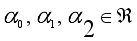 (1)
(1) 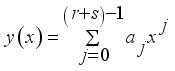 (2)
(2) 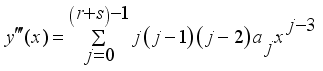 (3)
(3)  .(4)
.(4) 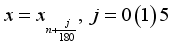 and interpolating Eq. (2) at
  ,
,  yield a system of equations for interpolation equation,
 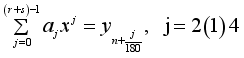 (5)
(5)  .(6)
.(6)  ,
, 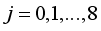 , which when substituted in (3) yields, after a some simplification, thus provides a continuous hybrid linear multistep formula of the form:
  (7)
(7)  and
and  are the coefficients that defined the method and are obtained as:
 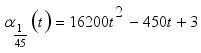 ,
, 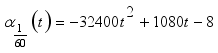 ,
, 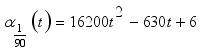 ,
, 
 ,
,  ,
,  ,
,  ,
,  ,
,  ,
,  (8)
(8)  (9)
(9)  (10)
(10)  (11)
(11)  ; the first and second derivatives at
 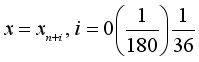 and substituting into Eq. (11) gives the coefficients matrices as:
  ,(12)
,(12)  (13)
(13)  (14)
(14)  (15)
(15)  (16)
(16)  (17)
(17)  (18)
(18)  (19)
(19)  (20)
(20)  (21)
(21)  (22)
(22)  (23)
(23)  (24)
(24)  (25)
(25)  (26)
(26) 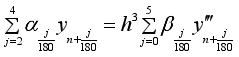 (27)
(27)  (28)
(28)  is continuously differentiable. Expanding (10) in Taylor series about the point
  yields the expression of the local truncation error
  (29)
(29)  is the error constant while the local truncation error is given by:
  (30)
(30)  . The procedure reveals that the suggested method has order
  with error constant
  , see
, see 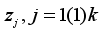 of the first characteristic polynomial
  specified as
  (31)
(31)  and for those roots with
  the multiplicity must not exceed 2.
  and the root
  has multiplicity not exceeding the order of the ODE. This is established with the following calculation; as
  where
where  is the order of the differential equation, for the block method,
  and
and 



 which is obvious.
  , thus
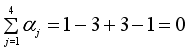 ,showthecondition(ii)issatisfied.

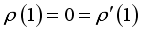 . Show that the condition (iii) is satisfied as well
 (32)
(32)  and
and  is assumed constant. The first and second characteristics polynomials of Eq. (10) are given by

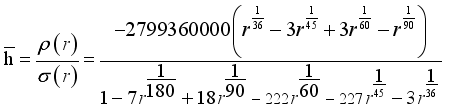 (33)
(33)  , then Eq. (33) becomes
 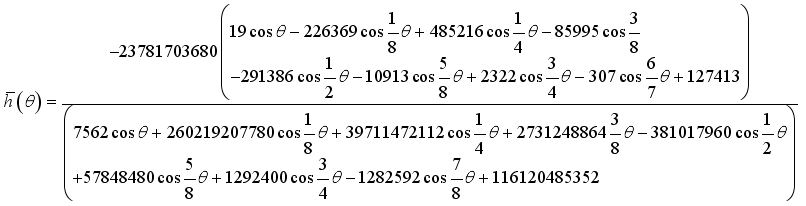 (35)
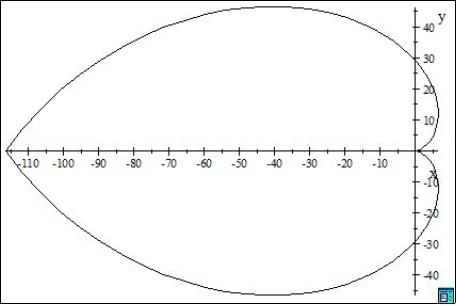
(35)  gives the following results of the boundaries for the region of absolute stability of the method as tabulated below;
 θ | 0° | 30° | 60° | 90° | 120° | 150° | 180° |
|---|---|---|---|---|---|---|---|
|
|
|
|
|
|
|
|
 which suggests potential P-stability according to
 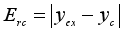 where
where  is the exact solution,
  is the computed result and absolute error defined as
  .
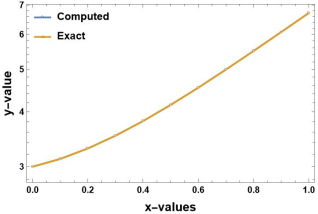
. XVC | ERC | NRC | ERR | ERR in [20] |
|---|---|---|---|---|
0.10 | 3.12517 | 3.12517 | 0 | 1.5227811E-12 |
0.20 | 3.30140 | 3.30140 | 2.22044604925031E-16 | 9.6922224E-12 |
0.3 | 3.52986 | 3.52986 | 2.22044604925031E-15 | 2.4267699E-11 |
0.4 | 3.81182 | 3.81182 | 7.993605777301127-15 | 4.5451198E-11 |
0.5 | 4.14872 | 4.14872 | 1.68753899743023E-14 | 7.8387963E-11 |
0.6 | 4.54212 | 4.54212 | 3.08642000845793E-14 | 1.3159340E-10 |
0.7 | 4.99375 | 4.99375 | 5.329070518200751E-14 | 2.0471091E-10 |
0.8 | 5.50554 | 5.50554 | 8.26005930321116E-14 | 2.9804159E-10 |
0.9 | 6.07960 | 6.07960 | 1.225686219186172E-13 | 4.1925841E-10 |
1.0 | 6.71828 | 6.71828 | 1.771915947301749E-13 | 5.8107297E-10 |
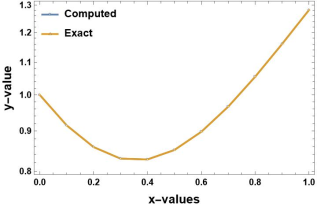
XVC | ERC | NRC | ERR | ERR in [21] |
|---|---|---|---|---|
0.1 | 0.914829 | 0.914829 | 0.000000E+000 | 3.473600E-14 |
0.2 | 0.858597 | 0.858597 | 6.66133814775093910E-16 | 3.326900E-13 |
0.3 | 0.830141 | 0.830141 | 2.886579864025407E-15 | 3.709100E-14 |
0.4 | 0.828175 | 0.828175 | 7.549516567451064E-15 | 5.791840E-13 |
0.5 | 0.851279 | 0.851279 | 1.7319479184152442E-14 | 3.581010E-13 |
0.6 | 0.897881 | 0.897881 | 3.241851231905457E-14 | 1.209298E-12 |
0.7 | 0.966247 | 0.966247 | 5.3734794391857577E-14 | 1.179995E-12 |
0.8 | 1.054460 | 1.054460 | 8.393286066166183E-14 | 2.514500E-12 |
0.9 | 1.160400 | 1.160400 | 1.2523315717771766E-13 | 2.409110E-12 |
1.0 | 1.281720 | 1.281720 | 1.794120407794253E-13 | 4.870670E-12 |
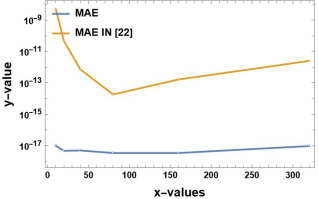
N | MAE | MAE in [22] |
|---|---|---|
10 | 9.97466E-18 | 2.91E-09 |
20 | 4.77049E-18 | 4.65E-11 |
40 | 4.98733E-18 | 7.39E-13 |
80 | 3.46945E-18 | 1.84E-14 |
160 | 3.46945E-18 | 1.65E-13 |
320 | 9.54945E-18 | 2.52E-12 |
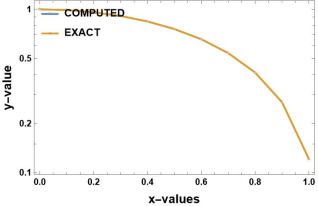
XVC | ERC | NRC | ERR | ERR in [20] |
|---|---|---|---|---|
0.10 | 0.990012 | 0.990012 | 0 | 6.8911543E-13 |
0.20 | 0.960200 | 0.960200 | 0 | 4.4015902E-12 |
0.30 | 0.911009 | 0.911009 | 0 | 1.0999868E-11 |
0.40 | 0.843183 | 0.843183 | 8.88178E-16 | 2.0601632E-11 |
0.50 | 0.757748 | 0.757748 | 2.22045E-15 | 3.6853520E-11 |
0.60 | 0.656007 | 0.656007 | 4.88498E-15 | 6.726841E-11 |
0.70 | 0.539527 | 0.539527 | 8.88178E-15 | 1.1150603E-10 |
0.80 | 0.410120 | 0.410120 | 1.50990E-14 | 1.6985002E-10 |
0.90 | 0.269830 | 0.269830 | 2.37588E-14 | 2.4948449E -10 |
1.00 | 0.120907 | 0.120907 | 3.59712E-14 | 3.6226498E-10 |
XVC | Value of the Independent Variable Where a Numerical Value Is Taken |
ERC | Exact Result at XVC |
NRC | Numerical Result of XVC |
ERR | Error in Proposed Method at XVC |
N | Steps |
MAE | Maximum Absolute Errors |
| [1] | Butcher, J. C. (1965): A modified multistep method for the numerical integration of ordinary differential equations. J Assoc. Comput. Math. 12; 124-135. |
| [2] | Lambert, J. D. (1973). Computational Methods in Ordinary Differential Equations. John Wiley, New York. |
| [3] | Chu, M. T. and Hamiton, H. (1987): Parallel Solution of Ordinary Differential Equations by Multiblock Methods. SIAM Journal of Scientific and Statistical Computation. 8; 342 – 553. |
| [4] | Fatunla, S. O. (1988). Numerical Methods for Initial value Problems in Ordinary Differential Equations. Academic Press Inc., New York. |
| [5] | Awoyemi, D. O (1999): A class of continuous Methods for general second order initial value problems in ordinary differential equations. International journal of computer mathematics 72; 29-39. |
| [6] | Olabode B. T. (2009): An accurate scheme by block method for the third order ordinary differential equations. Pacific Journal of Science and Technology. 2009; 10(1). |
| [7] | Bolarinwa Bolaji, Ademiluyi, R. A., Olaseni Tunde and Duromola M. K (2012): A New Implicit Hybrid Block Method for the Direct Solution of initial value problems of general third order ordinary differential equations. Canadian Journal of Science and Engineering, 3; 86 - 97. |
| [8] | Ademiluyi, R. A., Duromola, M. K. & Bolarinwa Bolaji. (2014). Modified block method for the direct solution of initial value problems of fourth order Ordinary differential equations. Australian Journal of Basic and Applied Sciences, 8(10) July 2014; 389-394. |
| [9] | Adesanya, A. O., Abdulqadri, B. and Ibrahim, Y. S. (2014) Hybrid One Step Block. Method for the Solution of Third Order Initial Value Problems of Ordinary Differential Equations. International Journal of Pure and Applied Mathematics, 97, 1-11. |
| [10] | Duromola, M. K., Lawal, R. S. and Akinmoladun, O. M. (2024): Numerical integration of linear hybrid multistep block method for third-order ordinary differential equations (IVPs). Scientific African (Elsevier) ScienceDirect |
| [11] | Duromola, M. K. (2025) An efficient A-stable linear multistep hybrid block method for solving fifth-order initial value problems in ordinary differential equations. American Journal of Applied Mathematics. 13(3): 174-193 |
| [12] | Duromola, M. K and Momoh, A. L. Hybrid numerical method with block extension for direct solution of third order ordinary differential equations. American Journal of Computational Mathematics. 2019; 9: 68-80. |
| [13] | Duromola M. K. (2022) Single-Step Block Method of P-stable for Solving Third Order Differential Equations (IVPs): Ninth Order of Accuracy. American Journal of Applied Mathematics and Statistics, 2022, Vol. 10, No. 1. Pp 4-1.3 |
| [14] | Duromola, M. K., Momoh, A. L. and. Kusoro O. O. (2024). A modified fourth derivative block method and its direct applications to third-order initial value problems. Journal of Mathematical Analysis and Modeling, 4(3): 60-75. |
| [15] | D. O. Awoyemi, E. A. Adebile, A. O. Adesanya and T. A. Anake (2011). Modified block method for the direct solution of second order ordinary differential equations. International Journal of Applied Mathematics and Computation. 3(3), pp 181-188. |
| [16] | Y. A. Yahaya and A. M. Badmus (2009). A class of collocation for General Second Order Ordinary Differential Equations. African Journal of Mathematics and Computer Science Research, 2(4): 069-072. |
| [17] | Fatunla, S. O. (1991). Block method for Second Order IVPs. International Journal of Computer Mathematics, 41(9); 55-63. |
| [18] | Henrici P. (1962). Discrete Variable Method in Ordinary Differential Equations. John Wiley and Sons, New York. |
| [19] | Shampine, L. F. and Watts, H. A. (1969): Block Implicit one step methods. Mathematics of Computation, 23 (108); 731-740. |
| [20] | J. O. Kuboye, O. F. Quadri, O. R. Elusakin (2020): Solving Third Order Ordinary Differential Equations Directly Using Hybrid Numerical Models. Journal of the Nigerian Society of Physical Sciences, 2 (2020) 69-76. |
| [21] | Abolarin, O. O., Kuboye, J. O., Adeyefa, E. O., and Ogunware, G. (2020): New Efficient Numerical Model for Solving Second, third and Fourth Order Ordinary Differential Equations Directly. Journal of Science. 33(4): 821-833 (2020). |
| [22] | Orakwelu, M. G., Otegbeye, O., and Mambili-Mamboundou, H. (2023). A class of single- step hybrid block methods with equally spaced points for general third-order ordinary differential equations. Journal of the Nigerian Society of Physical Sciences, 5(2023) 1484. |
APA Style
Kolawole, D. M., Mayowa, A. O., Olatunde, F. G. (2026). A Sixth-order Hybrid Block Method for the Direct Solution of 3rd-order Initial Value Problems of Ordinary Differential Equations. Engineering Mathematics, 10(2), 24-35. https://doi.org/10.11648/j.engmath.20261002.11
ACS Style
Kolawole, D. M.; Mayowa, A. O.; Olatunde, F. G. A Sixth-order Hybrid Block Method for the Direct Solution of 3rd-order Initial Value Problems of Ordinary Differential Equations. Eng. Math. 2026, 10(2), 24-35. doi: 10.11648/j.engmath.20261002.11
@article{10.11648/j.engmath.20261002.11,
  author = {Duromola Monday Kolawole and Akinmoladun Olusegun Mayowa and Fafesobi Gbenga Olatunde},
  title = {A Sixth-order Hybrid Block Method for the Direct Solution of 3rd-order Initial Value Problems of Ordinary Differential Equations},
  journal = {Engineering Mathematics},
  volume = {10},
  number = {2},
  pages = {24-35},
  doi = {10.11648/j.engmath.20261002.11},
  url = {https://doi.org/10.11648/j.engmath.20261002.11},
  eprint = {https://article.sciencepublishinggroup.com/pdf/10.11648.j.engmath.20261002.11},
  abstract = {This work focuses on the derivation, analysis and numerical application of a hybrid linear multistep formula for directly solving third-order initial value problems (IVPs) ordinary differential equations (ODEs). The method is derived by adopting the collocation and interpolation procedure with a power series polynomial of degree eight as the basis function. The procedure resulted in the construction of a continuous hybrid linear multistep method by collocating the third derivative at nodal and five off-nodal points to generate a system of linear equations for the determination of the unknown parameters, from which the formulas that constitute the proposed hybrid block method are obtained. The suggested method is fully hybrid, which is an important property that contributed to the good accuracy and minimum errors associated with the results of the method. The analysis of the basic properties of the suggested method reveals that the method is of theoretical order six, stable, consistent and convergent. Four numerical examples are considered for the numerical experiment to confirm the accuracy of the proposed method. The experiment shows that the present method is very efficient for the numerical approximation of third-order initial value problems for ordinary differential equations. The method also performs favorably well when compared with the results of some cited methods in the literature.},
 year = {2026}
}
TY  - JOUR
T1  - A Sixth-order Hybrid Block Method for the Direct Solution of 3rd-order Initial Value Problems of Ordinary Differential Equations
AU  - Duromola Monday Kolawole
AU  - Akinmoladun Olusegun Mayowa
AU  - Fafesobi Gbenga Olatunde
Y1  - 2026/07/17
PY  - 2026
N1  - https://doi.org/10.11648/j.engmath.20261002.11
DO  - 10.11648/j.engmath.20261002.11
T2  - Engineering Mathematics
JF  - Engineering Mathematics
JO  - Engineering Mathematics
SP  - 24
EP  - 35
PB  - Science Publishing Group
SN  - 2640-088X
UR  - https://doi.org/10.11648/j.engmath.20261002.11
AB  - This work focuses on the derivation, analysis and numerical application of a hybrid linear multistep formula for directly solving third-order initial value problems (IVPs) ordinary differential equations (ODEs). The method is derived by adopting the collocation and interpolation procedure with a power series polynomial of degree eight as the basis function. The procedure resulted in the construction of a continuous hybrid linear multistep method by collocating the third derivative at nodal and five off-nodal points to generate a system of linear equations for the determination of the unknown parameters, from which the formulas that constitute the proposed hybrid block method are obtained. The suggested method is fully hybrid, which is an important property that contributed to the good accuracy and minimum errors associated with the results of the method. The analysis of the basic properties of the suggested method reveals that the method is of theoretical order six, stable, consistent and convergent. Four numerical examples are considered for the numerical experiment to confirm the accuracy of the proposed method. The experiment shows that the present method is very efficient for the numerical approximation of third-order initial value problems for ordinary differential equations. The method also performs favorably well when compared with the results of some cited methods in the literature.
VL  - 10
IS  - 2
ER  -
Department of Mathematical Sciences, Federal University of Technology, Akure, Nigeria
Department of Mathematical Sciences, Lagos State University of Science and Technology, Ikorodu, Nigeria
Department of Mathematical Sciences, Federal University of Technology, Akure, Nigeria

Information



 Share This Article
 Twitter
 Linked In
 Facebook
 . Evaluate Eq. (
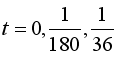 to obtain the discrete one thirty-sixth step formulas


 Copy
Copy Download