Research Article | | Peer-Reviewed

A Review on Engineering Phage Resistance in Vibrio cholerae: A Gene Editing Perspective

Received: 17 December 2025     Accepted: 29 December 2025     Published: 23 January 2026
Views:       Downloads:
Abstract

In this paper, Vibrio cholerae, the causative agent of cholera, is examined with focus on its genetic evolution, phage interactions, and modern gene-editing strategies for control. Cholera remains a pressing global health issue, especially in regions with inadequate sanitation. The bacterium’s virulence depends on acquiring the CTXφ bacteriophage, which integrates cholera toxin genes into its chromosome. Advances in CRISPR-Cas and recombineering now enable precise genetic manipulation to block CTXφ infection by targeting phage receptors like the toxin-coregulated pilus (TCP) or essential phage genes. The emergence of the O139 “Bengal” strain in the 1990s marked a major epidemiological event, illustrating how horizontal gene transfer and microevolution fuel epidemic potential. Genome plasticity, facilitated by SXT elements and chromosomal fusion, drives antimicrobial resistance and adaptability. Between 2015 and 2018, chromosome-fused V. cholerae strains in Dhaka highlighted ongoing recombination as an evolutionary force. Environmental isolates also serve as reservoirs for virulence genes such as ctxAB, tcpA, toxR, and toxT, showing that aquatic habitats sustain genetic exchange and the emergence of new variants. The stringent-response gene relA further links nutritional stress to virulence regulation and phage immunity. Horizontal gene transfer through the conjugative SXT element enables dissemination of resistance and virulence determinants across bacterial species. Emerging CRISPR-Cas and BREX/DISARM systems enhance phage resistance and genome stability. Together, these insights underscore how gene editing, synthetic biology, and genomic surveillance could revolutionize cholera prevention by designing phage-resistant, low-virulence, and ecologically stable V. cholerae strains for sustainable disease control.

Published in Biomedical Sciences (Volume 12, Issue 1)
DOI 10.11648/j.bs.20261201.11
Page(s) 1-9
Creative Commons

This is an Open Access article, distributed under the terms of the Creative Commons Attribution 4.0 International License (http://creativecommons.org/licenses/by/4.0/), which permits unrestricted use, distribution and reproduction in any medium or format, provided the original work is properly cited.

Copyright

Copyright © The Author(s), 2026. Published by Science Publishing Group

Keywords

Vibrio cholerae, CTXφ Bacteriophage, CRISPR-Cas Systems, Gene Editing, Phage Resistance

1. Introduction
Vibrio cholerae, the causative agent of cholera, remains a major public health threat in many parts of the world, particularly in regions with poor water sanitation and limited access to healthcare . Between 2020 and 2025, global cholera cases surged across more than 40 countries, with major outbreaks reported in Malawi, Haiti, Mozambique, and the Democratic Republic of Congo. WHO data show over 700,000 suspected cases and 5,000 deaths in 2023 alone. Genomic surveillance revealed the continued predominance of the V. cholerae O1 El Tor lineage, harboring new ctxB7 alleles and SXT/R391 variants conferring multidrug resistance and phage defense traits .
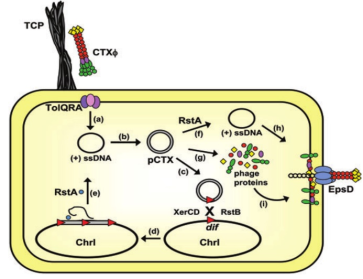
Central to the pathogenicity of toxigenic V. cholerae strains is their acquisition of the CTXφ (CTX phage), a filamentous bacteriophage that encodes the cholera toxin genes (ctxAB). CTXφ infects V. cholerae by recognizing specific host receptors, such as the toxin-coregulated pilus (TCP), and integrates its genome into the host chromosome via site-specific recombination mediated by host recombinases XerC and XerD . The resulting lysogenic conversion not only enhances bacterial virulence but also facilitates the horizontal transfer of virulence genes across V. cholerae populations. The sequential steps of CTXφ infection, replication, chromosomal integration, and virion secretion are summarized in Figure 1.
Figure 1. Schematic Representation of the CTXf Life Cycle in V. Cholerae.
a. CTXf infects V. cholerae by first binding to TCP and then to the inner membrane/periplasmic TolQRA complex, whereupon the single-stranded DNA [(+) ssDNA] loses its protein coat and is transported into the cytoplasm.
b. The replicative or plasmid form of CTXf (pCTX) is generated when DNA complementary to the phage genome is synthesized.
c. pCTX integrates site-specifically into the V. cholerae dif region of chromosome I. Integration requires the phage-encoded RstB protein as well as the host-encoded recombinases XerC and XerD. This recombination occurs between homologous sequences on CTXf and the chromosome, which are depicted as red triangles.
d. CTXf usually integrates as tandem prophages.
e. Tandem prophages serve as a template to generate extrachromosomal (+) ssDNA. This process requires RstA.
f. RstA also produces (+) ssDNA from pCTX.
g. The phage coat and secretion proteins are expressed from pCTX.
h and i. The phage proteins are localized to the inner membrane prior to forming virions. The (+) ssDNA is thought to be simultaneously packaged into phage particles and secreted from the cell. Secretion of CTXf from the bacterial cell occurs through the host-encoded EpsD channel.
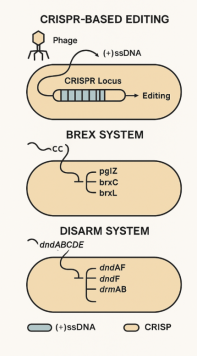
Recent genomic analyses identified novel anti-phage defense systems such as BREX and DISARM in V. cholerae, complementing classical CRISPR-Cas mechanisms and enhancing resistance to CTXφ infection and integration . The coordinated action of CRISPR-Cas, BREX, and DISARM defense systems in V. cholerae is illustrated in Figure 2.
Figure 2. Schematic representation of bacterial anti-phage defense systems in Vibrio cholerae.
Given the critical role of phage-host interactions in cholera pathogenesis, disrupting these mechanisms through gene editing offers a promising avenue for disease control and synthetic biology.
Advances in CRISPR-Cas systems and recombineering technologies now allow precise modification of bacterial genomes, making it feasible to engineer V. cholerae strains that are resistant to CTXφ infection. By targeting key phage receptors such as TCP, or essential phage genes like rstA, rstB, or pIII, researchers can potentially block phage entry, integration, or replication. .
This review explores current knowledge of CTXφ-V. cholerae interactions and evaluates emerging gene editing strategies aimed at engineering phage-resistant V. cholerae. Such interventions not only offer tools for combating cholera but also open new possibilities for reprogramming bacterial behavior for beneficial purposes.
2. Methodology
This review adopted a multidisciplinary synthesis of gene-editing perspectives. A comprehensive literature search was conducted across PubMed, Web of Science, and Google Scholar to retrieve peer-reviewed studies on Vibrio cholerae, CTXφ bacteriophage interactions, and gene-editing tools such as CRISPR-Cas. Supplementary genomic and phage datasets were explored from NCBI Genome, Integrated Microbial Genomes/Virus (IMG/VR), and PhageAI repositories to verify viral taxonomy, host range, and resistance determinants. The review emphasized studies addressing phage resistance, genomic plasticity, and horizontal gene transfer, with special focus on 2010–2025 advances in synthetic biology and molecular innovations targeting cholera pathogenesis.
3. The Rise and Evolution of Vibrio cholerae O139: A New Chapter in Cholera Epidemiology
In late 1992 and early 1993, a novel strain of Vibrio cholerae serogroup O139 "Bengal" emerged in southern India and Bangladesh, provoking large-scale cholera epidemics. This marked the first time a non-O1 serogroup was linked to epidemic cholera . The strain initially appeared to completely displace the existing O1 El Tor strains in these.
3.1. Origin and Genetic Makeup
Comparative genetic analyses suggested that the O139 strain originated from an O1 background but acquired a new O-antigen biosynthesis gene cluster through horizontal gene transfer. Its novel O-antigen cluster (wbfA–wbfX) is ~35.8 kb in size and inserts between conserved flanking genes found in O1 strains. Additionally, O139 strains carry the cholera toxin genes (ctxAB), and nearly all isolates are toxigenic, unlike most non-O1 vibrios.
3.2. Epidemiological Transitions
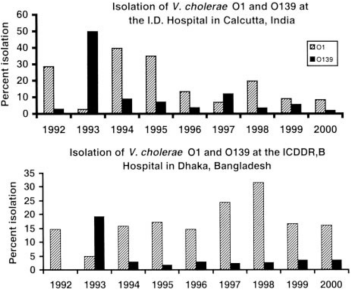
After O139’s emergence, O1 strains reappeared in 1994, triggering a period marked by the alternating dominance of O1 and O139. In India, a new O1 genetic variant replaced O139 in 1994–1996, but a fresh O139 variant resurfaced in August 1996, dominating until September 1997 in Bangladesh Despite this, the O1 El Tor lineage maintained overall dominance, with O139 cases resurging in early 2002 in Dhaka-area outbreaks. Temporal trends in the isolation of O1 and O139 strains in India and Bangladesh during 1992–2000 are shown in Figure 3.
Figure 3. Isolation of V. cholerae O1 and O139 from patients admitted to Infectios Diseases Hospital in Calcuta India (upper) and from those admitted to ICDDR, B Hospital in Dhaka Bangladesh (lower) between 1992 and 2000.
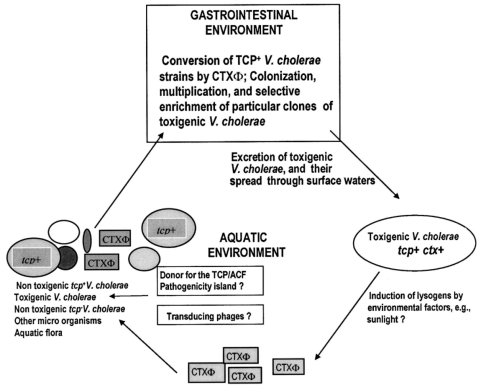
Table 1. Yearly isolations of different ribotypes of V. cholerae O139 in Bangladesh and India between 1992 and 2002.

Year of isolation

Country of isolation

No. of strains analyzed

No. of strains belonging to different ribotypes, %

B-I

B-II

B-III

B-IV

B-V

B-VI

1992

India

5

5

1993

India

20

13

5

1

1

1994

India

20

5

14

1

1995

India

6

2

3

1

1996

India

7

7

1997

India

24

6

17

1998

India

6

6

1993

Bangladesh

11

3

8

1995

Bangladesh

5

2

3

1996

Bangladesh

9

9

1997

Bangladesh

24

4

20

1998

Bangladesh

9

6

1

2

2002

Bangladesh

63

63

1992-2002

Total

209

36

145

21

2

3

1

3.3. Genotypic and Phenotypic Diversity
Ongoing surveillance revealed marked genetic diversity among O139 isolates. At least seven ribotypes and several CTX-genotypes have been identified, indicating multiple progenitor lineages and frequent genetic reassortment. For instance, isolates from different outbreaks clustered into distinct ribotypes (e.g., B-III in 1997) These findings suggest rapid microevolution: O139 periodically diversified to compete with O1 strains and adapt to shifting host/environmental pressures.
3.4. Competition and Persistence
Genetic flexibility appears to be a core survival strategy. Under selective pressure from O1 reemergence, O139 adapted through acquiring new surface polysaccharide loci, variations in CTX prophage, and altered antimicrobial resistances These changes likely enhanced its fitness, persistence and epidemic potential .
3.5. Broader Implications
The emergence of O139 presented a rare opportunity to trace the genomic evolution of a cholera-causing pathogen during active epidemic phases. It highlights several key evolutionary processes: Genetic displacement: a new serogroup replacing an established one , clonal diversification within a relatively short evolutionary timeframe , horizontal gene transfer as a driver of epidemic potential, the interplay of environmental, bacteriophage, and host immune pressures shaping the pathogen landscape.
The authors argue this evolutionary event in the Bengal region could influence cholera dynamics elsewhere, especially in endemic and epidemic settings beyond South Asia.
4. The Contribution of Transmission Ecology to the Genome of V. cholerae
Transmission ecology defined by the routes and reservoirs through which Vibrio cholerae moves among aquatic environments, human hosts, and vectors directly shapes its genomic architecture by exposing populations to distinct selective pressures and facilitating horizontal gene exchange. In endemic waters, bacteria encounter diverse filamentous CTXφ phages that bind the toxin coregulated pilus (TCP) and integrate via XerC/XerD recombinases, prompting rapid selection for mutants that alter or lose TCP, thereby gaining phage resistance but also modifying virulence factor expression.
The 1992 emergence of the O139 “Bengal” serogroup exemplifies how transmission through densely populated regions enabled acquisition of a novel O antigen biosynthesis cluster via horizontal transfer, displacing the dominant O1 lineage and illustrating the impact of host immune and environmental pressures on serogroup switching. Between 2015 and 2018, chromosome fused strains were identified in Dhaka, arising from homologous recombination at the HS1 region of pathogenicity island VPI 2, a genome rearrangement pathway conjugative SXT element further amplifies genomic plasticity by mobilizing antimicrobial resistance genes and anti phage defense systems (restriction modification, BREX), linking antibiotic use and phage predation to the spread of mobile elements across bacterial populations.
Natural competence on chitinous surfaces and biofilm formation in riverine and estuarine habitats promote uptake of exogenous DNA, enabling serogroup conversion and integration of new virulence loci. Consequently, each transmission event, whether waterborne, food borne, or person-to-person, acts as a conduit for gene flow, selects for adaptive mutations, and drives the mosaic, rapidly evolving genome of V. cholerae observed in epidemic and endemic settings . Phage–bacteria coevolution in aquatic reservoirs, influenced by seasonal and climatic fluctuations, accelerates horizontal gene transfer and selection of adaptive variants, shaping Vibrio cholerae diversity, virulence, and persistence across dynamic environmental niches . A conceptual model illustrating the emergence of pathogenic V. cholerae strains from environmental progenitors is presented in Figure 4.
Figure 4. Model of the origination of the new pathogenic strain of V. cholerae from the progenitor strains from the environment.
Genomic Flexibility in Cholera Pathogen: The Rise of Chromosome-Fused V. cholerae
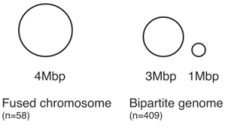
Researchers analyzed 467 clinical O1 isolates of Vibrio cholerae collected in Dhaka, Bangladesh (2015–2018) using long-read sequencing. Uniquely, 58 isolates (from 10 individuals across five households) carried a single fused chromosome (~4 Mbp), merging the typically separate ~3 Mbp and ~1 Mbp chromosomes .
Figure 5. A schematic diagram showing the chromosomal fusion of the larger and smaller chromosome in V. cholerae.
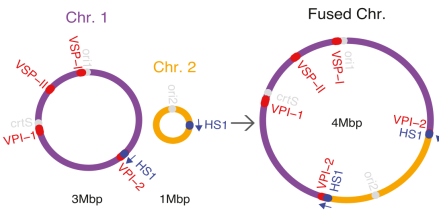
Fusions occurred via homologous recombination at a ~12 kb shared region (HS1) present on both chromosomes part of pathogenicity island VPI-2 and were confirmed with PFGE. Phylogenetic analysis revealed multiple independent fusion events, some transmitted between household members, indicating these fusions are not rare anomalies but rather recurring Mobile defense islands and phage exclusion modules embedded within SXT elements enhance Vibrio cholerae’s adaptive immunity, linking antimicrobial resistance dissemination with phage defense and contributing to its genomic flexibility and epidemic persistence . The fusion of the two chromosomes into a single replicon is schematically depicted in Figure 5.
Key genomic landmarks involved in chromosome fusion, including HS1, crtS, and replication origins, are detailed in Figure 6.
Figure 6. A schematic representation of chromosome fusion with the location of HS1, crtS, the origins of replications and pathogenicity islands indicated, Chr2 in rare cases carries the additional copy of VSP1.

5. Genes Responsible for the Virulence of V. cholerae
This study investigates the presence and expression of virulence genes in environmental strains of Vibrio cholerae isolated from freshwater lakes and ponds in Calcutta, India. The research focuses on five virulence genes: ctxAB, tcpA, toxR, and toxT, which are critical for pathogenicity . Using PCR and Southern hybridization, the study identified 24 strains carrying these genes, with tcpA and ctxAB being the most prevalent. Notably, tcpA genes in environmental strains showed high similarity (97.7%) to the classical biotype of V. cholerae O1, suggesting an environmental reservoir of virulence genes.
The study demonstrated that strains carrying tcpA expressed toxin-coregulated pilus (TCP), confirmed through autoagglutination assays and electron microscopy. Strains with ctxAB produced cholera toxin (CT), verified by GM1 ELISA and rabbit ileal loop tests. However, some strains positive for ctxAB did not produce detectable CT, indicating incomplete virulence gene expression. Ribotyping revealed genetic diversity among strains, supporting the hypothesis of gene transfer in the environment.
The findings highlight the ecological significance of environmental V. cholerae as a reservoir for virulence genes, which may contribute to the emergence of new pathogenic variants through horizontal gene transfer. This study underscores the potential for environmental strains to play a role in cholera epidemiology and evolution, emphasizing the need for further research into the molecular ecology of V. cholerae.
5.1. Regulation of Virulence by relA
Study shows how disruption of the relA gene influences virulence regulation in Vibrio cholerae El Tor C6709. The relA gene encodes an enzyme responsible for synthesizing (p) ppGpp, a signaling molecule central to the bacterial stringent response and adaptation to stress . Researchers cloned and sequenced the relA homolog (relAᴠᴄʜ) and created a deletion mutant strain (SHK17) by replacing part of the gene with a kanamycin resistance cassette.
The mutant failed to accumulate (p) ppGpp during amino acid starvation, confirming the gene’s role in the stringent response. Under virulence-inducing (AKI) conditions, SHK17 produced about 90% less cholera toxin (CT) and markedly lower levels of toxin-coregulated pilus (TCP) compared with the wild type. Northern blot and RT-PCR analyses showed significant decreases in ctxAB and tcpA transcripts, along with down-regulation of the key regulators toxR and toxT. The mutation also disrupted expression of outer membrane porins (OmpU decreased, OmpT increased), indicating an effect on the ToxR-dependent regulatory pathway.
In vivo assays supported these results: the mutant caused minimal fluid accumulation in rabbit ileal loops and showed over a 1000-fold reduction in intestinal colonization in suckling mice. These findings demonstrate that (p) ppGpp is vital for optimal CT and TCP expression and that relA positively regulates the ToxR–ToxT virulence cascade in V. cholerae. Thus, the stringent-response mediator (p) ppGpp connects nutritional stress to virulence regulation, influencing the pathogen’s ability to cause disease . The stringent response mediated by (p) ppGpp not only regulates virulence but also modulates phage immunity by influencing CRISPR-Cas activation, enhancing Vibrio cholerae’s capacity to adapt under phage stress and environmental fluctuations.
5.2. Horizontal Gene Transfer in V cholera via SXT
The study explores the gene transfer capabilities of the SXT element, a conjugative, self-transmissible, chromosomally integrating element (constin) found in Vibrio cholerae O139. The SXT element encodes resistance to multiple antibiotics and facilitates horizontal gene transfer among gram-negative bacteria. It can mobilize plasmids like RSF1010 and CloDF13 in trans and chromosomal DNA in an Hfr-like manner. Unlike its self-transfer, plasmid and chromosomal DNA mobilization does not require excision of the SXT element from the chromosome.
RSF1010 mobilization by the SXT element occurs independently of its origin of transfer (oriT), suggesting an alternative mechanism. The SXT element selectively mobilizes certain plasmids, such as CloDF13, but fails to mobilize others like ColE1 and ColE3 . The transfer of RSF1010 and CloDF13 is independent of the SXT element’s integrase (int) gene, indicating that excision and circularization of the element are not required for its conjugative functions.
The SXT element also mobilizes chromosomal DNA in a directional manner, similar to Hfr strains. Chromosomal DNA transfer is RecA-dependent and involves homologous recombination in recipient cells. This mechanism allows the transfer of linked chromosomal genes, potentially facilitating cross-species gene transfer. For example, the SXT element may mobilize virulence gene clusters, such as the Vibrio cholerae pathogenicity island.
The study highlights the distinct features of the SXT element compared to other conjugative systems, such as its selective plasmid mobilization and oriT-independent transfer. These findings suggest that the SXT element plays a significant role in horizontal gene transfer and may contribute to the dissemination of antibiotic resistance and virulence genes in bacterial populations. The SXT element could also serve as a tool for mobilizing chromosomal genes in species lacking H-like elements.
Natural competence in Vibrio cholerae is strongly induced on chitinous surfaces and regulated by quorum-sensing signals, promoting DNA uptake from the environment. This competence activation facilitates horizontal gene transfer, enabling acquisition of virulence genes, phage defense elements, and adaptive traits essential for environmental persistence and epidemic potential .
6. CRISPR-Cas and Synthetic Redesign for Cholera Control
Recent advances in CRISPR-Cas genome engineering have enabled precise modification of Vibrio cholerae to disrupt CTXφ receptor genes, delete prophage integration sites, and attenuate virulence pathways. Synthetic biology approaches now integrate recombineering with programmable nucleases to design phage-resistant or vaccine-candidate strains, enhancing biosafety and stability. Engineered CRISPR arrays can also target antibiotic-resistance and mobile genetic elements, reducing horizontal gene transfer . These innovations will provide sustainable strategies for cholera control by reprogramming bacterial genomes toward reduced pathogenicity and improved ecological fitness.
The phage defense arms race reflects continuous adaptive evolution between Vibrio cholerae and its infecting phages. As bacteria acquire systems such as CRISPR, BREX, and DISARM to block infection, phages counter with anti-CRISPR proteins, modified receptor-binding domains, and genome rearrangements to evade immunity. This reciprocal adaptation maintains dynamic genetic turnover, influencing cholera virulence, epidemic persistence, and the long-term stability of engineered phage-resistant strains
7. Conclusion
In conclusion, this review highlights the pivotal role of gene editing technologies, particularly CRISPR-Cas and recombineering, in engineering Vibrio cholerae strains resistant to CTXφ bacteriophage infection. By disrupting key phage - host interactions and targeting virulence determinants, these tools may provide innovative avenues for cholera prevention and control. Integrating genomic surveillance with synthetic biology approaches can enhance understanding of cholera evolution and support the development of sustainable, phage-resilient intervention strategies. Future integration of phage therapy, gene editing, and vaccine strategies could enhance sustainable cholera prevention.
Abbreviations

WHO

World Health Organization

TCP

Toxin Coregulated Pilus

CRISPR

Clustered Regularly Interspaced Short Palindromic Repeats

BREX

Bacteriophage Restriction by Exclusion

DISARM

Defense Island System Associated with Restriction Modification

CT

Cholera Toxin

PCR

Polymerase Chain Reaction

DNA

Deoxyribose Nucleic Acid

Author Contributions
Elihaika Charles Lyimo is the sole author. The author read and approved the final manuscript.
Conflicts of Interest
The author declares that this review does not have any conflicts of interest with a company, organization or individual.
References
[1] McLeod, S. M., Kimsey, H. H., Davis, B. M., & Waldor, M. K. (2005). CTXφ and Vibrio cholerae: exploring a newly recognized type of phage–host cell relationship. Molecular microbiology, 57(2), 347-356.
[2] S. M. Faruque, D. A. Sack, R. B. Sack, R. R. Colwell, Y. Takeda, & G. B. Nair, Emergence and evolution of Vibrio cholerae O139 (2003), Proc. Natl. Acad. Sci. U.S.A. 100(3) 1304-1309,
[3] Cuénod, A., Chac, D., Khan, A. I. et al. Prevalent chromosome fusion in Vibrio cholerae O1. Nat Commun 16, 5830(2025).
[4] Singh DV, Matte MH, Matte GR, Jiang S, Sabeena F, Shukla BN, Sanyal SC, Huq A, Colwell RR. 2001. Molecular Analysis of Vibrio cholerae O1, O139, non-O1, and non-O139 Strains: Clonal Relationships between Clinical and Environmental Isolates. Appl Environ Microbiol67
[5] Hochhut, B., Marrero, J., & Waldor, M. K. (2000). Mobilization of plasmids and chromosomal DNA mediated by the SXT element, a constin found in Vibrio cholerae O139. Journal of Bacteriology, 182(7), 2043-2047.
[6] Baddam, R., Sarker, N., Ahmed, D., Mazumder, R., Abdullah, A., Morshed, R., Hussain, A., Begum, S., Shahrin, L., Khan, A. I. and Islam, M. S., (2020). Genome dynamics of Vibrio cholerae isolates linked to seasonal outbreaks of cholera in Dhaka, Bangladesh. mBio 11: e03339-19
[7] Haralalka, S., Nandi, S. and Bhadra, R. K., (2003). Mutation in the relA gene of Vibrio cholerae affects in vitro and in vivo expression of virulence factors. Journal of bacteriology, 185(16), pp. 4672-4682.
[8] Chakraborty, S., Mukhopadhyay, A. K., Bhadra, R. K., Ghosh, A. N., Mitra, R., Shimada, T., Yamasaki, S., Faruque, S. M., Takeda, Y., Colwell, R. R. and Nair, G. B., 2000. Virulence genes in environmental strains of Vibrio cholerae. Applied and environmental microbiology, 66(9), pp. 4022-4028.
[9] Schild, S., Tamayo, R., Nelson, E. J., Qadri, F., Calderwood, S. B., & Camilli, A. (2007). Genes induced late in infection increase fitness of Vibrio cholerae after release into the environment. Cell host & microbe, 2(4), 264-277.
[10] Adams, D. W., Jaskólska, M., Lemopoulos, A., Stutzmann, S., Righi, L., Bader, L., & Blokesch, M. (2025). West African–South American pandemic Vibrio cholerae encodes multiple distinct phage defence systems. Nature Microbiology, 1-14.
[11] Box, A. M., McGuffie, M. J., O'Hara, B. J., & Seed, K. D. (2016). Functional analysis of bacteriophage immunity through a type IE CRISPR-Cas system in Vibrio cholerae and its application in bacteriophage genome engineering. Journal of bacteriology, 198(3), 578-590.
[12] Oshiro, R. T., Dunham, D. T. and Seed, K. D., (2024). The vibriophage-encoded inhibitor OrbA abrogates BREX-mediated defense through the ATPase BrxC. Journal of Bacteriology, 206(11), pp. e00206-24.
[13] Blokesch, M. and Seed, K. D., (2025). Lineage-specific defence systems of pandemic Vibrio cholerae. Philosophical Transactions B, 380(1934), p. 20240076.
[14] Madi, N., Cato, E. T., Abu Sayeed, M., Creasy-Marrazzo, A., Cuénod, A., Islam, K., Khabir, M. I. U., Bhuiyan, M. T. R., Begum, Y. A., Freeman, E. and Vustepalli, A., (2024). Phage predation, disease severity, and pathogen genetic diversity in cholera patients. Science, 384(6693), p. eadj3166.
[15] Li, R., Li, A., Zhang, Y. and Fu, J., (2023). The emerging role of recombineering in microbiology. Engineering Microbiology, 3(3), p. 100097.
[16] Hatoum-Aslan, A., (2018). Phage genetic engineering using CRISPR–Cas systems. Viruses, 10(6), p. 335. Viruses 2018, 10, 335;
[17] LeGault, K. N., Hays, S. G., Angermeyer, A., McKitterick, A. C., Johura, F. T., Sultana, M., Ahmed, T., Alam, M. and Seed, K. D., (2021). Temporal shifts in antibiotic resistance elements govern phage-pathogen conflicts. Science, 373(6554), p. eabg2166.
[18] O’Hara, B. J., Alam, M. and Ng, W. L., (2022). The Vibrio cholerae Seventh Pandemic Islands act in tandem to defend against a circulating phage. PLoS genetics, 18(8), p. e1010250.
[19] Borges, F. T., Papavasiliou, G. and Teymour, F., 2020. Characterizing the molecular architecture of hydrogels and crosslinked polymer networks beyond Flory–Rehner—I. Theory. Biomacromolecules, 21(12), pp. 5104-5118.
[20] Antonova, E. S. and Hammer, B. K., 2015. Genetics of natural competence in Vibrio cholerae and other vibrios. Microbiology spectrum, 3(3), pp. 10-1128.
[21] Woldetsadik, Y. A., Lazinski, D. W. and Camilli, A., (2024). A Vibrio cholerae anti-phage system depletes nicotinamide adenine dinucleotide to restrict virulent bacteriophages. mBio, 15(11), pp. e02457-24.
[22] Li, W., Huang, C. and Chen, J., (2022). The application of CRISPR/Cas mediated gene editing in synthetic biology: Challenges and optimizations. Frontiers in Bioengineering and Biotechnology, 10, p. 890155.
[23] Le Roux, F., 2025. The ecology and evolution of microbial immune systems: a look on the wild vibrio side. Philosophical Transactions B, 380(1934), p. 20240078.
[24] Patel, K. M. and Seed, K. D., (2024). Sporadic phage defense in epidemic Vibrio cholerae mediated by the toxin-antitoxin system DarTG is countered by a phage-encoded antitoxin mimic. MBio, 15(10), pp. e00111-24.
[25] World Health Organization (2024). Data show marked increase in annual cholera deaths. WHO News Release.
[26] Anderer, S. (2024). WHO: Cholera Cases Increased in 2023. JAMA, 332(17), pp. 1418-1418.
[27] 30, Chaguza, C., Chibwe, I., Chaima, D., Musicha, P., Ndeketa, L., Kasambara, W., Mhango, C., Mseka, U. L., Bitilinyu-Bangoh, J., Mvula, B. and Kipandula, W., (2024). Genomic insights into the 2022–2023 Vibrio cholerae outbreak in Malawi. Nature Communications, 15(1), p. 6291.
[28] Oshiro, R. T., Dunham, D. T. and Seed, K. D., (2024). The vibriophage-encoded inhibitor OrbA abrogates BREX-mediated Pant, A., Das, B. and Bhadra, R. K., (2020). CTX phage of Vibrio cholerae: genomics and applications. Vaccine, 38, pp. A7-A12.
Cite This Article
  • APA Style

    Lyimo, E. C. (2026). A Review on Engineering Phage Resistance in Vibrio cholerae: A Gene Editing Perspective. Biomedical Sciences, 12(1), 1-9. https://doi.org/10.11648/j.bs.20261201.11

    Copy | Download

    ACS Style

    Lyimo, E. C. A Review on Engineering Phage Resistance in Vibrio cholerae: A Gene Editing Perspective. Biomed. Sci. 2026, 12(1), 1-9. doi: 10.11648/j.bs.20261201.11

    Copy | Download

    AMA Style

    Lyimo EC. A Review on Engineering Phage Resistance in Vibrio cholerae: A Gene Editing Perspective. Biomed Sci. 2026;12(1):1-9. doi: 10.11648/j.bs.20261201.11

    Copy | Download

  • @article{10.11648/j.bs.20261201.11,
      author = {Elihaika Charles Lyimo},
      title = {A Review on Engineering Phage Resistance in Vibrio cholerae: A Gene Editing Perspective},
      journal = {Biomedical Sciences},
      volume = {12},
      number = {1},
      pages = {1-9},
      doi = {10.11648/j.bs.20261201.11},
      url = {https://doi.org/10.11648/j.bs.20261201.11},
      eprint = {https://article.sciencepublishinggroup.com/pdf/10.11648.j.bs.20261201.11},
      abstract = {In this paper, Vibrio cholerae, the causative agent of cholera, is examined with focus on its genetic evolution, phage interactions, and modern gene-editing strategies for control. Cholera remains a pressing global health issue, especially in regions with inadequate sanitation. The bacterium’s virulence depends on acquiring the CTXφ bacteriophage, which integrates cholera toxin genes into its chromosome. Advances in CRISPR-Cas and recombineering now enable precise genetic manipulation to block CTXφ infection by targeting phage receptors like the toxin-coregulated pilus (TCP) or essential phage genes. The emergence of the O139 “Bengal” strain in the 1990s marked a major epidemiological event, illustrating how horizontal gene transfer and microevolution fuel epidemic potential. Genome plasticity, facilitated by SXT elements and chromosomal fusion, drives antimicrobial resistance and adaptability. Between 2015 and 2018, chromosome-fused V. cholerae strains in Dhaka highlighted ongoing recombination as an evolutionary force. Environmental isolates also serve as reservoirs for virulence genes such as ctxAB, tcpA, toxR, and toxT, showing that aquatic habitats sustain genetic exchange and the emergence of new variants. The stringent-response gene relA further links nutritional stress to virulence regulation and phage immunity. Horizontal gene transfer through the conjugative SXT element enables dissemination of resistance and virulence determinants across bacterial species. Emerging CRISPR-Cas and BREX/DISARM systems enhance phage resistance and genome stability. Together, these insights underscore how gene editing, synthetic biology, and genomic surveillance could revolutionize cholera prevention by designing phage-resistant, low-virulence, and ecologically stable V. cholerae strains for sustainable disease control.},
     year = {2026}
    }
    

    Copy | Download

  • TY  - JOUR
    T1  - A Review on Engineering Phage Resistance in Vibrio cholerae: A Gene Editing Perspective
    AU  - Elihaika Charles Lyimo
    Y1  - 2026/01/23
    PY  - 2026
    N1  - https://doi.org/10.11648/j.bs.20261201.11
    DO  - 10.11648/j.bs.20261201.11
    T2  - Biomedical Sciences
    JF  - Biomedical Sciences
    JO  - Biomedical Sciences
    SP  - 1
    EP  - 9
    PB  - Science Publishing Group
    SN  - 2575-3932
    UR  - https://doi.org/10.11648/j.bs.20261201.11
    AB  - In this paper, Vibrio cholerae, the causative agent of cholera, is examined with focus on its genetic evolution, phage interactions, and modern gene-editing strategies for control. Cholera remains a pressing global health issue, especially in regions with inadequate sanitation. The bacterium’s virulence depends on acquiring the CTXφ bacteriophage, which integrates cholera toxin genes into its chromosome. Advances in CRISPR-Cas and recombineering now enable precise genetic manipulation to block CTXφ infection by targeting phage receptors like the toxin-coregulated pilus (TCP) or essential phage genes. The emergence of the O139 “Bengal” strain in the 1990s marked a major epidemiological event, illustrating how horizontal gene transfer and microevolution fuel epidemic potential. Genome plasticity, facilitated by SXT elements and chromosomal fusion, drives antimicrobial resistance and adaptability. Between 2015 and 2018, chromosome-fused V. cholerae strains in Dhaka highlighted ongoing recombination as an evolutionary force. Environmental isolates also serve as reservoirs for virulence genes such as ctxAB, tcpA, toxR, and toxT, showing that aquatic habitats sustain genetic exchange and the emergence of new variants. The stringent-response gene relA further links nutritional stress to virulence regulation and phage immunity. Horizontal gene transfer through the conjugative SXT element enables dissemination of resistance and virulence determinants across bacterial species. Emerging CRISPR-Cas and BREX/DISARM systems enhance phage resistance and genome stability. Together, these insights underscore how gene editing, synthetic biology, and genomic surveillance could revolutionize cholera prevention by designing phage-resistant, low-virulence, and ecologically stable V. cholerae strains for sustainable disease control.
    VL  - 12
    IS  - 1
    ER  - 

    Copy | Download

Author Information