Research Article | | Peer-Reviewed

Psychological Experience of Couple Infertility Among Women in Senegal

Received: 17 March 2026     Accepted: 28 March 2026     Published: 10 April 2026
Views:       Downloads:
Abstract

Introduction: Infertility is defined as the inability of a couple to achieve a clinical pregnancy after at least twelve months of regular, unprotected sexual intercourse. It is a major reproductive health problem worldwide, affecting approximately 80 million people. In Senegal, infertility represents a significant health and social concern due to its prevalence, its psychosocial repercussions, and the burden of suffering it inflicts on affected couples. The objective of the study was to evaluate the psychological experience of infertility among women in couples. Materials and Methods: This is a prospective, cross-sectional and descriptive study carried out over the period from October 11, 2021 to October 17, 2022 at the maternity ward of the National Hospital Center “Dalal Jamm” in Dakar. This included women in a relationship for one year who were consulted for pregnancy and those followed for infertility. Data was collected by direct interview, entered into the KOBO application, processed and analyzed using Excel and SPSS software. Results: Out of a total of 100 women surveyed, the average age was 34 years. The age group of [30-37 years] was the most represented. The secondary education level was the most represented 31%. The liberal profession was 37%, Muslim women 95% and those in their first marriage 85%. Women had been cohabiting with their partner for more than 5 years in 54% of cases. Primary infertility was 61%. The spouse participated in the explorations in 68.8% of cases. Infertility was of female origin in 51% of cases. When the diagnosis was announced, women felt hopeless in 29.6% of cases. Chronic psychological manifestations such as anxiety (82%), depression (73%), self-defense mechanisms such as isolation (62%), affiliation (20%) and intellectualization (13%) were not noted in the patients. The types of help expressed by patients were medical (68%), financial (37%), spiritual (23%), and psychological (20%). Conclusion: Infertility is not only a reproductive health issue, but also a mental health problem due to the psychological suffering it causes. Psychological and medical care (PMA) would allow women to reduce psychological suffering and increase the chances of pregnancy.

Published in American Journal of Psychiatry and Neuroscience (Volume 14, Issue 2)
DOI 10.11648/j.ajpn.20261402.11
Page(s) 30-40
Creative Commons

This is an Open Access article, distributed under the terms of the Creative Commons Attribution 4.0 International License (http://creativecommons.org/licenses/by/4.0/), which permits unrestricted use, distribution and reproduction in any medium or format, provided the original work is properly cited.

Copyright

Copyright © The Author(s), 2026. Published by Science Publishing Group

Keywords

Infertility of the Couple, Woman, Psychological Experience, Senegal

1. Introduction
Infertility is defined as the absence of spontaneous pregnancy after at least one year of regular sexual intercourse without any form of contraception . It affects 80 million people worldwide, or one in ten couples . In Senegal, motherhood remains highly valued and often constitutes a determining element of a woman's social status. Childlessness can thus be a break with family and community expectations. This situation exposes women to various forms of social pressure, stigmatization or guilt, even when the origin of infertility is not exclusively female. Therefore, infertility is not limited to a biological difficulty; it can also have significant repercussions on the psychological well-being, marital relations and emotional balance of the women concerned. The objective of the study was to evaluate the psychological experience of infertility among women in relationships.
2. Materials and Methods
2.1. Study Setting
Our study was carried out in the gynecology-obstetrics department of the Dalal Jamm National Hospital Center (CHNDJ), a level 3 Public Health Establishment located in the town of Guédiawaye, located 17 km from the city center of the capital of Senegal Dakar.
2.2. Type and Period of Study
This is a prospective, cross-sectional and descriptive study carried out from October 11, 2021 to October 17, 2022.
2.3. Study Population
It was made up of women who were followed at the gynecology-obstetrics department of the CHNDJ in Dakar for pregnancy desire.
2.3.1. Inclusion Criteria
1) Any woman in a relationship for at least a year and who has consulted for pregnancy
2) Any woman affected and fully monitored for infertility of the couple
2.3.2. Non-inclusion Criteria
1) Any woman who posed a language barrier problem
2) Any woman whose medical record was incomplete
2.4. Variables Studied
For each patient, we studied:
1) Sociodemographic variables
2) Women's psychological reactions to infertility
3) Resilience measures adopted by women facing infertility
4) Aspects of care
2.5. Data Collection and Analysis
Data was collected by direct interview based on a pre-established, tested and validated questionnaire. They were entered into the KOBO application, processed and analyzed using Excel and SPSS software.
2.6. Ethical Considerations
Anonymity and confidentiality were respected. No data allowing the participants to be identified was collected.
3. Results
3.1. Sociodemographic Aspects
In our study, we interviewed 100 women. The average age of the patients was 34 years, with extreme ages of 18 and 47 years. The most represented age group was [30-37 years] (Table 1).
Table 1. Distribution of patients according to their age group.

Age (year)

Workforce

Percentage (%)

≤ 30

34

34

[30- 37]

37

37

[37 - 40]

14

14

> 40

15

15

Total

100

100

Most of our patients, i.e. 82%, were educated, most often up to secondary school (Table 2).
Table 2. Distribution of patients according to their level of study.

Educational level

Workforce

Percentage (%)

Unschooled

13

13

Primary

28

28

Secondary

31

31

High

28

28

Total

100

100

Thirty-seven patients (37%) practiced a liberal profession, thirty-one patients (31%) were unemployed (Table 3).
Table 3. Distribution of patients according to their profession.

Profession

Workforce

Percentage (%)

Private employee

7

7

Public employee

13

13

Without profession

31

31

Liberal profession

37

37

Others

12

12

Total

100

100

Ninety-five patients (95%) were Muslim and five (5%) were Christian. The majority of patients were in their first marriage (85%), the rest (15%) had already experienced a divorce in their history. The reason for divorce was related to infertility in 27% of cases.
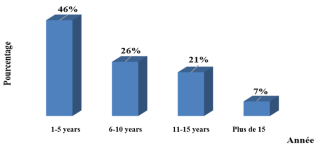
Forty-six patients (46%) had cohabited with their partner for less than 5 years and seven patients (7%) had cohabited for more than 15 years (Figure 1).
Figure 1. Distribution of patients according to the number of years of cohabitation with the spouse (N=100).
Sixty-one patients (61%) had never had a pregnancy.
3.2. Aspects Related to Care
Thirty-six patients (36%) consulted after one year of waiting (Table 4).
Table 4. Distribution of patients according to waiting time before consulting a gynecologist.

Consultation deadline

Workforce

Percentage (%)

One years

36

36

Two years

25

25

Three years

11

11

Four years

2

2

Five years

8

8

Five years and over

18

18

Total

100

100

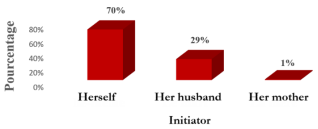
Most patients (70%) took their own initiative to consult a gynecologist (Figure 2).
Figure 2. Distribution of patients according to the initiator of the decision to consult (N= 100).
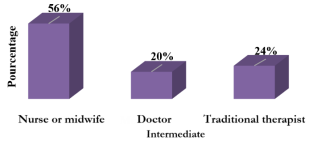
Forty-five patients (45%) had gone through an intermediary before consulting a gynecologist. The intermediaries were nurses or midwives in 56% of cases (Figure 3).
Figure 3. Distribution of patients according to type of intermediary (N=45).
Based on the 93 respondents to the question on the spouse's participation in the explorations, sixty-four patients (68.8%) confirmed their spouse's participation in the explorations compared to twenty-nine patients (31.2%) who said the opposite. Among those who said that their spouse does not participate in the explorations, thirteen patients (45%) gave the reason that no assessment was prescribed for it, seven patients (24.1%) said that the spouse had children while the other patients cited other reasons detailed in (Table 5).
Table 5. Distribution of reasons for spouses' non-participation in explorations.

Raisons

Workforce

Percentage (%)

No prescribed assessment

13

45

Already a father

7

24,1

Unknown reason

6

20,7

Pregnant second wife

1

3,4

No belief in modern medicine

1

3,4

Lack of resources

1

3,4

Total

29

100

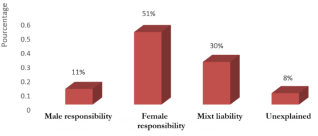
Among the one hundred patients interviewed, seventy-one patients (71%) knew the responsibility for their infertility. According to them, the responsibility was linked to the woman in 51% of cases (Figure 4).
Figure 4. Distribution of responsibility for infertility (N=71).
Forty-five patients (45%) had discontinued their medical follow-up.
The reasons for the interruption were linked in 44.4% of cases to a lack of expected result (Table 6).
Table 6. Distribution of reasons for discontinuing medical follow-up (N=45).

Reasons

Workforce

Percentage (%)

Lack of expected results

22

48,9

Discouragement

7

15,6

Changing gynecologist

6

13,6

Difficulty getting an appointment with the gynecologist

4

8,9

Lack of resources

2

4,4

Fear of surgery

2

4,4

Spouse’s non-participation

2

4,4

The husband's discomfort

1

2,2

Covid 19wsz »a

1

2,2

Travel

1

2,2

Eighty-sixteen patients (96%) had decided to remain faithful to medical care, of which 9 patients (9%) resorted to Medically Assisted Reproduction (AMP). (Table 7).
Table 7. Distribution according to the current state of procedures (N=100).

Procedures

Workforce

Percentage (%)

Continuity of care

96

96

Medical Assistance for Reproduction

9

9

Adoption of a child

2

2

Consultation with other specialists

2

2

Renunciation of the child project

2

2

Low-calorie diet

1

1

3.3. Psychological Aspects
At the time of our study, only 71 patients knew their diagnoses. During the announcement of the diagnosis, twenty-one women (29.6%) were driven by a feeling of hopelessness, seventeen women (23.9%) were frustrated. (Table 8).
Table 8. Distribution of reactions to the announcement of the diagnosis (N=71).

Reaction to the announcement of infertility

Workforce

Percentage (%)

Despair

21

29,6

The frustration

17

23,9

The feeling of helplessness

17

23,9

The pain

15

21,1

Sadness

10

14,1

Anger

5

7

Denial

4

5,6

Jealousy

3

4,2

Guilt

3

4,2

The injustice

3

4,2

Loss of confidence

3

4,2

Violation of his rights

1

1,4

The patients interviewed had presented several manifestations. We noted that eighty-two patients (82%) lived with anxiety, seventy-three patients (73%) with depression (Table 9).
Table 9. Distribution of patients according to psycho-affective manifestations due to infertility (N=100).

Demonstrations

Workforce

Percentage (%)

Anxiety

82

82

Depression

73

73

Insomnia

52

52

Bipolar disorder

32

32

Lower self-esteem

22

22

Presence of perverse desires

18

18

Decreased libido

15

15

No demonstration

8

8

To combat psycho-affective manifestations, several resilience measures were used by the patients. Sixty-two patients (62%) adopted isolation, twenty patients (20%) for affiliation and thirteen patients (13%) for intellectualization (Table 10).
Table 10. Distribution of patients’ self-defense mechanisms (N=100).

Self-defense reactions

Workforce

Percentage (%)

Insulation or isolation

62

62

Affiliation

20

20

Intellectualization

13

13

Sublimation

12

12

Repression

8

8

Altruism

8

8

Denial

6

6

Medication

1

1

3.4. Aspects Related to Support
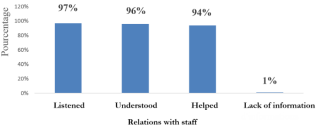
Most patients said they were listened to (97%), understood (96%) and helped (94%) by medical staff (Figure 5).
Figure 5. Relationship with medical staff (N=100).
No patient had received psychological support, and none had been able to meet a psychologist or psychiatrist.
The type of help most often expressed was medical help in 68% of cases followed by financial help (37%) (Table 11).
Table 11. Distribution of patients according to the type of help desired (N=100).

Help desired

Workforce

Percentage (%)

Medical help

68

68

Financial aid

37

37

Spiritual help

23

23

Psychological help

20

20

Others

2

2

4. Discussion
4.1. Sociodemographic Aspects
In our study, we found an average age of 34 years with extremes of 18 and 47 years. The most represented age group was [30-37 years] or 37%. These results are close to those obtained by many Senegalese authors, notably Diop, Dia, Dieng and Faye . Diop in 2013, in his study on the hysterosalpingographic profile of female infertility at the Pikine National Hospital Center (CHNP), found an average age of 32 years with extremes of 17 and 47 years, an age group of [35-47 years] more represented.
Dia in 2018 in his study on medically assisted procreation: IVF-Senegal activity report from 2007-2017, noted an average age of 34.13 years and a more representative age range of [30-34 years].
Dieng in 2019 in his study on the psychometric evaluation of stress linked to infertility in a sample of patients in Dakar, found an average age of 31.48 years, the most represented age group was that of [25-35 years].
Faye in 2019 in her study on the contribution of 2D ultrasound in the exploration of female infertility at the Pikine CHN, obtained an average age of 31.7 years with an age group of [30-39 years] more represented.
As elsewhere in Africa, these results are not far from those of certain Congolese, Ghanaian and Cameroonian authors .
In Cameroon, Priso E. et al found in 2015 the average age of patients to be 34 years ±13.4 with extremes of 18-49 years and a more representative age range of [29-34 years].
The Congolese Bruce Wembulua Shinga, in his study carried out in 2012, obtained an average age of 31.1 years.
In Ghana, a study carried out by Alhassan A et al in 2014, on depression associated with infertility in women, found an average age of 30.5 years with a more represented age group [20-30 years] (48%) followed by that of [31-35 years] (32%).
In Cameroon, Nana in 2011 found an average age of 30.76 years ± 6.68. Which is similar to the result of his fellow citizen Ella in 2017 who found an average age of 32.42 years ± 5.47.
Concerning the relationship between age and fertility, fertility is highest between [20-25 years] . It decreases with the age of the woman . The chances of one pregnancy occurring per cycle are 30% at age 25, 20% at age 35, and 1-2% at age 45 . So, the chances of pregnancy are very low beyond the age of 40, even for In vitro fertilization (IVF) . Our data shows that there is a decline in the age of motherhood. The reasons for this decline could be explained by the desire to have a career, the reluctance of business leaders to employ a pregnant woman, the progress of contraception or even prolonged studies.
These constraints should lead us to think about creating financial or material measures to support any pregnant woman who wants a long professional career, and to make crèches available in different workplaces.
The most represented level of study was secondary, i.e. 31%, followed by higher and primary level in equal proportions, i.e. 28%. The percentage of women having reached the higher level is comparable to that obtained by Dieng where he obtained 27.9%. On the other hand, in his study we noted a high proportion of women who were not in school, i.e. 39.6%. A study carried out in Germany showed a significant proportion of patients having reached the higher level, i.e. 26.8% . Ngo Um Meka et al in Cameroon in 2016 obtained 65% of women with higher education.
This is how we can agree on the fact that studies play a significant role in slowing down procreation among women.
We can hope that the creation of crèches within higher education centers and raising awareness among women wishing to pursue long studies could be a good support measure. Because we most often see among women a fear of combining study and procreation.
In our series, the liberal profession was the most represented, i.e. 37%, followed by those without professions with a percentage of 31%. His results were close to those obtained by Faye where 48.4% were housewives. On the other hand, Ngo Um Meka et al , obtained a high proportion of employed women (76%). The profession of our patients allows us to have an idea of their income in order to understand certain aspects (assessment not done or delayed, abandonment of follow-up). The financial profile of our women raises the issue of financial accessibility of reproductive health care. Certainly our study is not interested in the costs of care, but we have encountered a number of cases whose assessment is not carried out in time due to lack of resources; hence the need to subsidize these examinations or promote income-generating activities for women in order to facilitate access to infertility care.
In our study, the patients were predominantly Muslim, i.e. 95%. These results could be explained by the fact that Islam is the predominant religion in Senegal . We can say that there is no religious particularity in infertility: “Infertility has no religion.”
In our series, 46% of patients had cohabited with their partner for less than 5 years, 85% of patients were in their first marriage. Infertility was the reason for divorce in 27% of cases.
Kougbeagbédé made the same observation in his study on the psychological experience of female infertility within couples at Saint Luc hospital in Cotonou where 23.44% of women said they received suggestions for separation. Numerous studies have shown that in Africa infertility is a common cause of divorce.
We should then review the primary objective of marriage, especially in Africa. Instead of the primacy of the child over everything, we should certainly advocate reciprocal love, the stability of the couple and cultivate respect towards each other.
The Demographic and Health Surveys conducted in Senegal and published in 2012 estimate that primary infertility in Senegal is not very high and concerns 2.5% of women in union . Many authors have made the same observation . This was not the case in our study where primary infertility was found in 61% of cases. Like Faye who had obtained 57.4%, Hind.h in his study carried out in 2017 obtained 72% for primary infertility in Touba, 54.10% in Diourbel and 51% in Ndioum (Saint-Louis region). Dieng had found 75.7%. Diop in 2013 found 59% primary infertility and 41% secondary infertility. J. M. Afoutou et al in their study on the place of the direct post-coital Hühner test in the assessment of marital sterility in an African environment in Senegal regarding 2593 cases, found that primary infertility was twice as high as secondary infertility.
The large number of cases of primary infertility could be explained by such a high rate of educated women in our sample. This means that most educated women are aware of the time limit for talking about infertility, but also of the use of modern medicine to deal with it.
4.2. Aspects Related to Care
In our study, 36% of patients consulted after 1 year of waiting. This could be explained by the social pressure placed on women or the fact that our women know the deadline defined by the World Health Organization (WHO) for talking about infertility.
In our study, 45 patients (45%) went through an intermediary before consulting a gynecologist. The most represented types of intermediaries were nurses or midwives and doctors. We note here that most of the patients began their consultation in a modern health structure unlike Nana who obtained 52.9% of cases having started their consultation with a traditional practitioner. Similarly, Ngo Um Meka et al obtained 76% of cases in which the women had passed through naturopaths, traditional practitioners or religious people.
A study carried out by Sundby J in Gambia showed that most infertile patients go through traditional practitioners before consulting modern medicine. The difference in results in the type of intermediary could be explained by the awareness of its women, given that the majority of them are educated without forgetting the advances observed in modern medicine but also by the establishment alongside the population of primary health structures which facilitates orientation, referral and access to specialized care. Therefore, it will be necessary to recruit and involve the “Badienou Gokh” in the care of patients.
In our work, the woman is in 70% of cases the initiator of the consultation decision. Shinga obtained a rate of 93.1% in his study carried out in Kisangani Democratic Republic of the Congo (DRC). Women are the first to be singled out in cases of infertility. Added to this is the low involvement of men in the couple's care processes. This confirms the global trend according to which women feel more concerned by the infertility of the couple, particularly in Africa where the child remains the basis of marriage . This leads us to think that the man must go beyond this stage of modesty by having a good awareness of his responsibility to support his wife in the event of a health problem and always remember to stay in the spotlight.
In our series, we noticed the high participation of men in the explorations (68.8%). These results are contrary to those obtained by Shinga where a small percentage of men took the prescribed assessment (33.3%). According to Traoré et al, the man still has difficulty bearing his responsibility for the couple's infertility, thus explaining his low involvement in the search for a solution .
This difference in results proves the awareness of the notion of male infertility among Senegalese men. Awareness policies should be emphasized to further encourage men to break their silence and face this situation.
We had 71% of patients who knew the cause of their infertility while the others were waiting for their results.
Infertility was of female origin in 51% of cases, male in 11% of cases, mixed in 30% of cases and unexplained in 8% of cases. We can see this kind of results in Parnot in her study where she obtained 34.3% for female infertility, 24.2% for male infertility, 25.3% for mixed infertility and 16.2% for unexplained infertility. In France in 2007, it was estimated that infertility was of female origin in 30% of cases, male 20%, mixed 40% and unexplained 10% . These rates of unexplained infertility should motivate researchers to further their research and specially to develop accessible and decentralized Assisted reproductive technology (ART) techniques.
Forty-five patients (45%) had discontinued treatment at some point during follow-up and in 20% of cases the reason was a lack of expected results. Depression, social pressure, the stress of waiting for treatment results, are a very painful experience for some couples. According to Goeb et al, this situation leads some couples to interrupt their treatment after a single attempt at ART . In Africa, relatives or in-laws often interfere in the lives of infertile couples either to make fun of them or to help them; sometimes non-medical help. This is what often means that the latter are referred to marabouts or another doctor by their entourage, thus motivating interruptions in follow-up . In our study 6 women (13.6%) had discontinued their treatment for this. The high cost of treatment is another factor for discontinuation of medical treatment.
Good communication would allow patients to understand the delay linked to obtaining the expected results in order to motivate them to be patient but also a good subsidy of care would motivate patients to continue follow-up.
4.3. Psychological Aspects
Given the importance of the description of maternity in our societies, the announcement of the diagnosis of infertility is a test for both the doctor and the patient. The feelings experienced following the announcement vary from one individual to another.
In our series, 29.6% of patients had a feeling of despair, 23.9% a feeling of frustration, 21.1% a feeling similar to that of the announcement of cancer or another serious illness and 14.1% a feeling comparable to that of the announcement of death.
This confirms that the announcement of infertility represents a crisis in the life trajectory of the couple. The meaning of the couple’s existence is then called into question. Mental and physical integrity is called into question, reflecting profound suffering . Disappointment is often felt by women because of not experiencing the state of mother-child fusion experienced during their childhood.
The lesson to be learned from this observation is that the announcement creates very negative or painful feelings. To do this, it would be necessary to communicate well at the time of the announcement or at least involve psychologists in the announcement and in the ongoing care of patients.
Regarding chronic psychological manifestations, in our study, 82 women (82%) presented with anxiety, 73 women (73%) with depression, 52 women (52%) with insomnia, and 22 women (22%) with permanent shame. Similarly, Dieng et al who had obtained 71.4% depression cases. These data are consistent with literature data. According to Goeb et al , stress, anxiety and depression are common reactions of infertile couples. This psychological state alters the couple's quality of life and often has negative psychosocial repercussions . A study carried out in Tunisia on the quality of life of infertile couples by Yousri El Kissi et al had proven that the quality of life of couples was lower than other fertile couples and that infertile women had a quality of life which was lower than the quality of life of their partner. Another carried out in Egypt reached the same conclusion where the quality of life and sexuality of infertile women were very impaired compared to fertile women. The same remark has been made about infertile women in China . Oddens B. et al as well as Peterson et al found a higher depression score in infertile women compared to fertile women. According to Elodie Girard et al, more than 40% of infertile women present psychiatric disorders such as anxiety or depression and the levels of anxiety and depression are equivalent to those of women suffering from chronic illness such as cancer, heart disease or human immunodeficiency virus (HIV) . In Cameroon , a study on the psycho-social aspects of infertile patients revealed 84.61% cases of stress, 53.85% depression, and 34/92 women had permanent shame. According to Alhassan et al in their investigation into depression among infertile women in Ghana , the prevalence of depression is higher in infertile women and the level of depression increases with the age of the woman and the duration of infertility of the couple. The sexuality of infertile couples would be altered and this alteration of sexual relations would be influenced by the duration of infertility (more than 4 years), the age of the partners (greater than 32 years in women and greater than 42 years in men), the involvement of the man in the origin of the infertility and also the type of ART according to a study by Gamet et al .
According to Rossin B , the impossibility of accessing the desire to have a child constitutes an attack on the body and the psyche.
It is important to note here that the chronic manifestations are very present, so these patients must benefit from psychological care by psychiatrists or psychologists. We can also organize support groups to help these women relieve their stress.
Self-defense mechanisms are mental, involuntary and unconscious reactions that the person adopts when faced with a tense or stressful situation. These reactions are intended to help the person release this tension. They are numerous and varied. To combat these psycho-affective disorders, patients resort to several self-protection reaction mechanisms. In our study, sixty-two patients (62%) opted to isolate themselves and pray to God (isolation), twenty patients (20%) confided in their friend (affiliation) and thirteen patients (13%) used excessive thinking (intellectualization). These self-defense mechanisms are often adopted by women . Infertile couples often have difficulty coping with their difficulty according to Galhardo et al, and often adopt avoidance as a self-defense mechanism. For example, they may avoid attending certain ceremonies such as baptisms .
According to Bessoles et al , there is great suffering from incomprehension, a picture of psychological and psychopathological collapse, a story invaded by pressing demands to have a child.
We notice that patients prefer to isolate themselves and say prayers to combat their stress. They do not prefer to externalize their feelings, which leads us to say that, as we have said throughout the subject, we should organize discussion groups between women in a situation of couple infertility to facilitate them in externalizing their experience.
4.4. Aspects Related to Support
In our study, most patients say they are satisfied with the medical staff. This could be explained by the improvement of health policies on the welcome, humanism and compassion that health personnel must have.
We recommend that structures continue on this path and further improve patient reception.
Concerning psychological care, no patient had benefited from it. In a study carried out in Seine-Maritime and Eure (France) by Adam et al on the management of infertile couples in primary care by general practitioners, 97% of doctors said they played an advisory role on psychological support and reassurance for patients. What we did not notice in our study was that some patients had traveled a long way before arriving in the department. This could be explained by the absence of a psychiatry service at CHNDJ or an underestimation of the psychiatric disorders of infertile women by the nursing staff or even patients who are sometimes very strong and do not let their emotions be expressed, thus further deluding the staff. The need for psychological care for infertile couples is defended by several authors as well as us because of the significant psychiatric disorders caused by infertility or its management by ART . This support would make it possible to prevent or treat psychiatric disorders, preserve the couple's quality of life or even prepare for parenthood in the event of successful ART . A prior psychological assessment must be carried out for all patients in order to know what additional medical assistance is required .
5. Conclusion
Infertility, beyond being a reproductive health problem, is also a mental health problem due to the psychological suffering it causes among women in couples. For this reason, it appears essential to promote a multidisciplinary approach bringing together health professionals, psychologists, social workers and community stakeholders. Such an approach could contribute to more humane and more complete care for couples facing infertility, while promoting a better understanding of this problem in Senegalese society.
Abbreviations

PMA

Psychological and Medical Care

CHNDJ

Dalal Jamm National Hospital Center

CHNP

Pikine National Hospital Center

IVF

In Vitro Fertilization

WHO

World Health Organization

DRC

Democratic Republic of the Congo

HIV

Human Immunodeficiency Virus

ART

Assisted Reproductive Technology

Author Contributions
Adama Koundoul: Conceptualization, Data curation, Formal Analysis, Methodology, Writing – original draft
Mansata Diehiou: Conceptualization, Data curation, Formal Analysis, Investigation, Methodology, Writing – original draft
Amadou Kane Gueye: Conceptualization, Methodology, Writing – review & editing
Mame Diarra Ndiaye: Conceptualization, Methodology, Writing – review & editing
Abdou Khadre Dieng: Conceptualization, Methodology, Validation, Writing – review & editing
Diariatou Seck: Conceptualization, Methodology, Validation, Writing – review & editing
Sokhna Seck: Conceptualization, Methodology, Validation, Writing – review & editing
El Hadji Matar Ba: Conceptualization, Methodology, Validation, Writing – review & editing
Philippe Marc Moreira: Conceptualization, Methodology, Validation, Writing – review & editing
Conflicts of Interest
The authors declare no conflicts of interest.
References
[1] Girard DE, Galani DV, Toma S. « Détresse psychologique des couples infertiles : une approche globale ». ["Psychological distress in infertile couples: a comprehensive approach."] Rev Med Suisse 2017; 13(549): 371-374.
[2] Brzakowski M, Lourdel E, Cabry R, Olieric MF, Claeys C, Devaux A, et al. « Epidémiologie du couple infertile ». [Epidemiology of infertile couples.] J Gynécol Obstet Biol Reprod 2009; 38: F3-F7.
[3] Brochard M. Reproductive norms, infertility and new technologies of reproduction in Senegal. Université Paris Descartes, Thèse Méd., Paris, 2014.
[4] Diop A. « Profil hystérosalpingographique de l’infertilité féminine au centre hospitalier national de pikine » [Hysterosalpingographic profile of female infertility at the Pikine National Hospital Center] Ucad, Thèse Méd., Dakar, 2013, n°772, 104p.
[5] Dia F. « Assistance médicale à la procréation : bilan d’activités de FIV-Sénégal de 2007-2017 » [Assisted reproductive technology: activity report of IVF-Senegal from 2007-2017]. Ucad, Thèse Méd., Dakar, 2018, n°192, 116p.
[6] Dieng ML. « Évaluation psychométrique du stress lie à l’infertilité dans un échantillon de patients au Sénégal » [Psychometric assessment of infertility-related stress in a sample of patients in Senegal]. Ucad, Thèse Méd., Dakar, 2019; n° 266, 96 p.
[7] Faye AB. « Apport de l’échographie 2D dans l’exploration de l’infertilité féminine au CHN de Pikine ». [The contribution of 2D ultrasound in the investigation of female infertility at the Pikine National Hospital Center. Psychometric evaluation of stress related to infertility in a sample of patients in Senegal.] Ucad, Thèse Méd., Dakar, 2019, n°96, 149p.
[8] Priso EB, Nguefack CT, Nguemgne C, Njamen TN, Taila W, Banag E. « L’infertilité féminine a l’Hôpital Général de Douala : aspects épidémiologiques et radiologiques (à propos de 658 cas) ». [Female infertility at Douala General Hospital: epidemiological and radiological aspects (based on 658 cases)] J Afr Imag Méd. 2015; 7.
[9] Wembulua Shinga B. « Infertilité du couple. Étude épidémio-clinique et évaluation de la prise en charge à Kisangani, RDC ». [Couple infertility. Epidemiological and clinical study and evaluation of management in Kisangani, DRC] Thèse De Bachelor, 2012, 66 p.
[10] Alhassan A, Ziblim AR, Muntaka S. A survey on depression among infertile women in Ghana. BMC Womens Health 2014; 14: 42.
[11] Nana PN, Wandji JC, Fomulu JN, Mbu RE, Leke RJI, Woubinwou MJ. Aspects Psycho-Sociaux chez Patients Infertiles à la Maternite Principale de l’Hôpital Central de Yaoundé, Cameroun. [Psycho-Social Aspects in Infertile Patients at the Main Maternity Ward of the Central Hospital of Yaoundé, Cameroon.] Clin Mother Child Health 2011; 8.
[12] Ella SB. « Aspects épidémiologiques des lésions pelviennes et concordance hystérosalpingongraphie-cœlioscopie dans l’exploration de l’infertilité féminine 2017 » [Epidemiological aspects of pelvic lesions and concordance between hysterosalpingography and laparoscopy in the investigation of female infertility 2017] [Internet]. [Consulté le 14 février 2020]. Disponible sur:
[13] Frydman R. Reproduction humaine et hormones. [Human reproduction and hormones] Rev Form Méd Continue. 2012; XXV (3-4): 1-9.
[14] Rowe T. Fertility and a woman’s age. J Reprod Med 2006; 51: 157-63.
[15] Bernard V, Bouvattier C, Christin-Maitre S. « Enjeux thérapeutiques en fertilité masculine ». [Therapeutic challenges in male fertility] Ann Endocrinol. 2015; 39: 39.
[16] Frydman R, Eibschitz I, Papiernik E. « Les indications médicales de la fécondation ». [Medical indications for fertilization] Méd Sci 1985; 1: 122-128.
[17] Wischmann T, Stammer H, Scherg H, Gerhard I, Verres R. Psychosocial characteristics of infertile couples: a study by the "Heidelberg Fertility Consultation Service". Hum Reprod 2001; 16: 1753-61.
[18] Meka ENU, Foumane P, Essi MJ, Kamta AL, Essiben F, Mboudou ET. « Connaissances, attitudes et pratiques des femmes en désir d’enfant vis-à-vis de l’infertilité à l’hôpital gynéco-obstétrique et pédiatrique de Yaoundé ». [Knowledge, attitudes and practices of women desiring a child regarding infertility at the Yaoundé Gynecology, Obstetrics and Pediatrics Hospital] Health Sci Dis 2016; 17(4): 41-46.
[19] La Croix Africa. « Données géographiques et identité religieuse au Sénégal » [Geographic data and religious identity in Senegal] Internet]. Croix Afr n.d. [Consulté le 3 février 2023]. Disponible sur:
[20] Kougbeagbede Kuassigan IT. « Vécu psychologique de l’infertilité féminine au sein du couple à l’hôpital Saint-Luc de Cotonou ». [The psychological experience of female infertility within couples at Saint-Luc Hospital in Cotonou] Revue Ivoirienne de Sociologie et de Sciences Sociales, p. 314-327.
[21] Seck S. « Vécu psychologique de l’infertilité du couple au Sénégal ». [The psychological experience of infertility in couples in Senegal] Ucad, Thèse Méd., Dakar, 2010; n°16, 128 p.
[22] Mbow F, Toure ID. « Développer des approches pour comprendre, caractériser et adresser l’infertilité et ses conséquences pour les individus et les familles en Afrique subsaharienne: le cas du Sénégal. [Population Council ». Developing approaches to understand, characterize, and address infertility and its consequences for individuals and families in sub-Saharan Africa: the case of Senegal. Population Council] 2019; 21 p.
[23] Adjamagbo K. « Aspects radiologiques de la pathologie utero-tubaire dans la stérilité féminine à propos de 1314 hystérosalpingographies au CHU de Lomé ». [Radiological aspects of utero-tubal pathology in female infertility: a study of 1314 hysterosalpingographies at the University Hospital of Lomé] Médecine d'Afrique Noire. 1993, 40 (10): 581-582.
[24] Hind I. « Apport de l’hystérosalpingographie dans le bilan d’infertilité féminine : étude multicentrique à propos de 155 cas ». [The role of hysterosalpingography in the assessment of female infertility: a multicenter study of 155 cases] Ucad, Thèse Méd., Dakar, 2017; n°42, 131p.
[25] Afoutou JM, Diallo AS, D’Almeida C, Faye O, Diallo D, Silou J, et al. « Place du test post-coïtal direct de Hühner dans le bilan de la stérilité conjugale en milieu africain au Sénégal. (À propos de 2593 tests post-coïtaux réalisés par le laboratoire de cytologie clinique, cyto-génétique et biologie de la reproduction du CHU de Dakar, Sénégal) 1983-1993 ». [The role of the direct post-coital Hühner test in the assessment of marital infertility in an African setting in Senegal. (A study of 2593 post-coital tests performed by the clinical cytology, cytogenetics and reproductive biology laboratory of the University Hospital of Dakar, Senegal) 1983-1993] Santé Publique. 1997; n°1612: 1-4.
[26] Sundby J. Infertility in the Gambia: traditional and modern health care. Patient Educ Couns 1997; 31: 29-37.
[27] Traoré M, Touré A, Sissoko S, Samaké NF. « Profil spermiologique des hommes infertiles au Mali ». [Sperm profile of infertile men in Mali] Andrologie 2008; 18: 253-7.
[28] Pirrello-Parnot LP. « Étude de l’insatisfaction corporelle et du projet d’enfant chez les couples infertiles consultant en centre de procréation médicalement assistée ». [A study of body dissatisfaction and the desire to have children among infertile couples consulting at a medically assisted reproduction center] Université de Grenoble, Thèse Méd., Grenoble, 2006; 219 p.
[29] Barillier H. « La stérilité féminine Prise en charge actuelle en France ». [Female infertility: Current management in France] Université de Caen, Thèse Méd., Caen, 2007; 213 p.
[30] Goëb JL, Férel S, Guetta J, Dutilh P, Dulioust E, Guibert J, et al. « Vécus psychologiques des démarches d’Assistance médicale à la procréation ». [Psychological experiences of medically assisted reproduction procedures] Ann Méd-Psychol Rev Psychiatr 2006; 164: 781-8.
[31] Papreen N, Sharma A, Sabin K, Begum L, Ahsan SK, Baqui AH. Living with infertility: experiences among Urban slum populations in Bangladesh. Reprod Health Matters 2000; 8: 33-44.
[32] El Kissi Y, Amamou B, Hidar S, Ayoubi Idrissi K, Khairi H, Ali BBH. Quality of life of infertile Tunisian couples and differences according to gender. Int J Gynecol Obstet 2014; 125: 134-7.
[33] Hassanin IMA, Abd-El-Raheem T, Shahin AY. Primary infertility and health-related quality of life in Upper Egypt. Int J Gynecol Obstet 2010; 110: 118-21.
[34] Xiaoli S, Mei L, Junjun B, Shu D, Zhaolian W, Jin W, et al. Assessing the quality of life of infertile Chinese women: a cross-sectional study. Taiwan J Obstet Gynecol 2016; 55: 244-50.
[35] Oddens BJ, den Tonkelaar I, Nieuwenhuyse H. Psychosocial experiences in women facing fertility problems--a comparative survey. Hum Reprod Oxf Engl 1999; 14: 255-61.
[36] Peterson BD, Newton CR, Rosen KH, Schulman RS. Coping Processes of Couples Experiencing Infertility. Fam Relat 2006; 55: 227-39.
[37] Gamet ML. « À propos d’une étude sur la sexualité des femmes et des hommes pendant la grossesse issue d’une Assistance médicale à la procréation (AMP) ». [Regarding a study on the sexuality of women and men during pregnancy resulting from Assisted Reproductive Technology (ART)] EMC Sexologies 2008; 17: 102-12.
[38] Rossin B. « En quoi l’infertilité peut être source d’un sentiment d’agression ». [How infertility can be a source of feelings of aggression] EMC Sexologies. 2019; 28(2): 49-53.
[39] Bourdet-Loubère S, Pirlot G. « Le vécu psychologique d’hommes infertiles ». [The psychological experience of infertile men] Inf Psychiatr 2012; 88: 721-6.
[40] Bessoles P. « Infécondité féminine : un malaise dans la filiation ». [Female infertility: a problem in lineage] Clin Mediterr 2001; 63: 103-15.
[41] Adam M. « La prise en charge du couple infertile en soins primaires: enquête auprès de médecins généralistes de Seine-Maritime et de l’Eure ». [Primary care management of infertile couples: a survey of general practitioners in Seine-Maritime and Eure] Université de Rouen, Thèse Méd., Rouen, 2018; 102 p.
[42] Edelmann RJ, Connolly KJ. Psychological aspects of infertility. Br J Med Psychol 1986; 59(Pt 3): 209-19.
[43] Ramezanzadeh F, Aghssa MM, Abedinia N, Zayeri F, Khanafshar N, Shariat M, et al. A survey of relationship between anxiety, depression and duration of infertility. BMC Womens Health 2004; 4: 9.
[44] Camborieux L. « L’infertilité, c’est dans la tête ? Non mais oui ». [Is infertility all in your head? No, but yes.] Disponible sur:
[45] Dunnigan L. « La naissance tardive d’une intervention psychosociale en infertilité ». [The late emergence of psychosocial intervention in infertility] Serv Soc 1988; 37: 120-36.
Cite This Article
  • APA Style

    Koundoul, A., Diehiou, M., Gueye, A. K., Ndiaye, M. D., Dieng, A. K., et al. (2026). Psychological Experience of Couple Infertility Among Women in Senegal. American Journal of Psychiatry and Neuroscience, 14(2), 30-40. https://doi.org/10.11648/j.ajpn.20261402.11

    Copy | Download

    ACS Style

    Koundoul, A.; Diehiou, M.; Gueye, A. K.; Ndiaye, M. D.; Dieng, A. K., et al. Psychological Experience of Couple Infertility Among Women in Senegal. Am. J. Psychiatry Neurosci. 2026, 14(2), 30-40. doi: 10.11648/j.ajpn.20261402.11

    Copy | Download

    AMA Style

    Koundoul A, Diehiou M, Gueye AK, Ndiaye MD, Dieng AK, et al. Psychological Experience of Couple Infertility Among Women in Senegal. Am J Psychiatry Neurosci. 2026;14(2):30-40. doi: 10.11648/j.ajpn.20261402.11

    Copy | Download

  • @article{10.11648/j.ajpn.20261402.11,
      author = {Adama Koundoul and Mansata Diehiou and Amadou Kane Gueye and Mame Diarra Ndiaye and Abdou Khadre Dieng and Diariatou Seck and Sokhna Seck and El Hadji Matar Ba and Philippe Marc Moreira},
      title = {Psychological Experience of Couple Infertility Among Women in Senegal},
      journal = {American Journal of Psychiatry and Neuroscience},
      volume = {14},
      number = {2},
      pages = {30-40},
      doi = {10.11648/j.ajpn.20261402.11},
      url = {https://doi.org/10.11648/j.ajpn.20261402.11},
      eprint = {https://article.sciencepublishinggroup.com/pdf/10.11648.j.ajpn.20261402.11},
      abstract = {Introduction: Infertility is defined as the inability of a couple to achieve a clinical pregnancy after at least twelve months of regular, unprotected sexual intercourse. It is a major reproductive health problem worldwide, affecting approximately 80 million people. In Senegal, infertility represents a significant health and social concern due to its prevalence, its psychosocial repercussions, and the burden of suffering it inflicts on affected couples. The objective of the study was to evaluate the psychological experience of infertility among women in couples. Materials and Methods: This is a prospective, cross-sectional and descriptive study carried out over the period from October 11, 2021 to October 17, 2022 at the maternity ward of the National Hospital Center “Dalal Jamm” in Dakar. This included women in a relationship for one year who were consulted for pregnancy and those followed for infertility. Data was collected by direct interview, entered into the KOBO application, processed and analyzed using Excel and SPSS software. Results: Out of a total of 100 women surveyed, the average age was 34 years. The age group of [30-37 years] was the most represented. The secondary education level was the most represented 31%. The liberal profession was 37%, Muslim women 95% and those in their first marriage 85%. Women had been cohabiting with their partner for more than 5 years in 54% of cases. Primary infertility was 61%. The spouse participated in the explorations in 68.8% of cases. Infertility was of female origin in 51% of cases. When the diagnosis was announced, women felt hopeless in 29.6% of cases. Chronic psychological manifestations such as anxiety (82%), depression (73%), self-defense mechanisms such as isolation (62%), affiliation (20%) and intellectualization (13%) were not noted in the patients. The types of help expressed by patients were medical (68%), financial (37%), spiritual (23%), and psychological (20%). Conclusion: Infertility is not only a reproductive health issue, but also a mental health problem due to the psychological suffering it causes. Psychological and medical care (PMA) would allow women to reduce psychological suffering and increase the chances of pregnancy.},
     year = {2026}
    }
    

    Copy | Download

  • TY  - JOUR
    T1  - Psychological Experience of Couple Infertility Among Women in Senegal
    AU  - Adama Koundoul
    AU  - Mansata Diehiou
    AU  - Amadou Kane Gueye
    AU  - Mame Diarra Ndiaye
    AU  - Abdou Khadre Dieng
    AU  - Diariatou Seck
    AU  - Sokhna Seck
    AU  - El Hadji Matar Ba
    AU  - Philippe Marc Moreira
    Y1  - 2026/04/10
    PY  - 2026
    N1  - https://doi.org/10.11648/j.ajpn.20261402.11
    DO  - 10.11648/j.ajpn.20261402.11
    T2  - American Journal of Psychiatry and Neuroscience
    JF  - American Journal of Psychiatry and Neuroscience
    JO  - American Journal of Psychiatry and Neuroscience
    SP  - 30
    EP  - 40
    PB  - Science Publishing Group
    SN  - 2330-426X
    UR  - https://doi.org/10.11648/j.ajpn.20261402.11
    AB  - Introduction: Infertility is defined as the inability of a couple to achieve a clinical pregnancy after at least twelve months of regular, unprotected sexual intercourse. It is a major reproductive health problem worldwide, affecting approximately 80 million people. In Senegal, infertility represents a significant health and social concern due to its prevalence, its psychosocial repercussions, and the burden of suffering it inflicts on affected couples. The objective of the study was to evaluate the psychological experience of infertility among women in couples. Materials and Methods: This is a prospective, cross-sectional and descriptive study carried out over the period from October 11, 2021 to October 17, 2022 at the maternity ward of the National Hospital Center “Dalal Jamm” in Dakar. This included women in a relationship for one year who were consulted for pregnancy and those followed for infertility. Data was collected by direct interview, entered into the KOBO application, processed and analyzed using Excel and SPSS software. Results: Out of a total of 100 women surveyed, the average age was 34 years. The age group of [30-37 years] was the most represented. The secondary education level was the most represented 31%. The liberal profession was 37%, Muslim women 95% and those in their first marriage 85%. Women had been cohabiting with their partner for more than 5 years in 54% of cases. Primary infertility was 61%. The spouse participated in the explorations in 68.8% of cases. Infertility was of female origin in 51% of cases. When the diagnosis was announced, women felt hopeless in 29.6% of cases. Chronic psychological manifestations such as anxiety (82%), depression (73%), self-defense mechanisms such as isolation (62%), affiliation (20%) and intellectualization (13%) were not noted in the patients. The types of help expressed by patients were medical (68%), financial (37%), spiritual (23%), and psychological (20%). Conclusion: Infertility is not only a reproductive health issue, but also a mental health problem due to the psychological suffering it causes. Psychological and medical care (PMA) would allow women to reduce psychological suffering and increase the chances of pregnancy.
    VL  - 14
    IS  - 2
    ER  - 

    Copy | Download

Author Information
  • Emile Badiane Psychiatric Center, Ziguinchor, Senegal
  • Gynecology-Obstetrics Department, Dalal Jamm National Hospital Center, Dakar, Senegal

  • Obstetrics and gynecology Department, Peace Regional Hospital Center, Ziguinchor, Senegal

  • Gynecology-Obstetrics Department, Dalal Jamm National Hospital Center, Dakar, Senegal

  • Emile Badiane Psychiatric Center, Ziguinchor, Senegal

  • Emile Badiane Psychiatric Center, Ziguinchor, Senegal

  • Psychiatry Department, Fann National University Hospital Center, Dakar, Senegal

  • Psychiatry Department, Fann National University Hospital Center, Dakar, Senegal

  • Gynecology-Obstetrics Department, Dalal Jamm National Hospital Center, Dakar, Senegal

  • Abstract
  • Keywords
  • Document Sections

    1. 1. Introduction
    2. 2. Materials and Methods
    3. 3. Results
    4. 4. Discussion
    5. 5. Conclusion
    Show Full Outline
  • Abbreviations
  • Author Contributions
  • Conflicts of Interest
  • References
  • Cite This Article
  • Author Information