
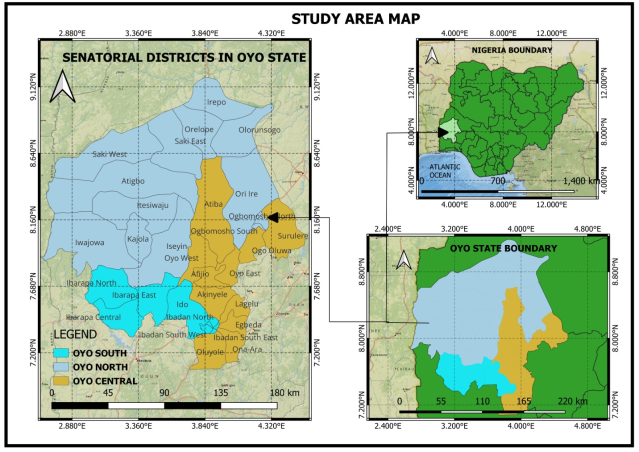
Employee engagement is the concept by which an employee’s intellectual and his emotional attachment to work and organization is measured. Employees of the hotels are to be engaged to reduce employee turnover, enhance customer satisfaction and improved service delivery that influences the sustainability of the organization in an aggressively competitive market. This study examined the effect of employee engagement on service delivery in selected hotel establishments in Oyo State, Nigeria. A multistage sampling technique was employed to select and administer semi-structured questionnaires to seven hundred and eighty-seven (787) employees of 38 hotels in the 10 LGAs of Oyo State. The analysis was performed using SPSS statistical software and the result was presented descriptively in the form of tables while inferential test evaluated relationship among the key variables. Findings revealed that majority of the respondents (63.8%) agreed that the hotel provides them with meaningful work that aligns with their values and personal goals. Also, the results reveal that 59.0% of the respondents agreed that hotels provide them with a sense of purpose and fulfillment in their work that motivates them to deliver excellent service to customers. Results indicated that the majority of the respondents agreed that customer feedback and complaints are used to improve their products and service delivery in the hotel. This study revealed that there is a significant positive correlation between employee engagement approaches and service delivery. The study concludes that tailored engagement methods can significantly enhance service quality, customer satisfaction, and hotel competitiveness. Recommendations are provided for hotel managers and policymakers in Oyo State, to develop effective strategies for enhancing employee engagement and improving service delivery.
| Published in | American Journal of Operations Management and Information Systems (Volume 11, Issue 1) |
| DOI | 10.11648/j.ajomis.20261101.11 |
| Page(s) | 1-15 |
| Creative Commons |
This is an Open Access article, distributed under the terms of the Creative Commons Attribution 4.0 International License (http://creativecommons.org/licenses/by/4.0/), which permits unrestricted use, distribution and reproduction in any medium or format, provided the original work is properly cited. |
| Copyright |
Copyright © The Author(s), 2026. Published by Science Publishing Group |
Employee, Engagement, Service delivery, Hotels, Oyo State
No | Variables | SD | D | N | A | SA | Mean | Standard Deviation |
|---|---|---|---|---|---|---|---|---|
1. | Motivation | |||||||
1. The hotel provides me with meaningful work that aligns with my values and personal goals. | 13(1.7%) | 15(1.9%) | 115(14.6%) | 502(63.8%) | 142(18.0%) | 3.95 | 0.74 | |
2. The hotel provides me with the supportive and collaborative work environment where I feel valued and appreciated. | 12(1.5%) | 22(2.8%) | 45(5.7%) | 513(65.2%) | 195(24.8%) | 4.09 | 0.74 | |
3. The hotel provides me with a sense of purpose and fulfillment in my work that motivates me to deliver excellent service to customers. | 12(1.5%) | 9(1.1%) | 83(10.5%) | 464(59.0%) | 219(27.8%) | 4.10 | 0.74 | |
2. | Involvement | |||||||
1. I have the opportunity to share ideas and opinions. | 22(2.8%) | 14(1.8%) | 65(8.3%) | 452(57.4%) | 234(29.7%) | 4.10 | 0.83 | |
2. The hotel provides opportunities for employees to provide feedback on service delivery. | 10(1.3%) | 19(2.4%) | 96(12.2%) | 485(61.6%) | 177(22.5%) | 4.02 | 0.75 | |
3. The hotel values my contribution and invests in my development as an employee. | 22(2.8%) | 7(0.9%) | 84(10.7%) | 504(64.0%) | 170(21.6%) | 4.01 | 0.78 |
No | Variables | SD | D | N | A | SA | Mean | SD |
|---|---|---|---|---|---|---|---|---|
3. | Leadership Styles | |||||||
1. Employees need to be supervised closely, for proper discharge of their duties. | 16(2.0%) | 10(1.3%) | 64(8.1%) | 497(63.2%) | 200(25.4%) | 4.09 | 0.75 | |
2. Employees want to be part of the decision making process. | 12(1.5%) | 22(2.8%) | 82(10.4%) | 515(65.4%) | 156(19.8%) | 3.99 | 0.74 | |
3. Supervisors need to help employees accept responsibility for completing their duties. | 9(1.1%) | 9(1.1%) | 68(8.6%) | 539(68.5%) | 162(20.6%) | 4.06 | 0.66 | |
4. Most employees feel insecure about their duties and need direction. | 12(1.5%) | 18(2.3%) | 81(10.3%) | 526(66.8%) | 150(19.1%) | 4.00 | 0.72 | |
4. | Employee-Employer Relationship | |||||||
1. The hotel values and respects my contributions and perspective as an employee. | 13(1.7%) | 18(2.3%) | 92(11.7%) | 530(67.3%) | 134(17.0%) | 3.96 | 0.73 | |
2. The hotel promotes an inclusive and equitable workplace that values diversity and inclusion. | 7(0.9%) | 10(1.3%) | 130(16.5%) | 531(67.5%) | 109(13.9%) | 3.92 | 0.65 | |
3. The hotel communicates openly and transparently with employees about the hotels goals, strategies and progress. | 14(1.8%) | 14(1.8%) | 118(15.0%) | 560(71.2%) | 81(10.3%) | 3.86 | 0.68 |
No | Variables | SD | D | N | A | SA | Mean | SD |
|---|---|---|---|---|---|---|---|---|
5. | Working Environment | |||||||
1. The hotel provides a safe, inclusive and positive work environment that is conducive to productivity and innovation. | 6(0.8%) | 21(2.7%) | 147(18.7%) | 414(52.6%) | 199(25.3%) | 3.99 | 0.78 | |
2. The hotel provides flexible work arrangements that enable me to balance my work and personal responsibilities effectively. | 4(0.5%) | 8(1.0%) | 49(6.2%) | 555(70.5%) | 171(21.7%) | 4.12 | 0.59 | |
3. The hotel provides me with a positive and supportive culture that encourages collaboration and teamwork. | 4(0.5%) | 15(1.9%) | 156(19.8%) | 470(59.7%) | 142(18.0%) | 3.93 | 0.70 | |
6. | Career development | |||||||
1. This hotel offer opportunities for career advancement. | 15(1.9%) | 15(1.9%) | 118(5.0%) | 502(63.8%) | 137(17.4%) | 3.93 | 0.75 | |
2. The hotel provides me with a clear path for advancement and encourages me to take on new challenges and responsibilities. | 7(0.9%) | 48(6.1%) | 86(10.9%) | 542(68.9%) | 104(13.2%) | 3.87 | 0.74 | |
3. The management has good relationship with professional bodies. | 7(0.9%) | 8(1.0%) | 90(11.4%) | 534(67.9%) | 148(18.8%) | 4.03 | 0.65 |
No | Variables | SD | D | N | A | SA | Mean | SD |
|---|---|---|---|---|---|---|---|---|
7. | Training and development | |||||||
1. My manager is committed to my personal development. | 14(1.8%) | 13(1.7%) | 131(16.6%) | 548(69.6%) | 81(10.3%) | 3.85 | 0.68 | |
2. The hotel provides me with adequate time and resources to attend training and development programs that are aligned with my career goals. | 6(0.8%) | 61(7.8%) | 191(24.3%) | 365(46.4%) | 164(20.8%) | 3.79 | 0.88 | |
3. Training and development opportunities provided by the hotel are effective in helping me improve my job performance and advance in my career. | 8(1.0%) | 11(1.4%) | 81(10.3%) | 572(72.7%) | 115(14.6%) | 3.98 | 0.63 | |
8. | Recognition and rewards | |||||||
1. Acknowledgement for contributions and efforts | 20(2.5%) | 13(1.7%) | 168(21.3%) | 453(57.6%) | 133(16.9%) | 3.85 | 0.81 | |
2. Praises for exceptional effort | 7(0.9%) | 40(5.1%) | 106(13.5%) | 494(62.8%) | 140(17.8%) | 3.91 | 0.77 | |
3. There is provision for recognition/award for well done job towards a good service delivery | 7(0.9%) | 15(1.9%) | 107(13.6%) | 433(55.0%) | 225(28.6%) | 4.09 | 0.76 |
No | Variables | SD | D | N | A | SA | Mean | SD |
|---|---|---|---|---|---|---|---|---|
9 | Compensation and benefits | |||||||
1. My salary justified the duties I performed which could made me do better in service delivery. | 19(2.4%) | 14(1.8%) | 78(9.9%) | 423(53.7%) | 253(32.1%) | 4.11 | 0.83 | |
2. There is always overtime compensation which made me fearless in projecting better service delivery. | 11(1.4%) | 31(3.9%) | 145(18.4%) | 435(55.3%) | 165(21.0%) | 3.90 | 0.82 | |
3. Provision and distribution of service charges at the middle of month is available here which caused a relief from family expenses before monthly salary. | 11(1.4%) | 30(3.8%) | 164(20.8%) | 456(57.9%) | 126(16.0%) | 3.83 | 0.79 | |
10. | Communication | |||||||
1. I feel that there is open and honest communication. | 9(1.1%) | 24(3.0%) | 118(15.0%) | 517(65.7%) | 119(15.1%) | 3.91 | 0.72 | |
2. I receive timely and relevant information from my manager and colleagues to help me do my job effectively. | 5(0.6%) | 51(6.5%) | 142(18.0%) | 452(57.4%) | 137(17.4%) | 3.85 | 0.80 | |
3. The hotel communicates openly and transparently with employees about organizational changes, goals and strategies. | 4(0.5%) | 7(0.9%) | 87(11.1%) | 572(72.7%) | 117(14.9%) | 4.01 | 0.58 |
No | Variables | SD | D | N | A | SA | Mean | SD |
|---|---|---|---|---|---|---|---|---|
11. | Job Security | |||||||
1. My performance is recognized and valued by the hotel, making me a valuable asset. | 12(1.5%) | 14(1.8%) | 131(16.6%) | 540(68.6%) | 90(11.4%) | 3.87 | 0.69 | |
2. The hotel has strong leadership and management, promoting stability and confidence in the organization direction. | 9(1.1%) | 7(0.9%) | 174(22.1%) | 517(65.7%) | 80(10.2%) | 3.83 | 0.66 | |
3. Terms and conditions of this hotel is more reliable and gives assurance of not relieving you from the job anytime soon and this could possibly aid a better service delivery. | 6(0.8%) | 6(0.8%) | 112(14.2%) | 505(64.2%) | 158(20.1%) | 4.02 | 0.67 | |
12. | Work place Safety | |||||||
1. The hotel is committed to workplace safety and values employee health and well-being. | 8(1.0%) | 26(3.3%) | 144(18.3%) | 479(60.9%) | 130(16.5%) | 3.89 | 0.75 | |
2. The hotel provides adequate training and resources for employees to maintain a safe and healthy work environment. | 10(1.3%) | 8(1.0%) | 138(17.5%) | 524(66.6%) | 107(13.6%) | 3.90 | 0.68 |
No | Variables | SD | D | N | A | SA | Mean | SD |
|---|---|---|---|---|---|---|---|---|
13. | Growth opportunities | |||||||
1. The hotel values my growth and encourages me to take on new challenges and responsibilities that align with my career goals. | 11(1.4%) | 31(3.9%) | 160(20.3%) | 507(64.4%) | 78(9.9%) | 3.77 | 0.73 | |
2. The hotel culture and values support employee growth and development | 6(0.8%) | 24(3.0%) | 216(27.4%) | 430(54.6%) | 111(14.1%) | 3.78 | 0.75 | |
14. | Decision making process | |||||||
1. The hotel decision-making process is transparent and inclusive, allowing for input and feedback from employees at all levels. | 8(1.0%) | 58(7.4%) | 98(12.5%) | 523(66.5%) | 100(12.7%) | 3.82 | 0.78 | |
2. The hotel promotes a culture of innovation and creativity in decision-making. | 4(0.5%) | 25(3.2%) | 89(11.3%) | 572(72.7%) | 97(12.3%) | 3.93 | 0.64 |
No | Variables | SD | D | N | A | SA | Mean | SD |
|---|---|---|---|---|---|---|---|---|
15. | Work place culture | |||||||
1. The hotel encourages open communication and collaboration among employees. | 10(1.3%) | 16(2.0%) | 127(16.1%) | 503(63.9%) | 131(16.6%) | 3.93 | 0.72 | |
2. The hotel fosters a positive work-life balance, encouraging employees to take time for themselves and prioritize their well-being. | 4(0.5%) | 4(0.5%) | 74(9.4%) | 589(74.8%) | 116(14.7%) | 4.03 | 0.55 | |
16. | Employee Participation | |||||||
1. My opinion is valued and I am encouraged to participate in decision-making processes within the hotel. | 7(0.9%) | 74(9.4%) | 120(15.2%) | 502(63.8%) | 84(10.7%) | 3.74 | 0.80 | |
2. I am provided with the resources and support I need to take ownership of my work and make decision that align with the organizations goals and values. | 5(0.6%) | 5(0.6%) | 104(13.2%) | 472(60.0%) | 201(25.5%) | 4.09 | 0.68 |
Variables | SD | D | N | A | SA | Mean | Standard Deviation |
|---|---|---|---|---|---|---|---|
Customer Service Standards | 4(0.5%) | 54(6.9%) | 111(14.1%) | 555(70.5%) | 63(8.0%) | 3.79 | 0.70 |
1. Confident in my ability to handle difficult customer interactions. | 5(0.6%) | 51(6.5%) | 99(12.6%) | 555(70.5%) | 77(9.8%) | 3.82 | 0.71 |
2. Good understanding of our customer service standards and policies. | 2(0.3%) | 72(9.1%) | 143(18.2%) | 394(50.1%) | 176(22.4%) | 3.85 | 0.88 |
3. Able to handle customer issues quickly and efficiently. | |||||||
4. Consistently providing high-quality service to customers. | 7(0.9%) | 3(0.4%) | 195(24.8%) | 431(54.8%) | 151(19.2%) | 3.91 | 0.73 |
Feed back and Complaints | |||||||
1. Customer feedback and complaints that I receive are handled in a timely and efficient manner. | 19(2.4%) | 7(0.9%) | 80(10.2%) | 537(68.2%) | 144(18.3%) | 3.99 | 0.73 |
Variables | SD | D | N | A | SA | Mean | SD |
2. The customer feedback and complaints that I receive are used to improve our products and services. | 12(1.5%) | 47(6.0%) | 157(19.9%) | 326(41.4%) | 245(31.1%) | 3.95 | 0.94 |
Quality of Product and Services | |||||||
1. The products and services that I provide to customers consistently meet or exceed customer expectations. | 7(0.9%) | 32(4.1%) | 104(13.2%) | 503(63.9%) | 141(17.9%) | 3.94 | 0.74 |
2. The products and services that I provide to customers are of the highest quality. | 1(0.1%) | 25(3.2%) | 148(18.8%) | 438(55.7%) | 175(22.2%) | 3.97 | 0.74 |
3. The products and services that I provide to customers are reliable and dependable. | 2(0.3%) | 62(7.9%) | 116(14.7%) | 395(50.2%) | 212(26.9%) | 3.96 | 0.87 |
4. The reports from the guests show that services of staff of this hotels excellent and not seconded to any standard. | 1(0.1%) | 34(4.3%) | 127(16.1%) | 544(69.1%) | 81(10.3%) | 3.85 | 0.65 |
Variables | SD | D | N | A | SA | Mean | SD |
Culture and Values | |||||||
1. The hotel culture supports and encourages employees to provide excellent service to customers. | 7(0.9%) | 8(1.0%) | 70(8.9%) | 593(75.3%) | 109(13.9%) | 4.00 | 0.59 |
2. The hotel provides opportunities for employees to develop and grow in their roles. | 2(0.3%) | 9(1.1%) | 305(38.8%) | 423(53.7%) | 48(6.1%) | 3.64 | 0.62 |
3. Guests always commend the appearance of staff of this hotel. | 2(0.3%) | 44(5.6%) | 139(17.7%) | 549(69.8%) | 53(6.7%) | 3.77 | 0.66 |
Employee Turn Over | |||||||
1. The hotel provides opportunities for career growth and development. | 5(0.6%) | 7(0.9%) | 141(17.9%) | 527(67.0%) | 107(13.6%) | 3.92 | 0.63 |
2. The hotel recognizes and rewards employee contributions. | 31(3.9%) | 15(1.9%) | 240(30.5%) | 417(53.0%) | 84(10.7%) | 3.65 | 0.85 |
3. The hotel provide a supportive and collaborative work environment | 1(0.1%) | 3(0.4%) | 115(14.6%) | 639(81.2%) | 29(3.7%) | 3.88 | 0.44 |
4. The hotel provides a positive work environment that encourages me to stay with the organization. | 4(0.5%) | 4(0.5%) | 85(10.8%) | 605(76.9%) | 89(11.3%) | 4.03 | 1.52 |
Variables | SD | D | N | A | SA | Mean | SD |
Leadership and Management | |||||||
1. The hotel provides opportunities for me to learn and develop new skills. | 6(0.8%) | 8(1.0%) | 89(11.3%) | 443(56.3%) | 241(30.6%) | 4.15 | 0.71 |
2. Manager supports and encourages collaboration and team work among employees. | 31(3.9%) | 30(3.8%) | 90(11.4%) | 482(61.2%) | 154(19.6%) | 3.89 | 0.89 |
3. Manager is effective at resolving conflicts and creating a positive work environment. | 5(0.6%) | 3(0.4%) | 195(24.8%) | 465(59.1%) | 119(15.1%) | 3.88 | 0.68 |
Customer Retention Strategies | |||||||
1. The hotel encourages employees to develop relationships with customers and provides the necessary tools and resources to do so. | 3(0.4%) | 10(1.3%) | 120(15.2%) | 555(70.5%) | 99(12.6%) | 3.94 | 0.59 |
2. The hotel provides a variety of incentives, such as loyalty programs, to encourage customer retention. | 3(0.4%) | 5(0.6%) | 192(24.4%) | 500(63.5%) | 87(11.1%) | 3.84 | 0.62 |
Variables | SD | D | N | A | SA | Mean | SD |
3. The hotel offers high-quality products and services that meet or exceed customer expectations. | 2(0.3%) | 7(0.9%) | 143(18.2%) | 503(63.9%) | 132(16.8%) | 3.96 | 0.64 |
Employee Rewards and Recognition | |||||||
1. The hotel provides opportunities for me to advance my career and receive additional compensation and benefits. | 9(1.1%) | 15(1.9%) | 179(22.7%) | 502(63.8%) | 82(10.4%) | 3.80 | 0.69 |
2. The hotel recognizes and rewards employees for going above and beyond to deliver excellent service to customers. | 2(0.3%) | 9(1.1%) | 86(10.9%) | 319(40.5%) | 371(47.1%) | 4.33 | 0.73 |
3. The hotel provides opportunities for me to advance my career and receive additional compensation and benefits. | 4(0.5%) | 5(0.6%) | 151(19.2%) | 528(67.1%) | 99(12.6%) | 3.91 | 0.62 |
Training and Development | |||||||
1. The hotel provides adequate training and development opportunities to support my career growth and development. | 7(0.9%) | 13(1.7%) | 82(10.4%) | 560(71.2%) | 125(15.9%) | 3.99 | 0.64 |
Variables | SD | D | N | A | SA | Mean | SD |
2. The hotel encourages and supports employees in pursuing additional education or certifications to enhance their skills and knowledge. | 7(0.9%) | 3(0.4%) | 43(5.5%) | 617(78.4%) | 117(14.9%) | 4.06 | 0.54 |
3. Training and lectures from the management to the staff is one of the major key to best service provision. | 8(1.0%) | 13(1.7%) | 209(26.6%) | 330(41.9%) | 227(28.8%) | 3.96 | 0.84 |
Employee Motivation | |||||||
1. The hotel provides recognition and appreciation for my contributions and achievements. | 12(1.5%) | 9(1.1%) | 117(14.9%) | 531(67.5%) | 118(15.0%) | 3.93 | 0.69 |
2. The hotel provides a work environment that is supportive, inclusive and respectful. | 5(0.6%) | 8(1.0%) | 25(3.2%) | 676(85.9%) | 73(9.3%) | 4.02 | 0.47 |
3. The hotel offers flexible work arrangements and a healthy work-life balance. | 6(0.8%) | 7(0.9%) | 26(3.3%) | 521(66.2%) | 227(28.8%) | 4.21 | 0.62 |
Variables | SD | D | N | A | SA | Mean | SD |
Work Place Safety | |||||||
1. Security personnel are not expected to provide any services to guests except manning the posts. | 7(0.9%) | 10(1.3%) | 61(7.8%) | 570(72.4%) | 139(17.7%) | 4.05 | 0.62 |
2. The hotel is committed to providing a safe and healthy work environment for all employees, to deliver high quality service to our customers. | 4(0.5%) | 17(2.2%) | 116(14.7%) | 586(74.5%) | 63(8.0%) | 3.93 | 1.55 |
Customer Expectations | |||||||
1. I have the knowledge and experience necessary to provide effective solutions and support to our customers. | 9(1.1%) | 4(0.5%) | 133(16.9%) | 542(68.9%) | 99(12.6%) | 3.91 | 0.64 |
2. I understand the needs and expectations of our customers and strive to meet or exceed those expectations. | 3(0.4%) | 5(0.6%) | 163(20.7%) | 523(66.5%) | 93(11.8%) | 3.89 | 0.61 |
Variables | SD | D | N | A | SA | Mean | SD |
Customer Loyalty | |||||||
1. The hotel provides me with feedback from customers that help me to better understand their needs and improve my service delivery. | 5(0.6%) | 24(3.0%) | 109(13.9%) | 367(46.6%) | 282(35.8%) | 4.14 | 0.81 |
2. The hotel provides me with the tools and resources I need to establish strong relationships with customers and build customer loyalty. | 3(0.4%) | 12(1.5%) | 132(16.8%) | 522(66.3%) | 118(15.0%) | 3.94 | 0.64 |
Communication | |||||||
1. The means of communication in this hotel such as (Gsm, Inter call etc) is at the best function. | 4(0.5%) | 11(1.4%) | 110(14.0%) | 557(70.8%) | 105(13.3%) | 3.95 | 0.75 |
2. Guest have never raised complain about internet functionality in this hotel. | 17(2.2%) | 41(5.2%) | 161(20.5%) | 449(57.1%) | 119(15.1%) | 3.78 | 0.81 |
Correlations | Employee engagement methods | Service delivery of hotels | |
|---|---|---|---|
Employee engagement approaches | Pearson Correlation | 1 | 0.130** |
Sig. (2-tailed) | 0.000 | ||
N | 787 | 787 | |
Service delivery of hotels | Pearson Correlation | 0.130** | 1 |
Sig. (2-tailed) | 0.000 | ||
N | 787 | 787 | |
| [1] | Jawabreh, O., Masa'Deh, R. E., Mahmoud, R., & Hamasha, S. A. (2020). Factors influencing the employees service performances in hospitality industry case study AQBA five stars hotel. Geo Journal of Tourism and Geosites, 29(2), 649-661. |
| [2] | Goswami, S., & Goswami, B. K. (2021). Exploring the shift from employee engagement to employee experience in improving organizational performance: a study of hospitality sector. Turkish Journal of Computer and Mathematics Education, 12(11), 3142-3151. |
| [3] | Bardukova, L. (2023). Navigating the hospitality horizon: current trends and strategies for customer attraction and retention in the hotel industry. Economics and computer science, 2, 88-103. |
| [4] | Bhardwaj, B., & Kalia, N. (2021). Contextual and task performance: role of employee engagement and organizational culture in hospitality industry. Vilakshan-XIMB Journal of Management, 18(2), 187-201. |
| [5] | Ozdemir, A. İ., Çolak, A., & Shmilli, J. (2019). Business process management in hotels: with a focus on delivering quality guest service. Quality & Quantity, 53(5), 2305-2322. |
| [6] | Huang, C. H., & Lin, Y. C. (2020). Relationships among employee acting, customer-perceived service quality, emotional well-being and value co-creation: An investigation of the financial services industry. Asia pacific journal of marketing and logistics, 33(1), 29-52. |
| [7] | Olayiwola, R. K., Tuomi, V., Strid, J., & Nahan-Suomela, R. (2024). Impact of Total quality management on cleaning companies in Finland: A Focus on organisational performance and customer satisfaction. Cleaner Logistics and Supply Chain, 10, 100139. |
| [8] | Lv, X., Zhang, K., Song, Q., Fu, X., & Liu, Y. (2024). How does occupational stigma and work dirtiness inhibit hotel front-line employees’ proactive customer service performance and its solutions. Tourism Management, 104, 104932. |
| [9] | Saydam, M. B., Uludag, O., Arici, H. E., & Likoum, S. W. B. (2025). A multilevel analysis of green organizational support among hotel employees in Türkiye. European Journal of Tourism Research, 39, 3904-3904. |
| [10] | Barreto, N., & Mayya, S. (2024). The Role of Job Satisfaction in Enhancing Employee Performance and Customer Experience in the Goan Hospitality Industry: A Case Study. International Journal of Case Studies in Business, IT, and Education, 310-325. |
| [11] | Ato, A. & Franklin, D. D. (2018). Assessing The Job Satisfaction Levels Among Employees Of The Coconut Grove Hotel In Elmina, Ghana. British Journal of Multidisciplinary and Advanced Studies, 2(2)19-33. |
| [12] | Astha, M., Riddhima, R., Rinki, P. (2023). A Study on Employee Engagement Activities at Sayaji Hotel, Indore. International Journal of Advances in Engineering and Management (IJAEM), 5(2), 240-247. |
| [13] | Adokwu, E. S., Umogbai M. E. & Ucherwuhe, S. I. (2024). Effect of Employee Participation on Customer Patronage in Hotel Industry in Makurdi Metropolis, Benue State. International Journal of Management & Marketing Systems, 14(11), 61-84. |
| [14] | Emily, N. & Paul, M. (2018). Influence of Employee Engagement Strategies on Service Delivery in Nairobi City County, Kenya. Journal of International Business and Management, 1(3), 1-10. |
| [15] | Emmanuel, U O. (2021) The Impact of Employee Retention on Customer Satisfaction in the Nigerian Service Organizations. International Journal of Managerial Studies and Research (IJMSR), 2(9) 140-154. |
| [16] | Guesh, B. G. (2019). Customers’ expectations and perceptions of service quality dimensions: A study of the hotel industry in selected cities of Tigray Region, Ethiopia. African Journal of Hospitality, Tourism and Leisure, 8(5), 2223-814. |
| [17] | Maher, F. (2019). Impact of Leadership Style on Employee Job Satisfaction in the Hospitality Industry. International Journal of Heritage, Tourism and Hospitality, 13(1), 388-410. |
| [18] | Mokaya, S. O., Musau, J. L., Wagoki, J., & Karanja, K. (2013). Effects of organizational work conditions on employee job satisfaction in the hotel industry in Kenya. International Journal of Arts and Commerce, 2(2), 79-90. |
| [19] | Oranusi, I. N, Okolo, V. O, Wali, K, Mmamel, Z. U & Obikeze, C. O (2018). Investigating the Effects of Customer Complaints and Feedback Management on Customer Satisfaction in Select Banks in Anambra State, Nigeria. Journal of Marketing and Consumer Research. 48(2), 2422-8451. |
| [20] | Osita, F. C., Anoke, A. F., Eze S. U., Onuzulike, C. N. (2021). Organizational Culture and Hotel-Quality Services Delivery in Enugu Metropolis, Enugu, Nigeria. International Journal of Social Science and Human Research, 4(8) 2204-2210. |
APA Style
Tosin, A. D., Catherine, A. F., Omowumi, O. O. (2026). Effect of Employee Engagement on Service Delivery in Selected Hotel Establishments in Oyo State, Nigeria. American Journal of Operations Management and Information Systems, 11(1), 1-15. https://doi.org/10.11648/j.ajomis.20261101.11
ACS Style
Tosin, A. D.; Catherine, A. F.; Omowumi, O. O. Effect of Employee Engagement on Service Delivery in Selected Hotel Establishments in Oyo State, Nigeria. Am. J. Oper. Manag. Inf. Syst. 2026, 11(1), 1-15. doi: 10.11648/j.ajomis.20261101.11
@article{10.11648/j.ajomis.20261101.11,
  author = {Adesunloye Dotun Tosin and Arowosafe Folusade Catherine and Oyeleke Olaide Omowumi},
  title = {Effect of Employee Engagement on Service Delivery in Selected Hotel Establishments in Oyo State, Nigeria},
  journal = {American Journal of Operations Management and Information Systems},
  volume = {11},
  number = {1},
  pages = {1-15},
  doi = {10.11648/j.ajomis.20261101.11},
  url = {https://doi.org/10.11648/j.ajomis.20261101.11},
  eprint = {https://article.sciencepublishinggroup.com/pdf/10.11648.j.ajomis.20261101.11},
  abstract = {Employee engagement is the concept by which an employee’s intellectual and his emotional attachment to work and organization is measured. Employees of the hotels are to be engaged to reduce employee turnover, enhance customer satisfaction and improved service delivery that influences the sustainability of the organization in an aggressively competitive market. This study examined the effect of employee engagement on service delivery in selected hotel establishments in Oyo State, Nigeria. A multistage sampling technique was employed to select and administer semi-structured questionnaires to seven hundred and eighty-seven (787) employees of 38 hotels in the 10 LGAs of Oyo State. The analysis was performed using SPSS statistical software and the result was presented descriptively in the form of tables while inferential test evaluated relationship among the key variables. Findings revealed that majority of the respondents (63.8%) agreed that the hotel provides them with meaningful work that aligns with their values and personal goals. Also, the results reveal that 59.0% of the respondents agreed that hotels provide them with a sense of purpose and fulfillment in their work that motivates them to deliver excellent service to customers. Results indicated that the majority of the respondents agreed that customer feedback and complaints are used to improve their products and service delivery in the hotel. This study revealed that there is a significant positive correlation between employee engagement approaches and service delivery. The study concludes that tailored engagement methods can significantly enhance service quality, customer satisfaction, and hotel competitiveness. Recommendations are provided for hotel managers and policymakers in Oyo State, to develop effective strategies for enhancing employee engagement and improving service delivery.},
 year = {2026}
}
TY  - JOUR
T1  - Effect of Employee Engagement on Service Delivery in Selected Hotel Establishments in Oyo State, Nigeria
AU  - Adesunloye Dotun Tosin
AU  - Arowosafe Folusade Catherine
AU  - Oyeleke Olaide Omowumi
Y1  - 2026/01/20
PY  - 2026
N1  - https://doi.org/10.11648/j.ajomis.20261101.11
DO  - 10.11648/j.ajomis.20261101.11
T2  - American Journal of Operations Management and Information Systems
JF  - American Journal of Operations Management and Information Systems
JO  - American Journal of Operations Management and Information Systems
SP  - 1
EP  - 15
PB  - Science Publishing Group
SN  - 2578-8310
UR  - https://doi.org/10.11648/j.ajomis.20261101.11
AB  - Employee engagement is the concept by which an employee’s intellectual and his emotional attachment to work and organization is measured. Employees of the hotels are to be engaged to reduce employee turnover, enhance customer satisfaction and improved service delivery that influences the sustainability of the organization in an aggressively competitive market. This study examined the effect of employee engagement on service delivery in selected hotel establishments in Oyo State, Nigeria. A multistage sampling technique was employed to select and administer semi-structured questionnaires to seven hundred and eighty-seven (787) employees of 38 hotels in the 10 LGAs of Oyo State. The analysis was performed using SPSS statistical software and the result was presented descriptively in the form of tables while inferential test evaluated relationship among the key variables. Findings revealed that majority of the respondents (63.8%) agreed that the hotel provides them with meaningful work that aligns with their values and personal goals. Also, the results reveal that 59.0% of the respondents agreed that hotels provide them with a sense of purpose and fulfillment in their work that motivates them to deliver excellent service to customers. Results indicated that the majority of the respondents agreed that customer feedback and complaints are used to improve their products and service delivery in the hotel. This study revealed that there is a significant positive correlation between employee engagement approaches and service delivery. The study concludes that tailored engagement methods can significantly enhance service quality, customer satisfaction, and hotel competitiveness. Recommendations are provided for hotel managers and policymakers in Oyo State, to develop effective strategies for enhancing employee engagement and improving service delivery.
VL  - 11
IS  - 1
ER  -
Department of Hospitality and Tourism Management, Ladoke Akintola University of Technology, Ogbomoso, Nigeria
Department of Ecotourism and Wildlife Management, Federal University of Technology, Akure, Nigeria

Information



 Share This Article
 Twitter
 Linked In
 Facebook
 Copy
Copy Download