
The increasing integration of renewable energy sources into microgrids has intensified the need for intelligent energy management strategies capable of addressing the intermittency of solar and wind generation while ensuring reliable and cost-effective operation. Although Rule-Based Control (RBC) methods are straightforward to implement, their limited adaptability often leads to suboptimal utilisation of Hybrid Energy Storage Systems (HESS). This study develops and evaluates a Deep Reinforcement Learning (DRL)-based energy management system employing a Deep Q-Network (DQN) to coordinate battery–supercapacitor operation within a renewable microgrid. A Gymnasium-compatible simulation environment was constructed using a publicly available time-series dataset comprising renewable generation, load demand, electricity prices, battery state of charge (SoC), and supercapacitor SoC. Feature engineering, incorporating sinusoidal temporal representations and Min-Max normalisation, was applied to enhance learning stability and capture cyclical demand and generation patterns. The DQN agent was trained over 50 episodes and benchmarked against a conventional RBC strategy under identical operating conditions. Training performance demonstrated progressive policy improvement, with cumulative rewards increasing from approximately -1200 to -400, indicating enhanced decision-making capability during learning. The learned controller exhibited adaptive energy scheduling through dynamic utilisation of the supercapacitor and selective grid interaction in response to varying operating conditions, whereas the RBC followed a deterministic control strategy with limited flexibility. However, comparative evaluation revealed that the DQN did not consistently outperform the RBC in cumulative economic performance, suggesting the need for further refinement of the reward function, training process, and hyperparameter configuration. Nevertheless, the proposed framework demonstrates the feasibility of applying deep reinforcement learning to coordinated battery–supercapacitor energy management and highlights its potential to enhance operational flexibility and intelligent resource utilisation in renewable microgrids. The study contributes a dataset-driven reinforcement learning framework that provides a foundation for future research on advanced AI-based energy management systems and the integration of more sophisticated reinforcement learning algorithms for resilient and sustainable microgrid operation.
| Published in | American Journal of Neural Networks and Applications (Volume 12, Issue 2) |
| DOI | 10.11648/j.ajnna.20261202.11 |
| Page(s) | 40-56 |
| Creative Commons |
This is an Open Access article, distributed under the terms of the Creative Commons Attribution 4.0 International License (http://creativecommons.org/licenses/by/4.0/), which permits unrestricted use, distribution and reproduction in any medium or format, provided the original work is properly cited. |
| Copyright |
Copyright © The Author(s), 2026. Published by Science Publishing Group |
Adaptive Energy Scheduling, Deep Reinforcement Learning, Hybrid Energy Storage Systems, Microgrid, Renewable Energy, Smart Energy Systems, Supercapacitor
SN | Methods Employed | Description | Results | Constraints | Ref. |
|---|---|---|---|---|---|
1. | PSO and neural networks combined hierarchically to decouple fast and slow storage dynamics | Four‑bus ringmain DC microgrid with hybrid storage, simulated in MATLAB and validated experimentally | Hybrid PSO‑NN framework improved voltage regulation, reduced battery stress, and enhanced transient response | Required extensive offline neural training, with performance dependent on dataset quality and representativeness | [17] |
2. | PRISMA‑guided review synthesiing 214 DRL studies across hybrid power system applications | Analysis of DRL algorithms, applications, verification platforms, challenges, and prospects | DRL achieved near‑optimal energy efficiency, strong adaptability, and superior robustness compared to traditional methods | Deployment hindered by low sample efficiency, safety concerns, interpretability issues, and reality gaps | [18] |
3. | Integrated quantum particle swarm optimisation with deep reinforcement learning for dynamic-aware EMS | It investigated microgrid energy management using BESS under uncertain inertia, damping, and transient conditions | The hybrid framework improved economic efficiency by 52.2% and enhances BESS charging/discharging performance | DRL faces challenges from non-Markovian dynamics, high-dimensional state spaces, and computational training complexity | [19] |
4. | It employed multi‑objective mixed‑integer nonlinear programming with metaheuristic algorithms and deep reinforcement learning | It investigated techno‑economic optimisation of off‑grid hybrid renewable microgrids using dual‑battery storage | The framework reduced life‑cycle costs by over 20%, emissions by 30%, and battery degradation by 10% | Limitations from simplified simulations, incomplete degradation modeling, and scarce real‑world reinforcement learning deployments. | [20] |
5. | Applied bi‑LSTM forecasting with DQN and SAC reinforcement learning for HRES control | Examined supervisory control of solar, wind, biomass, and hydrogen storage within a unified HRES | SAC agent achieved superior adaptability, reducing energy imbalance below 0.5 MWh and improving stability | Reliance on a short 24‑hour dataset and absence of conventional baseline comparisons | [21] |
6. | Reviewed smart grid and microgrid advances using state‑of‑the‑art literature | Researched on planning, operation, economics, and resilience of distributed energy systems | Highlighted on synergistic integration of distributed generation and storage improving efficiency and resilience | Reliance on simulated case studies and incomplete real‑world validation across diverse contexts | [22] |
7. | Analysed 101 selected articles using structured keyword searches and comparative synthesis | Examined microgrid energy management systems integrating machine learning and IoT technologies | Highlighted EMS roles in optimising microgrid stability, efficiency, and reliability through advanced technologies | Renewable variability, cybersecurity risks, and deployment complexities limiting microgrid performance | [23] |
8. | Analysed diverse optimisation strategies for CPS‑based microgrids using literature synthesis | Surveyed forecasting, demand management, economic dispatch, and unit commitment in CPS microgrids | Multi‑agent and meta‑heuristic approaches outperformed conventional methods in decentralised, dynamic CPS microgrids | Advanced optimisation techniques remained underutilised in forecasting and demand management, limiting scheduling accuracy | [24] |
9. | Reviewed microgrid control strategies and IoT‑enabled monitoring systems | Examined AC, DC, and hybrid microgrid modes with distributed energy resources integration | Emphasised IoT‑based monitoring improved stability, efficiency, and resilience of microgrid operations | Intermittency of renewables, cybersecurity risks, and complexity of advanced control strategies | [25] |
10. | Reviewed centralised, decentralised, and hierarchical microgrid control strategies | Studied renewable energy‑based microgrid systems, IoT monitoring, and emerging control technologies | Advanced controllers and IoT integration significantly improved microgrid stability, scalability, and operational efficiency | System complexity, scalability issues, cybersecurity risks, and limitations of conventional linear controllers | [26] |
11. | The study implemented a DQN‑based reinforcement learning algorithm on TI C2000 controller | Explored adaptive real‑time smart charging of supercapacitors using reinforcement learning techniques | The RL framework achieved high capacitance retention after 8,000 cycles with reduced degradation | Focused on short‑term cycling tests without extensive validation across diverse operating conditions | [27] |
12. | Reviewed conventional and advanced microgrid control strategies, including IoT integration | Analysed microgrid control methods, energy management systems, and emerging technologies for resilience and efficiency | The review highlighted strengths and limitations of droop, PID, MPC, ANN, and IoT - enabled control frameworks | Challenges of scalability, computational demands, cybersecurity risks, and limited real‑world validation of advanced techniques | [28] |
13. | Developed and simulated a communication‑free SOC‑based cooperative control strategy for hybrid energy storage | Studied a solar‑PV DC microgrid integrating batteries and supercapacitors with droop‑controlled converters | The proposed SOC‑based control achieved seamless mode switching, stable voltage regulation, and extended battery lifespan | The approach did not address aging effects, SOC estimation errors, or declining storage performance over time | [29] |
14. | Conducted a review of IoT, AI, blockchain, and digital twin applications in microgrids | Analysed Industry 4.0 technologies for enhancing microgrid resilience, efficiency, and sustainable energy integration | Demonstrated that IoT, cloud computing, AI, and blockchain significantly improved microgrid monitoring, control, and security | Scalability, cybersecurity, data management, and limited real‑world implementation of advanced technologies | [30] |
 (1)
(1)  is the total renewable power available at time t,
  solar power generation at time t,
  is the wind power generation at time t, and t is the step within the simulation period.
 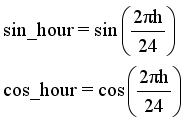 (2)
(2) 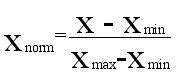 (3)
(3)  is the minimum value of the feature,
  is the maximum value, and
  is the normal feature value.
  (4)
(4)  is the state vector at time t,
  is the renewable power generation,
  is the load demand,
  is the electricity price,
  is the battery state of charge,
  is the sine-based temporal feature, and
  is the cosine-based temporal feature.
  (5)
(5)  is the grid import penalty at time step t that denotes the monetary expense or operational drawback associated with importing electricity from the external main grid at a given time step,
  is the operator that establishes a boundary condition that restricts grid penalty evaluation to instances where the load demand exceeds the aggregate contribution of renewable generation and storage,
  is the load demand that represents the microgrid’s electricity usage requirement at time step t,
  is the combined renewable generation that represents the total power output from local solar and wind resources at time step t, as defined earlier in Equation (1),
  is the battery power output that represents the commanded charging or discharging power of the battery system,
  is the supercapacitor power output that represents the transient charging or discharging power of the supercapacitor system, and
  is the electricity price that shows the time-dependent grid electricity tariff at time step t (USD/kWh).
  (6)
(6)  is the storage degradation penalty at time step t that represents the abstract penalty imposed on the agent to deter intensive usage behaviours that accelerate the physical ageing of hybrid storage assets,
  is the battery wear coefficient that represents a fixed scaling factor that captures the elevated long-term degradation costs of electrochemical batteries operating under high-current conditions,
  is the supercapacitor wear coefficient that represents a structural weighting factor assigned to the supercapacitor,
 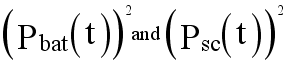 are the squared power outputs that represent the quadratic penalty on power terms, guiding the DQN agent towards low amplitude operation and thereby reducing stress induced battery degradation.
  (7)
(7)  is the State of Charge Violation Penalty at time step t, representing a strict penalty triggered when the state of charge breaches safe limits,
  is the Summation operator aggregating boundary checks for battery and supercapacitor into a single penalty,
  is the current state of charge, representing the real time percentage or energy level of the storage asset at time step t,
 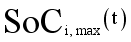 is the Maximum Safe State of Charge, representing the upper physical limit of the storage unit,
 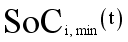 is the Minimum Safe State of Charge, representing the lower physical limit of the storage unit, and
  is the set of conditions that function as conditional logical gates.
 SN | Parameter | Value |
|---|---|---|
1. | Input State Dimension | 7 |
2. | Hidden Layers | 2 |
3. | Neurons per Hidden Layer | 128 |
4. | Activation Function | ReLU |
5. | Output Actions | 25 (5 battery power levels x 5 supercapacitor power levels) |
6. | Optimiser | Adam |
7. | Learning Rate | 0.001 |
8. | Discount Factor (γ) | 0.99 |
9. | Loss Function | Smooth L1 (Huber) |
10. | Gradient Clipping (max norm) | 5.0 |
11. | Replay Memory Capacity | 50,000 |
12. | Mini-Batch Size | 128 |
13. | Initial Exploration Rate (ε) | 1.0 |
14. | Final Exploration Rate (ε) | 0.05 |
15. | Exploration Strategy | ε-Greedy |
16. | Training Episodes | 50 |
17. | Warm-up Steps (random actions) | 2,000 |
18. | Training Start Threshold | 1000 steps |
19. | Target Network Update | Every 1000 steps |
AI | Artificial Intelligence |
DQN | Deep Q - Network |
DRL | Deep Reinforcement Learning |
EMS | Energy Management System |
HESS | Hybrid Energy Storage System |
IoT | Internet of Things |
PPO | Proximal Policy Optimisation |
RL | Reinforcement Learning |
SAC | Soft Actor-Critic |
SoC | State of Charge |
| [1] | Mulaudzi, S. T., Rasimphi, T., Tinarwo, D. Assessing the Contribution of Microgrids to Sustainable Agriculture and Community Development at the Masia Development Centre, Clean Energy Technologies. 2026, 2(1), 1–16. |
| [2] | Atef, M., Alahakoon, S., Mumtahina, U., Wolfs, P., Khatib, T., Uddin, M. A Review of Microgrid Energy Management Systems: Methods, Challenges, and Future Directions, International Journal of Ambient Energy. 2026, 47(1), 1–28. |
| [3] | Sargentis, G., Papadodimas, N., Benekos, I., Katsoulakos, N. M., Dimitriadis, P., Tepetidis, N., Koutsoyiannis, D. Stochastic Assessment of Renewable Energy Reliability: A Case Study of North Euboea, Greece, Journal of Energy and Power Technology. 2026, 8(2), 1–13. |
| [4] | Dawn, S., Vadlamudi, B., Vital, M. L. N., Das, S. S., Rao, K. D., Al Mansur, A., Ustun, T. S. Enhancing Grid Stability and Sustainability in Electrical Markets: A Review on the Synergy of Renewable Energy and Electric Vehicles, Energy Exploration and Exploitation. 2026, 44(2), 1021–1066. |
| [5] | Dawn, S., Manideep, S., Rekha, S. S., Rao, C. R., Rao, K. D., Al Mansur, A., Ustun, T. S. Advancing Renewable Energy Integration in Deregulated Markets: The Role of Energy Storage, EVs, and Policy Frameworks, Energy Exploration and Exploitation. 2025, 43(6), 2745–2797. |
| [6] | Gowtham, M., Suresh, S. Supercapacitor Integration in Hybrid Energy Storage Systems for Electric Vehicles: A Comprehensive Review. In Proceedings of the 2025 International Conference on Intelligent Computing, Information and Control Systems. IEEE, Lalitpur, Nepal, 2025; pp. 170–176. |
| [7] | Ghoudelbourk, S., Yousfi, R., Benbouhenni, H. Energy Management of an Autonomous Hybrid Renewable Power System. In Proceedings of the 2025 IEEE 13th International Conference on Smart Energy Grid Engineering. IEEE, Oshawa, Canada, 2025; pp. 190–194. |
| [8] | Srivastava, A., Jha, S. K., Gupta, D., Singh, S. A Critical Review of Microgrid Technologies: Storage and Control Systems with Effective Optimisation Techniques for Modeling Wind, Solar, Biomass, and Battery Energy Storage Systems, Cureus Journals. 2026, 3(1), 1–23. |
| [9] | Eslami, F., Gangineni, M., Ebrahimi, A., Rathnayake, M., Patel, M., Lavrova, O. A Review on Protection and Cybersecurity in Hybrid AC/DC Microgrids: Conventional Challenges and AI/ML Approaches, Energies. 2026, 19(3), 1–38. |
| [10] | Guo, Z., Grano, E., de Carvalho Pinheiro, H., Carello, M. A Comparative Evaluation of Rule-Based Strategies, ECMSs, and MPC Strategies for Fuel Cell Hybrid LCV Energy Management, World Electric Vehicle Journal. 2026, 17(3), 1–25. |
| [11] | Kavaliauskas, Ž., Milieška, M., Blažiūnas, G., Gecevičius, G., Zhairabany, H. Optimisation of Hybrid Energy System Control Using MPC and MILP, Applied Sciences. 2026, 16(8), 1–22. |
| [12] | Kırant-Mitić, T., Voss, K. A Rule-Based Predictive Control Framework for Market and Grid-Oriented Operation in Thermally Activated Buildings, Journal of Building Performance Simulation. 2026, 19(2), 209–238. |
| [13] | Ioannou, I., Javaid, S., Tan, Y., Vassiliou, V. A Hierarchical Predictive-Adaptive Control Framework for State-of-Charge Balancing in Mini-Grids Using Deep Reinforcement Learning, Electronics. 2026, 15(1), 1–47. |
| [14] | Wang, X., Zhang, H., Liu, H., Lewis, F. L. Control-Oriented Reinforcement Learning: A Survey of Recent Progress and Applications, International Journal of Robust and Nonlinear Control. 2026, 36(2), 694–718. |
| [15] | Hu, P., Ukil, A. Enhanced Multi-Agent Reinforcement Learning for Power Quality Enhancement and False Data Injection Defense in Multi-Microgrid Systems. In Proceedings of the IECON 51st Annual Conference of the IEEE Industrial Electronics Society. IEEE, Madrid, Spain, 2025; pp. 1–6. |
| [16] | Ketjoy, N., Muna, Y. B., Kaewpanha, M., Chamsa-ard, W., Suriwong, T., Termritthikun, C. Grid-Scale Battery Energy Storage and AI-Driven Intelligent Optimization for Techno-Economic and Environmental Benefits: A Systematic Review, Batteries. 2026, 12(1), 1–39. |
| [17] | Banka, S., Kumar, D. V. A. Hierarchical Data-Driven and PSO-Based Energy Management of Hybrid Energy Storage Systems in DC Microgrids, Automation. 2026, 7(2), 1–21. |
| [18] | Li, Z., Long, W., Tian, H. Current Applications and Future Prospects of Deep Reinforcement Learning in Energy Management for Hybrid Power Systems, Energies. 2026, 19(9), 1–50. |
| [19] | Asadi, Y., Eskandari, M., Mansouri, M. Revolutionising Battery Energy Storage Systems Energy Management: Dynamic‐Aware Solutions with Integrated Quantum Particle Swarm Optimisation and Deep Reinforcement Learning, IET Energy Systems Integration. 2026, 8(1), 1–15. |
| [20] | Khan, W., Renhai, F., Aziz, A., Yousaf, M. Z., Cai, Z., Iqbal, M. U., Geremew, M. S. Deep Reinforcement Learning-Based Energy Management for Design and Control of Off-Grid Renewable Microgrids With Dual-Battery Storage. Energy Exploration and Exploitation. 2026, 44(2), 821–869. |
| [21] | Kavaliauskas, Ž., Milieška, M., Blažiūnas, G., Gecevičius, G., Zhairabany, H. Optimisation of Control for a Hybrid Renewable Energy System with Energy Storage Using Deep Reinforcement Learning Methods, Sustainability. 2026, 18(11), 1–43. |
| [22] | Zhou, Y. Advances in Smart Grids and Microgrids: Distributed Generation and Energy Storage Systems, Processes. 2026, 14(9), 1–9. |
| [23] | Tasmant, H., Bossoufi, B., Alaoui, C., Siano, P. A Review of Machine Learning and IoT?Based Energy Management Systems for AC Microgrids, Computers and Electrical Engineering. 2025, 127, 1–23. |
| [24] | Behera, S., Khare, M. A Survey on Optimisation Strategies for Energy Storage and Microgrid Energy Management in Cyber-Physical Systems Based Microgrids, Engineering Research Express. 2025, 7(4), 1–30. |
| [25] | Ojo, K. E., Saha, A. K., Srivastava, V. M. Microgrids’ Control Strategies and Real-Time Monitoring Systems: A Comprehensive Review, Energies. 2025, 18(13), 1–34. |
| [26] | Ojo, K. E., Saha, A. K., Srivastava, V. M. Review of Advances in Renewable Energy-Based Microgrid Systems: Control Strategies, Emerging Trends, and Future Possibilities, Energies. 2025, 18(14), 1–26. |
| [27] | Arunkumar, R., Rahman, A. F., Nathan, V. B., Krishnamoorthy, K., Gangatharan, N. Reinforcement Learning-Assisted Smart Charging Algorithm to Extend Lifespan of Supercapacitor-Based Energy Storage Systems. In Proceedings of the International Conference on Recent Innovation in Science Engineering and Technology. IEEE, Chennai, India, 2025; pp. 1–8. |
| [28] | Almihat, M. G. M., Munda, J. L. Review on Recent Control System Strategies in Microgrid, Edelweiss Applied Science and Technology. 2024, 8(6), 5089–5111. |
| [29] | Gajjar, R. R., Giri, N. C., Patel, U., Gajjar, R. C., Dave, D., Aly, A. M. State of Charge Control Based Improved Hybrid Energy Storage System for DC Microgrid, Bulletin of Electrical Engineering and Informatics. 2024, 13(6), 3779–3788. |
| [30] | Negi, G. S., Singh, R., Gehlot, A., Malik, P., Sharma, R., Obaid, A. J., Kumar, S. Microgrids 4.0: Digitalisation of Microgrid with Iot and Recent Technology Interventions, IET Communications. 2025, 19(1), 1–12. |
APA Style
Owusu, D. K. (2026). Deep Reinforcement Learning-Based Energy Management of Battery-Supercapacitor Hybrid Storage Systems in Renewable Microgrids. American Journal of Neural Networks and Applications, 12(2), 40-56. https://doi.org/10.11648/j.ajnna.20261202.11
ACS Style
Owusu, D. K. Deep Reinforcement Learning-Based Energy Management of Battery-Supercapacitor Hybrid Storage Systems in Renewable Microgrids. Am. J. Neural Netw. Appl. 2026, 12(2), 40-56. doi: 10.11648/j.ajnna.20261202.11
@article{10.11648/j.ajnna.20261202.11,
  author = {Daniel Kumi Owusu},
  title = {Deep Reinforcement Learning-Based Energy Management of Battery-Supercapacitor Hybrid Storage Systems in Renewable Microgrids},
  journal = {American Journal of Neural Networks and Applications},
  volume = {12},
  number = {2},
  pages = {40-56},
  doi = {10.11648/j.ajnna.20261202.11},
  url = {https://doi.org/10.11648/j.ajnna.20261202.11},
  eprint = {https://article.sciencepublishinggroup.com/pdf/10.11648.j.ajnna.20261202.11},
  abstract = {The increasing integration of renewable energy sources into microgrids has intensified the need for intelligent energy management strategies capable of addressing the intermittency of solar and wind generation while ensuring reliable and cost-effective operation. Although Rule-Based Control (RBC) methods are straightforward to implement, their limited adaptability often leads to suboptimal utilisation of Hybrid Energy Storage Systems (HESS). This study develops and evaluates a Deep Reinforcement Learning (DRL)-based energy management system employing a Deep Q-Network (DQN) to coordinate battery–supercapacitor operation within a renewable microgrid. A Gymnasium-compatible simulation environment was constructed using a publicly available time-series dataset comprising renewable generation, load demand, electricity prices, battery state of charge (SoC), and supercapacitor SoC. Feature engineering, incorporating sinusoidal temporal representations and Min-Max normalisation, was applied to enhance learning stability and capture cyclical demand and generation patterns. The DQN agent was trained over 50 episodes and benchmarked against a conventional RBC strategy under identical operating conditions. Training performance demonstrated progressive policy improvement, with cumulative rewards increasing from approximately -1200 to -400, indicating enhanced decision-making capability during learning. The learned controller exhibited adaptive energy scheduling through dynamic utilisation of the supercapacitor and selective grid interaction in response to varying operating conditions, whereas the RBC followed a deterministic control strategy with limited flexibility. However, comparative evaluation revealed that the DQN did not consistently outperform the RBC in cumulative economic performance, suggesting the need for further refinement of the reward function, training process, and hyperparameter configuration. Nevertheless, the proposed framework demonstrates the feasibility of applying deep reinforcement learning to coordinated battery–supercapacitor energy management and highlights its potential to enhance operational flexibility and intelligent resource utilisation in renewable microgrids. The study contributes a dataset-driven reinforcement learning framework that provides a foundation for future research on advanced AI-based energy management systems and the integration of more sophisticated reinforcement learning algorithms for resilient and sustainable microgrid operation.},
 year = {2026}
}
TY  - JOUR
T1  - Deep Reinforcement Learning-Based Energy Management of Battery-Supercapacitor Hybrid Storage Systems in Renewable Microgrids
AU  - Daniel Kumi Owusu
Y1  - 2026/08/17
PY  - 2026
N1  - https://doi.org/10.11648/j.ajnna.20261202.11
DO  - 10.11648/j.ajnna.20261202.11
T2  - American Journal of Neural Networks and Applications
JF  - American Journal of Neural Networks and Applications
JO  - American Journal of Neural Networks and Applications
SP  - 40
EP  - 56
PB  - Science Publishing Group
SN  - 2469-7419
UR  - https://doi.org/10.11648/j.ajnna.20261202.11
AB  - The increasing integration of renewable energy sources into microgrids has intensified the need for intelligent energy management strategies capable of addressing the intermittency of solar and wind generation while ensuring reliable and cost-effective operation. Although Rule-Based Control (RBC) methods are straightforward to implement, their limited adaptability often leads to suboptimal utilisation of Hybrid Energy Storage Systems (HESS). This study develops and evaluates a Deep Reinforcement Learning (DRL)-based energy management system employing a Deep Q-Network (DQN) to coordinate battery–supercapacitor operation within a renewable microgrid. A Gymnasium-compatible simulation environment was constructed using a publicly available time-series dataset comprising renewable generation, load demand, electricity prices, battery state of charge (SoC), and supercapacitor SoC. Feature engineering, incorporating sinusoidal temporal representations and Min-Max normalisation, was applied to enhance learning stability and capture cyclical demand and generation patterns. The DQN agent was trained over 50 episodes and benchmarked against a conventional RBC strategy under identical operating conditions. Training performance demonstrated progressive policy improvement, with cumulative rewards increasing from approximately -1200 to -400, indicating enhanced decision-making capability during learning. The learned controller exhibited adaptive energy scheduling through dynamic utilisation of the supercapacitor and selective grid interaction in response to varying operating conditions, whereas the RBC followed a deterministic control strategy with limited flexibility. However, comparative evaluation revealed that the DQN did not consistently outperform the RBC in cumulative economic performance, suggesting the need for further refinement of the reward function, training process, and hyperparameter configuration. Nevertheless, the proposed framework demonstrates the feasibility of applying deep reinforcement learning to coordinated battery–supercapacitor energy management and highlights its potential to enhance operational flexibility and intelligent resource utilisation in renewable microgrids. The study contributes a dataset-driven reinforcement learning framework that provides a foundation for future research on advanced AI-based energy management systems and the integration of more sophisticated reinforcement learning algorithms for resilient and sustainable microgrid operation.
VL  - 12
IS  - 2
ER  -
Department of Electrical and Electronic Engineering, Takoradi Technical University, Takoradi, Ghana
Biography: Daniel Kumi Owusu holds a PhD in Electrical and Electronic Engineering from the University of Mines and Technology, Tarkwa, Ghana where he also completed his MSc in Electrical and Electronic Engineering in 2016. He earned a BEng in Electrical and Electronic Engineering from the Accra Institute of Technology in 2012 and a Higher National Diploma in Electrical and Electronic Engineering from Takoradi Technical University in 2006. He is currently a Lecturer in the Department of Electrical Engineering at Takoradi Technical University and serves as an A1 Assessor and Lead Trainer in Electrical and Instrumentation Engineering at the Jubilee Technical Training Centre of Takoradi Technical University. Dr Owusu is a member of the Ghana Institution of Engineering (GhIE) and the International Association of Engineers (IAENG). His research interests encompass artificial intelligence applications in engineering, electrical machines, instrumentation, and control systems engineering.
Research Fields: application of artificial intelligence in engineering, electrical machines, instrumentation, control systems engineering, power systems analysis

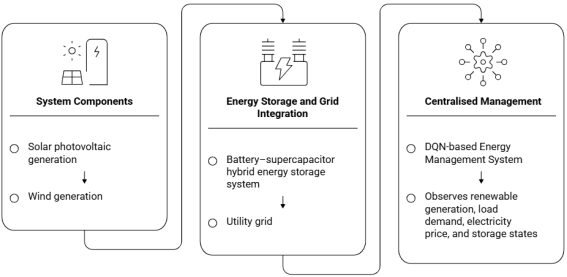
Figure 1. Schematic Representation of the Microgrid System Architecture.
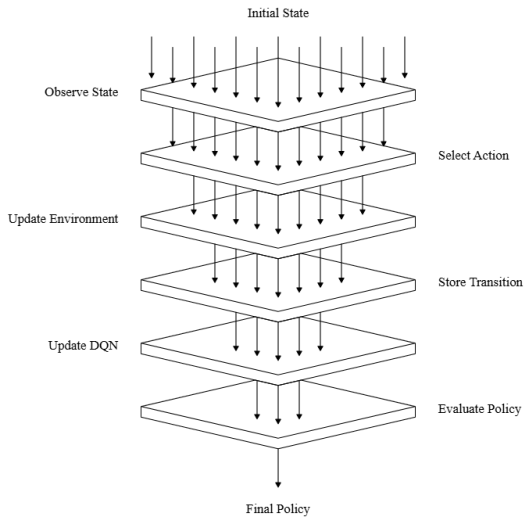
Figure 2. Flowchart of the Deep Reinforcement Learning Process.
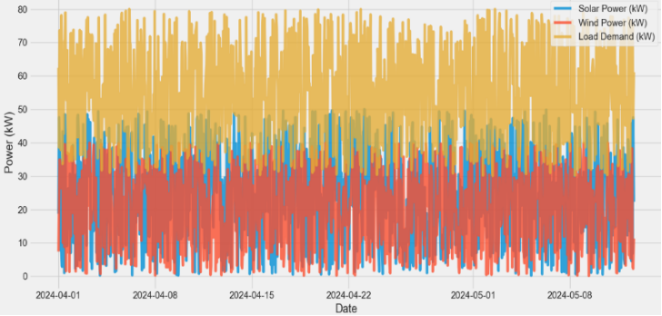
Figure 3. Renewable Supply and Load Demand.
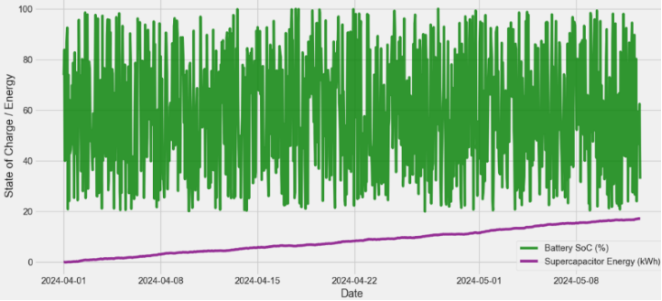
Figure 4. Battery SoC and Supercapacitor Energy Profiles.
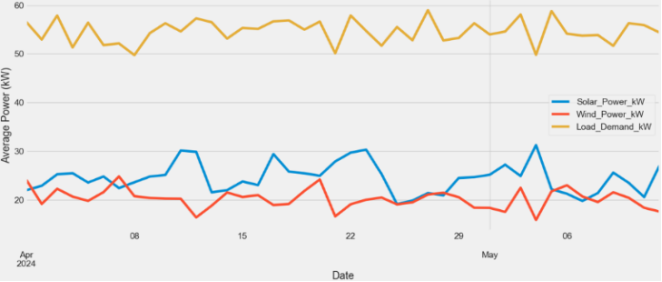
Figure 5. Daily Solar - Wind - Load Trends.
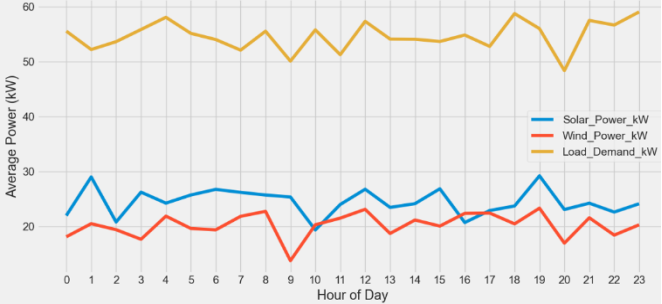
Figure 6. Hourly Average Solar, Wind, and Load Demand Profile.
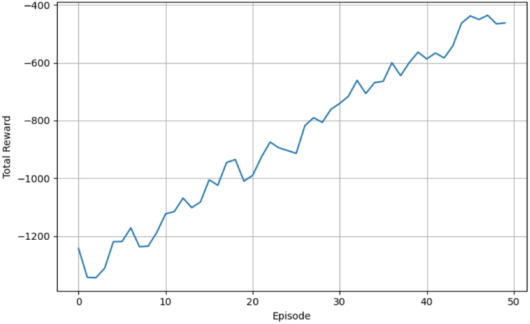
Figure 7. Training Reward per Episode.
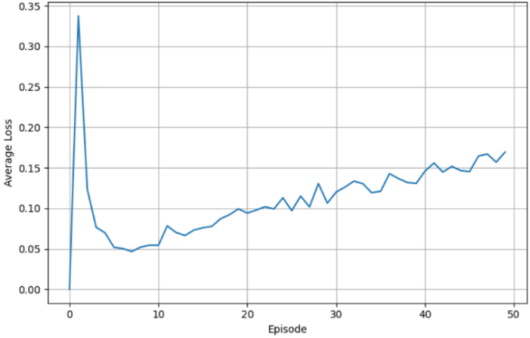
Figure 8. Training Loss per Episode.
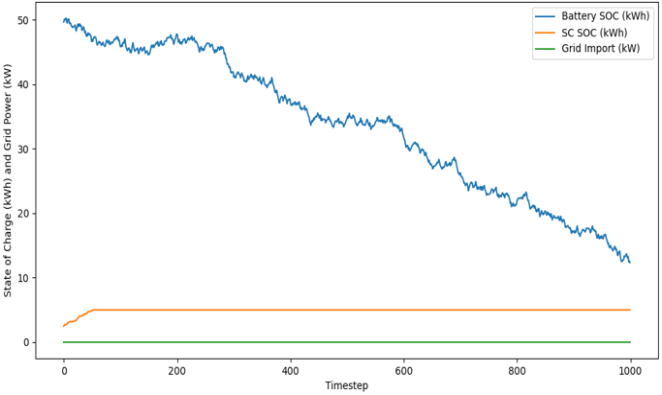
Figure 9. Battery and SC SoC under RBC.
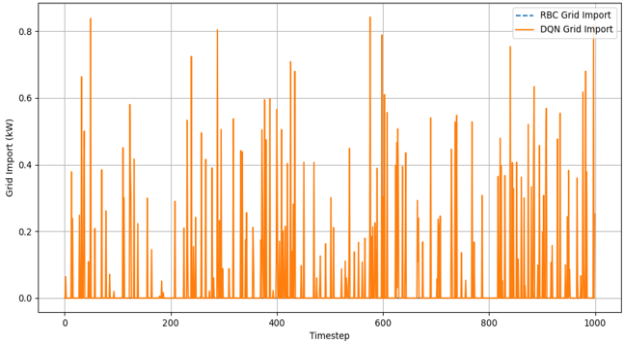
Figure 10. RBC and DQN Grid Imports.
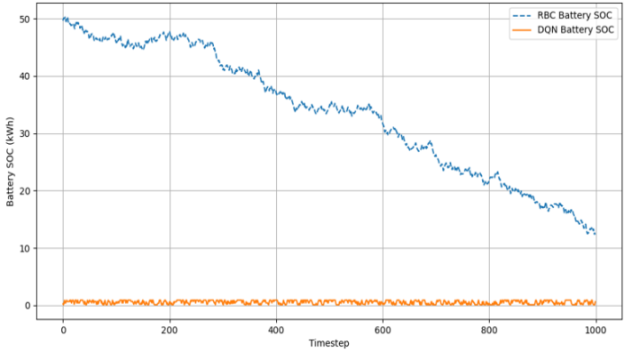
Figure 11. Battery SoC: RBC vs. DQN.
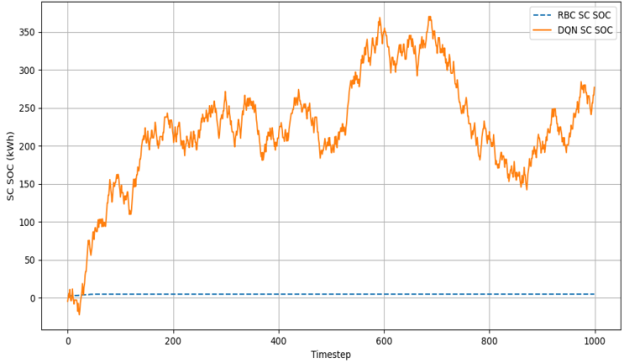
Figure 12. Supercapacitor SoC: RBC vs. DQN.
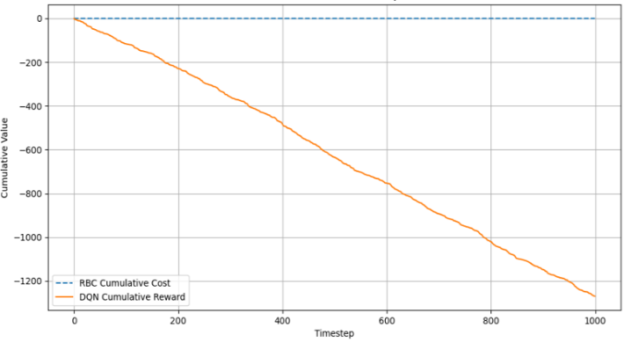
Figure 13. Cumulative Cost and Reward: RBC vs. DQN.

Information



 Share This Article
 Twitter
 Linked In
 Facebook
 Copy
Copy Download