Abstract
Water privatization is a contentious policy response to scarcity in semi-arid regions. This study investigates its socio-environmental consequences for indigenous communities in Laikipia County, Kenya. Employing a concurrent mixed-methods design, data were collected via surveys (n=15 community members), semi-structured interviews (n=25 with government, WRMA, and commercial farm officials), focus group discussions, and document analysis. Qualitative analysis identified five dominant themes: drivers of privatization, water access and availability, perceptions of water quality, environmental change, and governance and social conflict. Findings show privatization was primarily driven by state failure, corruption, and a quest for operational efficiency. Implementation involved minimal transparency or community consultation. While commercial horticulture farms secured reliable water access, indigenous communities faced significantly reduced water availability. 67.7% reported increased challenges, and 67.7% reported deterioration in quality, including elevated turbidity and chemical contamination from agricultural runoff. There was also greater unaffordability. Environmental externalities included river depletion (Figure 1), groundwater over-extraction, and pollution. These issues exacerbated ecological precarity. The process transferred control from communal to private hands, fueling social conflict and eroding local governance. The study concludes that neoliberal water governance, as implemented in Laikipia, prioritizes commercial efficiency over equity and ecological sustainability. This disproportionately burdens indigenous populations. Findings are subject to limitations, such as a small community sample size and the absence of longitudinal hydrological monitoring. We recommend policy reforms centred on mandatory community co-management, robust environmental impact assessments, and hybrid public-communal governance structures. These can help ensure water justice and long-term resource security.
Keywords
Water Governance, Privatization, Indigenous Rights, Environmental Justice, Political Ecology, Kenya, Sustainability,
Arid and Semi-Arid Lands
1. Introduction
Global water scarcity, intensified by climate change and demand growth, has prompted a shift towards market-based resource management in many developing nations. Kenya's Laikipia County, a semi-arid region, exemplifies this trend. Since the early 2000s, chronic water stress has led to government policies that facilitate private-sector involvement in water abstraction and management. Notably, large-scale horticulture farms have been licensed to extract water directly from river systems
| [9] | Mutua, B. M., & Omolo, A. (2019). Water privatization in Kenya: A critical analysis of the challenges, opportunities, and implications. Journal of Economic and Social Thought, 6(3), 131–142. |
[9]
. This transfer of control from public and communal to private entities has led to the de facto privatization of water resources.
Such policies are grounded in neoliberal logic, which posits that private sector participation enhances efficiency, investment, and service delivery
| [1] | Bakker, K. (2005). Neoliberalizing nature? Market environmentalism in water supply in England and Wales. Annals of the Association of American Geographers, 95(3), 542–565. |
[1]
. However, critical scholarship in political ecology and environmental justice warns that privatization can reconfigure power dynamics, marginalize vulnerable communities, and prioritise profit over ecological integrity
| [13] | Robbins, P. (2004). Political ecology: A critical introduction. Blackwell Publishing. |
| [4] | Bullard, R. D. (1990). Dumping in Dixie: Race, class, and environmental quality. Westview Press. |
[13, 4]
. For indigenous communities in Laikipia, such as the Maasai and Dorobo, whose livelihoods and cultural practices are inextricably linked to customary water and land access, these shifts pose an existential threat. The human right to clean, accessible water—recognized internationally
—is thus placed in direct tension with market imperatives.
Despite ongoing debates, there is a paucity of localized, multi-stakeholder empirical studies examining the tangible impacts of this transition on indigenous communities. This research addresses that gap. It asks: (1) What factors precipitated water resource privatization in Laikipia? (2) How has privatization affected the availability, quality, and affordability of water for indigenous communities? (3) What are the subsequent environmental and socio-community impacts? By answering these questions, this article contributes to broader discourses on equitable resource governance, indigenous rights, and sustainable development in arid and semi-arid lands (ASALs).
2. Literature Review and Theoretical Framework
2.1. Neoliberal Water Governance
The privatization of natural resources is a cornerstone of neoliberal environmental governance. Proponents argue that market mechanisms correct public sector inefficiencies, attract capital for infrastructure, and improve service delivery through competition
. In the water sector, this approach has led to concessions, leases, and the full divestiture of public utilities. This is particularly common in the Global South. Multilateral institutions, such as the World Bank and IMF, have promoted privatization as a condition of structural adjustment programmes. This has embedded market logic in the water policies of developing nations.
Empirical outcomes, however, are complex and often contradictory. Studies in Kenya's urban centres have shown that improved infrastructure (such as new water systems and pipes) has been accompanied by increased user fees (tariffs), sometimes pricing out the poor
| [10] | Mwangi, J. M., & Kimathi, M. (2019). Effects of privatization of water services on access and affordability: A case of urban areas in Kenya. Journal of Water, Sanitation and Hygiene for Development, 9(4), 609–618.
https://doi.org/10.2166/washdev.2019.181 |
[10]
. Research in rural Tanzania by Mhando and Madulu
| [8] | Mhando, L., & Madulu, N. F. (2018). Water resources management and rural livelihoods in semi-arid Tanzania: Examining privatization outcomes along the Wami River basin. Journal of Environmental Management, 210, 21–30.
https://doi.org/10.1016/j.jenvman.2017.12.071 |
[8]
linked privatization to environmental degradation and resource depletion, with communities reporting declines in riverine ecosystem health following the expansion of commercial agriculture. In Bolivia, the so-called Cochabamba Water Wars of 2000 demonstrated the explosive social consequences of privatizing a public good, culminating in the reversal of a World Bank-backed concession (a legal agreement granting operation rights to a private company) following mass civil unrest. A consistent theme across contexts is the exacerbation of inequality: private providers routinely sideline unprofitable, low-income, or remote communities
| [2] | Bakker, K. (2010). Privatizing water: Governance failure and the world’s urban water crisis. Cornell University Press. |
[2]
.
Recent scholarship has extended this critique to examine the gendered dimensions of water privatization. Women in pastoral communities across ASALs (Arid and Semi-Arid Lands—dry regions with limited rainfall) bear a disproportionate burden of water collection
| [14] | United Nations Development Programme. (2018). Laikipia County integrated development plan 2018–2022.
https://www.undp.org/ |
[14]
, meaning that longer travel distances and degraded water sources translate directly into heightened time poverty (limited time due to responsibilities) and physical risk. This intersectionality—the overlapping effects—of class, indigeneity, and gender is central to understanding the full scope of privatization’s impacts.
2.2. Political Ecology and Environmental Justice Frameworks
To analyze these dynamics in Laikipia, this study employs an integrated theoretical lens of Political Ecology and Environmental Justice. Political Ecology elucidates how power relations—between state, capital, and local communities—shape access to and control over resources
| [13] | Robbins, P. (2004). Political ecology: A critical introduction. Blackwell Publishing. |
[13]
. It moves beyond apolitical analyses of scarcity to ask who benefits and who loses from specific governance arrangements. Peet, Robbins, and Watts further articulate how "liberation ecologies" can emerge from communities resisting dispossession, a dynamic observable in Laikipia's history of resource conflict
| [11] | Peet, R., Robbins, P., & Watts, M. (Eds.). (2011). Global political ecology. Routledge. |
[11]
.
Environmental Justice complements Political Ecology by providing a normative framework for equity. It demands fair distribution of environmental benefits and burdens, and meaningful participation in decision-making by marginalized groups
| [4] | Bullard, R. D. (1990). Dumping in Dixie: Race, class, and environmental quality. Westview Press. |
[4]
. Bullard's foundational work showed that environmental hazards, such as pollution and resource depletion, often concentrate in communities of colour and low-income populations. This pattern goes beyond the United States and has been validated in African post-colonial contexts. Walker
| [15] | Walker, G. (2012). Environmental justice: Concepts, evidence and politics. Routledge. |
[15]
expanded the concept to differentiate between distributive justice (who gets what), procedural justice (who decides), and recognitional justice (whose knowledge and identity count). All three dimensions are engaged by this study.
In Laikipia, these frameworks are essential. The region's history is marked by land alienation and the systematic marginalization of indigenous pastoralists that began under British colonial administration and has persisted through post-independence governance structures. Contemporary water privatization, therefore, is not an isolated economic policy but the latest iteration in a longer political struggle over territory and resources. This study positions privatization as a socio-political process with distinct winners and losers, analyzing its outcomes through the lived experiences of indigenous communities.
2.3. Water Governance in Kenyan ASALs
Kenya's water governance framework changed with the Water Act of 2002 and the Water Act of 2016. These laws devolved (transferred) management responsibilities and opened formal channels for private sector participation. The Water Resources Management Authority (WRMA), now restructured as the Water Resources Authority (WRA), was meant to ensure fair allocation and environmental protection. However, evidence shows that regulatory agencies have not kept pace with the scale of private abstraction (removal of water for private use). This is a problem in water-stressed counties like Laikipia
| [9] | Mutua, B. M., & Omolo, A. (2019). Water privatization in Kenya: A critical analysis of the challenges, opportunities, and implications. Journal of Economic and Social Thought, 6(3), 131–142. |
[9]
. The gap between legislative intent and on-the-ground enforcement is a central concern of this study.
3. Methodology
3.1. Research Design
A concurrent mixed-methods design as depicted by Creswell
| [5] | Creswell, J. W. (2014). Research design: Qualitative, quantitative, and mixed methods approaches (4th ed.). SAGE Publications. |
[5]
was employed to achieve triangulation and depth. This design involves the simultaneous, but independent, collection of quantitative and qualitative data, which are then integrated during interpretation. Quantitative data measured the prevalence and patterns of experiences across the community sample, while qualitative data captured nuanced perspectives, institutional processes, and contextual explanations from multiple stakeholder groups. Both strands were weighted equally in informing the final analysis (QUAN + QUAL).
3.2. Study Area and Sampling
The study was conducted in Laikipia County, focusing on communities downstream of major horticulture farms along the Ewaso Ng'iro River basin. Purposeful sampling was chosen to deliberately select participants from four distinct stakeholder groups—indigenous community members, government officials, representatives from the Water Resources Management Authority (WRMA), and commercial farm managers—each of whom holds a unique position within the water governance system. This approach was adopted to ensure a diverse and information-rich sample that would capture the wide range of perspectives and experiences relevant to the research aims, particularly the differentiated impacts of water privatization on various groups. Details of participant selection and group composition are summarized in
Table 1.
Table 1. Summary of Study Participants and Data Collection Methods.
Stakeholder Group | Number | Date Collection Method | Role |
Indigenous Community Members | 15 | Survey + FGD | Primary affected population; livelihood, access, and quality experiences |
Commercial Farm Officials | 15 | Semi-structured interview | Institutional actors; abstraction volumes, mitigation measures |
WRMA Officers | 5 | Semi-structured interview | Regulatory mandate, enforcement capacity, monitoring data |
Government Administrators | 5 | Semi-structured interview | Policy drivers, governance accountability, conflict mediation |
TOTAL | 40 | | |
Source: Authors' fieldwork, 2024
3.3. Data Collection Instruments
Surveys: A structured questionnaire using a 5-point Likert scale was administered to the 15 FGD participants prior to discussion. Questions covered perceived changes in water availability, quality, and travel time to water points, as well as affordability over the preceding five years. Descriptive statistics (frequencies and percentages) were computed using SPSS v.26.
Semi-Structured Interviews: Interviews were conducted with all 25 officials, lasting approximately 45–75 minutes each. An interview guide was developed around the study's research questions, with probes tailored to each stakeholder group. Specifically, the guide covered: (a) perceived drivers of privatization and institutional roles; (b) abstraction volumes and monitoring practices (commercial farms and WRMA); (c) policy design and implementation challenges (government officials); and (d) observed environmental and social changes. Interviews were audio-recorded with participant consent and transcribed verbatim.
Focus Group Discussion (FGD): A single FGD was held with the 15 community representatives to explore collective experiences, historical changes in water access, social conflict, and community governance. The FGD was facilitated using a structured guide with open-ended prompts and lasted approximately 90 minutes. It was conducted in Kiswahili and Maa, with simultaneous interpretation and later translated transcription.
Document Analysis: Primary and secondary documents were systematically reviewed to contextualize the empirical findings. These included: the Laikipia County Integrated Development Plan 2018–2022 (UNDP, 2018); WRMA water allocation schedules and abstraction permit registers for the Ewaso Ng'iro sub-catchment; published environmental impact assessments (EIAs) for licensed horticulture operations; and the Kenyan Water Act. Document analysis focused on identifying official frameworks for allocation, stated environmental protections, and the gap between policy text and reported practice.
3.4. Qualitative Data Analysis
Qualitative data from interviews and the FGD were transcribed, coded, and analyzed thematically following Braun and Clarke's
six-phase framework: (1) familiarization with data, (2) generating initial codes, (3) searching for themes, (4) reviewing themes, (5) defining and naming themes, and (6) producing the report. Coding was conducted using NVivo v.14. Two independent coders analyzed a 20% sub-sample of transcripts, achieving an intercoder reliability coefficient of κ = 0.78, indicating substantial agreement. Discrepancies were resolved through discussion and codebook refinement. The thematic analysis identified five primary themes: (I) Drivers of Privatization, (II) Water Access and Availability, (III) Water Quality Perceptions, (IV) Environmental Change and Degradation, and (V) Governance, Control, and Social Conflict. Document analysis findings were triangulated with interview data to validate institutional claims against policy records.
4. Findings
4.1. Factors Driving Privatization (Theme I)
Stakeholders cited a confluence of factors, but they diverged markedly in their framing. WRMA and government officials (80%) primarily cited "poor public management" and "inadequate investment" as justifications for involving private actors—framing privatization as a technocratic solution to an apolitical problem. In contrast, 66.7% of community representatives identified "government failure and corruption" as the principal driver, citing specific instances of water access being informally sold or allocated without community input. Commercial farm managers viewed privatization as a logical response to state inefficiency, enabling them to secure reliable water for export production. Document analysis of WRMA permit registers corroborated community claims: abstraction licenses were issued to commercial operations at levels that, in aggregate, exceeded the environmentally recommended river flow maintenance thresholds during dry seasons. This divergence highlights a critical perception gap: while officials frame privatization as a technical solution, affected communities perceive it as a political and institutional failure underpinned by corruption.
4.2. Impacts on Water Access, Quality, and Affordability (Themes II & III)
Availability: Survey data (
Table 2) reveal a stark dichotomy. All commercial farms (100%) reported stable, guaranteed access to water throughout the year. Conversely, 67.7% of community respondents reported increased challenges in obtaining water, citing reduced river flows and prioritized diversion to farms upstream. Travel times to functional water points had significantly increased for 53.3% of households, with a mean reported increase of 2.3 hours per day per household—a finding with significant implications for women and children, who bear the primary burden of water collection
| [14] | United Nations Development Programme. (2018). Laikipia County integrated development plan 2018–2022.
https://www.undp.org/ |
[14]
.
Table 2. Community Survey Results: Changes in Water Access and Quality (n=15).
Indicator | % Reporting Deterioration / Negative Impact | % Reporting No Deterioration / Stable or Improved |
Overall water availability | 67.7% | 32.3% |
Travel time to water point | 53.3% | 46.7% |
Perceived water quality | 67.7% | 32.3% |
Water affordability / cost burden | 60.0% | 40.0% |
Social tensions related to water | 80.0% | 20.0% |
Sense of control over local water | 100.0% (complete loss of control) | 0.0% |
Source: Authors' community survey, 2024. Note: Percentages rounded to one decimal place.
Quality: Community surveys indicated a marked decline in perceived water quality (67.7% reporting deterioration), attributed to agricultural chemical runoff and reduced dilution from river flows, with participants describing the water as "dirty and smelly" and visibly discoloured during and after rainfall events. Farm managers who acknowledged runoff as a known operational issue corroborated this. While comprehensive laboratory analysis of water samples was beyond the scope of this study, existing WRMA water quality monitoring reports reviewed during document analysis documented elevated nitrate concentrations (averaging 18–24 mg/L NO₃⁻ in downstream sampling points, above the world health organization’s (WHO) guideline of 11.3 mg/L NO₃⁻-N) and increased turbidity in river sections adjacent to active horticulture operations. Elevated phosphate levels consistent with fertilizer application were also noted in WRMA records, suggesting eutrophication risk. These documented parameters, while not directly measured by this study, provide technical grounding for community-reported quality deterioration. However, it is important to acknowledge that reliance on secondary data from WRMA reports introduces limitations: these records may vary in temporal coverage, monitoring frequency, and spatial resolution relative to the most affected community sites, and their methodological rigour cannot be independently verified by this research. Future studies should incorporate direct, longitudinal water sampling and laboratory analysis to strengthen empirical evidence of quality changes and enable more robust attribution of contamination sources.
Affordability: While private entities paid volumetric abstraction fees to WRMA, communities faced new indirect costs. The need to travel further, purchase water from vendors, or treat contaminated water created a significant economic burden, with 60% of survey respondents reporting increased expenditure. This constitutes a hidden privatization tax on households least equipped to absorb it, reducing effective affordability despite the absence of direct billing.
4.3. Environmental and Socio-Community Impacts (Themes IV & V)
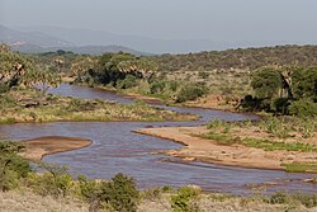
Environmental Degradation: 80% of community respondents and 70% of WRMA officers observed significant environmental decline, consistent across the dry and wet seasons. Key manifestations included the progressive drying of seasonal rivers (see
Figure 1 below), reduced groundwater levels, and increased pollution from farm runoff. Farm managers confirmed high levels of abstraction but framed their construction of private boreholes as adequate mitigation—a claim disputed by WRMA officers who warned, during interviews, that unregulated borehole sinking in the region is contributing to aquifer depletion and subsidence risks.
Figure 1. Visible reduction in river flow at a downstream monitoring point near Nanyuki, indicative of excessive upstream abstraction. Image captured during dry season fieldwork, 2024.
Loss of Communal Control and Social Conflict: A unanimous sentiment (100%) among community participants was the total loss of meaningful control over local water resources—a finding that is unambiguous despite the small sample size and was consistently corroborated across all qualitative interview strands. This erosion of customary management systems, historically embedded in Maasai and Dorobo community governance structures, has led to heightened inter-group tensions (reported by 80% of respondents): both between communities and commercial farms competing for upstream water, and within communities as diminished resources strain traditional sharing norms. The social fabric tied to shared water points, which also functions as a site of information exchange and community solidarity, is demonstrably fraying.
5. Discussion
This study demonstrates that water privatization in Laikipia has functioned less as a neutral tool for efficiency and more as a mechanism of accumulation by dispossession
| [7] | Harvey, D. (2005). A brief history of neoliberalism. Oxford University Press. |
[7]
. Control has been transferred from a—however imperfect—communal domain to a private, profit-driven one, replicating historical patterns of land and resource alienation that have defined the region's political economy since the colonial period.
The findings directly challenge neoliberal assumptions. Efficiency was achieved for capital-intensive horticulture, but at the expense of equity and ecological sustainability. The purported benefits of private investment did not trickle down to indigenous communities; instead, costs were externalized onto them through scarcity, pollution, and social strife. This aligns with Political Ecology's core assertion: environmental outcomes are inseparable from the power relations within which they are embedded
| [11] | Peet, R., Robbins, P., & Watts, M. (Eds.). (2011). Global political ecology. Routledge. |
| [13] | Robbins, P. (2004). Political ecology: A critical introduction. Blackwell Publishing. |
[11, 13]
.
The Environmental Justice lens reveals profound procedural and distributive injustices. The absence of transparent community consultation during licensing processes violated communities' right to participate in decisions affecting them—a right enshrined in Kenya's Constitution (Article 69) and in international indigenous rights frameworks
| [12] | Republic of Kenya. (2016). Water Act, 2016 (No. 43 of 2016). Kenya Gazette Supplement No. 164, 20 September 2016. |
[12]
. The resulting inequitable distribution of burdens (water insecurity, pollution, increased labour for collection) and benefits (reliable irrigation for export crops) constitutes what Bullard would characterize as environmental racism
| [4] | Bullard, R. D. (1990). Dumping in Dixie: Race, class, and environmental quality. Westview Press. |
[4]
: the systematic subordination of indigenous livelihoods to commercial gain. Walker's (2012) recognitional justice dimension is equally implicated: the knowledge systems of indigenous communities—including centuries of adaptive water management—were rendered invisible in the privatization process
| [15] | Walker, G. (2012). Environmental justice: Concepts, evidence and politics. Routledge. |
[15]
.
The role of the state appears paradoxical. While retreating from direct service provision, it actively enabled privatization through licensing and failed to robustly regulate abstraction or pollution. This represents a form of "state-sponsored neoliberalization" in which the state facilitates market rule while abdicating its protective mandate. Document analysis of WRMA permit registers suggests this abdication is not merely passive but at times active, with allocations that demonstrably breach environmental flow requirements. The documented gap between legislative intent
| [12] | Republic of Kenya. (2016). Water Act, 2016 (No. 43 of 2016). Kenya Gazette Supplement No. 164, 20 September 2016. |
[12]
and enforcement reality is a structural governance failure that policy reforms must directly target.
6. Limitations of the Study
Several limitations must be acknowledged when interpreting the findings of this study:
1) Small Quantitative Sample: The community survey was administered to n=15 participants, all drawn from FGD participants using purposeful sampling. This sample size precludes statistical generalization to all indigenous communities in Laikipia County or beyond. The quantitative data should be read as indicative of patterns and experiences within the sampled community, serving primarily to structure and quantify the qualitative narrative rather than to produce population-level estimates. Future studies should employ larger, randomly sampled populations to test the generalizability of these findings.
2) Single Focus Group: Only one FGD was conducted, representing 15 community members. While participants were purposefully selected for diversity in age, gender, and sub-location, the views expressed may not capture the full range of intra-community variation in experience or opinion.
3) Absence of Independent Environmental Monitoring Data: This study did not independently collect water quality samples or hydrological flow measurements. Environmental findings rely on: (a) community perceptions, (b) official statements from WRMA officers, and (c) secondary data from WRMA monitoring reports accessed through document analysis. Independent longitudinal monitoring data, including regular physical-chemical analysis of water samples, would substantially strengthen the environmental engineering dimensions of this research.
4) Potential Response Bias: Community participants were aware of the research focus, which may have influenced their responses toward more negative portrayals of privatisation. Commercial farm officials, conversely, may have understated environmental impacts. The use of multiple data sources and triangulation mitigates but does not eliminate this risk.
5) Temporal Scope: The study provides a cross-sectional snapshot; longitudinal tracking of the socio-economic and environmental impacts over time would yield richer insights into trends and causality.
7. Conclusion and Policy Implications
The privatization of water resources in Laikipia County has exacerbated vulnerability for indigenous communities, deepened socio-ecological inequalities, and undermined long-term water security. It represents a governance model that is economically myopic and socially unsustainable. These conclusions, while drawn from a relatively small empirical base, are consistent with and contribute to a substantial body of comparative evidence from ASALs across sub-Saharan Africa and the Global South. Subject to the limitations outlined above, we propose the following policy reorientation:
1) Transition to Co-Governance Models: Policy must mandate the establishment of legally recognized Water User Associations (WUAs) with equitable representation from indigenous communities, commercial users, and government bodies. These associations should be granted real authority over local water allocation, monitoring, and conflict resolution, and should operate under a legal framework that explicitly protects community veto rights over large-scale abstractions.
2) However, implementing co-governance in practice faces significant political and institutional barriers. There may be resistance from powerful commercial water users reluctant to relinquish control, as well as bureaucratic inertia within government agencies accustomed to top-down management. Institutional capacity and resource constraints could undermine the effectiveness and inclusiveness of WUA operations, especially in under-resourced rural settings. Additionally, entrenched interests and local elite capture may threaten meaningful community participation if safeguards are not rigorously designed and enforced. Addressing these challenges will require ongoing political commitment, capacity building, transparent monitoring, and clear mechanisms for accountability at all levels.
3) Implement Stronger Regulatory Enforcement: WRMA's mandate must be bolstered with resources and political independence to enforce abstraction limits, conduct rigorous environmental flow assessments, and penalize non-compliance. Specifically, minimum ecological flow standards for the Ewaso Ng'iro river system should be established, published, and enforced, with penalties that create a genuine disincentive for over-abstraction.
4) Invest in Public-Communal Hybrid Infrastructure: Public investment should support decentralized, climate-resilient water systems—including managed aquifer recharge, sand dams, and rainwater harvesting—managed by communities with technical support from government. This would reduce dependence on vulnerable river sources and buffer the most vulnerable households against seasonal and climate-driven variability.
5) Mandatory Participatory Environmental Impact Assessments: All future water abstraction licensing must require full Environmental Impact Assessments that include documented, meaningful community consultation as a legal prerequisite—not a procedural formality.
6) Mainstream Climate and Gender Justice: Future water governance must be explicitly linked to climate adaptation planning, recognizing indigenous communities not as passive victims but as essential partners with valuable ecological knowledge and constitutional rights. Gender-disaggregated data on water collection burdens should be integrated into all future impact assessments and governance frameworks.
Future research should longitudinally track the socio-economic and environmental impacts of these changes, explore the potential of community-led legal challenges to privatization grounded in Kenya's constitutional rights to a clean environment and water, and expand the quantitative sample base to support robust statistical inference. Specifically, future studies could employ panel surveys to follow households over time, systematically monitoring changes in water access, affordability, and well-being. Implementing environmental monitoring—such as regular in situ river flow measurements and laboratory-based water quality assessments—would enable more precise attribution of hydrological and pollution impacts. Mixed-methods approaches that combine quantitative surveys with participatory mapping, in-depth interviews, and legal analysis would further enrich the evidence base and support rigorous policy evaluation.
Abbreviations
ASALs | Arid and Semi-arid Lands |
EIAs | Environmental Impact Assessments |
FGD | Focus Group Discussion |
WRA | Water Resources Authority |
WRMA | Water Resources Management Authority |
WUAs | Water User Associations |
Author Contributions
Wagura Alexis: Conceptualization, Resources
Conflicts of Interest
The authors declare no conflicts of interest.
References
| [1] |
Bakker, K. (2005). Neoliberalizing nature? Market environmentalism in water supply in England and Wales. Annals of the Association of American Geographers, 95(3), 542–565.
|
| [2] |
Bakker, K. (2010). Privatizing water: Governance failure and the world’s urban water crisis. Cornell University Press.
|
| [3] |
Braun, V., & Clarke, V. (2006). Using thematic analysis in psychology. Qualitative Research in Psychology, 3(2), 77–101.
https://doi.org/10.1191/1478088706qp063oa
|
| [4] |
Bullard, R. D. (1990). Dumping in Dixie: Race, class, and environmental quality. Westview Press.
|
| [5] |
Creswell, J. W. (2014). Research design: Qualitative, quantitative, and mixed methods approaches (4th ed.). SAGE Publications.
|
| [6] |
Gleick, P. H. (2015). The human right to water. Water International, 40(4), 500–514.
https://doi.org/10.1080/02508060.2015.1053849
|
| [7] |
Harvey, D. (2005). A brief history of neoliberalism. Oxford University Press.
|
| [8] |
Mhando, L., & Madulu, N. F. (2018). Water resources management and rural livelihoods in semi-arid Tanzania: Examining privatization outcomes along the Wami River basin. Journal of Environmental Management, 210, 21–30.
https://doi.org/10.1016/j.jenvman.2017.12.071
|
| [9] |
Mutua, B. M., & Omolo, A. (2019). Water privatization in Kenya: A critical analysis of the challenges, opportunities, and implications. Journal of Economic and Social Thought, 6(3), 131–142.
|
| [10] |
Mwangi, J. M., & Kimathi, M. (2019). Effects of privatization of water services on access and affordability: A case of urban areas in Kenya. Journal of Water, Sanitation and Hygiene for Development, 9(4), 609–618.
https://doi.org/10.2166/washdev.2019.181
|
| [11] |
Peet, R., Robbins, P., & Watts, M. (Eds.). (2011). Global political ecology. Routledge.
|
| [12] |
Republic of Kenya. (2016). Water Act, 2016 (No. 43 of 2016). Kenya Gazette Supplement No. 164, 20 September 2016.
|
| [13] |
Robbins, P. (2004). Political ecology: A critical introduction. Blackwell Publishing.
|
| [14] |
United Nations Development Programme. (2018). Laikipia County integrated development plan 2018–2022.
https://www.undp.org/
|
| [15] |
Walker, G. (2012). Environmental justice: Concepts, evidence and politics. Routledge.
|
| [16] |
World Bank. (2020). The role of the private sector in water supply and sanitation.
https://www.worldbank.org/
|
Cite This Article
-
APA Style
Peter, W. A. (2026). The Cost of Efficiency: Analysis of Water Privatization's Impact on Indigenous Livelihoods and Environmental Security in Laikipia, Kenya. American Journal of Environmental and Resource Economics, 11(2), 24-31. https://doi.org/10.11648/j.ajere.20261102.11
 Copy
|
Copy
|
 Download
ACS Style
Peter, W. A. The Cost of Efficiency: Analysis of Water Privatization's Impact on Indigenous Livelihoods and Environmental Security in Laikipia, Kenya. Am. J. Environ. Resour. Econ. 2026, 11(2), 24-31. doi: 10.11648/j.ajere.20261102.11
Copy
|
Download
AMA Style
Peter WA. The Cost of Efficiency: Analysis of Water Privatization's Impact on Indigenous Livelihoods and Environmental Security in Laikipia, Kenya. Am J Environ Resour Econ. 2026;11(2):24-31. doi: 10.11648/j.ajere.20261102.11
Copy
|
Download
-
@article{10.11648/j.ajere.20261102.11,
  author = {Wagura Alexis Peter},
  title = {The Cost of Efficiency: Analysis of Water Privatization's Impact on Indigenous Livelihoods and Environmental Security in Laikipia, Kenya},
  journal = {American Journal of Environmental and Resource Economics},
  volume = {11},
  number = {2},
  pages = {24-31},
  doi = {10.11648/j.ajere.20261102.11},
  url = {https://doi.org/10.11648/j.ajere.20261102.11},
  eprint = {https://article.sciencepublishinggroup.com/pdf/10.11648.j.ajere.20261102.11},
  abstract = {Water privatization is a contentious policy response to scarcity in semi-arid regions. This study investigates its socio-environmental consequences for indigenous communities in Laikipia County, Kenya. Employing a concurrent mixed-methods design, data were collected via surveys (n=15 community members), semi-structured interviews (n=25 with government, WRMA, and commercial farm officials), focus group discussions, and document analysis. Qualitative analysis identified five dominant themes: drivers of privatization, water access and availability, perceptions of water quality, environmental change, and governance and social conflict. Findings show privatization was primarily driven by state failure, corruption, and a quest for operational efficiency. Implementation involved minimal transparency or community consultation. While commercial horticulture farms secured reliable water access, indigenous communities faced significantly reduced water availability. 67.7% reported increased challenges, and 67.7% reported deterioration in quality, including elevated turbidity and chemical contamination from agricultural runoff. There was also greater unaffordability. Environmental externalities included river depletion (Figure 1), groundwater over-extraction, and pollution. These issues exacerbated ecological precarity. The process transferred control from communal to private hands, fueling social conflict and eroding local governance. The study concludes that neoliberal water governance, as implemented in Laikipia, prioritizes commercial efficiency over equity and ecological sustainability. This disproportionately burdens indigenous populations. Findings are subject to limitations, such as a small community sample size and the absence of longitudinal hydrological monitoring. We recommend policy reforms centred on mandatory community co-management, robust environmental impact assessments, and hybrid public-communal governance structures. These can help ensure water justice and long-term resource security.},
 year = {2026}
}
Copy
|
Download
-
TY  - JOUR
T1  - The Cost of Efficiency: Analysis of Water Privatization's Impact on Indigenous Livelihoods and Environmental Security in Laikipia, Kenya
AU  - Wagura Alexis Peter
Y1  - 2026/07/11
PY  - 2026
N1  - https://doi.org/10.11648/j.ajere.20261102.11
DO  - 10.11648/j.ajere.20261102.11
T2  - American Journal of Environmental and Resource Economics
JF  - American Journal of Environmental and Resource Economics
JO  - American Journal of Environmental and Resource Economics
SP  - 24
EP  - 31
PB  - Science Publishing Group
SN  - 2578-787X
UR  - https://doi.org/10.11648/j.ajere.20261102.11
AB  - Water privatization is a contentious policy response to scarcity in semi-arid regions. This study investigates its socio-environmental consequences for indigenous communities in Laikipia County, Kenya. Employing a concurrent mixed-methods design, data were collected via surveys (n=15 community members), semi-structured interviews (n=25 with government, WRMA, and commercial farm officials), focus group discussions, and document analysis. Qualitative analysis identified five dominant themes: drivers of privatization, water access and availability, perceptions of water quality, environmental change, and governance and social conflict. Findings show privatization was primarily driven by state failure, corruption, and a quest for operational efficiency. Implementation involved minimal transparency or community consultation. While commercial horticulture farms secured reliable water access, indigenous communities faced significantly reduced water availability. 67.7% reported increased challenges, and 67.7% reported deterioration in quality, including elevated turbidity and chemical contamination from agricultural runoff. There was also greater unaffordability. Environmental externalities included river depletion (Figure 1), groundwater over-extraction, and pollution. These issues exacerbated ecological precarity. The process transferred control from communal to private hands, fueling social conflict and eroding local governance. The study concludes that neoliberal water governance, as implemented in Laikipia, prioritizes commercial efficiency over equity and ecological sustainability. This disproportionately burdens indigenous populations. Findings are subject to limitations, such as a small community sample size and the absence of longitudinal hydrological monitoring. We recommend policy reforms centred on mandatory community co-management, robust environmental impact assessments, and hybrid public-communal governance structures. These can help ensure water justice and long-term resource security.
VL  - 11
IS  - 2
ER  -
Copy
|
Download




 Share This Article
 Twitter
 Linked In
 Facebook