
Optimal management of renewable energy resources is a priority, especially in a global energy mix where fossil fuels are increasingly exploited. The major challenge associated with these renewable resources lies in their intermittency. Complementarity and optimal management of these resources are therefore essential. This article proposes a model for managing renewable energies in power grid systems with a storage system. The resulting model has been tested. Python 3.10 programming language was used to solve the optimization problem, using mixted integer linear programming. To test the model, a special case study was carried out in the South of Togo, representing almost 96% of the country's electrical loads. In this study, resources were first evaluated for one year, then compared according to their evolution over the years. The results showed that the country's energy potential is considerable, but unevenly distributed. The study showed that in the north and center of the country, solar energy and biomass are the main resources available. In the south, on the other hand, energy potential is based on solar, wind, hydro and biomass. The optimization results obtained for the south of the country have enabled to plan better the management of these resources over the course of the year. The results show a composition of maximum load satisfaction, with 39% from grid compared with 8% from hydro, 10% from wind, 12% from batteries systems and 31% from photovoltaic systems. The storage required for energy management is estimated at 220 kWh, with an optimal annual value for the objective cost function of around 67885.10212 USD. The model thus obtained provides a decision-making tool for the optimal management of renewable resources.
| Published in | American Journal of Energy Engineering (Volume 12, Issue 3) |
| DOI | 10.11648/j.ajee.20241203.12 |
| Page(s) | 62-79 |
| Creative Commons |
This is an Open Access article, distributed under the terms of the Creative Commons Attribution 4.0 International License (http://creativecommons.org/licenses/by/4.0/), which permits unrestricted use, distribution and reproduction in any medium or format, provided the original work is properly cited. |
| Copyright |
Copyright © The Author(s), 2024. Published by Science Publishing Group |
Optimal Management, Model, Renewable Energy, Programming, Optimization
Month | Solar radiation (W/m2) | Temperature (degree) | Relative humidity (%) | Wind speed (m/s) | ||||||||||||
|---|---|---|---|---|---|---|---|---|---|---|---|---|---|---|---|---|
min | max |
|
| min | max |
|
| min | max |
|
| min | max |
|
| |
J | 85.46 | 115.71 | 99.01 | 5.87 | 26.12 | 28.41 | 27.59 | 0.59 | 60.56 | 85.62 | 75.25 | 6.92 | 2.04 | 4.45 | 3.27 | 0.68 |
F | 85.98 | 113.63 | 103.63 | 6.95 | 27.58 | 28.57 | 28.05 | 0.23 | 69.75 | 85.19 | 80.92 | 2.97 | 2.21 | 5.17 | 3.94 | 0.76 |
M | 84.98 | 122.43 | 108.85 | 9.69 | 27.83 | 28.96 | 28.38 | 0.23 | 78.44 | 86.31 | 81.99 | 1.89 | 3.99 | 6.11 | 4.78 | 0.57 |
A | 109.64 | 137.14 | 127.32 | 7.0 | 26.95 | 28.38 | 27.67 | 0.46 | 78.31 | 88.31 | 83.72 | 2.35 | 1.86 | 5.49 | 3.7 | 0.91 |
M | 108.89 | 132.91 | 126.36 | 4.72 | 26.49 | 28.11 | 27.41 | 0.41 | 76.19 | 88.62 | 85.21 | 2.59 | 1.91 | 4.47 | 3.41 | 0.56 |
J | 112.42 | 128.5 | 121.95 | 3.63 | 25.09 | 27.42 | 26.25 | 0.73 | 79.0 | 92.88 | 87.34 | 3.28 | 1.9 | 5.6 | 3.69 | 0.85 |
J | 117.48 | 129.11 | 123.56 | 2.93 | 24.44 | 25.9 | 25.10 | 0.36 | 82.19 | 90.81 | 87.35 | 2.33 | 3.42 | 6.55 | 5.06 | 0.66 |
A | 117.97 | 134.07 | 127.02 | 3.74 | 23.64 | 25.35 | 24.34 | 0.46 | 82.62 | 92.31 | 87.89 | 2.0 | 2.4 | 7.82 | 5.29 | 1.36 |
S | 125.77 | 140.23 | 134.24 | 3.19 | 24.95 | 25.87 | 25.45 | 0.24 | 82.88 | 91.5 | 87.28 | 2.18 | 3.26 | 6.55 | 4.85 | 0.88 |
O | 113.06 | 133.61 | 125.49 | 4.72 | 25.17 | 27.4 | 26.32 | 0.63 | 84.62 | 90.69 | 87.60 | 1.55 | 2.16 | 5.55 | 3.19 | 0.89 |
N | 106.05 | 122.58 | 114.64 | 4.22 | 26.64 | 27.83 | 27.24 | 0.3 | 79.44 | 87.0 | 83.24 | 1.78 | 1.65 | 4.77 | 3.03 | 0.71 |
D | 90.72 | 111.33 | 103.36 | 4.46 | 25.9 | 27.8 | 27.01 | 0.35 | 61.62 | 86.62 | 78.24 | 6.64 | 1.62 | 4.3 | 2.94 | 0.61 |
Months/Systems (MW) | Objectif function (USD) | Power (PV) | Power (battery) | soct | Power (wind) | Power (hydro) | Power (grid/biodiesel) |
|---|---|---|---|---|---|---|---|
January | 30185.83538337 | 50.59000008 | 16.10261946 | 125 | 7.29182268 | 16.00000024 | 77.83012655 |
February | 7493.38819407 | 52.45000009 | 0.18756169 | 141.10261946 | 12.75503066 | 16.00000024 | 60.5957174 |
March | 14110.53651495 | 54.63500014 | 6.03352181 | 141.29018115 | 22.77595159 | 16.00000024 | 52.00590985 |
April | 1939.29014263 | 64.24000011 | -3.01186196 | 147.32370296 | 10.56326108 | 16.00000024 | 48.5061267 |
May | 2325.72339825 | 63.33500011 | -2.59584265 | 144.311841 | 8.26905688 | 16.00000024 | 47.23730382 |
June | 9928.80617995 | 62.52500011 | 3.24511764 | 141.71599834 | 10.47784432 | 16.00000024 | 47.30122336 |
July | 33336.46911887 | 63.15000008 | 21.6853283 | 144.96111598 | 27.01745224 | 16.00000024 | 42.21034946 |
August | 35930.21093907 | 64.82000005 | 23.94968835 | 166.6464443 | 30.87165114 | 16.00000024 | 39.13168472 |
September | 19519.14402523 | 64.94500008 | 11.54444071 | 190.59613265 | 23.79129369 | 16.00000024 | 36.80903221 |
October | -12515.95181863 | 61.3100001 | -13.18540703 | 202.14057336 | 6.76962939 | 16.00000024 | 38.10488874 |
November | -28607.64232167 | 56.6950001 | -25.41975695 | 188.95516633 | 5.80123862 | 16.00000024 | 36.60008109 |
December | -45760.70763742 | 52.2000001 | -38.53540938 | 163.53540938 | 5.29949926 | 16.00000024 | 35.80671332 |
| Photodiode Current |
| Photocurrent |
| Saturation Current |
| Load |
| Voltage |
| Serial Resistor |
| Ideality Factor |
| Boltzmann's Constant |
| Temperature |
| Shunt Resistor |
| Diffusion Current |
| Generation Current |
| Variable Current |
| Number of Cells in Parallel |
| Number of Cells in Series |
| Variable Power |
| Variable Solar Power |
| Charging (80%) and Discharging (20%) Rates |
| Efficiency |
| Performance Ratio |
| Area |
| Temperature Differential |
| Decision Variable |
| Cell Temperature |
| Reference Temperature |
| Battery Storage at t+1 |
| Battery Storage at Time t |
| Battery Power |
| Number of Batteries |
| Battery Capacity |
| Battery Voltage |
| Battery Efficiency |
| Probability Density |
| Scaling Factor |
| Wind Speed |
| Shape Factor |
| Ecart Type |
FO | Fonction Objectif |
| Moyenne Vitesse |
| Gamma Function |
| Average Power |
| Power |
| Wind Power |
| Air Density |
| Area Swept by the Wind Turbine |
| Wind Power Efficiency |
| Wind Turbine Decision Variable |
| Hydroelectric Power |
| Water Density |
| Acceleration |
| water flow rate |
| Head of Water |
| Hydroelectric Efficiency |
| Volume of Biogas |
| Methane Volume |
| Constant Biogas Production |
| Molecular Volume |
| Methane Fraction in Generated Biogas |
| Organic Waste Mass |
| Carbon Molar Mass |
| Biogas Capacity |
| Gas Yield |
| Constant Methane Energy |
| objective function |
| Binary Coefficient |
| Cost |
| Energy Production |
| Index |
| Latitude of the Location |
| Declination Angle |
| Angle |
| Day's Number |
| Solar Constant |
| Regression Coefficient |
| Regression Coefficient |
| Number of Hours of Sunlight |
| Maximum Daily Sunshine |
| Average |
x | Variable |
| Standard Deviation |
Pr | Power in the Grid |
Pl | Power of Load |
| [1] |
“World Energy Outlook 2023 | Connaissances des énergies.” Accessed: Jan. 30, 2024. Available:
https://www.connaissancedesenergies.org/world-energy-outlook-2023-231026 |
| [2] | K. Farhana et al., “Energy consumption, environmental impact, and implementation of renewable energy resources in global textile industries: an overview towards circularity and sustainability Nano-fluid Technology View project NASA HUNCH-Sleeping Rack for Astronauts View pro”, |
| [3] | M. S. Nazir, Z. M. Ali, M. Bilal, H. M. Sohail, and H. M. N. Iqbal, “Environmental impacts and risk factors of renewable energy paradigm—a review,” Environ. Sci. Pollut. Res., vol. 27, no. 27, pp. 33516–33526, Sep. 2020, |
| [4] |
R. Sharma, H. Kodamana, M. R.-C. E. and, and undefined 2022, “Multi-objective dynamic optimization of hybrid renewable energy systems,” Elsevier, Accessed: Jan. 29, 2024. Available:
https://www.sciencedirect.com/science/article/pii/S0255270121003500 |
| [5] |
M. Mayer, A. Szilágyi, G. G.-A. Energy, and undefined 2020, “Environmental and economic multi-objective optimization of a household level hybrid renewable energy system by genetic algorithm,” Elsevier, Accessed: Jan. 29, 2024. Available:
https://www.sciencedirect.com/science/article/pii/S0306261920305705 |
| [6] | D. Kejela Geleta, M. Singh Manshahia, and D. Kajela, “Optimization of Renewable Energy Systems: A Review,” 2017, Accessed: Feb. 01, 2024. |
| [7] | D. P. E Silva, M. D. Queiroz, J. F. Fardin, J. L. F. Sales, and M. T. D. Orlando, “Hybrid modeling of energy storage system and electrical loads in a pilot-microgrid,” 2018 13th IEEE Int. Conf. Ind. Appl. INDUSCON 2018 - Proc., pp. 433–438, Jul. 2019, |
| [8] | “A Self Sustaining Microgrid for Supplying Electrical Load in Rural Areas,” 2020 IEEE Reg. 10 Symp. TENSYMP 2020, pp. 1836–1839, Jun. 2020, |
| [9] | A. Nazari and R. Keypour, “Participation of responsive electrical consumers in load smoothing and reserve providing to optimize the schedule of a typical microgrid,” Energy Syst., vol. 11, no. 4, pp. 885–908, Nov. 2020, |
| [10] | L. Tao, P. Wang, X. Ma, Y. Wang, and X. Zhou, “Variable Form LADRC-Based Robustness Improvement for Electrical Load Interface in Microgrid: A Disturbance Response Perspective,” IEEE Trans. Ind. Informatics, 2023, |
| [11] | L. Wang, “Dynamic analysis of a Microgrid system for supplying electrical loads in a sailing boat,” IEEE Power Energy Soc. Gen. Meet., 2012, |
| [12] | S. Rajamand, “Vehicle-to-Grid and vehicle-to-load strategies and demand response program with bender decomposition approach in electrical vehicle-based microgrid for profit profile improvement,” J. Energy Storage, vol. 32, Dec. 2020, |
| [13] | A. A. Herrera-Guerra, E. E. Henao-Bravo, and J. P. Villegas-Ceballos, “Digital twin of electrical motorcycle battery charger as AC Load in a Microgrid Based on Renewable Energy,” 2023 IEEE Lat. Am. Electron Devices Conf. LAEDC 2023, 2023, |
| [14] | L. Abualigah, R. Zitar, K. Almotairi, A. H.- Energies, and undefined 2022, “Wind, solar, and photovoltaic renewable energy systems with and without energy storage optimization: A survey of advanced machine learning and deep,” mdpi.com, Accessed: Jan. 25, 2024. [Online]. Available: |
| [15] | C. Chandrakant, S. M.-C. J. of P. and, and undefined 2020, “A typical review on static reconfiguration strategies in photovoltaic array under non-uniform shading conditions,” ieeexplore.ieee.org, Accessed: Feb. 28, 2024. |
| [16] | K. Anoune, M. Bouya, A. Astito, A. A.-R. and Sustainable, and undefined 2018, “Sizing methods and optimization techniques for PV-wind based hybrid renewable energy system: A review,” Elsevier, 2018, |
| [17] |
P. Premadasa, C. Silva, … D. C.-J. of E., and undefined 2023, “A multi-objective optimization model for sizing an off-grid hybrid energy microgrid with optimal dispatching of a diesel generator,” Elsevier, Accessed: Jan. 25, 2024.
https://www.sciencedirect.com/science/article/pii/S2352152X23010186 |
| [18] |
J. Viteri, F. Henao, J. Cherni, I. D.-J. of C. Production, and undefined 2019, “Optimizing the insertion of renewable energy in the off-grid regions of Colombia,” Elsevier, Accessed: Jan. 23, 2024. [Online]. Available:
https://www.sciencedirect.com/science/article/pii/S0959652619323042 |
| [19] |
G. Bekele, G. T.-A. Energy, and undefined 2012, “Feasibility study of small Hydro/PV/Wind hybrid system for off-grid rural electrification in Ethiopia,” Elsevier, Accessed: Jan. 22, 2024. [Online]. Available:
https://www.sciencedirect.com/science/article/pii/S0306261911007653 |
| [20] | H. Zhu et al., “Energy storage in high renewable penetration power systems: Technologies, applications, supporting policies and suggestions,” ieeexplore.ieee.org, Accessed: Feb. 28, 2024. [Online]. Available: |
| [21] |
R. Hassan, B. Das, M. H.- Energy, and undefined 2022, “Integrated off-grid hybrid renewable energy system optimization based on economic, environmental, and social indicators for sustainable development,” Elsevier, Accessed: Jan. 27, 2024.
https://www.sciencedirect.com/science/article/pii/S0360544222007265 |
| [22] | X. Xu, M. Bishop, … D. O.-C. journal of power, and undefined 2016, “Application and modeling of battery energy storage in power systems,” ieeexplore.ieee.orgX Xu, M Bishop, DG Oikarinen, C HaoCSEE J. power energy Syst. 2016•ieeexplore.ieee.org, Accessed: Feb. 28, 2024. |
| [23] | X. Chen et al., “An improved brain storm optimization for a hybrid renewable energy system,” ieeexplore.ieee.orgXR Chen, JQ Li, Y Han, B Niu, L Liu, B ZhangIeee Access, 2019•ieeexplore.ieee.org, Accessed: Jan. 27, 2024. Available: |
| [24] | M. Ming, R. Wang, Y. Zha, T. Z.- Energies, and undefined 2017, “Multi-objective optimization of hybrid renewable energy system using an enhanced multi-objective evolutionary algorithm,” mdpi.com, 2017, |
| [25] | H. Yang, L. Lu, W. Z.-S. energy, and undefined 2007, “A novel optimization sizing model for hybrid solar-wind power generation system,” Elsevier, 2006, |
| [26] | D. K. Dhaked, Y. Gopal, and D. Birla, “Battery Charging Optimization of Solar Energy based Telecom Sites in India,” Eng. Technol. Appl. Sci. Res., vol. 9, no. 6, pp. 5041–5046, 2019, |
| [27] | K. Sedzro, A. Salami, P. Agbessi, M. K.- Energies, and undefined 2022, “Comparative Study of Wind Energy Potential Estimation Methods for Wind Sites in Togo and Benin (West Sub-Saharan Africa),” mdpi.comKSA Sedzro, AA Salami, PA Agbessi, MK KodjoEnergies, 2022•mdpi.com, Accessed: Jan. 25, 2024. Available: |
| [28] | S. Guo, A. Kurban, Y. He, F. Wu, … H. P.-C. J. of P., and undefined 2021, “Multi-objective sizing of solar-wind-hydro hybrid power system with doubled energy storages under optimal coordinated operation strategy,” ieeexplore.ieee.orgS Guo, A Kurban, Y He, F Wu, H Pei, G SongCSEE J. Power Energy Syst. 2021•ieeexplore.ieee.org, Accessed: Feb. 28, 2024. |
| [29] |
A. Al-Othman, M. Tawalbeh, R. Martis, … S. D.-E. C. and, and undefined 2022, “Artificial intelligence and numerical models in hybrid renewable energy systems with fuel cells: Advances and prospects,” Elsevier, Accessed: Jan. 27, 2024. Available:
https://www.sciencedirect.com/science/article/pii/S0196890421013303 |
| [30] | S. A.-R. energy and undefined 2007, “Optimised model for community-based hybrid energy system,” Elsevier, vol. 32, pp. 1155–1164, 2007, |
| [31] |
A. Mutungwazi, P. Mukumba, G. M.-R. and Sustainable, and undefined 2018, “Biogas digester types installed in South Africa: A review,” Elsevier, Accessed: Jan. 27, 2024.
https://www.sciencedirect.com/science/article/pii/S1364032117311176 |
| [32] |
R. Al Afif, Y. Ayed, O. M.-R. Energy, and undefined 2023, “Feasibility and optimal sizing analysis of hybrid renewable energy systems: A case study of Al-Karak, Jordan,” Elsevier, Accessed: Jan. 27, 2024. [Online].
https://www.sciencedirect.com/science/article/pii/S096014812201905X |
| [33] | M. Delegue, A. Du, P. D. E. La, and R. Charge, “Mise à jour du plan directeur « production, transport, distribution » de l ’ énergie électrique au Togo,” 2021. |
| [34] | M. G. Sánchez, Y. Macia, A. F. G.- Mathematics, and undefined 2020, “A mathematical model for the optimization of renewable energy systems,” mdpi.comM Gómez Sánchez, YM Macia, A Fernández Gil, C Castro, SM Nuñez GonzálezMathematics, 2020•mdpi.com, Accessed: Jan. 22, 2024. Available: |
| [35] | M. Kamal, I. Ashraf, E. F.-E. Storage, and undefined 2022, “Efficient two-layer rural electrification planning and techno-economic assessment integrating renewable sources,” Wiley Online Libr. Kamal, I Ashraf, E FernandezEnergy Storage, 2022•Wiley Online Libr., vol. 4, no. 3, Jun. 2021, |
| [36] |
D. Ngwashi, A. Arnold, S. Ndeh, E. T.-S. African, and undefined 2023, “Optimal design and sizing of a multi-microgrids system: Case study of Goma in The Democratic Republic of the Congo,” Elsevier, Accessed: Jan. 22, 2024. Available:
https://www.sciencedirect.com/science/article/pii/S246822762300368X |
| [37] | A. K. Akella, M. P. Sharma, and R. P. Saini, “Optimum utilization of renewable energy sources in a remote area,” Renew. Sustain. Energy Rev., vol. 11, no. 5, pp. 894–908, Jun. 2007, |
| [38] | J. Zeng, M. Li, J. F. Liu, J. Wu, and H. W. Ngan, “Operational optimization of a stand-alone hybrid renewable energy generation system based on an improved genetic algorithm,” IEEE PES Gen. Meet. PES 2010, 2010, |
| [39] | E. Koutroulis, D. Kolokotsa, A. Potirakis, and K. Kalaitzakis, “Methodology for optimal sizing of stand-alone photovoltaic/wind-generator systems using genetic algorithms,” 2005, |
| [40] | S. M. Hakimi and S. M. Moghaddas-Tafreshi, “Optimal sizing of a stand-alone hybrid power system via particle swarm optimization for Kahnouj area in south-east of Iran,” 2008, |
| [41] | A. Askarzadeh and L. dos Santos Coelho, “A novel framework for optimization of a grid independent hybrid renewable energy system: A case study of Iran,” Sol. Energy, vol. 112, pp. 383–396, Feb. 2015, |
| [42] | A. Maleki and F. Pourfayaz, “Optimal sizing of autonomous hybrid photovoltaic/wind/battery power system with LPSP technology by using evolutionary algorithms,” Sol. Energy, vol. 115, pp. 471–483, May 2015, |
| [43] | X. Pelet, D. Favrat, and G. Leyland, “Multiobjective optimisation of integrated energy systems for remote communities considering economics and CO 2 emissions,” Int. J. Therm. Sci., vol. 44, pp. 1180–1189, 2005, |
| [44] | R. Ramakumar, P. S. Shetty, and K. Ashenayi, “LINEAR PROGRAMMING APPROACH TO THE DESIGN OF INTEGRATED RENEWABLE ENERGY SYSTEMS FOR DEVELOPING COUNTRIES.,” IEEE Trans. Energy Convers., vol. EC-1, no. 4, pp. 18–24, 1986, |
| [45] | R. Ramakumar, I. Abouzahr, and K. Ashenayi, “A knowledge-based approach to the design of integrated renewable energy systems,” IEEE Trans. Energy Convers., vol. 7, no. 4, pp. 648–659, 1992, |
| [46] |
A. Tabares, G. Muñoz-Delgado, … J. F.-I. J. of, and undefined 2022, “Multistage reliability-based expansion planning of AC distribution networks using a mixed-integer linear programming model,” Elsevier, Accessed: Jan. 22, 2024. Available:
https://www.sciencedirect.com/science/article/pii/S0142061521011285 |
| [47] | A. C. Nagabhushana, R. Jyoti, and A. B. Raju, “Economic analysis and comparison of proposed HRES for stand-alone applications at various places in Karnataka state,” 2011 IEEE PES Int. Conf. Innov. Smart Grid Technol. ISGT India 2011, pp. 380–385, 2011, |
| [48] | R. H. Liang, “Application of grey linear programming to short-term hydro scheduling,” Electr. Power Syst. Res., vol. 41, no. 3, pp. 159–165, Jun. 1997, |
| [49] | W. Lip Theo et al., “An MILP model for cost-optimal planning of an on-grid hybrid power system for an eco-industrial park,” 2016, |
| [50] | A. Gupta, R. P. Saini, and M. P. Sharma, “Optimised Application of Hybrid Renewable Energy System in Rural Electrification,” 2006. |
| [51] | R. P. Saini, A. B. Kanase-Patil, and M. P. Sharma, “Integrated renewable energy systems for off grid rural electrification of remote area,” 2009, |
| [52] | R. K. Rajkumar, V. K. Ramachandaramurthy, B. L. Yong, and D. B. Chia, “Techno-economical optimization of hybrid pv/wind/battery system using Neuro-Fuzzy,” 2011, |
| [53] | L. Ferrer-Martí, B. Domenech, A. García-Villoria, and R. Pastor, “A MILP model to design hybrid wind-photovoltaic isolated rural electrification projects in developing countries,” Eur. J. Oper. Res., vol. 226, no. 2, pp. 293–300, Apr. 2013, |
| [54] | W. S. Ho, H. Hashim, and J. S. Lim, “Integrated biomass and solar town concept for a smart eco-village in Iskandar Malaysia (IM),” Renew. Energy, vol. 69, pp. 190–201, 2014, |
| [55] | S. Twaha and M. A. M. Ramli, “Title: A review of optimization approaches for hybrid distributed energy generation systems: off-grid and grid-connected systems A review of optimization approaches for hybrid distributed energy generation systems: off-grid and grid-connected systems,” Sustain. Cities Soc., 2018, |
| [56] | O. Kunle Ajiboye, C. Victor Ochiegbu, E. Antwi Ofosu, and S. Gyamfi, “A review of hybrid renewable energies optimisation: design, methodologies, and criteria,” Int. J. Sustain. Energy, vol. 42, no. 1, pp. 648–684, 2023, |
| [57] | A. A. Salami, A. S. A. Ajavon, M. K. Kodjo, and K. S. Bédja, “Evaluation of wind potential for an optimum choice of wind turbine generator on the sites of Lomé, Accra, and Cotonou located in the Gulf of Guinea,” Int. J. Renew. Energy Dev., vol. 5, no. 3, pp. 211–223, 2016, |
| [58] | A. A. Salami, S. Ouedraogo, K. M. Kodjo, and A. S. A. Ajavon, “Influence of the Random Data Sampling in Estimation of Wind Speed Resource: Case Study,” Int. J. Renew. Energy Dev., vol. 11, no. 1, pp. 133–143, 2022, |
| [59] | M. Kabe, Y. Bokovi, K. S. Sedzro, P. Takouda and Y.Lare, “Optimal Electrification Using Renewable Energies: Microgrid Installation Model with Combined Mixture k-Means Clustering Algorithm, Mixed Integer Linear,” Energies, vol. 17, no. 12, pp. 1996–1073, June 2024, |
| [60] | M. Kabe, Y. Bokovi, K. S. Sedzro, M. Aragah, P. Takouda and Y. Lare, “Global atlas of renewables energies: A complementary to an optimal electrification planning method at short and long terms–Case study of Togo,” Int. J. Eng. Sci. Res. Technol.,12, 18–35, 2023, |
APA Style
Yao, B., Moyème, K., Sedzro, K. S., Pidéname, T., Yendoubé, L. (2024). Optimal Planning of Renewables Energies Management in Power Energy Systems. American Journal of Energy Engineering, 12(3), 62-79. https://doi.org/10.11648/j.ajee.20241203.12
ACS Style
Yao, B.; Moyème, K.; Sedzro, K. S.; Pidéname, T.; Yendoubé, L. Optimal Planning of Renewables Energies Management in Power Energy Systems. Am. J. Energy Eng. 2024, 12(3), 62-79. doi: 10.11648/j.ajee.20241203.12
AMA Style
Yao B, Moyème K, Sedzro KS, Pidéname T, Yendoubé L. Optimal Planning of Renewables Energies Management in Power Energy Systems. Am J Energy Eng. 2024;12(3):62-79. doi: 10.11648/j.ajee.20241203.12
@article{10.11648/j.ajee.20241203.12,
  author = {Bokovi Yao and Kabe Moyème and Kwami Senam Sedzro and Takouda Pidéname and Lare Yendoubé},
  title = {Optimal Planning of Renewables Energies Management in Power Energy Systems
},
  journal = {American Journal of Energy Engineering},
  volume = {12},
  number = {3},
  pages = {62-79},
  doi = {10.11648/j.ajee.20241203.12},
  url = {https://doi.org/10.11648/j.ajee.20241203.12},
  eprint = {https://article.sciencepublishinggroup.com/pdf/10.11648.j.ajee.20241203.12},
  abstract = {Optimal management of renewable energy resources is a priority, especially in a global energy mix where fossil fuels are increasingly exploited. The major challenge associated with these renewable resources lies in their intermittency. Complementarity and optimal management of these resources are therefore essential. This article proposes a model for managing renewable energies in power grid systems with a storage system. The resulting model has been tested. Python 3.10 programming language was used to solve the optimization problem, using mixted integer linear programming. To test the model, a special case study was carried out in the South of Togo, representing almost 96% of the country's electrical loads. In this study, resources were first evaluated for one year, then compared according to their evolution over the years. The results showed that the country's energy potential is considerable, but unevenly distributed. The study showed that in the north and center of the country, solar energy and biomass are the main resources available. In the south, on the other hand, energy potential is based on solar, wind, hydro and biomass. The optimization results obtained for the south of the country have enabled to plan better the management of these resources over the course of the year. The results show a composition of maximum load satisfaction, with 39% from grid compared with 8% from hydro, 10% from wind, 12% from batteries systems and 31% from photovoltaic systems. The storage required for energy management is estimated at 220 kWh, with an optimal annual value for the objective cost function of around 67885.10212 USD. The model thus obtained provides a decision-making tool for the optimal management of renewable resources.},
 year = {2024}
}
TY  - JOUR
T1  - Optimal Planning of Renewables Energies Management in Power Energy Systems

AU  - Bokovi Yao
AU  - Kabe Moyème
AU  - Kwami Senam Sedzro
AU  - Takouda Pidéname
AU  - Lare Yendoubé
Y1  - 2024/10/29
PY  - 2024
N1  - https://doi.org/10.11648/j.ajee.20241203.12
DO  - 10.11648/j.ajee.20241203.12
T2  - American Journal of Energy Engineering
JF  - American Journal of Energy Engineering
JO  - American Journal of Energy Engineering
SP  - 62
EP  - 79
PB  - Science Publishing Group
SN  - 2329-163X
UR  - https://doi.org/10.11648/j.ajee.20241203.12
AB  - Optimal management of renewable energy resources is a priority, especially in a global energy mix where fossil fuels are increasingly exploited. The major challenge associated with these renewable resources lies in their intermittency. Complementarity and optimal management of these resources are therefore essential. This article proposes a model for managing renewable energies in power grid systems with a storage system. The resulting model has been tested. Python 3.10 programming language was used to solve the optimization problem, using mixted integer linear programming. To test the model, a special case study was carried out in the South of Togo, representing almost 96% of the country's electrical loads. In this study, resources were first evaluated for one year, then compared according to their evolution over the years. The results showed that the country's energy potential is considerable, but unevenly distributed. The study showed that in the north and center of the country, solar energy and biomass are the main resources available. In the south, on the other hand, energy potential is based on solar, wind, hydro and biomass. The optimization results obtained for the south of the country have enabled to plan better the management of these resources over the course of the year. The results show a composition of maximum load satisfaction, with 39% from grid compared with 8% from hydro, 10% from wind, 12% from batteries systems and 31% from photovoltaic systems. The storage required for energy management is estimated at 220 kWh, with an optimal annual value for the objective cost function of around 67885.10212 USD. The model thus obtained provides a decision-making tool for the optimal management of renewable resources.
VL  - 12
IS  - 3
ER  -
Department of Electrical Engineering, Engineering Sciences Research Laboratory, Regional Center of Excellence for Electricity Control, University of Lome, Lome, Togo
Biography: Bokovi Yao, Electrical Design Engineer, University Associate Professor, is the Director of Centre d’Excellence Régional pour la Maitrise de l’Electricité (CERME) and teacher-researcher at CERME and the Ecole Polytechnique de Lomé (EPL) from the University of Lome in Togo. His research focuses on mastering the techniques of power grids, electrical machines and controls of electrical machines and on the prediction, planning and optimization of the production of conventional and renewable electrical energy.

Regional Center of Excellence for Electricity Control, Solar Energy Laboratory, University of Lome, Lome, Togo
Biography: Kabe Moyème is at the end of a PhD in electrical engineering at the Centre d'Excellence Régional pour la Maitrise de l'Electricité (CERME). Previously, he earned a PhD in physics: materials applications for renewable energy and optoelectronics. He has worked in the solar energy laboratory at the University of Lome (Togo, in West Africa) and at the Institut Matériaux Microélectroniques Nanoscience de Province (IM2NP), in France. His research focuses on materials for photovoltaic cells and their characterizations, photovoltaic parameters extraction model development, models of renewable energy production (solar, wind, biomass, hydro); energy management, electrification planning and microgrids, optimal microgrids model, gid expansion, loads forecasting, etc.

National Renewable Energy Laboratory, Colorado, USA
Biography: Kwami Senam Sedzro earned a bachelor and a Master of Science degrees in Electrical Engineering from University of Lome in Lome, Togo (West Africa). He obtained a Master of Engineering degree in Energy Systems Engineering and holds a Doctor of Philosophy (PhD) degree in Electrical Engineering form Lehigh University in Bethlehem, Pennsylvania (USA). Sedzro is a Senior Member of the Institute of Electrical and Electronics Engineers, and an alumnus of the prestigious Fulbright Scholars hip program.

Electrical Engineer, University of Lome, Lome, Togo
Biography: Takouda Pidename (S’14) received the B.S. and M.S. degrees in electrical engineering in 2009, all from University of Lome, Togo (West Africa) and the M.S. degree in electrical engineering from Washington State University, Pullman, USA, in 2016. He is currently engineer in charge of operations in CEET, distribution utility in Togo (West Africa). His work-related domains include monitoring of MV and LV grid in Togo, its maintenance. He co-authored many articles related to power system distribution.

Regional Center of Excellence for Electricity Control, Solar Energy Laboratory, University of Lome, Lome, Togo
Biography: Lare Yendoubé, Ph.D., is a leading academic in the field of physics with a robust focus on sustainable energy technologies and materials science. With a doctorate from the « University de Lomé » carried out alternately with the University of Nantes, France, his scholarly pursuit centers on the development and characterization of materials for renewable energy applications, particularly photovoltaics and energy storage systems. Currently, as a Full Professor at Université de Lomé, he is instrumental in steering research on materials and optoelectronics, with a significant emphasis on thin films and their utility in enhancing solar cell efficiencies. His role as the Chair of both the UNESCO Chair on Renewable Energies and the Master’s Program in Materials and Energies underscores his dedication to advancing educational and research initiatives that address critical issues in energy sustainability. Professor Lare’s research portfolio encompasses a broad spectrum, from the fundamental physics of materials to innovative applications in energy systems, focusing on the impact of nanotechnologies in transforming energy infrastructures to be more efficient and less reliant on non-renewable resources. His extensive publication record in top-tier scientific journals reflects his commitment to high-impact research. Beyond academia, Professor Lare actively engages in significant public service efforts, advocating for sustainable energy solutions and technology-driven policies to mitigate energy challenges in Togo and the broader region. His leadership in overseeing doctoral and master’s research further cements his legacy as a mentor and leader, preparing the next generation of scientists and engineers to continue pushing the boundaries of what is possible in energy science and technology.

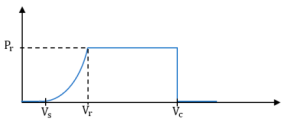
Figure 1. Wind power distribution by speed.
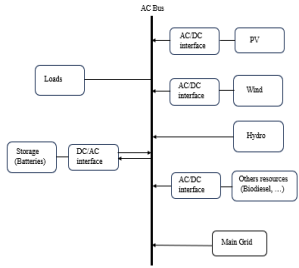
Figure 2. Power grid model for efficient management of renewable resources.
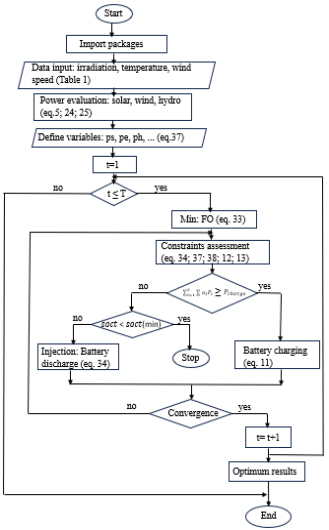
Figure 3. Flow chart for efficient management of renewable resources in the grid. Eq mean equation.
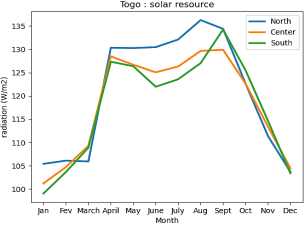
Figure 4. Solar radiation.
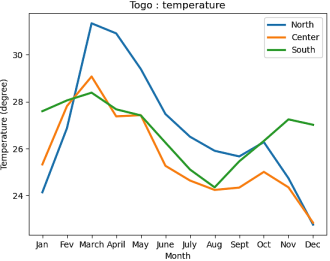
Figure 5. Temperature.
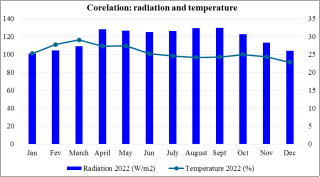
Figure 6. Radiation and temperature correlation.
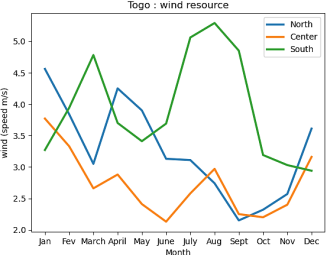
Figure 7. Wind resource.
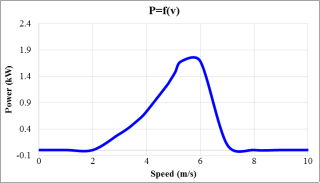
Figure 8. Power curve of a wind turbine.
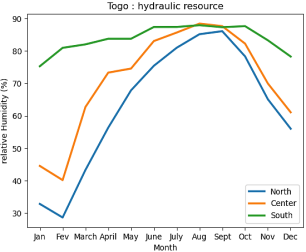
Figure 9. Water resources.
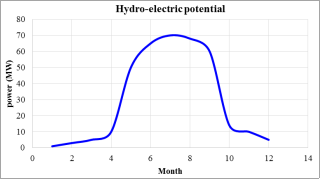
Figure 10. Example of hydropower potential.
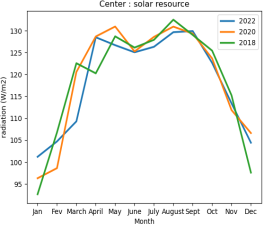
Figure 11. Solar radiation per year.
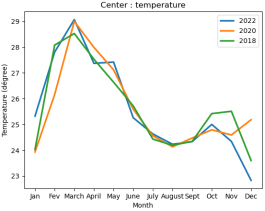
Figure 12. Temperature per year.
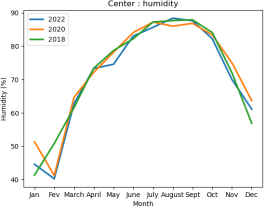
Figure 13. Hydraulic resource per year.
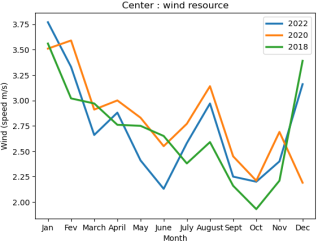
Figure 14. Wind resource per year.
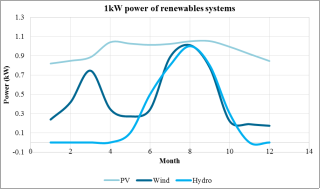
Figure 15. Energy potential of renewable resources.
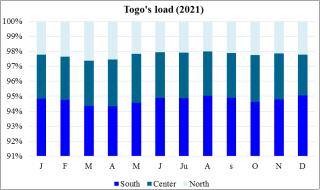
Figure 16. Electricity loads in Togo in 2021.
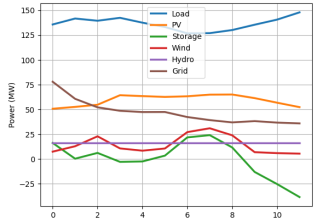
Figure 17. Optimal management of renewable resources: the case of South Togo.
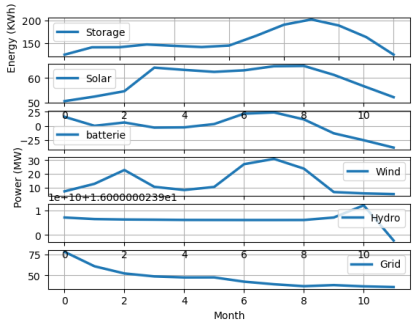
Figure 18. Simulations obtained from different renewable resources.

Information



 Share This Article
 Twitter
 Linked In
 Facebook
 Copy
Copy Download